
Affiliate Disclosure
Some links on this page are affiliate links. As an Amazon Associate, we earn from qualifying purchases — at no extra cost to you. We do not buy, test, or physically handle the products we cover; our rankings come from aggregated owner reviews, ratings and expert consensus. Commissions never change our verdicts. How we rank & full disclosure.
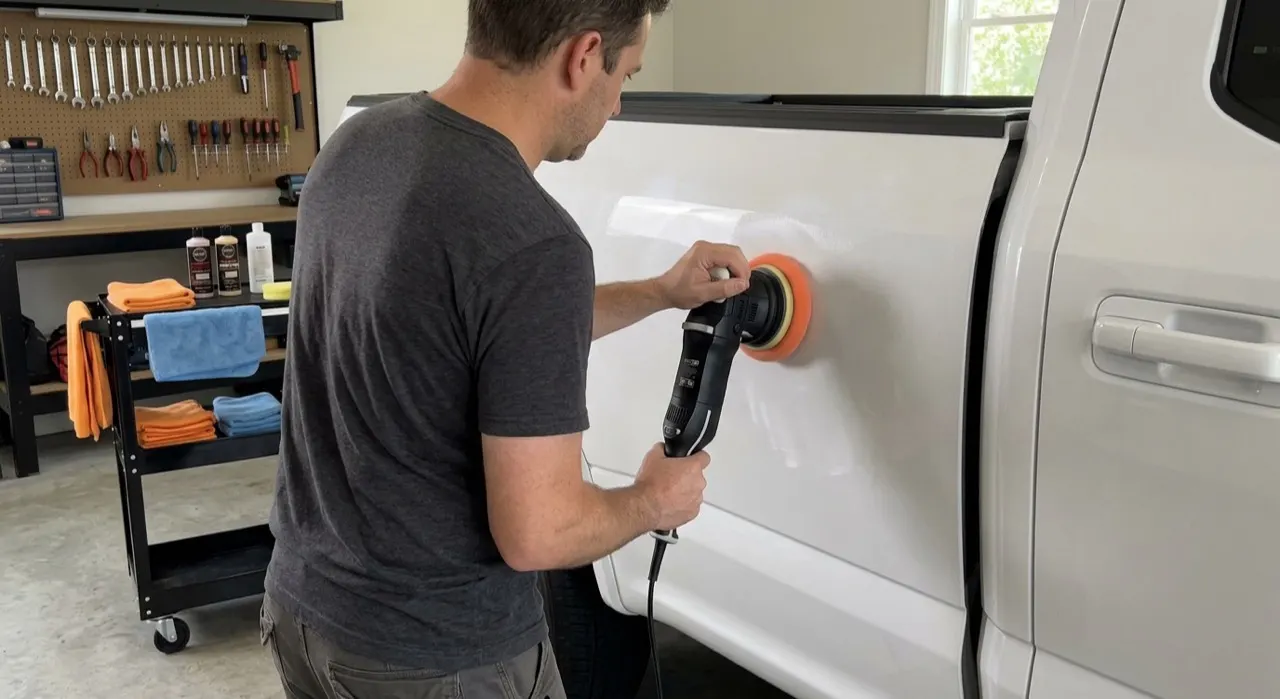
Short version: These three products do very different jobs. Compound is the heavy cutter — it removes deep defects fast but leaves haze. Polish is the finisher — it removes lighter defects and brings up gloss. Glaze corrects nothing; it fills and masks flaws temporarily for a quick shine. For serious damage: compound, then polish. For light defects: polish alone. For a fast cosmetic boost: glaze. Match the product to the damage and you'll never over-cut your paint.
It all comes down to abrasive size
The easiest way to understand compound, polish and glaze is to picture them on a scale of aggressiveness — from "removes a lot of clear coat" to "removes nothing at all." That aggressiveness is basically down to abrasive size. Compound has large, aggressive abrasives. Polish has fine ones. Glaze has none. Once that clicks, choosing the right product for a given problem becomes obvious, and you stop making the classic beginner mistake of reaching for the strongest product "just to be safe" — which is exactly how people burn through their clear coat.
Compound: the heavy cutter
Compound is your demolition crew. Its coarse abrasives cut quickly and aggressively, removing a meaningful layer of clear coat and taking the deep defects with it. Reach for compound when you're dealing with:
- Heavy swirl marks that a polish won't touch.
- Deeper scratches (though not ones that catch a fingernail hard — those may be too deep to remove safely).
- Serious oxidation on neglected, chalky paint.
- Water spot etching and other stubborn surface damage.
The trade-off: compound leaves a hazy, slightly dull finish behind because those big abrasives leave their own micro-marring. That's expected — you're not done after compounding. You follow it with a polish to refine the surface back to gloss. Compound cuts; it doesn't shine. Because it removes the most clear coat, use it only when a polish genuinely isn't enough, and always do a test spot first. Our paint correction guide covers the full multi-step process.
Polish: the finisher
Polish is the refinement tool. Its fine abrasives remove lighter defects and — crucially — clean up the haze that compound leaves behind, bringing the paint to a deep, clear gloss. You use polish in two situations:
- On its own for light swirls, dullness and minor oxidation. For most daily drivers, this is all the correction you need.
- After compound to remove the compound's marring and restore full clarity and shine.
Polish removes far less clear coat than compound, so it's the safer, more forgiving product and the one you should default to. Start with polish, and only step up to compound if a test spot proves the defects are too deep. Our how to polish a car guide walks through applying it by hand or machine.
Glaze: the temporary cover-up
Here's where a lot of people get confused. Glaze is not a corrective product — it removes nothing. It's a non-abrasive product loaded with oils and fillers that flow into fine swirls and scratches, masking them and adding a wet, glossy pop to the paint. It's pure cosmetics.
Glaze has a real place: a quick gloss boost before a car show, a photo shoot, or selling a car, when you want the paint to look its best right now without doing full correction. But because it fills rather than fixes, it washes away within a few weeks and the defects reappear. Never mistake glaze for correction — it's a temporary shine, not a repair. If you want the flaws actually gone, you polish; if you just want them hidden for the weekend, glaze does the trick.
A word on all-in-ones
You'll also see "all-in-one" (AIO) products that combine light cutting, polishing and often a bit of protection in a single step. They're a genuinely useful middle ground: they remove light-to-moderate defects and leave a protected shine in one pass, saving a ton of time. The compromise is they don't cut as hard as a dedicated compound or finish quite as flawlessly as a dedicated polish. For a lot of daily drivers with light swirling, though, an AIO is the smart, efficient choice — and it's the backbone of a one-step swirl removal.
The right order to use them
Put together, the correct sequence for a full correction looks like this:
- 1. Wash, decontaminate and clay so you're working on clean, smooth paint.
- 2. Compound — only if there are deep defects to cut out.
- 3. Polish to refine the finish and remove any compound haze.
- 4. Glaze — optional, for extra gloss before protecting (mostly for shows).
- 5. Protect with wax, sealant or ceramic to lock in the result.
Most people never need step two. Wash, clay, polish, protect covers the majority of daily-driver jobs beautifully.
The honest verdict
Remember it like this: compound cuts hard and leaves haze, polish refines and shines, glaze hides and washes off. Always start with the least aggressive product that solves your problem — polish before compound, and glaze only when you want a temporary boost. Do a test spot, respect your finite clear coat, and protect the paint when you're done. Get the product matched to the damage and you'll fix your paint efficiently without ever over-cutting it. Ready to buy? Our top car polish picks cover compounds, polishes and all-in-ones worth owning.
Recommended Products
Here are the correction products we point people to — the polish and compound sides of this comparison, plus the hybrids that blur the line. We rank on aggregated owner ratings, not first-hand testing.

Best for gloss and light-swirl removal — the finisher
- Fine abrasives refine paint to a deep gloss
- Removes light swirls and compound haze
- Works by hand or machine
- The safe default — start here before reaching for compound
Why buy it: the polish side of the comparison — refines to a wet gloss and cleans up any haze a compound leaves behind.

Best for heavier swirls, scratches and oxidation
- Coarser abrasives cut deeper defects fast
- Leaves haze — always follow with a polish
- Works by hand or machine
- The heavy-cutter side of the comparison
Why buy it: the compound side — cuts out defects a polish cannot touch, then you refine with the polish above.

Best for one bottle that cuts and finishes
- Hybrid compound-and-polish in one
- Cut or finish by changing the pad
- Best on a dual-action polisher
- Skips the two-step routine on lighter paint
Why buy it: the middle-ground AIO — most of a compound-then-polish result from a single bottle for light-to-moderate defects.

Best for a tidy one-pass correction
- One-step scratch & swirl remover
- Corrects then finishes glossy in a pass
- Shines best on a DA polisher
- Light-to-moderate defects only
Why buy it: a convenient one-and-done for lighter paint — less cut than a true compound, cleaner than working a polish hard.
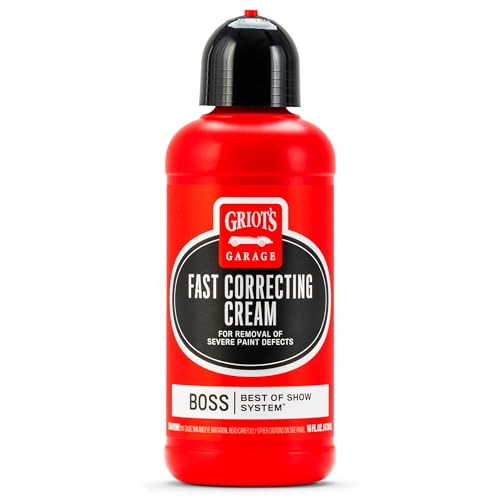
Best for machine polishing on a dual-action
- Fast-correcting cream built for machines
- Strong cut that still refines down
- Body shop / detailer favourite
- Wants a DA to shine
Why buy it: the machine-correction pick — serious cut on a DA that you can knock back to a clean finish.

Best for budget heavy cutting
- Aggressive, low-cost compound
- Cuts oxidation and deeper defects
- Follow with a polish for gloss
- The value entry to the compound side
Why buy it: the cheapest way onto the compound side — real cutting power for pocket change, then refine with a polish.
Prices are pulled from Amazon and were accurate as of Aug 22, 2026, 6:54 PM EDT. Product prices and availability are subject to change — the live price is shown on Amazon.