
Affiliate Disclosure
Some links on this page are affiliate links. As an Amazon Associate, we earn from qualifying purchases — at no extra cost to you. We do not buy, test, or physically handle the products we cover; our rankings come from aggregated owner reviews, ratings and expert consensus. Commissions never change our verdicts. How we rank & full disclosure.
Short version: Your pad matters as much as your product — the same polish on a cutting pad versus a finishing pad gives completely different results. Cutting pads are firm and remove heavy defects with compound; polishing pads are medium for lighter correction; finishing pads are soft for glazes and final gloss. Colors indicate aggressiveness but only within a brand. Foam is the all-rounder, microfiber cuts more, wool cuts hardest. Match the pad to the product and the paint.
Why the pad matters as much as the product
Beginners obsess over which polish to buy and treat the pad as an afterthought — which is backwards. Your pad and product work as a system. Put a fine polish on an aggressive cutting pad and you'll cut harder than you expected. Put a compound on a soft finishing pad and you'll barely remove anything. The pad controls how aggressively the abrasives are driven into the paint, so getting the pairing right is half of a good correction. Once you understand pads, everything about machine polishing makes more sense.
The three main pad types
Regardless of material or brand, pads fall into three functional categories based on how aggressive they are:
- Cutting pads. Firm and coarse. They drive abrasives hard into the paint to remove heavy swirls, scratches and oxidation. You pair these with compounds. They cut fast but leave a hazier finish that needs refining.
- Polishing pads. Medium firmness. The workhorse for lighter correction and refining — they remove light-to-moderate defects and bring up gloss. Paired with polishes, they're the pad most home jobs use most.
- Finishing pads. Soft and gentle. They don't really cut — they're for laying down glazes, sealants, all-in-ones or a final jeweling pass to maximize gloss on already-corrected paint.
This ladder mirrors the product ladder exactly: cutting pad with compound, polishing pad with polish, finishing pad with glaze or sealant. See our compound vs polish vs glaze guide to match the products up.
What the colors actually mean
Here's the trap that catches everyone: pad colors do indicate aggressiveness, but there is no universal color standard across brands. One manufacturer's orange pad might be a firm cutting pad; another's orange might be a soft polishing pad. A black pad is a gentle finishing pad in one lineup and an aggressive cutter in another.
So never assume a color means the same thing everywhere. Always check the manufacturer's own labeling — they'll tell you whether a pad is cutting, polishing or finishing. Color is a useful shorthand within a single brand's system, and useless as a cross-brand rule. Buy pads and products from within one system when you're starting out and the guesswork disappears.
Foam vs microfiber vs wool
The other big variable is what the pad is made of, and each material behaves differently:
- Foam. The versatile all-rounder and what most people should own. Foam pads come in cutting, polishing and finishing grades, they're forgiving, they finish cleanly, and they're perfect for hand and dual-action work. If you buy one type, buy foam.
- Microfiber. The little microfiber fingers cut more aggressively than foam of the same nominal grade, which makes them popular for efficient one-step corrections on a DA. They cut fast but can leave more haze, so they often need a foam finishing pass afterward.
- Wool. The heaviest cutter, mostly the domain of pros on rotary machines removing serious defects. Overkill and harder to control for most home users — you rarely need it for daily-driver work.
For home use with a dual-action polisher, foam and microfiber cover the overwhelming majority of jobs. Our DA polisher guide covers the machines these pads mount to.
Pad size and keeping them working
Pad size matters too. Smaller pads (three to four inches) give you control on tight areas — mirrors, pillars, bumpers — while larger pads (five to six inches) cover big flat panels faster. Many people run a five-inch backing plate for general work and keep a set of small pads for the fiddly bits.
However good your pad is, it stops working well once it's saturated with spent product and removed paint. A clogged pad cuts poorly and can leave streaks or micro-marring. So clean your pads regularly with a pad brush or compressed air between sections, swap to a fresh pad when one gets heavy, and wash them properly after use so they last. This is exactly why having a couple of spares of each type genuinely improves your results — you're never forced to work with a dead pad.
A simple starter set
If you're building a kit from scratch and mostly want to knock out light swirls and keep the paint glossy, don't overthink it. A couple of foam polishing pads and a foam finishing pad, paired with a good polish and an all-in-one, will handle most daily-driver correction and protection. Add cutting pads and a compound only when you hit defects that a polish won't remove. Start simple, expand as your jobs demand it — you don't need every pad on the shelf on day one. For the bigger picture on how far to take correction, see our paint correction guide.
The honest verdict
Pads are the unsung half of polishing, and getting them right is the difference between chasing your tail and nailing the finish. Remember the three types — cutting, polishing, finishing — and pair them with the matching products. Treat color as a within-brand hint, not a rule, and check the manufacturer's labeling. Start with foam, add microfiber for efficient cutting, and keep your pads clean and swapped out. Get the pad-and-product pairing dialed and your corrections get faster, safer and better-looking. When you're ready to buy polish to go with them, our top picks pair up nicely.
Recommended Products

Best for the machine your pads mount to
- Long 15mm throw corrects fast
- Smooth, low-vibration
- Beginner-safe dual-action
- Strong warranty
Why buy it: long-throw correction that's beginner-safe and you won't outgrow — the dual-action machine foam and microfiber pads are made to run on.

Best for pairing with a polishing or finishing pad
- Glaze-rich finishing polish
- Removes light swirls
- Deep, wet-look gloss
- Works by hand or machine
Why buy it: stunning gloss and light-swirl removal for about $13 — the polish to run on a medium polishing pad once the heavy defects are gone.

Best for pairing with a firm cutting pad
- Strong cut
- Still finishes well
- Cheap
Why buy it: the cutting partner for heavier swirls and scratches — the compound that belongs on a coarse cutting pad before you refine with a polish.
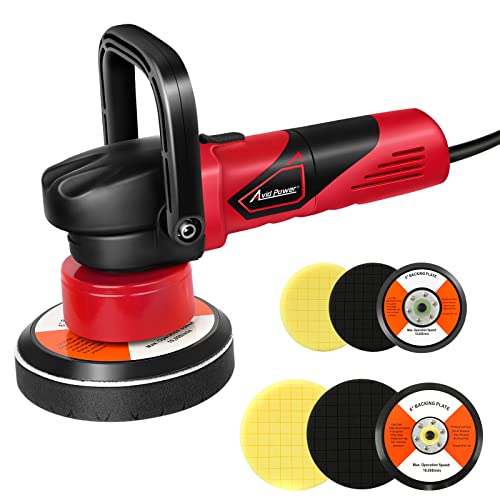
Best for beginners on a budget
- Cheap and capable
- Beginner-safe DA
- Great value
Why buy it: the smart first machine for most people — a beginner-safe dual-action that takes standard foam and microfiber pads without the premium price.
Prices are pulled from Amazon and were accurate as of Aug 22, 2026, 6:54 PM EDT. Product prices and availability are subject to change — the live price is shown on Amazon.