
Affiliate Disclosure
Some links on this page are affiliate links. As an Amazon Associate, we earn from qualifying purchases — at no extra cost to you. We do not buy, test, or physically handle the products we cover; our rankings come from aggregated owner reviews, ratings and expert consensus. Commissions never change our verdicts. How we rank & full disclosure.
Short version: Paint decontamination is the step between washing and polishing that removes the contaminants a wash physically can't. Even a perfectly washed car has iron fallout, tar, overspray, and rail dust bonded into the clear coat, stuff you can feel as roughness but often can't see. Decontamination uses chemistry and a clay bar to break that bond and reset the surface to truly clean. Skip it and everything you do afterward, from waxing to coating to polishing, underperforms.
The step almost everyone skips
Most people's car care routine is wash, dry, maybe wax. That's it. And for keeping a car looking presentable, it mostly works. But there's a hidden step missing in the middle, and once you understand it, you can't unsee the difference.
Here's the giveaway: wash and dry your car, then run a clean hand over the paint. If it feels gritty, grabby, or bumpy instead of smooth as glass, that roughness is contamination that survived your wash. It's not dirt sitting on top; it's contamination that has physically bonded to and slightly into your clear coat. No amount of washing gets it off, because washing only lifts what's loose. This is exactly what decontamination is for.
What actually bonds to your paint
A surprising variety of stuff embeds into paint over time. The main culprits:
- Iron fallout. Every braking car sheds hot iron particles from its rotors and pads. They land on your paint still warm and lightly fuse into the clear coat. This is the biggest and most universal contaminant. Our iron remover guide covers how to dissolve it.
- Road tar. Fresh asphalt and oil-slick roads throw up sticky petroleum tar that clings to lower panels. It needs a solvent, not a wash.
- Baked-on bugs. Protein-rich splatter that dries into an acidic crust and can actually etch paint if left too long.
- Overspray and industrial fallout. Paint mist, cement dust, and factory pollution that drifts onto cars parked near job sites or industrial areas.
- Rail dust. Metallic particles from train tracks and transport, notorious on cars shipped by rail from the factory.
- Tree sap and pollen. Sticky organic deposits that bond in the sun.
All of these share one thing: they're bonded, not loose. That's the definition of a decontamination job.
The two types of decontamination
Decontamination comes in two flavors, and a proper job uses both in sequence.
Chemical decontamination uses products that dissolve specific contaminants. Iron removers convert embedded iron into a rinsable compound, bleeding purple as they work. Bug and tar removers use solvents to break down petroleum and protein deposits. These reach contamination without physically touching the paint, which makes them the safest first move.
Mechanical decontamination uses a clay bar or clay mitt to physically pull bonded contaminants off the surface. You glide the clay over lubricated paint and it grabs what's raised, leaving the paint smooth. Our clay bar walkthrough covers this in full.
Do chemical first, then mechanical. Dissolving what you can chemically means the clay bar has less to drag off, which makes claying faster and safer.
Where decon fits in the process
Decontamination lives in a specific spot in the detailing order, and getting the sequence right matters:
- Wash. Remove loose dirt so decon products contact the paint, not grime.
- Chemical decon. Iron remover, then bug and tar remover on the affected areas.
- Clay bar. Mechanically lift whatever bonded contamination remains.
- Final wash. Reset the surface and clear any residue.
- Polish (optional). Now that the paint is truly clean, correct swirls and defects if desired.
- Protect. Wax, sealant, or ceramic coating bonds to genuinely clean paint.
Notice decon sits between washing and polishing. Polishing contaminated paint just grinds those particles across the surface, so decon has to come first. And protecting contaminated paint seals the contamination in place.
Why it matters more than you think
Decontamination isn't just about smoothness for its own sake. Bonded contaminants actively cause problems:
- Embedded iron rusts, and on white and silver paint it shows as tiny orange or brown speckles that spread over time.
- Baked-on bugs and tar etch the clear coat the longer they sit, leaving marks a wash can never fix.
- Contamination blocks protection from bonding. Wax, sealant, and especially ceramic coatings need clean paint to adhere. Apply them over contamination and they don't last.
- Rough paint feels rough. A decontaminated car is genuinely slicker to the touch and stays cleaner because there's less texture for new grime to grab.
This last point is why decon is non-negotiable before a coating. A ceramic coating locks whatever is on the paint underneath it for years. Any contamination you leave behind is trapped and keeps corroding under the coating. Our decon before ceramic guide makes the case in detail.
How often to do it
Decontamination is periodic, not routine. Unlike washing, which you do regularly, most daily drivers need a full decon once or twice a year, spring and fall being natural checkpoints. Cars that live under fallout, near rail lines, or that rack up highway miles benefit from more frequent decon. The baggie test is your guide: whenever the paint feels rough after a wash, it's time.
What you need to get started
You don't need much to decontaminate a car properly:
- An iron remover, spray-on or concentrate.
- A bug and tar remover for the messy areas.
- A clay bar or clay mitt with lubricant.
- Microfiber towels and a properly washed car.
That's genuinely it, and none of it is expensive. Our full decontamination hub collects every guide in the process. We analyzed the ratings and reviews for the popular clay kits and decon products and rounded up our top picks here, so you can skip the guesswork and get the products that earned their place. And once the paint is clean, don't forget to protect it, because decontamination strips whatever wax was on there.
The bottom line
Paint decontamination is the invisible step that makes everything else in car care actually work. It removes the bonded contamination a wash can't touch, resets your paint to genuinely clean, and gives wax, sealant, and coatings a surface they can bond to. Do the baggie test on your own car once and you'll feel exactly why this matters. It's a couple of times a year, it's cheap, and it's the difference between paint that looks clean and paint that is clean.
Recommended Products

Best for the easiest safe first clay bar
- Two 80g clay bars plus Instant Detailer lubricant
- Medium-fine grade forgiving for first-timers
- Re-usable until dropped
- Widely stocked and easy to replace
Why buy it: the kit we hand beginners without a second thought — it glides, it is cheap to replace, and the included lubricant means nothing else to buy for your first mechanical decon.
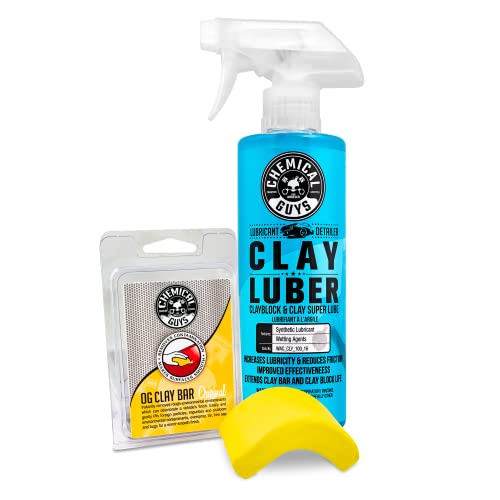
Best for a big bar and lots of lubricant
- Generous clay bar plus a full bottle of luber
- Light/medium grade suits regular maintenance
- Enough lubricant for multiple full details
- Strong cost-per-use
Why buy it: more product for the money than almost any kit here — the one to grab when you are decontaminating more than one car a year.

Best for a complete system for nervous first-timers
- Two clay bars, Quik Detailer and a microfiber towel
- Softest, most forgiving clay in the test
- Everything for a first decon in one box
- Trusted mainstream brand
Why buy it: the most idiot-proof kit going — the soft clay and included towel mean a total newcomer can decon a car with zero guesswork.

Best for well-maintained paint needing a gentle touch
- Genuinely fine grade — minimal marring risk
- Ideal on already-clean, protected paint
- Soft and easy to knead in cool weather
- Pairs well with a dedicated clay lubricant
Why buy it: the lowest marring risk in the group — the clay to reach for on dark, soft paint that is already in good shape and just needs a maintenance pass.
Prices are pulled from Amazon and were accurate as of Aug 22, 2026, 6:54 PM EDT. Product prices and availability are subject to change — the live price is shown on Amazon.