
Affiliate Disclosure
Some links on this page are affiliate links. As an Amazon Associate, we earn from qualifying purchases — at no extra cost to you. We do not buy, test, or physically handle the products we cover; our rankings come from aggregated owner reviews, ratings and expert consensus. Commissions never change our verdicts. How we rank & full disclosure.
Short version: A ceramic coating is only as good as the paint it bonds to. Whatever contamination, swirl, or residue is on your paint when you coat gets locked underneath for years, and the coating itself won't adhere properly over it. That's why decontamination isn't optional before coating, it's the whole ballgame. Wash, chemically decon, clay, polish if you can, then wipe down to bare paint. Get the prep right and a mid-tier coating outperforms a premium one applied over dirty paint.
Why prep decides everything
Here's the thing people get backward about ceramic coatings. They obsess over which brand to buy and spend nothing on prep. But a coating is just a thin, hard, clear layer that bonds chemically to your clear coat. It amplifies and preserves whatever is underneath it. If the paint below is contaminated, swirled, and covered in residue, the coating locks all of that in and can't bond well on top of it.
The coating brand matters far less than the surface you put it on. A perfectly prepped car with a budget coating will look better and last longer than a premium coating slapped over contaminated paint. Prep is where the result actually comes from, and decontamination is the heart of prep. If you're new to the whole concept, our what is paint decontamination explainer covers the fundamentals first.
The trapped-contamination problem
This is the part that makes decon non-negotiable before coating. A wax lasts weeks and a sealant lasts months, so if you trap contamination under them, it's a short-term problem that lifts off at the next decon. A ceramic coating lasts years. Anything you seal under it is sealed under it for the life of the coating.
Picture embedded iron fallout on your paint. Iron rusts. Coat over it and that iron keeps corroding under the coating, where you can't reach it, slowly staining your paint from beneath a layer you can't remove without stripping the whole coating. Same with tar, overspray, and rail dust: trap it and it's there for years. This is why a rushed coating job often looks worse a year in than an uncoated car, because the flaws are preserved instead of washed away.
The full prep sequence
Here's the order I follow for coating prep, start to finish. Every step earns its place:
- Thorough wash. Foam, two-bucket wash, and rinse to remove all loose dirt. The paint has to be visibly clean before decon.
- Iron remover. Dissolve embedded brake-dust fallout. This is the contamination most likely to keep corroding under a coating, so don't skip it. See our iron remover guide.
- Bug and tar remover. Clear the petroleum and protein deposits clay can't handle, especially on the lower panels and front end. Our bug and tar guide covers the technique.
- Clay bar. Mechanically lift whatever bonded contamination remains until the paint is glass-smooth. Full walkthrough in our how to clay bar guide.
- Wash again. Reset the surface and clear any residue from the decon steps.
- Polish (strongly recommended). Remove swirls and defects, because a coating locks these in for years. This is your one chance to fix them before they're preserved.
- Panel wipe. The critical final step. An IPA or dedicated prep solution strips all oils, polishing residue, and clay lubricant so the coating bonds to bare clear coat.
- Coat. Now, and only now, apply the coating to genuinely clean, bare, flawless paint.
Notice how much happens before the coating touches the car. That ratio, mostly prep and a little application, is exactly right.
Don't skip the panel wipe
Of all the steps, the panel wipe is the one first-timers skip, and it's the one that kills coatings. After decon and polishing, your paint has invisible residue on it: polishing oils, clay lubricant film, hand oils. A coating cannot bond through that film. It'll bead up, streak, and fail to cure properly, and you won't always see the problem until weeks later when the coating starts wearing unevenly.
A panel wipe with isopropyl alcohol solution or a dedicated coating prep spray strips all of that away, leaving bare clear coat the coating can grip. Wipe each panel, flip your towel constantly, and coat one panel at a time while it's fresh. This one step is the difference between a coating that lasts its rated life and one that sheds in months.
Watch for water spots
One contaminant slips past decon: mineral water spots. Hard-water and sprinkler spots can survive a wash and even a clay bar because they've etched into or bonded onto the surface differently. Coat over them and, like everything else, they're locked in. If your paint has stubborn spotting after decon, treat it with a water spot remover before you wipe down and coat. It's a small step that prevents a permanent annoyance.
The payoff of doing it right
When you prep properly, a ceramic coating delivers on its promise. The paint feels impossibly slick, water sheets and beads off, contamination struggles to bond because there's nothing for it to grab, and washing becomes dramatically easier for years. That last part is the real daily benefit: a properly coated car over properly decontaminated paint is genuinely faster and safer to wash because grime slides off instead of sticking.
But every bit of that depends on the surface underneath. The coating amplifies clean, smooth, flawless paint into something spectacular. It also amplifies contaminated, swirled paint into a preserved mess. Same coating, opposite results, decided entirely by the prep.
Getting the prep products right
Coating prep doesn't require exotic gear, just the decon essentials plus a prep solution:
- Iron remover and bug/tar remover for chemical decon.
- A clay bar or mitt with lubricant.
- A polish and machine if you're correcting defects.
- An IPA prep spray or panel-wipe solution for the final step.
- Plenty of clean microfiber.
The full decontamination hub walks through each stage, and we analyzed the popular clay kits and decon products so you don't have to guess; the ones that earned their spot are in our top picks. Buy the decon right and the coating step becomes the easy part.
The bottom line
The single biggest mistake people make with ceramic coatings is spending on the coating and skimping on the prep. It's exactly backward. Decontamination before coating is what makes it bond, last, and look right, because a coating locks in whatever is underneath for years. Wash, decon chemically, clay, polish if you can, and wipe down to bare paint. Do that and even a modest coating rewards you with years of slick, easy-to-wash paint. Skip it and the best coating on the market fails early. Prep is the product.
Recommended Products

Best for the easiest safe first clay bar before coating
- Two 80g clay bars plus Instant Detailer lubricant
- Medium-fine grade forgiving for first-timers
- Re-usable until dropped — good bar longevity
- Widely stocked and easy to replace
Why buy it: the kit we hand beginners without a second thought — it glides, it's cheap to replace, and the included lubricant means nothing else to buy for the clay step.
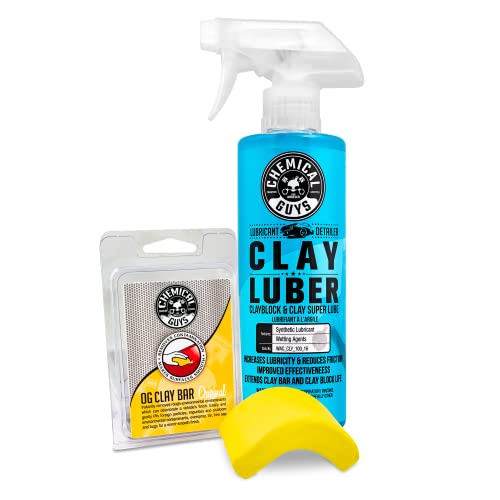
Best for buyers who want a big bar and lots of lubricant
- Generous clay bar plus a full bottle of luber
- Light/medium grade suits regular maintenance
- Enough lubricant for multiple full details
- Strong cost-per-use once you factor the luber
Why buy it: more product for the money than almost any kit here — the one to grab when you're claying more than one car before a coating.

Best for nervous first-timers who want a complete system
- Two clay bars, Quik Detailer and a microfiber towel
- Softest, most forgiving clay in the test
- Everything for a first decon in one box
- Trusted mainstream brand support
Why buy it: the most idiot-proof kit in our rankings — soft clay and an included towel let a total newcomer decon a car with zero guesswork.
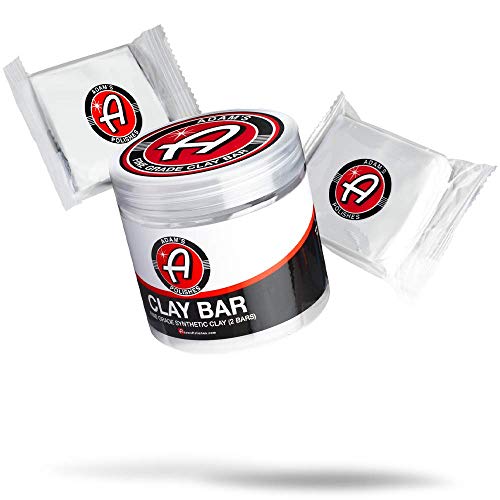
Best for enthusiasts chasing a flawless pre-coat finish
- High-grade clay with excellent glide
- Detail Spray lubricant that doubles as a QD
- Consistent bar quality batch to batch
- Backed by a strong satisfaction guarantee
Why buy it: the clay glides with less drag than anything else here, which makes long prep sessions on a whole car genuinely pleasant rather than a chore.

Best for speed and big vehicles over ultimate finish
- Rubber-polymer mitt covers panels fast
- Rinses clean instead of kneading a bar
- Survives being dropped — just rinse it off
- Far longer service life than a clay bar
Why buy it: won't finish quite as fine as a proper bar, but on a big truck or SUV it halves the decon time and shrugs off the drops that would kill a clay bar.
Prices are pulled from Amazon and were accurate as of Aug 22, 2026, 6:54 PM EDT. Product prices and availability are subject to change — the live price is shown on Amazon.