
Affiliate Disclosure
Some links on this page are affiliate links. As an Amazon Associate, we earn from qualifying purchases — at no extra cost to you. We do not buy, test, or physically handle the products we cover; our rankings come from aggregated owner reviews, ratings and expert consensus. Commissions never change our verdicts. How we rank & full disclosure.
Short version: Bug guts and road tar are chemically different messes, and a clay bar chokes on both. Tar is petroleum-based, so you need a solvent to dissolve it. Bug residue is protein that bakes into an acidic crust, so you soften it and float it off. Use the right product, let it dwell instead of scrubbing dry, and both come off without scratching. This is the step you do before claying, not instead of it.
Why a clay bar hates bugs and tar
Clay bars are brilliant at lifting bonded contaminants that sit on top of the paint, like overspray, rail dust, and fallout. But drag clay across a smear of sticky road tar and it just loads up, gums the bar, and drags the tar across your clear coat like a crayon. Same story with a crusty splattered bug: the clay catches the hard shell and can grind it into the paint.
These two need to be dissolved or softened chemically before any mechanical decontamination. Get them off first, then clay handles the rest. If you're building a full decon routine, our clay bar walkthrough covers where this step slots in, and the broader decontamination overview explains the whole sequence.
Tackling road tar
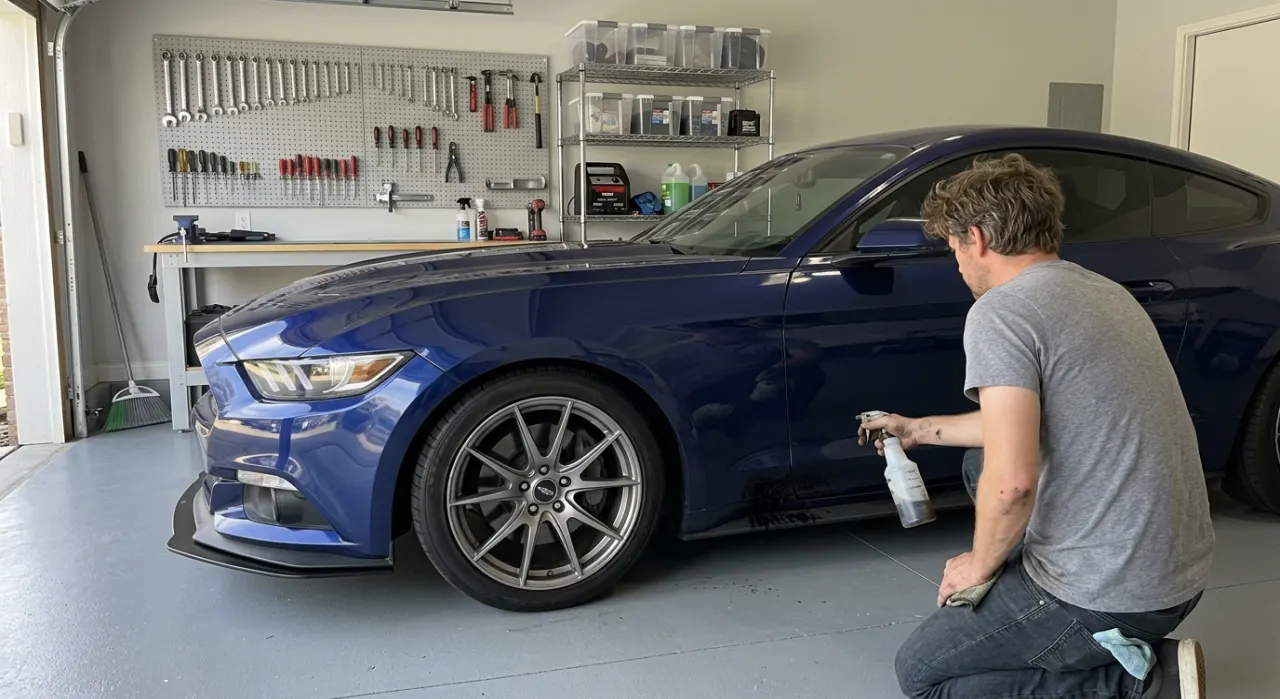
Tar shows up as those black or dark-brown speckles along your lower doors, rockers, and rear quarter panels, thrown up off fresh asphalt and oil-slick roads. It's petroleum, so it dissolves in petroleum-based solvents. Here's the approach:
- Wash the car first so you're treating tar, not tar plus grit.
- Spray or dab the tar remover directly on the affected area. Work in shade so it doesn't flash off.
- Let it dwell 30 seconds to a couple of minutes. You'll often see the tar start to run and streak as it dissolves.
- Wipe with a soft microfiber, one direction, light pressure. The tar should smear onto the towel with almost no effort. Flip to a clean section constantly so you're not redepositing.
- Reapply for stubborn spots rather than scrubbing harder. A second dwell beats aggression every time.
- Wash or rinse the area afterward to clear any solvent residue.
The temptation is always to scrub. Resist it. Solvent plus dwell time does the work, and scrubbing dry tar is how you put swirls in your paint. A useful trick on heavy tar is to lay a solvent-soaked microfiber flat over the spot and leave it for a minute or two, so the tar softens all the way through instead of just on the surface. When you lift the towel, most of the tar comes with it. For a single bad panel after a road trip on fresh asphalt, that soak-and-lift approach beats a dozen aggressive wipes and leaves your paint untouched.
Tackling baked-on bugs
Bug splatter is a different animal. It's protein-rich, and as it dries in the sun it becomes acidic, which is why leaving bugs on your paint for weeks can actually etch the clear coat. The front bumper, hood, mirrors, and A-pillars take the worst of it after a highway run.
The golden rule with bugs is soften, don't scrape. Here's what works:
- Soak the area. A dedicated bug remover, a bug-specific pre-soak, or even a wet microfiber towel laid flat over the splatter for a few minutes rehydrates the crust.
- Let it sit. Give the softened residue time to release from the paint. Rushing this is what causes scratches.
- Wipe gently. Once softened, most bugs come off with a light single-direction wipe. A bug sponge or soft mesh pad helps on heavy splatter, but only after soaking.
- Get them off promptly. The longer bug guts bake on, the more they etch. If you can hit them within a day or two of a road trip, they come off easily.
If bugs have already etched a faint outline into the clear coat, that's a paint-correction issue, not a cleaning one, and no amount of soaking fixes an etch. That's a job for polishing after decontamination.
Choosing your products
You've got a few formats to consider. General price ranges here are modest across the board; this isn't expensive stuff:
- Combo bug-and-tar sprays are convenient and handle both jobs reasonably well. Good for occasional users who don't want two bottles.
- Dedicated tar removers tend to be stronger solvents and cut heavy tar faster. Worth it if you drive a lot of freshly paved roads.
- Bug-specific pre-soaks are gentler and safer to use liberally on the front end, and some are enzyme-based to break down the protein.
Whatever you pick, check that it's labeled clear-coat safe and test any strong solvent on an inconspicuous spot first, especially near trim. We rounded up the decontamination products reviewers rate highest in our top picks, which includes the solvents and kits that earned their place.
Where this fits in a full decon
Here's the running order I use so nothing fights anything else:
- Wash to remove loose dirt.
- Iron remover to dissolve embedded brake-dust fallout. See our iron remover guide.
- Bug and tar remover to dissolve the petroleum and protein messes clay can't handle. That's this step.
- Clay bar to lift everything else still bonded to the paint.
- Final wash to reset the surface before protecting it.
Doing tar and bugs before clay is what keeps your clay bar clean and your paint scratch-free. Skip it and you'll gum up an expensive bar on your first pass.
Protect after, because you stripped it
Remember that solvents strip wax and sealant. After a bug-and-tar session, especially a full decon, the treated paint is bare. That's actually perfect timing, because you were going to reprotect anyway. Whether you're topping with wax, sealant, or a ceramic coating, decontaminated bare paint is the ideal canvas. If a coating is your goal, read our decon before ceramic guide, because a coating over trapped contamination is a coating that fails early.
The bottom line
Bugs and tar are the two contaminants that make people scrub, and scrubbing is what wrecks paint. The whole game here is chemistry and patience: dissolve tar with solvent, soften bugs with a soak, and let the product do the lifting so your towel barely has to touch the paint. It's one stage of a full paint decontamination. Get them off before you clay, protect afterward, and your lower panels and front end stay smooth instead of speckled. It's a five-minute step that saves you from a hundred tiny swirl marks.