
Affiliate Disclosure
Some links on this page are affiliate links. As an Amazon Associate, we earn from qualifying purchases — at no extra cost to you. We do not buy, test, or physically handle the products we cover; our rankings come from aggregated owner reviews, ratings and expert consensus. Commissions never change our verdicts. How we rank & full disclosure.
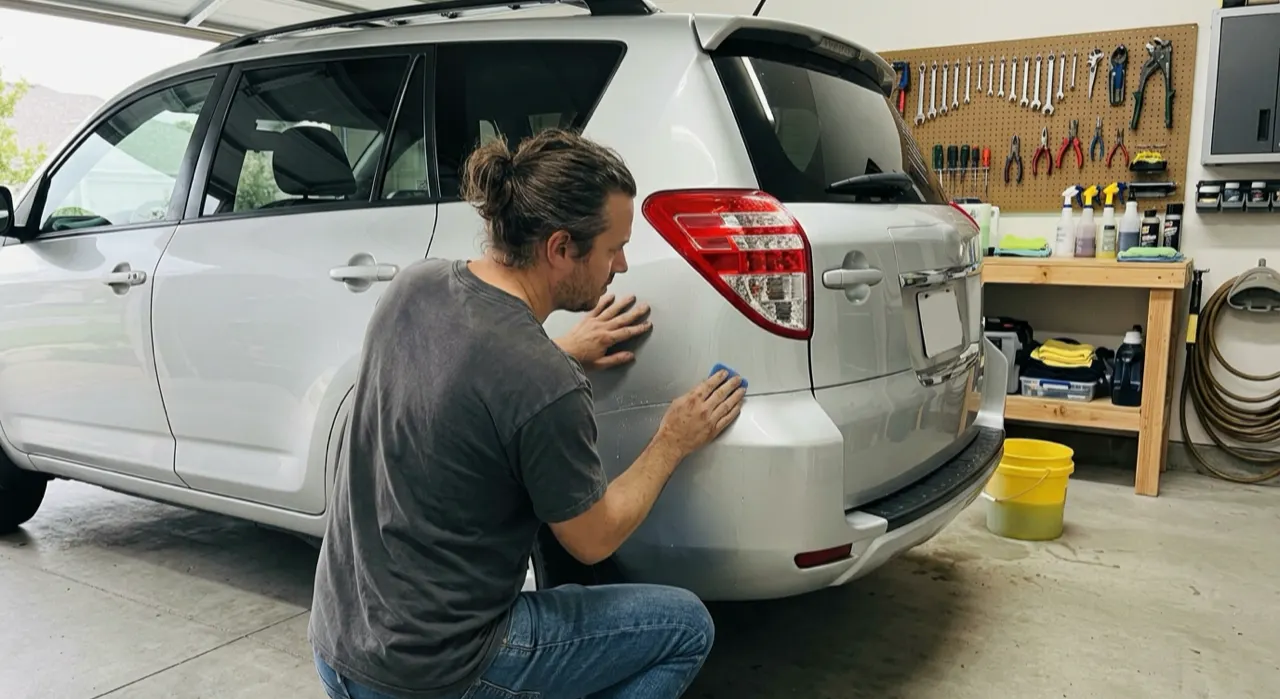
Short version: Claying is dead simple in principle. You glide a piece of detailing clay over well-lubricated paint and it grabs the bonded contaminants a wash leaves behind, leaving glass-smooth paint. The whole game is lubricant and light pressure. Use plenty of both, keep folding the clay to a fresh face, and never, ever reuse a bar you've dropped. Do that and you'll marr nothing and end up with the smoothest paint your car has felt in years.
What claying actually does
After you wash and dry a car, the paint can still feel rough. That roughness is bonded contamination: industrial fallout, rail dust, overspray, tree sap mist, and the general grime of the road that has physically stuck to and slightly into your clear coat. Washing floats off the loose dirt but leaves this bonded layer behind.
A clay bar is a soft, tacky resin that, when dragged over lubricated paint, catches those raised contaminants and pulls them into the clay. The paint underneath is left smooth. It's a purely mechanical process, which is why lubricant matters so much: the clay has to glide, not grip. For the full context of why this step exists, our what is paint decontamination explainer walks through what these contaminants are.
The feel-the-grit test
Before you clay, confirm you need to and find your problem areas. The classic method is the baggie test: wash and dry the car, then put your hand inside a thin plastic sandwich bag and lightly run your fingertips over the paint. The bag amplifies texture your bare skin misses. Smooth as glass means you're clean. Gritty, grabby, or bumpy means bonded contamination.
Pay attention to where it's worst. Horizontal surfaces like the hood, roof, and trunk usually catch the most fallout because they face the sky. Lower panels catch more tar and road splatter. This tells you where to spend your time and where a light pass is enough.
What you need
- A clay bar in a fine or medium grade. Fine grade is the safe default for a maintained car; medium is for heavier contamination but marrs slightly more.
- Clay lubricant or a quality detail spray. Do not skimp here. Running out mid-panel is how people clay dry and scratch paint.
- Clean microfiber towels for wiping off the lubricant as you go.
- A freshly washed car, ideally after chemical decon. If you've done iron remover and bug and tar removal first, your clay bar will last far longer and work more safely.
Not sure which clay to buy? We ranked the popular kits using owner reviews and put the results in our best clay bar kit roundup, with picks for beginners and heavy contamination alike.
The technique, step by step
- Break off a chunk of the clay bar, roughly a third to a half, and knead it into a flat patty that fits comfortably under your fingers. Keep the rest sealed and clean.
- Work one small section at a time, around two feet square. Never try to clay a whole panel in one pass.
- Spray the section generously with lubricant. It should look wet. This is the single most important step.
- Glide the clay flat across the paint in straight lines, back and forth, with very light pressure. Let the clay do the work. You'll feel and hear it grabbing at first, then it goes silent and slick as the contamination lifts.
- Wipe the section with a clean microfiber to remove lubricant and check your progress. Do the baggie test again if you want confirmation.
- Fold the clay to a fresh face often. As it picks up dirt, the surface gets dirty and can start dragging that grit around. Knead and fold to expose clean clay.
- Move to the next section and repeat, working top to bottom so gravity doesn't drag contamination onto areas you've already cleaned.
Do lower panels last, since they carry the most grit and you don't want that grit on your clay before you tackle the pristine upper panels.
The mistakes that marr paint
Claying is safe when done right and scratchy when done wrong. Here are the errors to avoid:
- Not enough lubricant. This is the big one. Dry or under-lubricated clay grips instead of glides, and grip means marring. Keep it wet.
- Reusing a dropped bar. The floor is covered in grit. A dropped bar is now a sanding block. Throw it away, no exceptions.
- Not folding to a fresh face. A dirty clay face redeposits the grit it just picked up. Fold often.
- Heavy pressure. Pressing hard doesn't clean better, it just increases marring. Let the clay skim.
- Claying a dirty or unwashed car. Loose grit under the clay gets dragged across the paint. Always wash first.
Even done perfectly, claying leaves ultra-fine marring on the microscopic level. On most paint it's invisible, and if you're following with a polish anyway, it disappears entirely. That's why claying and polishing pair so naturally.
After you clay: protect it
Freshly clayed paint is bare paint. Whatever wax or sealant was on there came off with the contamination. That's not a problem, it's an opportunity, because bare, decontaminated paint is the perfect surface to protect. Bond it with a wax, a sealant, or a full ceramic coating and it'll stay smoother and cleaner for longer.
If a ceramic coating is your endgame, the prep is everything. A coating locks whatever is on the paint underneath it, so any contamination you left behind is trapped for years. Read our decon before ceramic guide before you coat, and if your car also has stubborn mineral spots that survived the wash and clay, a water spot remover is the missing piece.
A note on clay alternatives
Clay mitts and clay towels have become popular, and they're faster over big panels because you can cover more area per pass. The tradeoff is they're less forgiving on heavily contaminated paint and can marr more if you're not generous with lubricant. For a first-timer learning the feel, a traditional clay bar teaches you the technique better. Once you know what smooth paint should feel like, a mitt is a fine time-saver for maintenance decon.
The bottom line
Claying is the step that separates a car that looks clean from a car that feels clean. It's not difficult, it's just methodical: wash, lubricate heavily, glide light, fold often, and never reuse a dropped bar. Do the baggie test before and after and you'll feel the difference immediately. Paired with chemical decon, it completes the full paint decontamination job the pros charge real money for. Your paint will feel like glass, and everything you put on top of it will bond better and last longer.
Recommended Products
We aggregate owner reviews rather than test products ourselves. The one rule that outranks brand choice: never skimp on lubricant. Kits that bundle clay with matching lube make that easy — which is why they lead this list.

Best for most people — a complete kit with clay and lubricant in the box
- Includes clay bars plus detailer lubricant
- Fine-to-medium grade that suits a maintained car
- Huge owner base and consistent results
- Everything you need to start in one purchase
Why buy it: the safe default — enough clay and the matching lube so you never run dry mid-panel, which is how paint gets marred.
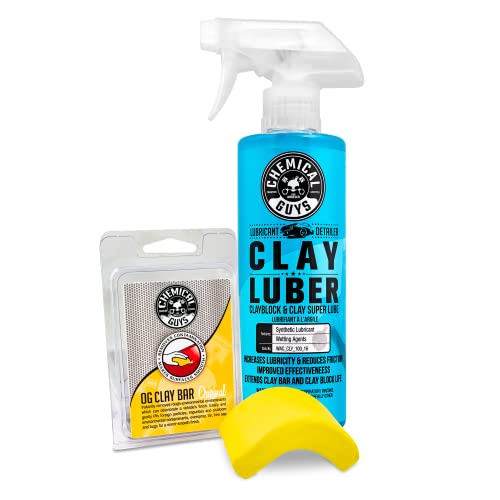
Best for more contaminated paint that needs a slightly stronger grade plus plenty of lube
- Medium-grade clay for heavier contamination
- Comes with a generous bottle of lubricant
- Very high owner rating
- Great volume of product for the money
Why buy it: plenty of clay and lube together, so you can be generous with lubricant — the whole secret to safe claying.

Best for a first-timer learning the feel of decontaminating paint
- Softer clay that is forgiving to work
- Includes Quik Detailer as lubricant
- Teaches the technique gently
- Trusted mainstream brand
Why buy it: the forgiving choice for learning — soft clay and matching lube make the baggie-test-to-smooth journey easy.

Best for a regularly maintained car that only needs a light decon pass
- Fine grade — minimal marring on clean paint
- Ideal for maintenance claying
- Reusable until dropped or fully loaded
- Well regarded by detailers
Why buy it: the gentle fine grade for keeping already-smooth paint that way with the least possible marring.
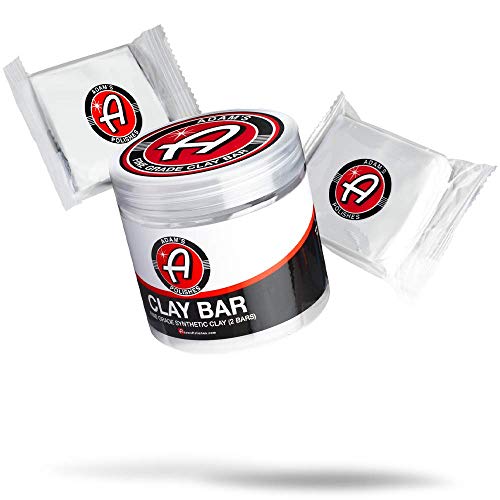
Best for enthusiasts who want a quality bar to pair with their own lube
- Fine-grade detailing clay
- Pliable and easy to knead to a fresh face
- Popular in enthusiast kits
- Strong owner rating
Why buy it: a quality fine bar for detailers who already have a lubricant they trust.

Best for faster maintenance decon over big panels once you know the technique
- Covers area faster than a traditional bar
- Rinses clean and reuses many times
- Best on lightly contaminated paint
- Needs generous lubricant like any clay
Why buy it: the time-saver for maintenance decon — quicker over big panels, though a bar teaches the feel better first.
Prices are pulled from Amazon and were accurate as of Aug 22, 2026, 6:54 PM EDT. Product prices and availability are subject to change — the live price is shown on Amazon.