
Affiliate Disclosure
Some links on this page are affiliate links. As an Amazon Associate, we earn from qualifying purchases — at no extra cost to you. We do not buy, test, or physically handle the products we cover; our rankings come from aggregated owner reviews, ratings and expert consensus. Commissions never change our verdicts. How we rank & full disclosure.
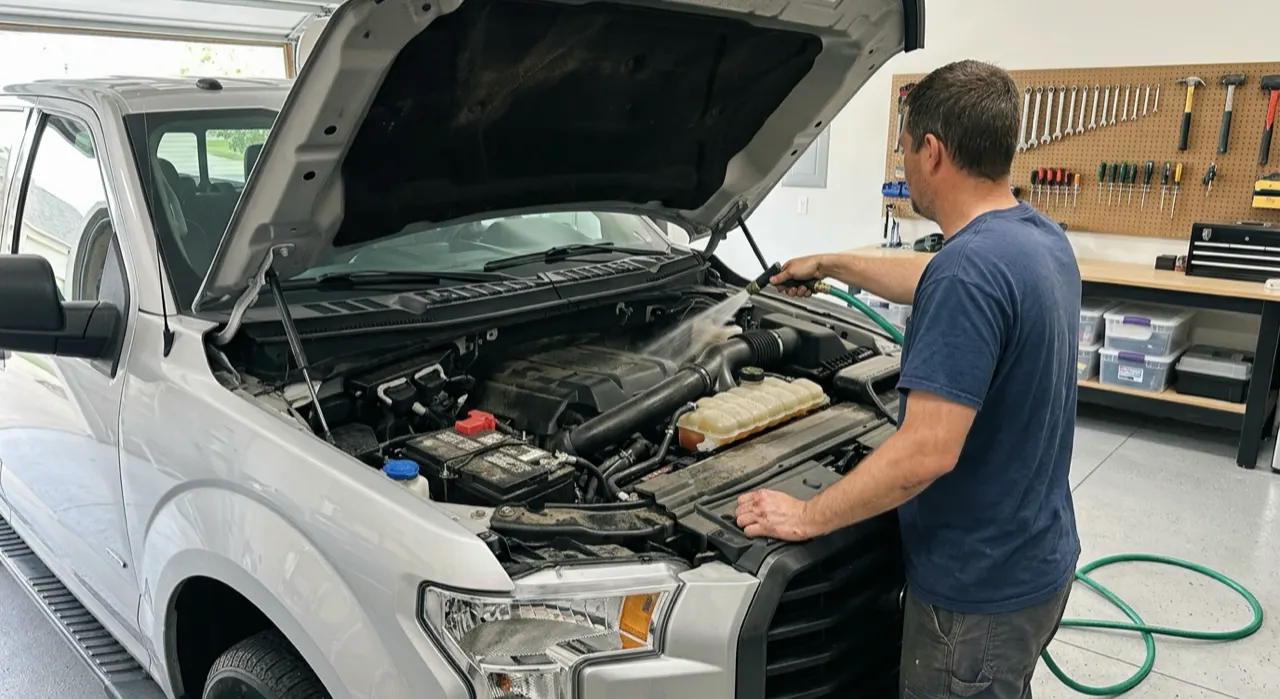
Short version: Yes, you can pressure wash an engine bay, but the honest answer has conditions. The water is not the enemy. Concentrated high pressure driven into the wrong places is. Cover the sensitive parts, use a wide fan tip, keep the pressure moderate, and hold the wand well back so the water falls onto surfaces rather than blasting into them. Do that and it is safe. Grab a narrow turbo tip and jam it against a connector, and you will regret it. Low and far always wins.
What is actually at risk
Let me clear up the biggest misconception first. People imagine that any water near an engine is dangerous, and that is simply not how modern cars are built. Your engine bay gets rained on, driven through puddles, and splashed constantly. It is designed to cope with water from above.
What it is not designed to cope with is water forced under pressure into places that are meant to stay dry. There are really only two things you need to genuinely respect:
- The air intake. Water pushed into the intake tract can get drawn toward the cylinders, and in a worst case that means hydrolock, which is expensive. This is the one that actually scares me.
- Electrical connectors and boxes. Factory connectors are sealed, but a close-range high-pressure jet can defeat a seal that was only ever designed to shrug off rain and splash, not a focused blast. Force water into the wrong connector and you get gremlins, warning lights, or a rough running condition.
Notice both risks come from pressure and placement, not from water existing. That is the whole insight.
Why low-and-far beats blasting
A pressure washer concentrates force into a small point. That is exactly what you want for a caked wheel arch and exactly what you do not want near sealed electronics. The fix is to spread that force out and back off.
A wide fan tip turns a piercing jet into a gentle sheet of water. Holding the wand far back lets that sheet lose energy before it reaches the surface, so it rinses without driving into anything. The mental model I use: I want the water to arrive like heavy rain, not like a needle. When I detail a bay, the pressure washer is basically doing the job of a firm garden hose, just more conveniently. If you find yourself creeping the tip closer to blast a stubborn spot, stop, and go back to degreaser and a brush instead.
The garden hose is genuinely fine
Here is something the gear-focused corner of the internet will not tell you: for most people, a garden hose is all you need to rinse an engine bay. It delivers plenty of volume to wash degreaser away and it physically cannot generate the concentrated pressure that causes problems. If you do not own a pressure washer, do not go buy one just for this. A hose on a gentle setting does the job with even less risk.
A pressure washer earns its place through convenience and reach, not because the bay demands it. If you already own one, great, just use it correctly.
How to do it safely, in order
If you are going to use a pressure washer, here is the non-negotiable sequence.
- Cool the engine completely. Cold water on a hot manifold can crack it. Wait until everything is touch-cool.
- Cover the sensitive parts. Bag the intake, alternator, exposed fuse boxes, battery terminals, and any open connectors. This is mandatory, not optional. Our full what to cover in the engine bay guide lays out exactly what and how.
- Degrease and agitate first. Do the actual cleaning with product and brushes so the rinse only has to carry away loosened grime, not scour it off.
- Fit a wide fan tip. Never a narrow turbo or zero-degree tip in the engine bay. Ever.
- Keep the pressure moderate and the wand far back. Let the water fall onto surfaces. Never aim a close jet at connectors or your covered areas.
- Dry it out afterward. Blow the water from crevices with a blower or compressed air, then remove your bags once the area is dry.
Where this fits in the bigger job
Rinsing is only one step of a proper engine bay detail, and it only works if the steps before it were done right. Blasting a bay you did not degrease just moves grime around. The full routine, in order, is covered in how to clean an engine bay, which walks through cover, cool, degrease, agitate, rinse, dry, and dress. And once the bay is clean and dry, the finishing step is a thin coat of dressing on the plastics, which we cover in the engine bay dressing guide.
The bottom line
So, is it safe to pressure wash an engine? Yes, with respect. Cover the intake and electronics, keep the engine cold, use a wide fan tip, run moderate pressure, and hold the wand far enough back that the water arrives soft. Honestly, a garden hose does the same job with even less to worry about. The people who damage engines are not unlucky, they are the ones who skipped the covering step or aimed a narrow high-pressure jet at a connector from six inches away. Do not be that person, and the whole thing is a calm, safe Saturday job.
Recommended Products
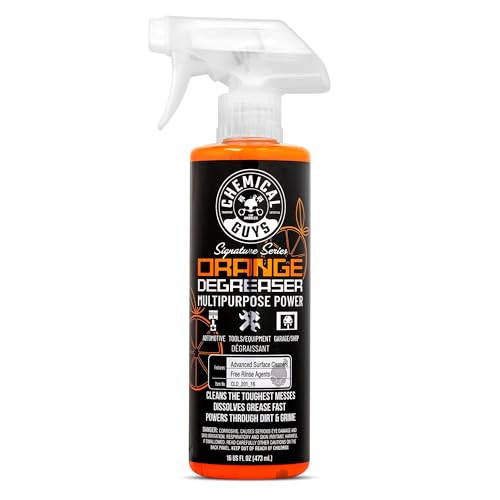
Best for most engine bays and general degreasing
- Citrus-based, cuts grease without harsh fumes
- Dilutable — one bottle stretches a long way
- Safe on painted metal, plastic and rubber
- Rinses clean without a greasy residue
Why buy it: the best balance of cutting power and safety — gentle enough on plastics and wiring that you can degrease first and rinse with a light spray instead of blasting.
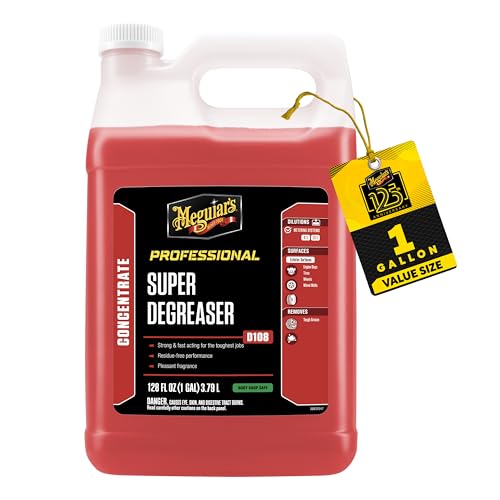
Best for dilutable pro-grade cleaning
- Highly concentrated — dilutes to taste
- Professional-strength on baked-on grime
- Versatile across the whole car
- Excellent cost-per-use once diluted
Why buy it: dilute it strong for a nasty bay or weak for general use — that flexibility makes one bottle do the work of several.

Best for one cleaner for everything
- Non-toxic, biodegradable formula
- Dilutable for engine bays or household use
- Very widely available and inexpensive
- Low-fume and gentle on hands
Why buy it: the jack-of-all-trades — dilute it right and it degreases a bay perfectly, then cleans the rest of your garage too.

Best for quick, targeted spot cleaning
- Ready-to-use, no mixing required
- Foaming action clings where you spray
- Precise trigger for targeted grime
- Trusted, widely available formula
Why buy it: no dilution, no fuss — point, spray, wipe for the greasy spots a rinse would otherwise force you to pressure-blast.
Prices are pulled from Amazon and were accurate as of Aug 22, 2026, 6:54 PM EDT. Product prices and availability are subject to change — the live price is shown on Amazon.