

Affiliate Disclosure
Some links on this page are affiliate links. As an Amazon Associate, we earn from qualifying purchases — at no extra cost to you. We do not buy, test, or physically handle the products we cover; our rankings come from aggregated owner reviews, ratings and expert consensus. Commissions never change our verdicts. How we rank & full disclosure.
The short version: this is a genuinely useful twenty-minute job with one significant trap in it. Modern electronic throttle bodies have a thin anti-friction coating inside the bore, and a lot of the aggressive carburetor cleaner sitting next to the throttle body cleaner on the same shelf will attack it. Strip that coating and you turn a mild idle complaint into a sticking throttle plate. Ranked across aggregated owner reviews, our #1 pick is CRC 05078 Throttle Body and Air-Intake Cleaner, because it is formulated for exactly this surface and is safe around sensors and converters.
The second honest note: cleaning a throttle body fixes a small problem. It smooths an idle and restores a bit of tip-in crispness. It does not clean your injectors, it does not clean the intake valves on a direct-injected engine, and it will not recover lost power. Below is the ranked field, how to do the job without causing a new fault, and which can to keep well away from your mass airflow sensor. For the wider category start at the fuel system cleaners & additives hub.
Top Picks at a Glance
Our #1 Pick: CRC 05078 Throttle Body and Air-Intake Cleaner
CRC 05078 is the can this job was designed around. Since the mid-1990s most throttle bodies have carried a low-friction coating on the bore and the back of the butterfly, applied so the plate can close to a precisely repeatable position without binding. That coating is what the engine computer's learned idle position depends on. A strong general-purpose carburetor solvent will happily dissolve carbon and that coating, and the result — a plate that sticks slightly, an idle that hunts, occasionally a throttle-position fault — is far more annoying than the deposits you set out to remove. The CRC formulation cuts carbon and varnish while leaving the coating alone, and it is rated safe around oxygen sensors and catalytic converters.
Across roughly twelve thousand owner reviews the consensus is dull in the best way: it works, it does not create new problems, and the extension straw reaches the back of the plate where the worst of the buildup actually sits. Owners consistently report a settled idle and a crisper tip-in on cars that genuinely had a visible carbon ring, and — usefully — plenty of reviewers report no change at all on a throttle body that only had a light even film, which is exactly what should happen. That is a good sign in review data: people describing when a product did nothing are people whose positive reviews you can trust.
Best Throttle Body Cleaners 2026: The Ranked Field
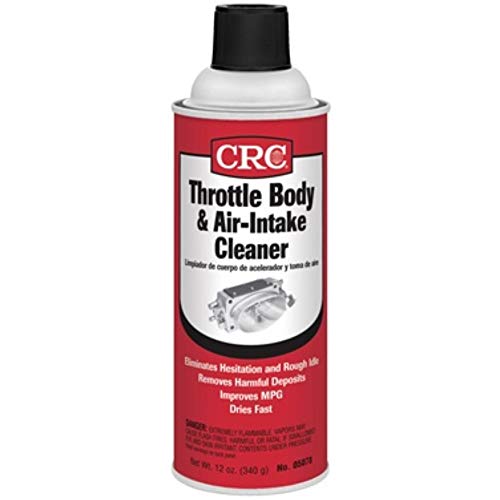
Best for the safe default on any modern electronic throttle body
- Formulated for coated and anodized throttle bores
- Safe with oxygen sensors and catalytic converters
- Dissolves carbon, varnish and gum without scrubbing
- Extension straw for the back of the plate
Why buy it: the one can that is actually designed for the job. Unlike a carb cleaner, it will not attack the anti-friction coating inside a modern throttle body — which is the single most common way people ruin one.
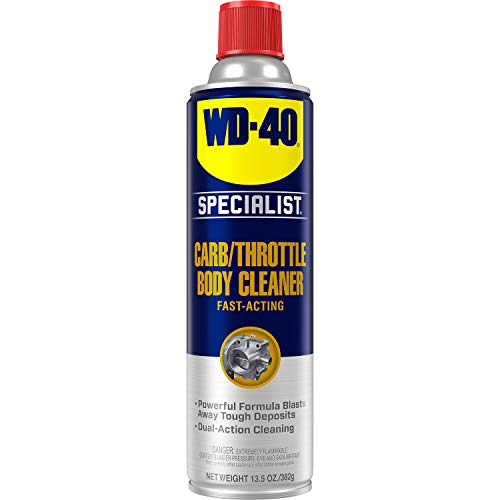
Best for a bigger can at a lower price with the same sensor-safe brief
- Sensor-safe and converter-safe formulation
- Doubles as a general parts and linkage cleaner
- Powerful spray with an attached precision straw
- 13.5 oz can, more product per dollar
Why buy it: the value pick that does not cut corners on chemistry. Owners rate it as highly as the CRC can and it stretches further across a whole intake cleanup.

Best for when the throttle body is clean but the valves behind it are not
- Fed into the intake with the engine running
- Targets carbon on intake valves and turbo compressor
- Includes hose and applicator for the induction service
- Formulated for direct-injection engines
Why buy it: the step up. Cleaning a throttle plate is a fifteen-minute job that fixes a small problem; this is the product that addresses the larger one behind it on a GDI engine.

Best for older throttle bodies, carburetors and genuinely gummed-up linkages
- Aggressive solvent blend that cuts old varnish fast
- VOC-compliant in all 50 states
- 16 oz aerosol with extension tube
- Long track record on carbureted engines
Why buy it: the strong stuff. Use it on an older, uncoated throttle body or a carburetor where a gentle cleaner just moves the grime around — and keep it away from coated bores and sensors.

Best for throttle body plus a light intake and valve cleanup in one can
- Long hose applicator for feeding into the intake
- Cleans throttle body, intake tract and valve faces
- Petroleum-based, converter and sensor safe
- Widely available and easy to find locally
Why buy it: the gentler all-rounder. It will not strip heavy carbon like a dedicated induction cleaner, but it covers the throttle body and the tract behind it from one can without risk.
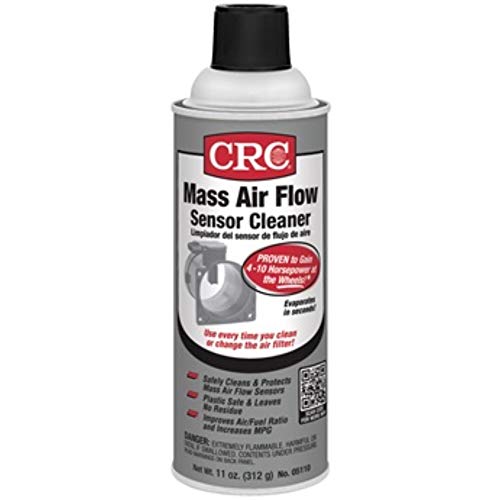
Best for the one component you must never spray with throttle body cleaner
- Fast-drying, leaves no residue on the sensing element
- Plastic-safe on the sensor housing
- Precision straw for the hot-wire or hot-film element
- Evaporates in under a minute
Why buy it: not a throttle body cleaner, and that is the point. Half the rough-idle complaints that follow a throttle body clean come from someone spraying the MAF with the wrong can.
Prices are pulled from Amazon and were accurate as of Aug 22, 2026, 6:54 PM EDT. Product prices and availability are subject to change — the live price is shown on Amazon.
Carb Cleaner vs Throttle Body Cleaner: The Difference That Costs Money
They sit on the same shelf, they cost the same, and they are not interchangeable on a modern car.
Carburetor cleaner is built to dissolve hardened fuel varnish out of tiny brass passages. It is aggressive by design, it often contains acetone or toluene, and on bare metal that is exactly right. It is also perfectly fine on a genuinely old, uncoated throttle body, and it is what you want if you are actually cleaning a carburetor — the ranked field for that is in best carb cleaner.
Throttle body cleaner is a milder solvent package chosen to lift carbon without attacking the anti-friction coating, plastics or the seals on the throttle position sensor. It is the correct choice on anything with electronic throttle control, which in practice means almost every car built since the early 2000s.
The simple rule: if the can does not say "throttle body safe", do not spray it into a throttle body. And if you have an older carbureted engine or a genuinely varnished older throttle body, the aggressive Berryman can further down this list is the right tool and the coating concern does not apply.

How to Clean a Throttle Body Properly
1. Engine off and cool, battery disconnected if you are cautious. Some drive-by-wire systems will fault if the plate is moved with the key on.
2. Remove the intake duct from the throttle body. Take a photo first if there is a vacuum line or a breather hose attached — reconnecting one wrong is a guaranteed vacuum leak.
3. Do not force the plate open on a drive-by-wire throttle. This is the second big trap. An electronic throttle has a return spring and a geartrain; levering the plate open by hand can strip the plastic gears or damage the motor. Clean what you can reach with the plate closed, spray around the edge, and let the plate open itself when you start the engine later. If your car is cable-operated, having a helper hold the pedal down is fine.
4. Spray onto a rag or a soft brush, not straight into the bore. Flooding the throttle body sends solvent downstream toward the intake manifold and, on some layouts, the MAP sensor. Wet the cloth, wipe the bore edge and the visible face of the plate, repeat until the cloth stops coming away black.
5. Leave the thin even film alone. A light black coating on the bore is normal and in many cases is the coating itself. You are removing the crusty ring around the plate edge, not polishing the bore to bare metal.
6. Reassemble, then relearn the idle. Expect a high or hunting idle for the first few minutes. Many cars settle within a few dozen miles; some need a specific relearn procedure. If a code appears, read it before you panic — the reading OBD2 codes hub covers what a basic scanner will tell you.
Never Spray the Mass Airflow Sensor With This
This deserves its own section because it is the most common way a throttle body cleaning goes wrong. The mass airflow sensor sits in the intake duct just downstream of the air filter, and its sensing element is a hot wire or hot film thinner than a human hair with a calibrated coating on it. Throttle body cleaner, carb cleaner and brake cleaner will all damage that element or leave a residue on it. The symptom is a car that ran acceptably before you cleaned anything and now hesitates, runs rich or lean, and throws a MAF code.
If you want to clean the MAF — and on a high-mileage car it is often worth doing at the same time — use a dedicated MAF sensor cleaner that flash-evaporates and leaves nothing behind. Spray it, never touch the element with anything, and let it dry completely before reinstalling. It is a two-dollar difference and a hundred-dollar mistake.
What Cleaning a Throttle Body Will and Will Not Fix
It genuinely helps a hunting or unstable idle, a small stumble just off closed throttle, and a hesitation on tip-in — the symptoms caused by carbon changing the effective airflow at very small throttle openings.
It does nothing for a misfire, a check engine light with a genuine mechanical cause, poor fuel economy at cruise, or a general lack of power. Those are ignition, sensor, compression or fueling problems.
It is not a substitute for the two jobs behind it. Injector deposits are a fuel-side problem treated from the tank — see best fuel system cleaner. And on a direct-injected engine, the carbon on the back of the intake valves is a completely separate problem that neither a throttle body spray nor a tank additive can reach; the honest version of that is in best intake valve cleaner.
If you are already under the hood with the duct off, it is a reasonable time to deal with the rest of the engine bay — the engine bay detailing hub covers doing that without soaking something you should not.
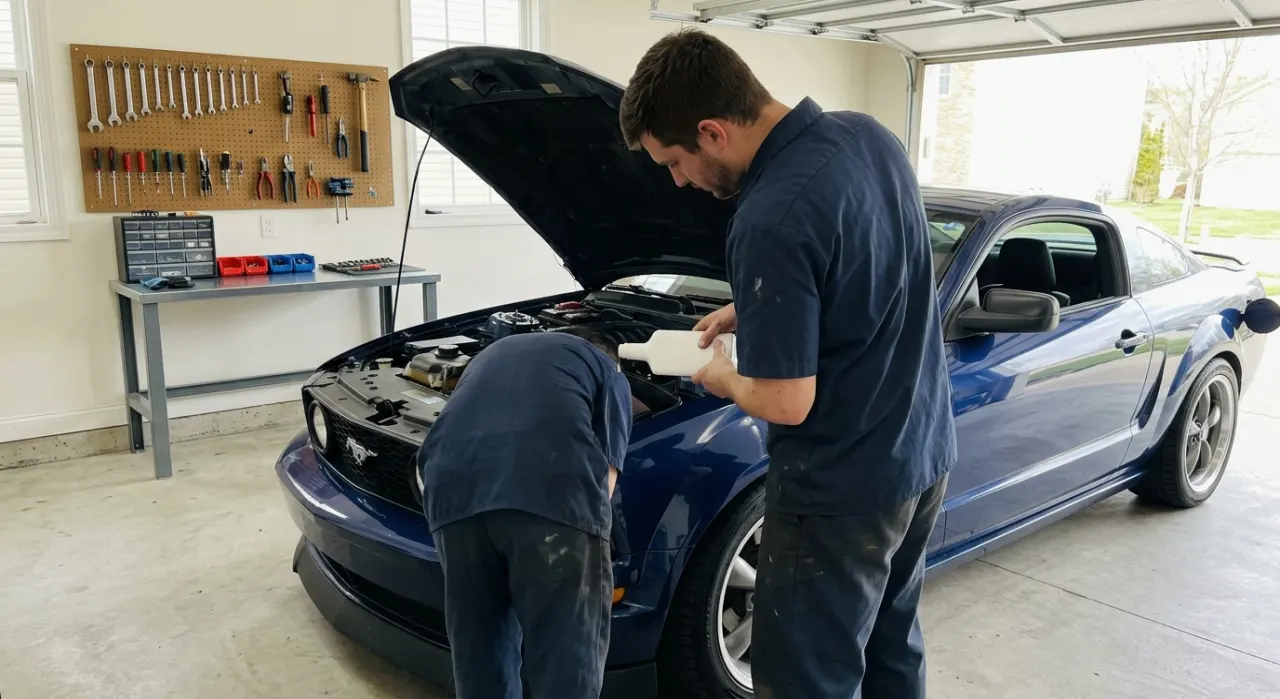
How We Rank
We do not run a lab and we have not measured coating loss on a stripped throttle body. We rank by aggregating owner ratings and review volume, then weighing four things. Formulation safety — whether the product explicitly states compatibility with coated throttle bores, plastics, sensors and catalytic converters, which is the deciding factor in this category. Reported cleaning effectiveness on real carbon rather than surface film. Applicator design, because reaching behind the plate matters more than raw solvent aggression. And value per can. We also rank two products here that are deliberately not throttle body cleaners, because using the wrong can — aggressive carb cleaner in a coated bore, throttle body cleaner on a MAF element — causes more damage in this job than dirt ever does. Prices were current at the time of writing.
The Verdict
Buy CRC 05078 and you cannot get the chemistry wrong: it is designed for coated throttle bores, safe around sensors and converters, and the straw reaches where the carbon is. WD-40 Specialist Carb/Throttle Body Cleaner is the same brief in a bigger can for less money and is rated just as highly. Reach for Berryman 0117C only on older uncoated hardware or an actual carburetor, add a can of MAF sensor cleaner so you are not tempted to use the wrong one, and if the throttle body was clean when you opened it up, your problem is behind the plate — which is where CRC GDI IVD and the induction-service conversation start.
Quick Comparison
CRC 05078 Throttle Body and Air-Intake Cleaner (12 wt oz)
Best for the safe default on any modern electronic throttle body
Best Value
WD-40 Specialist Carb/Throttle Body & Parts Cleaner (13.5 oz)
Check Price on Amazon
Best Premium
CRC 05319 GDI IVD Intake Valve and Turbo Cleaner (11 oz)
$18.49 · Check Price on Amazon
Best for Heavy Varnish
Berryman 0117C B-12 Chemtool Carburetor, Choke and Throttle Body Cleaner (16 oz)
Check Price on Amazon
Best Multi-Purpose
Sea Foam SS14 Spray Top Engine Cleaner (14 oz)
Check Price on Amazon
Best Companion Product
CRC 05110 Mass Air Flow Sensor Cleaner (11 wt oz)
Check Price on Amazon
Prices are pulled from Amazon and were accurate as of Aug 22, 2026, 6:54 PM EDT. Product prices and availability are subject to change — the live price is shown on Amazon.