
Affiliate Disclosure
Some links on this page are affiliate links. As an Amazon Associate, we earn from qualifying purchases — at no extra cost to you. We do not buy, test, or physically handle the products we cover; our rankings come from aggregated owner reviews, ratings and expert consensus. Commissions never change our verdicts. How we rank & full disclosure.
Short version: Modern headlights are made of polycarbonate plastic with a thin factory UV coating. Sunlight slowly destroys that coating, then attacks the bare plastic underneath — that's the yellow haze you see. Cheap hacks only polish the surface; they don't remove the damaged layer or replace the lost UV protection, which is exactly why they never last.
Before you spend a Saturday restoring your headlights, it's worth understanding what actually went wrong. Once you get the "why," every part of the fix — and every reason the internet hacks disappoint — suddenly makes sense. So let's pop the hood on the chemistry, quickly and painlessly.
Your headlights aren't glass anymore
If you drive anything built in the last thirty years or so, your headlight lens is plastic — specifically polycarbonate. Automakers moved away from glass for good reasons: polycarbonate is far lighter, cheaper to produce, safer in a collision because it doesn't shatter into shards, and flexible enough to mold into the sleek, wraparound shapes designers love. It was a genuine upgrade in almost every way.
The one catch is that raw polycarbonate hates ultraviolet light. Left unprotected, it yellows and goes brittle in the sun surprisingly fast. So every plastic headlight leaves the factory with a thin, clear, hard UV-protective coating sprayed over it. That coating is the real hero — and its slow death is the whole story of foggy headlights.
How UV breaks it down
Ultraviolet radiation from the sun carries enough energy to break chemical bonds. Day after day, year after year, it works on that clear factory coating — microscopically cracking, chalking and thinning it. This is why the top surfaces of a headlight (the ones aimed at the sky) almost always yellow first and worst.
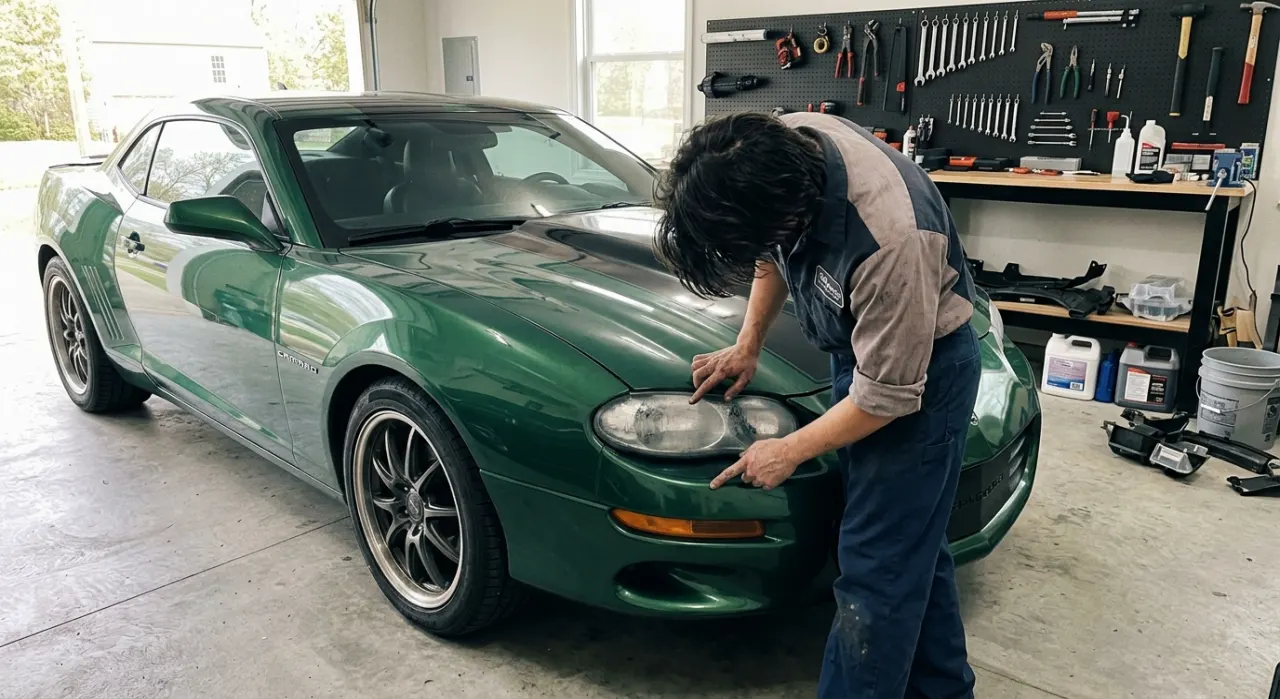
Once the coating is compromised, UV reaches the polycarbonate itself and starts oxidizing it. The plastic's surface molecules react with oxygen and sunlight, and the by-products are yellow and cloudy. That's the haze. It's not dirt sitting on top — it's the actual surface of the plastic that has chemically changed. This matters enormously, because you can't wash away a molecular change. You have to physically remove that damaged layer, which is exactly what a proper restoration does. We walk through that in the full step-by-step restoration guide.
What makes it happen faster
UV is the main culprit, but a few things speed the process along:
- Where you park. A car left outside all day in strong sun ages its headlights far quicker than one kept in a garage or under a carport.
- Heat. Headlights run hot, and the housing traps that heat against the lens. Heat accelerates the oxidation chemistry.
- Climate. High-UV regions — think desert states and high-altitude areas — punish plastic lenses. Coastal salt and industrial fallout add abrasive and chemical wear on top.
- Automatic car washes. Harsh brushes and strong chemicals can scuff and thin an already-weakened coating, opening the door to UV sooner.
None of these cause the fogging on their own — UV does — but they're why two identical cars can look completely different after five years depending on how and where they lived.
Why the cheap fixes don't last
Now the payoff. Understanding the cause tells you exactly why toothpaste, bug spray and "one weird trick" videos let people down.
Toothpaste works — briefly — because it's mildly abrasive. Rub it on and it scuffs the very top of the haze, making the lens look a little clearer for a day or two. But it barely scratches the surface of a deep, oxidized layer, and crucially it does nothing to replace the UV protection you're wearing away. So the bare plastic is left even more exposed, and it re-yellows fast. The verdict from countless owners who've tried it is predictable: does toothpaste really work?
The same logic applies to any polish-only quick fix. If it doesn't remove the full damaged layer and lay down fresh UV protection, it's a temporary cosmetic pass, not a repair. That's the entire argument for sealing after you restore — which we cover in sealing headlights so they stay clear.
The fix that respects the cause
A proper restoration treats the actual problem in the right order. You sand away the oxidized plastic entirely, polish the fresh surface back to optical clarity, and then apply a new UV coating to replace the factory one that died. Cause, then cure. Because you've dealt with the real chemistry — removed the damage and restored the protection — the result lasts.
If you're wondering whether it's cheaper to restore or just replace a badly-gone lens, we ran the numbers in DIY vs pro cost. For most cars, restoration wins comfortably — as long as you don't skip the seal.
Can you slow it down?
You can't stop UV, but you can buy your lenses years. Park in shade or a garage whenever you can. Keep a coat of protection on them — waxing your headlights when you wax the car, or applying a proper UV sealant, adds a sacrificial barrier that takes the hit instead of the coating. And clean them gently; skip the abrasive scrubbing that thins the coating prematurely.
Think of it like sunscreen for your car's face. The factory applied one coat at the dealership and never reapplied. Do that yourself once or twice a year and your headlights stay clear far longer than the car next to you.
So that's the fog, explained: plastic lenses, a factory sunscreen that wears out, and UV doing its patient damage underneath. Understand that, and the right fix — remove the damage, replace the protection — is obvious. Everything else is just delaying the inevitable re-yellow.
Recommended Products
Best for a complete, long-lasting result
- 3-stage sand, clarify & seal
- UV sealing wipe included
- Does both headlights
- Proven lasting results
Why buy it: the only common kit with a proper UV seal step — so the clarity actually lasts instead of fogging back over in weeks.

Best for fast drill-powered results
- Uses your drill for speed
- Sanding discs + compound
- Very even finish
Why buy it: the fastest, most even clear-up if you own a drill.
Best for the most durable protection against re-yellowing
- Ceramic coating finish
- Wipe-on, no sanding on light haze
- Strong UV durability
Why buy it: a ceramic top-coat that resists re-yellowing longer than most — the UV protection that stops the fog coming straight back.

Best for badly yellowed, oxidized lenses
- Aggressive cut for bad haze
- Multiple sanding grits
- Trusted brand
Why buy it: the extra cut you need for the worst, most oxidized headlights.
Prices are pulled from Amazon and were accurate as of Aug 22, 2026, 6:54 PM EDT. Product prices and availability are subject to change — the live price is shown on Amazon.