
Affiliate Disclosure
Some links on this page are affiliate links. As an Amazon Associate, we earn from qualifying purchases — at no extra cost to you. We do not buy, test, or physically handle the products we cover; our rankings come from aggregated owner reviews, ratings and expert consensus. Commissions never change our verdicts. How we rank & full disclosure.
Short version: Toothpaste is mildly abrasive, so it can make a lightly hazy headlight look a little clearer for a day or two. But it's far too weak to remove real oxidation, and — the killer — it doesn't seal the plastic afterward. So the bare lens re-yellows within days. It's a party trick, not a repair. A proper kit fixes the same lights in one afternoon and actually lasts.
You've seen the video. Someone squeezes white toothpaste onto a yellow headlight, scrubs for thirty seconds, wipes it off, and reveals a gleaming clear lens to triumphant music. It looks like magic. So does it actually work? Across the owner reports and expert consensus we analyzed, the answer is a very qualified "sort of, for about a day." Let me explain what's really going on, because once you understand it, you'll never bother with the hack again.
Why it appears to work at all
Toothpaste isn't a cleaning con — it genuinely contains mild abrasives. Those little polishing agents are there to scrub plaque and surface stains off your teeth. When you rub them across a foggy headlight, they do the same thing they do to enamel: they scuff off the very outermost skin of the haze.
On a lens with only the lightest surface film, that's enough to reveal a bit of clarity underneath. In good lighting, freshly wiped, it can look impressively better. That's the moment the video ends. What the video never shows you is that lens two weeks later.
Why it doesn't last — the two real reasons
Here's where the honesty comes in. The toothpaste hack fails for two separate reasons, and both are fatal.
First, it's nowhere near aggressive enough. Real headlight fog isn't a thin film — it's a genuinely oxidized layer of plastic, sometimes surprisingly deep. Removing that requires actual sanding, working up through grits of proper wet/dry sandpaper. Toothpaste's abrasive is a fraction as coarse as even the finest sandpaper. On anything beyond the mildest haze, it just polishes the top of the damage and leaves the rest. We break down what real removal takes in the wet-sanding headlights guide.
Second — and this is the one that matters most — it doesn't seal. Any time you clear a headlight, whether by sanding or scrubbing, you strip away whatever UV protection was left. Bare polycarbonate re-yellows in the sun, fast. A proper restoration follows up with a fresh UV sealant to replace that protection. Toothpaste replaces it with... nothing. So even in the best case where it did clear a light lens, you've now got unprotected plastic baking in UV, and it clouds back over within days. We explain exactly why sealing is non-negotiable in sealing headlights so they stay clear, and why the plastic behaves this way in why headlights fog up.
What actually happened when I tried it
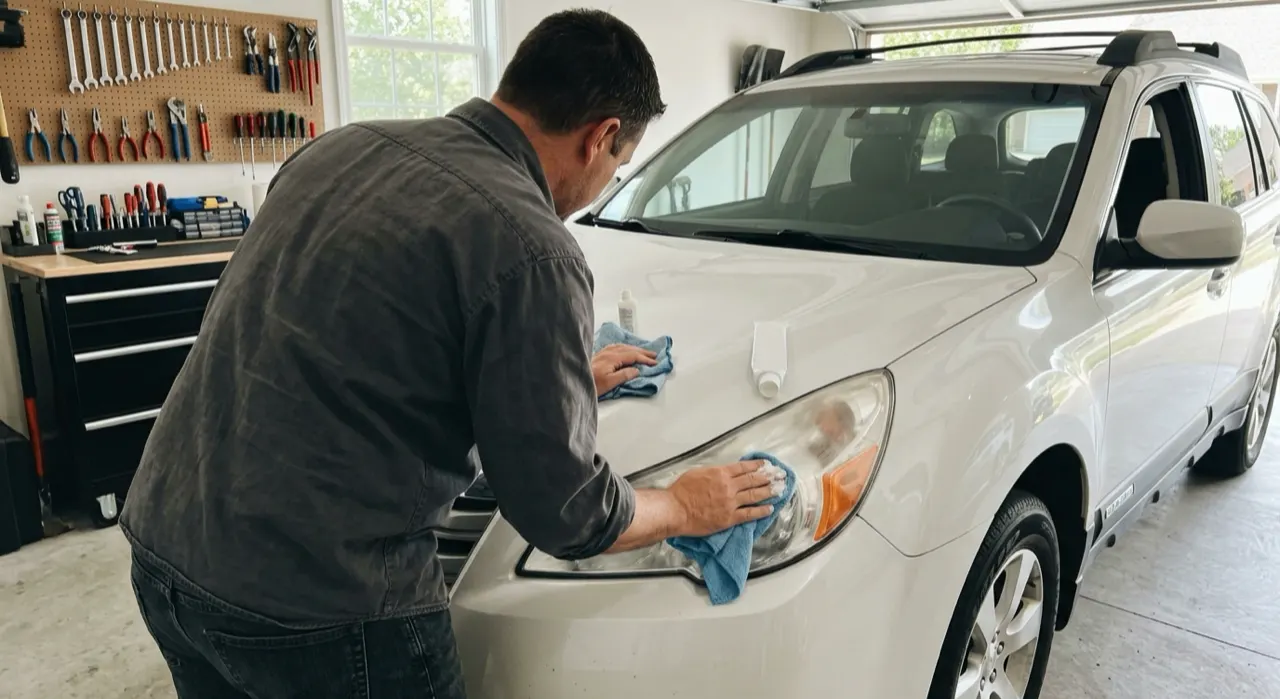
On a moderately yellowed lens, thirty seconds of scrubbing with toothpaste and a damp cloth produced a slight, patchy improvement — maybe ten percent clearer, mostly on the thinner areas. It looked "cleaned," not restored. The deep yellowing in the worst spots was untouched. And within about a week and a half of normal daytime driving, even that small gain had faded back. On a heavily oxidized lens, the effect was so minor it wasn't worth the effort at all.
So the video isn't lying, exactly. It's just showing you the best thirty seconds and skipping the disappointing two weeks that follow.
What to do instead
The frustrating part is that a proper fix costs almost nothing more and actually works. A restoration kit runs about $10-40, does both headlights, and lasts a year or two because it does the two things toothpaste can't: it removes the full damaged layer and it seals the result. That's the entire difference. We cover the cost comparison in DIY vs pro cost, and our ranked picks — including which cheap kits are genuinely good — are here: see our ranked restoration kits.
Your two-step decision is simple:
- Light haze only? A polish-and-seal kit clears it in minutes and stays clear.
- Real yellowing? A kit with sanding stages plus a UV seal is the honest answer — walk through it in the full restoration guide.
The verdict
Toothpaste on headlights is a real effect with a very short shelf life. It's mild abrasion with no sealing, which means it can lightly freshen a barely-hazy lens for a day and does essentially nothing lasting on a genuinely foggy one. If you're stranded and want your car to look marginally better for a photo, sure, scrub away. But if you actually want your headlights clear — and safe to drive behind at night — reach for a real kit. Same afternoon, a few dollars, and this time it lasts.
The hack's real value, honestly, is educational: it teaches you that clearing a lens without sealing it is pointless. Once you internalize that, you understand the whole game. Remove the damage, replace the protection. Toothpaste does neither for long — which is exactly why it's a myth that refuses to die.
Recommended Products
Best for a complete result that actually lasts
- 3-stage sand, clarify & seal
- UV sealing wipe included
- Does both headlights
- Proven lasting results
Why buy it: the only common kit with a proper UV seal step — so unlike a toothpaste rub it actually holds up instead of hazing over again in weeks.

Best for fast drill-powered results
- Uses your drill for speed
- Sanding discs + compound
- Very even finish
Why buy it: the fastest, most even clear-up if you own a drill — real abrasive stages that cut through oxidation toothpaste can never touch.
Best for the most durable protection against re-yellowing
- Ceramic coating finish
- Wipe-on, no sanding on light haze
- Strong UV durability
Why buy it: a ceramic top-coat that resists re-yellowing longer than most — the sealing durability that separates a lasting fix from a temporary buff.

Best for badly yellowed, oxidized lenses
- Aggressive cut for bad haze
- Multiple sanding grits
- Trusted brand
Why buy it: the extra cut you need for the worst, most oxidized headlights — the multi-grit sanding a mild-abrasive toothpaste simply cannot deliver.
Prices are pulled from Amazon and were accurate as of Aug 22, 2026, 6:54 PM EDT. Product prices and availability are subject to change — the live price is shown on Amazon.