
Affiliate Disclosure
Some links on this page are affiliate links. As an Amazon Associate, we earn from qualifying purchases — at no extra cost to you. We do not buy, test, or physically handle the products we cover; our rankings come from aggregated owner reviews, ratings and expert consensus. Commissions never change our verdicts. How we rank & full disclosure.
Short version: before you buy any headlight, fog or high-beam bulb, you need one piece of information — your exact bulb size. Bulbs come in fixed, standardized codes (H11, 9005/HB3, 9006/HB4, H7, H4/9003 and more) that are not interchangeable, and ordering the wrong one is the number-one reason lighting purchases get returned. Find yours three ways: read it off your current bulb, check the owner’s manual, or use a retailer’s fitment lookup. Many cars use different sizes for low beam, high beam and fog — so check each. This is the reference page the rest of our lighting hub links back to, because getting the size right is step one for everything.
Three ways to find your bulb size
Use at least two of these and cross-check them:
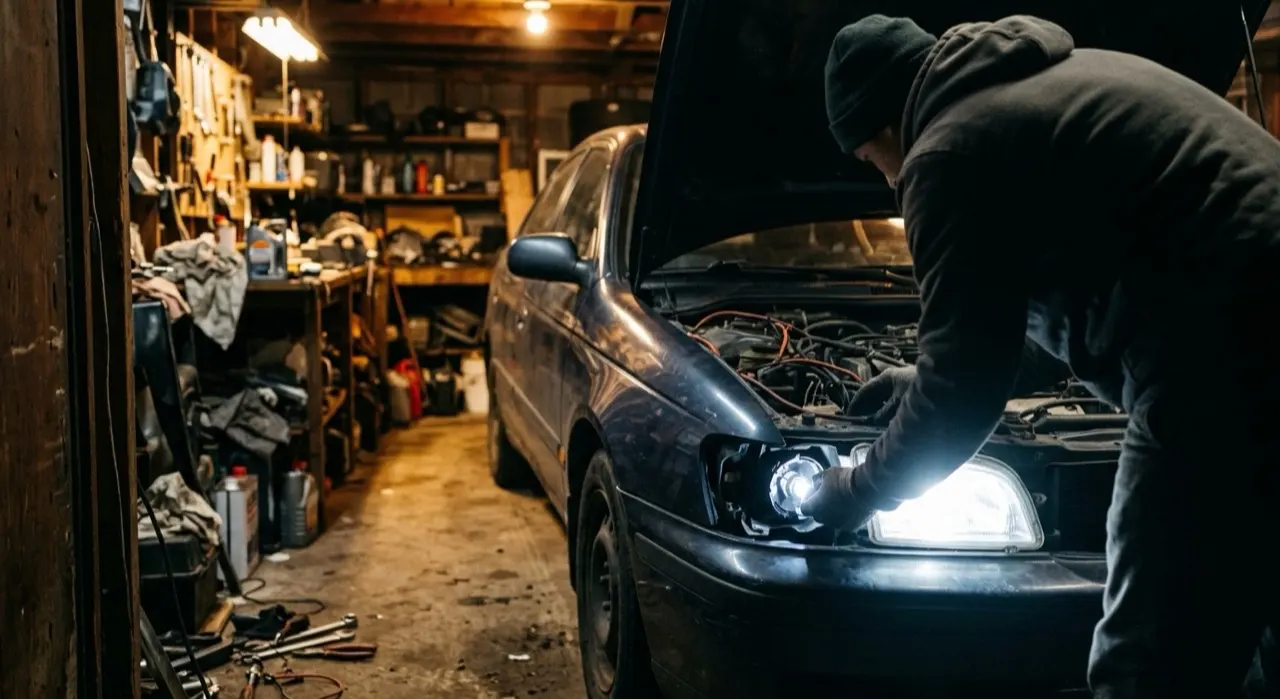
- Read your current bulb (easiest and most reliable). Open the hood, unplug the connector, twist out the bulb, and read the code molded into its base — it will say H11, 9005, H7 or similar. This is the ground truth, because it is literally what is fitted.
- Check the owner’s manual. The maintenance or bulb-replacement section lists sizes for low beam, high beam and fog. Handy when you cannot easily reach the bulb.
- Use a fitment lookup. Any bulb retailer’s site lets you enter your year, make, model and trim to return the correct sizes. Great for cross-checking, but trim and year variations exist, so confirm against the physical bulb when you can.
The one thing not to do is assume — bulb sizes vary even between trims of the same model.
What the size codes mean
The codes look cryptic but follow patterns. A few of the most common on US vehicles:
- H11 — an extremely common single-beam low-beam and fog size.
- 9005 (HB3) — a common single-beam high-beam size; often paired with H11 lows.
- 9006 (HB4) — a common single-beam low-beam and fog size on many vehicles.
- H7 — a single-beam size common on European cars.
- H4 / 9003 (HB2) — a dual-filament bulb handling both low and high beam in one.
- 9007 / H13 — dual-filament sizes used where one bulb does both beams.
- H8 / H10 (9145) / H16 — frequently fog-light sizes.
The "H" and number combinations denote a specific base shape and connector. When a size has two names (9005 = HB3, 9006 = HB4, H4 = 9003 = HB2), they are the same bulb — retailers use them interchangeably.
Why low, high and fog beams can all differ
This is where most mistakes happen. Depending on your headlight design, your car may use:
- One dual-filament bulb (H4/9003, 9007, H13) that produces both low and high beam.
- Two separate single-beam bulbs — very commonly H11 for low beam and 9005 for high beam.
- A third, separate size for the fog lights — often H11, H10, 9006 or H8, and not necessarily matching either headlight size.
So "what bulb does my car take?" often has three answers. If you are upgrading everything, you may buy a pair of H11, a pair of 9005, and a pair of fog bulbs in yet another size. Check each socket individually — never assume they match.
Common size mistakes to avoid
The big one is assuming one size covers the whole car — check low, high and fog separately. Second is trusting a single source without cross-checking; a fitment tool can be wrong for your specific trim, so confirm against the physical bulb. Third is ordering your headlight size for the fog lights, which are frequently different. Fourth is ignoring dual-name codes and thinking 9005 and HB3 are different bulbs — they are the same. And fifth is buying before checking at all, which is exactly the return that this whole page exists to prevent. Two minutes with your old bulb saves a wasted order.
Bulb Cross-Reference Charts and Finder Tools
If you cannot reach the bulb, a manufacturer size chart or online finder is the next best reference. Brands like Sylvania publish a bulb finder and a printable cross-reference chart: enter your year, make and model and it returns the correct sizes for low beam, high beam and fog. Retailer fitment tools work the same way. Many also link short installation videos and step-by-step guides that show exactly which bulb fits each socket on your car. Treat these as a cross-check, not gospel — trim and year variations exist — but a reputable chart plus the code on your old bulb together will confirm the size with confidence and help you avoid a wrong order.
Matching the Right Bulb Number to Your Model
The number stamped on the bulb (H11, 9005, 9006) is the definitive answer for your exact model — match that number and you have the right bulb, whatever a chart suggests.
Turn Signal and Other Replacement Light Bulbs
Your headlights are not the only bulbs on the car. Turn signal, brake, reverse and interior light bulbs use their own separate numbering system (typically three- or four-digit codes like 7440, 3157 or 194), completely different from the headlight H-and-number codes. If you are doing a full replacement refresh, find each one the same way — read the old bulb, check the manual, or use a fitment lookup — and confirm the exact number before ordering. The installation is usually even simpler than a headlight swap. Just do not assume a turn signal or reverse light shares a size with anything else; each socket has its own correct bulb.
Sealed-Beam Headlight Sizes: Getting the Correct Inch Fit
Older and classic vehicles often use round or rectangular sealed-beam headlights measured in inches rather than an H-code — the common ones are the 7-inch round, the 5.75-inch round, and 4x6-inch or 165x100mm rectangular units. Here the whole lamp is the bulb, so the correct size is a physical dimension: measure the opening or read the model number on the lens rim. Many classic owners now fit LED sealed-beam replacements in the same inch sizes for a brighter light that still bolts straight in. If your car predates replaceable H-code bulbs, work in inches and confirm the shape fits your bucket before buying.
You have your size — now what?
With your exact size confirmed for each socket, you are ready to choose bulbs. Decide between an LED conversion and a halogen upgrade in LED vs halogen headlights, then pick a product from best LED headlight bulbs or the full best headlight bulbs ranking. Upgrading the fog lights too? See best LED fog lights. If you are going LED, read are LED headlight bulbs legal first. And when your bulbs arrive, how to replace a headlight bulb walks through the 15-minute swap. It all ties back to the automotive lighting hub.
Recommended Products
Best for the common 9005 high-beam size, plug-and-play
- 1:1 mini size fits most housings
- 6500K cool white, sharp beam
- Plug-and-play, no adapter for most cars
- Aviation-grade cooling fan
Why buy it: once you have confirmed a 9005 socket, the LED conversion owners rank highest — a clean brightness jump in a compact body, in the popular high-beam size.
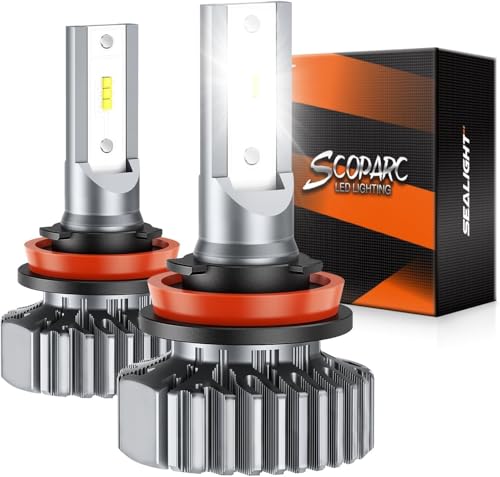
Best for the ubiquitous H11 low-beam and fog size
- Non-polarity — plugs in either way
- Cooling fan, compact heatsink
- 6000K white output
- Simple 5-minute install
Why buy it: the value pick in the H11 size so many cars run for low beam — genuinely bright, forgiving to install, and cheap enough to light several sockets.

Best for the separate fog size your headlights may not share
- CSP LED chips, 6500K cool white
- Non-polarity — plugs in either way
- Compact body fits fog housings
- Plug-and-play, no adapter for most
Why buy it: because fog lights are almost always a third, separate size — a clean white beam in a compact body that fits tight fog housings, once you have confirmed the fog code.

Best for a guaranteed-legal drop-in when you would rather not go LED
- Guaranteed street-legal, DOT-compliant
- Whiter light than standard halogen
- Tri-band coating, brighter down-road
- Direct drop-in replacement
Why buy it: the safe halogen upgrade with zero legality worries — a real brightness gain in the 9005 size, a true DOT bulb rather than an off-road LED.