
Affiliate Disclosure
Some links on this page are affiliate links. As an Amazon Associate, we earn from qualifying purchases — at no extra cost to you. We do not buy, test, or physically handle the products we cover; our rankings come from aggregated owner reviews, ratings and expert consensus. Commissions never change our verdicts. How we rank & full disclosure.
Short version: LED headlight bulbs are dramatically brighter, whiter and longer-lasting than halogen — but they are only DOT-approved for fog use, work best in projector housings, and can glare other drivers in reflector housings. Halogen upgrade bulbs are dimmer and burn out faster, but they are guaranteed street-legal, drop straight in, and never raise a glare or inspection concern. If you want the biggest improvement and accept the caveats, go LED. If you want zero hassle and unquestionable legality, buy a premium halogen. Here is the honest, category-by-category comparison — not the marketing version.
Both are just replacement bulbs for the same sockets, so this is not about rewiring your car — it is about which light source to drop in. Let us break down the real trade-offs.
Brightness and color
LED wins, clearly. A good LED conversion produces far more light and a clean white color (typically 6000K) versus a halogen’s warmer, yellowish ~3200K. Owners consistently describe the difference as night-and-day. But brightness only helps if the beam is focused correctly — a bright light scattered everywhere lights the road no better and blinds oncoming drivers. Ignore the "30,000 lumen" box claims entirely; a pair of physical bulbs cannot produce those numbers, and usable down-road light is what actually matters. Premium halogens (SYLVANIA SilverStar, Philips X-tremeVision) narrow the gap somewhat with whiter, brighter output, but they cannot match a well-focused LED.
Lifespan
LED wins by a wide margin. Halogen bulbs last roughly one to two years, and high-output halogens often less — the brighter the filament, the shorter its life. LEDs have no filament and commonly last many years; their weak point is the fan or driver electronics. Over a car’s life, one set of quality LEDs can outlast several sets of halogens, which partly offsets the higher upfront price. For a lot of owners, the real appeal is simply never swapping a dead bulb on a cold night again.
Legality and glare — the honest part
This is where halogen wins. Premium halogen upgrade bulbs are DOT-compliant and unquestionably street-legal. Aftermarket LED conversion bulbs are not DOT-approved for headlight use — they are sold "for off-road use only," and running them in a halogen reflector housing can scatter light and glare oncoming drivers, which is both antisocial and, in some states, an inspection or enforcement issue. In a projector housing, LEDs focus far better and the concern largely evaporates in practice. Enforcement varies widely by state. We cover the full picture in are LED headlight bulbs legal — it is worth reading before you decide.
Cost and installation
It is a wash on installation and a modest gap on price. Both are the same easy 15-minute bulb swap in the correct size. Halogens are cheaper upfront — a premium pair runs $20–$45, a basic pair under $15 — while LED conversions typically run $30–$100 a pair. Factor in lifespan and the lifetime cost narrows, since one LED set outlasts several halogen sets. Neither requires rewiring for most cars, though some newer vehicles need a CANbus-ready LED or a decoder to avoid a dashboard "bulb out" warning.
The deciding factor: your housing type
More than anything, your housing type should drive the choice. If your car has projector housings (a lens over a bowl), LEDs focus cleanly, glare is minimal, and the upgrade is genuinely excellent — go LED. If your car has reflector housings (mirrored surfaces around the bulb, no lens) and you value guaranteed legality and zero glare complaints, a premium halogen delivers a real improvement with none of the caveats. You can tell them apart by looking: a projector has a distinct round lens, a reflector shows faceted mirror surfaces. And whatever you fit, clear lenses matter — cloudy, yellowed housings scatter light and undo the upgrade, so restore them first via the headlight restoration hub.
How LED and Halogen Bulbs Emit Light
The two bulbs make light in completely different ways, and that explains every trade-off. A halogen bulb runs current through a thin tungsten filament sealed inside a gas-filled capsule until it glows white-hot and emits light — simple, cheap, the same principle as an old house bulb. An LED instead emits light from a semiconductor chip, with no filament to burn out and far less heat. Because LEDs turn more of their watts into light rather than heat, they draw less power for more brightness, while the halogen wastes much of its energy as warmth. That single difference drives the gaps in lifespan, efficiency and running temperature covered above.
LED vs Halogen Headlights: Pros and Cons at a Glance
If you want the short chart before the detail, here are the honest pros and cons. LED headlights offer far more brightness, a clean white color, and a lifespan measured in years — but they are only DOT-approved for fog, can glare in reflector housings, and cost more. Halogen lights offer guaranteed legality, a true drop-in fit, and the lowest price — but they are dimmer, warmer in color, and burn out in a year or two. Ignore the inflated lumens claims on LED boxes; usable down-road light, not the number, is what separates a good set from a bad one.
What About HID (Xenon) Headlight Kits?
LED and halogen are not the only choices — HIDs (high-intensity discharge, also called xenon) are a third path. HID headlights offer very bright, white light from an arc struck between two electrodes, brighter than halogen and close to LED, and some owners switch to an HID kit for the look. The catches mirror the LED story: retrofit HID kits are not DOT-approved in halogen reflector housings, they glare badly there, and they add a ballast and a warm-up delay. For anybody choosing today, a quality LED in a projector housing would usually be the simpler bright-white upgrade over a retrofit HID.
The honest verdict
There is no universal winner — there is the right choice for your car. Choose LED if you want maximum brightness and lifespan, have projector housings, and are comfortable with the off-road labeling. Choose a premium halogen if you want a real, guaranteed-legal improvement with zero glare or inspection worry, especially with older reflector housings. Ready to pick a product? See best LED headlight bulbs or the full best headlight bulbs ranking, confirm your fitment in the size guide, and head back to the automotive lighting hub for the rest.
Recommended Products
Here are the bulbs owners rate highest on each side — the LED conversions worth fitting in a projector housing, and the guaranteed-legal premium halogens for reflector housings. Always confirm your bulb size first. We rank on aggregated owner ratings and reviews, not first-hand testing.
Best for the brightness-and-lifespan upgrade, best in projector housings
- Far brighter, clean 6000K white output
- Plug-and-play in the 9005/HB3 socket
- Years-long lifespan versus a halogen year or two
- Focuses cleanly in projector housings
Why buy it: the standout LED for most cars — the night-and-day brightness owners rave about, best paired with projector housings where the beam stays controlled and legal-grey worries fade.
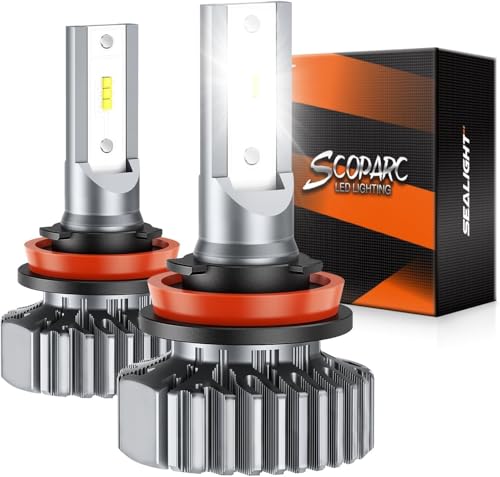
Best for a low-cost LED jump in the common H11 size
- Bright white output at a budget price
- Fits the widespread H11/H8/H9 socket
- Simple plug-and-play install
- Big improvement over tired halogens
Why buy it: the affordable way into LED — most of the brightness gain for the least money, ideal if your housings are projectors.
Best for buyers who want a focused, responsibly-aimed LED beam
- Engineered beam pattern for controlled output
- Reputable brand with real optical design
- Runs cooler and lasts for years
- Less glare-prone than cheap high-lumen bulbs
Why buy it: the enthusiast LED — you pay for a genuinely engineered beam rather than an inflated lumen claim, which is exactly what keeps light on the road and out of oncoming eyes.

Best for guaranteed-legal, zero-hassle brightness in reflector housings
- DOT-compliant and unquestionably street-legal
- Whiter, brighter than a basic halogen
- True drop-in fit, no glare or inspection worry
- The safe pick for older reflector housings
Why buy it: the no-caveats upgrade — a real improvement in brightness and color with none of the off-road labeling or glare concerns that follow an LED into a reflector housing.
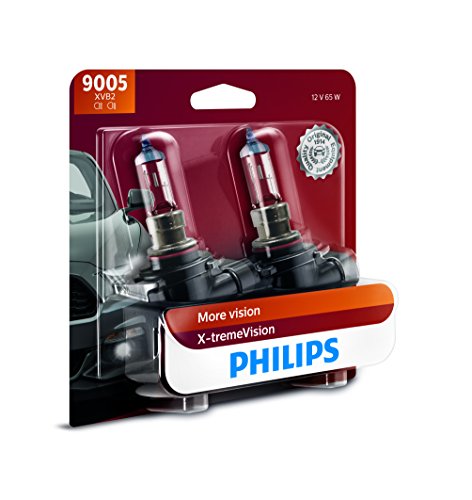
Best for maximum legal halogen output without going LED
- Among the brightest street-legal halogens
- Whiter beam than standard halogen
- Straight drop-in replacement
- No CANbus or decoder needed
Why buy it: the halogen for people who want every legal lumen — it narrows the gap to LED while staying fully DOT-compliant and glare-free.
Best for a cheap, legal brightness bump over worn bulbs
- More down-road light than basic halogens
- Fully street-legal, drop-in fit
- Inexpensive and widely stocked
- No glare or inspection concerns
Why buy it: the budget-legal choice — a noticeable step up from dead stock bulbs for very little money, and never a glare or legality worry.