
Affiliate Disclosure
Some links on this page are affiliate links. As an Amazon Associate, we earn from qualifying purchases — at no extra cost to you. We do not buy, test, or physically handle the products we cover; our rankings come from aggregated owner reviews, ratings and expert consensus. Commissions never change our verdicts. How we rank & full disclosure.
Walk into any quick-lube chain and you'll hand over $80–$180 for an oil change depending on your car and zip code. Do that four times a year and that's up to $720 before you've touched a bolt. That makes people curious about DIY — and the question that stops most of them is: how many changes does it take before the tools pay for themselves? This page works through every number. It's part of our DIY oil change hub.
What You Actually Pay at the Shop
Quick-lube chain: $60–$120 for full synthetic (the $49 specials are conventional with a bargain filter). Dealership: $90–$180, with large-capacity Euro brands hitting $150–$200. Independent mechanic: $70–$130 — often the best-value shop job. None of these cover your waiting-room time, the upsells, or any certainty about which oil went in.
Where the Shop Quietly Adds Cost
The sticker price is rarely the final number. Quick-lube chains run on upsells: the "recommended" air filter at triple its parts price, an engine flush you probably don't need, a cabin filter marked up hard, wiper blades waved at you across the counter. Say yes to two of those and an $80 change quietly becomes $140. There's also the oil-grade shell game — the advertised special is almost always a conventional oil and a bargain filter, and stepping up to the full synthetic your car actually calls for is billed as an upgrade. Then there's the cost that never shows on the invoice: certainty. You rarely get to confirm which oil, which filter brand, and what torque went onto your drain plug. Do it yourself and every one of those line items is either free or a decision you control — you match the exact grade from our oil grade guide instead of trusting whatever came out of the bulk drum.
The DIY Parts Cost Breakdown
Every change has three consumable costs: oil (4–6 qt of quality full-synthetic, $28–$65), a filter (a quality Mann/Bosch/Ryco unit, $12–$28 — avoid the $6 house brands), and a crush washer ($1–$3, or ~$8 for a ten-pack).
| Item | Low | Mid | High |
|---|---|---|---|
| Engine oil (4–6 qt) | $28 | $42 | $65 |
| Oil filter | $12 | $18 | $28 |
| Crush washer | $1 | $2 | $3 |
| Consumables total | $41 | $62 | $96 |
$62 is a realistic mid-range for a mainstream Japanese or Korean car on full synthetic. European cars with 7–8 qt sumps and spec-grade oils sit closer to $90–$110 in parts — but the equivalent dealer job is $180–$220, so the saving holds.
One-Time Tool Cost (and How Fast It Amortizes)
| Tool | Cost |
|---|---|
| Jack + axle stands (or ramps) | $30–$140 |
| Drain pan (8 qt+, sealable) | $15–$25 |
| Oil filter wrench | $10–$25 |
| Drain plug socket | $8–$15 |
| Torque wrench | $30–$60 |
| Gloves, rags & funnel | $13–$22 |
| One-time total | $156–$287 (~$220 mid) |
Full tool detail is in the tools you need guide, and ranked starter bundles are in our tool bundle comparison.
The Break-Even Math
Realistic mid-range numbers: shop $110/change, DIY consumables $62 — a $48 saving per change, against a $220 tool investment. Break-even: $220 ÷ $48 = 4.6 changes — round to 5. At three changes a year you break even in under two years, and every change after saves $48 cash. Over five years (15 changes): shop $1,650 vs DIY $1,150 ($220 tools + 15×$62) = ~$500 saved, climbing above $800 against a dealer.
Oil Disposal: Cheaper and Easier Than You Think
The one running cost people forget to budget is getting rid of the old oil — and the good news is it's usually free. Most auto parts stores and municipal recycling centers across the US accept used motor oil at no charge, and many take the old filter too once you've drained it overnight. Pour the drained oil into a sealable container — the empty jug your fresh oil came in is perfect — keep it clean of coolant, brake fluid or solvents (mixing them makes the whole lot non-recyclable), and drop it off on your next errand run. Budget essentially nothing for disposal beyond the sealable drain pan already counted in the tool total above. Never tip it down a drain or into the trash: a single oil change can foul an enormous volume of water, it's illegal in most places, and it throws away a resource that gets cleaned and re-refined. Factor this in and the DIY column still wins comfortably, because the shop's disposal fee is quietly baked into your bill.
Time, Effort and the Non-Obvious Wins
Your first change takes 45–60 minutes; by the third it's 25–30 including clean-up — often less than a round trip and wait at a quick-lube. The effort is genuinely low: loosen, drain, swap filter, tighten, fill, check. Beyond the money, the non-obvious wins matter: you control exactly which oil and filter go in (crucial for turbos and Euro-spec engines), you catch problems early (a weeping boot, a soft hose, a rocker-cover seep) four times a year, you know the service history precisely, and you build mechanical confidence on the lowest-stakes job on the car.
The First-Timer Reality Check
If you've never done it, here's the honest picture: your first change will feel slow and slightly nerve-racking, and that's completely normal. The two mistakes that actually cost money are both easy to avoid. Overtightening the drain plug strips the soft aluminum oil pan thread — an expensive repair — so use the torque wrench and the figure in your manual rather than gorilla-gripping it. A badly seated filter gasket weeps oil everywhere; wipe the mating surface clean, smear a film of fresh oil on the new seal, and go hand-tight plus the fraction of a turn marked on the filter. Get those two right and the rest is just pouring and checking. Confirm the level properly afterwards with our checking and topping up oil guide, note the odometer reading and keep the receipts, and you've built a service record more detailed than any dealer stamp. By the third change the nerves are gone and you're beating the quick-lube on time as well as cost.
When the Shop Makes More Sense
Being straight: pay a shop if you rent with no suitable outdoor space and drain access; if your car is under a warranty that requires dealer-stamped logs (confirm first); if you're genuinely time-poor during a busy stretch; or if your car has a complex full-length skid plate that adds real effort. No judgment.
The Bottom Line
If you change your oil three times a year and currently pay a shop $110, you break even on the tools in under two years — and everything after is money in your pocket, plus eyes under your car and certainty about what went in. The barrier is mostly psychological. Start with the right gear via the tools guide, and nail the schedule with our oil change intervals page.
Recommended Products
The picks below are affiliate links — buy through them and we may earn a small commission at no extra cost to you. We rank on aggregated owner reviews, not first-hand testing, and it never changes our verdicts. These are the DIY-side consumables and one-time tools the math above is built on.

Best for the biggest per-change consumable
- Full synthetic, long drain interval
- Buy the exact grade your car calls for
- The core of the DIY cost saving
Why buy it: the DIY side starts here — you pick the exact oil that goes in, not whatever came out of the shop’s bulk drum.
Best for a quality filter, not a $6 house brand
- High-efficiency synthetic media
- Matched to your engine by part number
- Cheap insurance vs a bargain filter
Why buy it: the second consumable — a proper filter for a few dollars, chosen by you rather than upsold at the counter.
Best for not stripping the drain plug
- Accurate click at target torque
- Prevents the costly stripped oil-pan thread
- A one-time tool that lasts years
Why buy it: the tool that stops the one DIY mistake that actually costs money — over-torquing the drain plug.

Best for safe access under the car
- Ratcheting 3-ton pair
- Wide base + locking pawl
- Reusable across every job
Why buy it: never work under a car on a jack alone — cheap stands make the whole DIY approach safe.
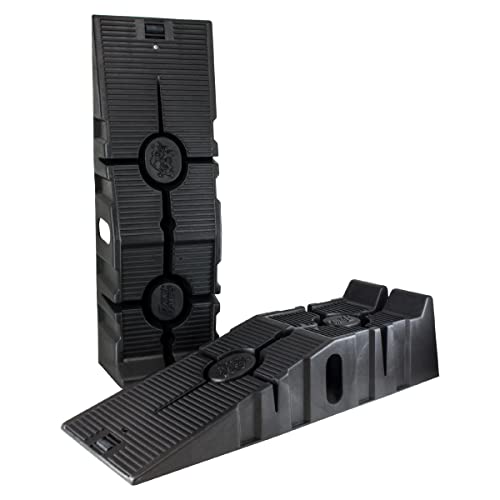
Best for the fastest access for oil changes
- Drive up in seconds
- No jack step for a standard-height car
- The simplest lift for a quick service
Why buy it: the fastest way under a normal-clearance car for an oil change — drive up, chock, done.
Prices are pulled from Amazon and were accurate as of Aug 22, 2026, 6:54 PM EDT. Product prices and availability are subject to change — the live price is shown on Amazon.