
Affiliate Disclosure
Some links on this page are affiliate links. As an Amazon Associate, we earn from qualifying purchases — at no extra cost to you. We do not buy, test, or physically handle the products we cover; our rankings come from aggregated owner reviews, ratings and expert consensus. Commissions never change our verdicts. How we rank & full disclosure.
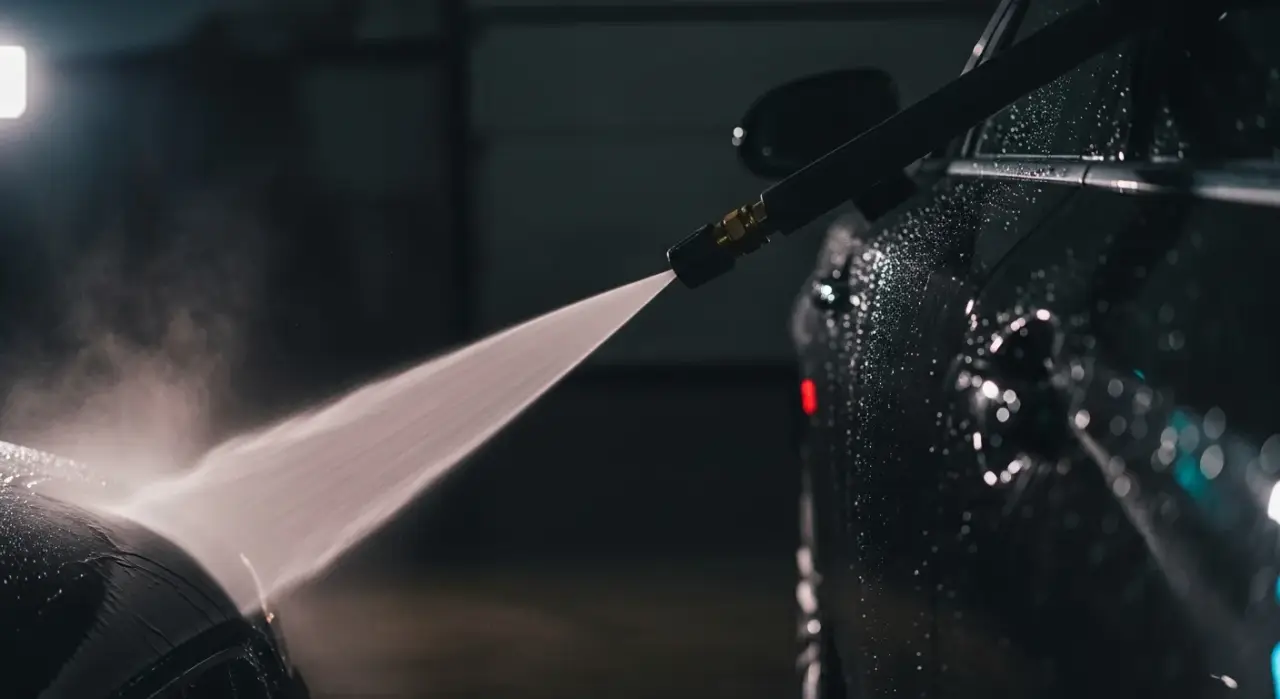
Short version: Pressure washers don't damage cars — bad habits do. The big mistakes are using a narrow nozzle on paint, spraying too close, driving water into seals, trim and door gaps, blasting chipped or peeling paint, and going straight at badges, emblems and vinyl. Fix those five things — wide nozzle, distance, spray along panels — and a pressure washer is one of the safest tools in your kit.
I've watched people undo a careful wash in seconds with one careless move, and it's almost always the same handful of errors. The frustrating part is that every one of them is free to avoid — it's technique, not equipment. Let me walk through the mistakes I see most and exactly how to wash safely instead. If you're new to all this, the full pressure washer guide covers choosing and using a machine from scratch.
Mistake 1: Using the wrong nozzle
This is the big one. Reaching for a narrow tip — especially the red 0-degree jet or the yellow 15-degree — because it "cleans better" is how paint gets stripped and trim gets gouged. Those tips concentrate all the machine's force into a pinpoint meant for concrete, not clear coat.
Do this instead: Use the white 40-degree wide-fan nozzle on all paint. Green 25-degree only for wheels and heavy lower-body grime, with distance. Never yellow, red or a turbo nozzle anywhere near the car. This single habit prevents most pressure-washer damage. I break down every tip in pressure washer nozzles explained.
Mistake 2: Spraying too close
Pressure at the surface climbs fast as you close the gap. Jam the wand an inch from a panel and even a wide nozzle concentrates enough force to lift failing paint or exploit a chipped edge. People do this chasing a stubborn spot, not realizing they've multiplied the force.
Do this instead: Start 18 to 24 inches back and only ease closer if a specific spot genuinely needs it — then back off again. Distance is a free safety margin. The rated PSI matters far less than how close you hold the wand, which I explain in what PSI is safe for a car.
Mistake 3: Blasting into seals, trim and gaps
Spraying straight into door edges, window seals, panel seams, mirror bases and body-side moldings forces water past rubber and adhesive into places it shouldn't be — into the cabin, behind trim, under vinyl. Over time it can lift moldings, peel wraps and leave you with damp door cards.
Do this instead: Angle the spray along panels, following the surface, rather than driving it into gaps and edges. Give seals, trim and any wrap or decal extra distance. Think of the water as flowing across the car, not punching into it.
Mistake 4: Pressure washing already-failing paint
A pressure washer doesn't create weak paint — it finds it. If clear coat is peeling, paint is flaking, or an edge is heavily chipped, a wide fan at distance can still catch and lift it. That's not the washer's fault; the finish was already compromised.
Do this instead: On older or damaged areas, drop the pressure, add distance, and be gentle. If paint peels under a normal, careful wash, that section needed attention regardless — the washer just revealed it.
Mistake 5: Going straight at badges, emblems and vinyl
Emblems, adhesive badges, pinstripes, decals and vinyl wraps are held on by adhesive, and a direct close blast can peel or fling them off. Same goes for loose trim clips.
Do this instead: Keep extra distance from any glued-on item and never point a narrow tip at it. If you've got a wrap or lots of decals, treat the whole car with more caution and prefer a gentler approach overall.
Bonus mistake: Carelessly blasting the engine bay
The engine bay tempts people into pointing the wand at greasy components up close. Concentrated water into connectors, the alternator, fuse boxes and sensors can cause real electrical headaches. The engine bay is a low-pressure, cover-first, cautious job — not a place to blast.
A word on foam and pre-wash
Ironically, the safest way to pressure wash a car leans less on the pressure and more on foam. A good pre-wash foam soaks and lifts grit before you ever touch the paint, so you're rinsing loosened dirt rather than blasting bonded grime up close. That reduces the temptation to get aggressive. If you haven't set that up, it's the best safety upgrade you can make — I cover it in pressure washer + foam cannon setup.
The safe method in one paragraph
Foam the car and let it dwell. Rinse top-down with the white 40-degree nozzle held 18 to 24 inches back, spraying along panels and keeping the wand moving. Give seals, trim, badges and any wrap extra room. Never let a narrow or turbo tip near the paint. Drop pressure and add distance on older or damaged areas. That's it — do this and a pressure washer is a genuinely safe, paint-friendly tool.
Cold-weather and equipment mistakes
Not every pressure-washer mistake happens at the car — some wreck the machine or create hazards, and they're just as avoidable:
- Letting the machine freeze with water inside. Trapped water expands as it turns to ice and can crack the pump housing. In cold climates, drain the machine and store it somewhere it won't freeze.
- Running the pump dry. Firing up the washer before water is flowing, or letting the supply run out mid-wash, damages the pump seals fast. Always have water on before you pull the trigger.
- Using a thin extension cord on an electric unit. Undersized cords starve the motor and can overheat. Use a short, heavy-gauge cord.
- Washing in freezing conditions. Water on the ground and on the car turns to ice, creating a slip hazard and water spots you can't buff off frozen glass.
These don't harm your paint, but they'll shorten the life of a machine or turn a driveway into an ice rink. A minute of care after each wash — drain, coil the hose, store it dry and warm — keeps your washer healthy for years.
Bottom line
Every common pressure-washer disaster traces back to technique, not the machine: wrong nozzle, too close, spraying into gaps, hitting failing paint, or blasting glued-on parts. None of it costs money to avoid. Respect the wide-nozzle-and-distance rule and you'll wash worry-free for years.
And when you're choosing a machine, a well-balanced, paint-safe unit makes good technique easier. The ones I rate for cars are on the best pressure washer for cars page — those are my top picks, chosen with paint safety front of mind.
Recommended Products
Best for a paint-safe, foam-ready starter that makes good technique easy
- Paint-safe pressure range
- Foam-cannon-ready flow
- Dual detergent tanks
- Includes 5 quick-connect tips
Why buy it: safe pressure, foam-ready flow and a low price — a well-balanced machine that keeps you in the wide-nozzle, paint-safe zone this guide is all about.
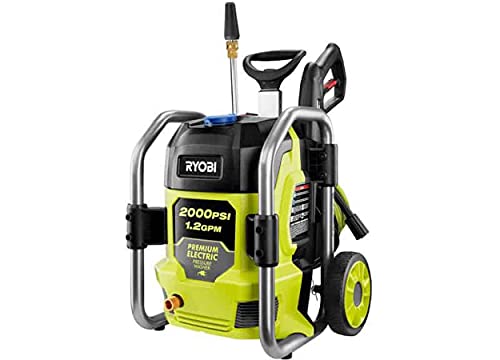
Best for a compact, tidy build with safe pressure for paint
- Compact, easy to store
- Quality build
- Safe pressure for paint
- Simple to handle around a car
Why buy it: a tidier, well-built electric that stores easily and stays in the car-safe pressure band so you are not tempted into the mistakes that chip paint.

Best for quiet, budget-friendly washing at a gentle pressure
- Quiet operation
- Affordable
- Easy to handle
- 1800 PSI sits comfortably in the paint-safe range
Why buy it: quiet and cheap, with a lower pressure rating that is naturally forgiving on paint — a sensible pick if you worry about overdoing it.

Best for a durable, quiet water-cooled machine
- Water-cooled motor
- Quiet and durable
- Premium quality
- Steady, controllable flow
Why buy it: German quality that runs quiet and lasts — just note it needs an adapter for most foam cannons, and the extra pressure still calls for wide-nozzle discipline.

Best for a budget Sun Joe alternative with similar specs
- Cheap
- Safe pressure
- Foam-cannon ready
- Onboard soap tank
Why buy it: a direct budget rival to the Sun Joe with similar car-friendly specs — enough pressure to clean and foam without straying into paint-damaging territory.
Prices are pulled from Amazon and were accurate as of Aug 22, 2026, 6:54 PM EDT. Product prices and availability are subject to change — the live price is shown on Amazon.