
Affiliate Disclosure
Some links on this page are affiliate links. As an Amazon Associate, we earn from qualifying purchases — at no extra cost to you. We do not buy, test, or physically handle the products we cover; our rankings come from aggregated owner reviews, ratings and expert consensus. Commissions never change our verdicts. How we rank & full disclosure.
Short version: The safe pressure window for washing a car is roughly 1,200 to 1,900 PSI. That's ample to remove dirt and rinse foam without threatening paint. Higher-PSI machines aren't automatically dangerous, but they demand a wide nozzle and real distance. The number on the box matters far less than how close you hold the wand and which tip is on the end.
PSI is the spec everyone fixates on, and I get why — it's the big number on the label. But treating a pressure washer like it's all about raw pressure is like judging a car purely on redline. What actually keeps your paint safe is technique: distance, nozzle choice and angle. Let me break down the real numbers. For the bigger picture on choosing and using a machine, see the full pressure washer guide.
The safe PSI range for car paint
Here's how I think about the pressure bands after years of washing cars:
- Under 1,200 PSI: Very gentle. Fine for a light rinse and foam, but you may find it a little weak for caked-on mud or heavy wheel grime.
- 1,200 to 1,900 PSI: The sweet spot. Strong enough to clean effectively, gentle enough that paint stays worry-free even if your technique isn't perfect.
- 1,900 to 2,300 PSI: Still car-friendly with a wide nozzle and good distance. Common for home electric units, and totally usable.
- 2,800 PSI and up: Gas territory. Cleans anything, but now your habits matter. A careless close pass can chip a stone-nicked edge or exploit already-failing clear coat.
Notice that even the "too much" band isn't a hard stop — it's a warning to respect the tool. Modern factory clear coat is tougher than people fear, but every car has weak points: chipped edges, cracked trim, aging rubber seals, aftermarket badges and vinyl.
Why PSI alone doesn't tell the story
Two machines both rated 2,000 PSI can feel completely different at the panel, because pressure is only half the equation. The other half is flow (GPM) and, crucially, how that force is spread by the nozzle. A narrow jet concentrates all that pressure into a tiny point — that's what dents and chips. A wide fan spreads the same pressure across a broad, gentle sheet.
So the honest answer to "what PSI is safe" is: almost any home-user PSI is safe with the right nozzle and distance, and even a modest PSI can mark paint if you jam a narrow tip an inch from a chipped edge. I dig into the flow side of this in GPM vs PSI for car washing, because rinsing power comes as much from gallons as from pressure.
Nozzle choice is your real safety dial
If you take one thing from this page, make it this: use a wide-fan nozzle on paint. The color-coded tips that come with most washers matter enormously here.
- White (40°): My default for car panels. Wide, soft, safe.
- Green (25°): Fine for wheels, arches and stubborn lower-body grime with a bit of distance.
- Black (soap/low-pressure): What your foam cannon effectively acts like — gentle by design.
- Yellow (15°) and red (0°): Never on paint. The red zero-degree tip is a pinpoint jet built for concrete. Point it at a car and you can strip paint and gouge trim.
I walk through every tip and exactly where each belongs in pressure washer nozzles explained. It's the single most useful thing to understand before you pull the trigger.
Distance and angle: the free safety margin
Pressure at the surface drops fast as you back the nozzle away. Holding the wand 18 to 24 inches from the panel gives you a big cushion — the same machine that could mark paint at two inches is completely benign at two feet. Start far, move in only if a spot demands it, and keep the spray moving.
Angle matters too. Spraying straight into a panel edge, a seam or a piece of trim invites water underneath it. Angle the spray along panels rather than driving it into gaps, seals and door edges. This is exactly the kind of habit that separates a clean wash from an expensive lesson — I've listed the rest in pressure washing mistakes.
What about foam cannons and PSI?
Foam is where PSI myths run wild. You don't need a monster machine to lay down a thick blanket — you need enough pressure to run the cannon (roughly 1,300 PSI and up) and the right soap and dilution. A modest, paint-safe washer foams a car beautifully. If you're building that setup, I cover the pressure and connector requirements in pressure washer + foam cannon setup.
Two PSI myths worth killing
Myth one: "more PSI means a cleaner car." It doesn't. Past the point where dirt lets go, extra pressure adds nothing but risk. A car cleaned at 1,600 PSI ends up exactly as clean as one cleaned at 3,000 — the difference is only how much margin for error you have. Cleaning power for cars comes more from foam dwell time and flow than from raw pressure.
Myth two: "high PSI will instantly strip any paint." Also false. Healthy factory clear coat shrugs off a wide fan at a sensible distance even from a powerful machine. Paint that lifts under careful washing was already failing. The danger from high PSI is real but specific: narrow nozzles, close range, and vulnerable edges — not the number itself in isolation. Understanding that keeps you from either over-buying pressure you'll never safely use, or fearing a capable machine you could run just fine with good habits.
The bottom line on safe pressure
Aim for a machine in the 1,200 to 1,900 PSI band if you're buying specifically for cars and want zero anxiety. If you already own something more powerful, it's still perfectly usable — just commit to a 40-degree tip, keep 18-plus inches of distance, and never let a narrow jet near your clear coat.
Paint doesn't fail from the right PSI used well. It fails from a narrow nozzle held too close to a vulnerable edge. Get the technique right and pressure stops being scary.
When you're ready to pick a machine that sits in the safe zone by design, the units I rate for car work are on the best pressure washer for cars page — those are my top picks, and every one clears the bar for paint safety.
Recommended Products

Best for a car-safe pressure range with foam-ready flow
- Sits right in the paint-safe pressure window
- Foam-cannon-ready flow
- Dual detergent tanks
- Includes 5 quick-connect tips
Why buy it: the best car-washing starter — enough pressure to clean and rinse without stressing paint, backed by the largest owner base of any unit here.
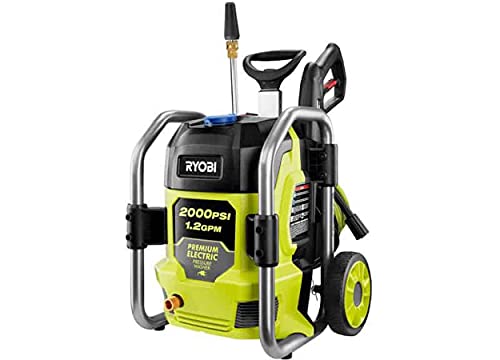
Best for a compact, tidy build at safe pressure
- 2,000 PSI — inside the car-safe range
- Compact, easy to store
- Quality build
- Foam-cannon friendly flow
Why buy it: a tidier, well-built electric whose 2,000 PSI keeps it firmly in the paint-safe zone while storing easily.

Best for quiet, budget-friendly washing at low PSI
- 1,800 PSI — gentle and paint-safe
- Quiet operation
- Affordable
- Easy to handle
Why buy it: the lowest-PSI pick here at 1,800 — quiet, cheap, and impossible to overpower paint with, yet still enough to wash a car.

Best for a budget Sun Joe alternative
- Car-safe pressure range
- Foam-cannon ready
- Cheap
- Onboard soap tank
Why buy it: a direct budget rival to the Sun Joe with similar car-safe specs and foam-ready flow.

Best for premium build and quietness
- Water-cooled motor
- Quiet and durable
- Premium quality
- Needs an adapter for most foam cannons
Why buy it: German build quality for owners who wash often — keep your distance and use a wide tip and its higher output stays paint-safe.
Prices are pulled from Amazon and were accurate as of Aug 22, 2026, 6:54 PM EDT. Product prices and availability are subject to change — the live price is shown on Amazon.