
Affiliate Disclosure
Some links on this page are affiliate links. As an Amazon Associate, we earn from qualifying purchases — at no extra cost to you. We do not buy, test, or physically handle the products we cover; our rankings come from aggregated owner reviews, ratings and expert consensus. Commissions never change our verdicts. How we rank & full disclosure.
Read this first: a timing light sets ignition timing on engines with a distributor and adjustable timing — classic cars, hot rods, older carbureted vehicles, many motorcycles and small engines. The honest caveat that saves modern owners a wasted purchase: most fuel-injected cars built since the 1990s have fixed, ECU-controlled timing you cannot adjust, so a timing light is for verification or diagnostics on those, not tuning. If you work on older or carbureted engines, our overall pick is the INNOVA 3568 with digital advance and tach; if you only service modern cars, a scanner from our OBD2 hub is the more useful buy.
Top Picks at a Glance
Our #1 Pick: INNOVA 3568 Digital Timing Light
The INNOVA 3568 earns the top spot for the enthusiast who actually adjusts timing: a bright xenon strobe plus a digital advance and tachometer readout, so you can verify not just base timing but the whole ignition advance curve as RPM changes. That makes it a real diagnostic tool for distributor engines, classics and performance builds, not just a set-and-forget strobe. It is aimed squarely at engines with adjustable timing — which is the whole point of this category. If you just need to set base timing on a classic, the simpler INNOVA 3551 does it for less; if you drive a modern EFI car, see the caveat above before buying any timing light.
Best Timing Lights 2026: The Ranked Field

Best for checking base timing and the advance curve
- Digital advance & tachometer readout
- Bright xenon flash
- Inductive clamp pickup
- Reads RPM and timing advance
Why buy it: the timing light enthusiasts trust for real diagnostics — the digital advance and tach let you verify not just base timing but the whole advance curve.
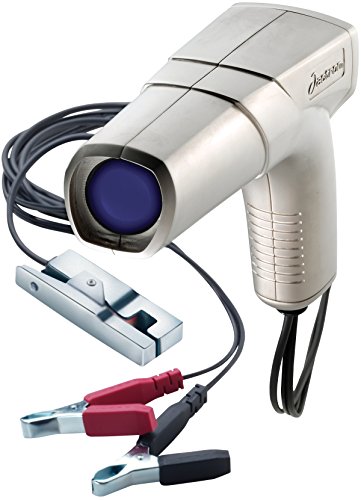
Best for pro-grade advance and tach features
- Digital advance and tachometer
- Bright, clear strobe
- Inductive pickup clamp
- Durable pro build
Why buy it: the pro timing light owners choose for its clear advance and tach readouts — everything you need to dial in and verify ignition timing.

Best for straightforward base-timing checks
- Bright xenon inductive strobe
- Simple, reliable operation
- Inductive clamp pickup
- Great value
Why buy it: the value timing light owners buy for basic timing checks — a bright, reliable strobe to set or verify base timing without extra features you may not need.
Best for a digital readout at a low price
- LED display readout
- Inductive strobe pickup
- Portable design
- Budget-friendly
Why buy it: the budget digital light owners pick for a readout without the premium price — handy for timing checks on older engines that let you adjust.

Best for a cheap, bright basic strobe
- Bright xenon flash tube
- Inductive pickup
- 12V automotive use
- Low cost
Why buy it: the cheap-and-bright strobe owners grab for the occasional timing check — a linear xenon flash that clearly lights the marks on older engines.

Best for a simple, no-frills timing light
- High-intensity xenon bulb
- Inductive clamp
- Simple operation
- Affordable
Why buy it: the no-frills xenon light owners keep for classic-car tune-ups — a bright, simple strobe for setting base timing on a distributor engine.
Do You Even Need One? (The Honest Truth)
This is the section that matters most. On modern fuel-injected engines, ignition timing is managed by the ECU from sensor inputs (crank/cam position, knock, load), and the base timing is fixed and not adjustable — most of these engines no longer even have a distributor to turn. So on a typical late-model car, you cannot "set the timing" with a timing light; the computer owns it, and there is nothing to adjust. A timing light is only genuinely needed when you work on engines with adjustable ignition timing: classics, hot rods, older carbureted vehicles, motorcycles and small engines. If your projects are modern EFI cars, save your money and buy a scanner instead.
Basic vs Advance (Dial-Back) Lights
If you do need one, choose the type by the job. A basic timing light flashes with the spark so you can read the marks at idle and set base timing — plenty for a straightforward classic tune-up. An advance (dial-back) light adds a control and digital readout to measure ignition advance, letting you verify how timing advances with RPM and load — the tool for diagnosing an advance mechanism or dialing in a performance engine. Pick a basic light for simple base-timing work, and step up to an advance/digital light (INNOVA 3568, Actron CP7529) if you want to check the advance curve.
Using It on a Distributor Engine
The procedure: with the engine off, connect the light’s power leads to the battery and clamp the inductive pickup around the number-one plug wire. Find the timing marks (on the crank pulley/harmonic balancer and a fixed pointer) and mark them with chalk so they pop under the strobe. Start the engine at the specified idle (disconnect the vacuum advance if your procedure says to), aim the light at the marks, and the strobe freezes them so you can read the timing. To adjust, loosen the distributor and rotate it until the mark meets spec, then tighten. Always follow your vehicle’s exact timing procedure and spec.
Modern Diagnostics Instead
If you drive a modern car, the tools that actually help are elsewhere in this hub: read faults with a scanner, confirm electrical issues with a multimeter, and check ignition components like coils and spark plugs when you have a misfire. The wider service picture is in the oil change hub, and hand tools live in the garage tools hub.
How We Rank
Timing lights are a tool category, so we rank on aggregated owner ratings, review volume and the qualities owners report — while being honest about who actually needs one. We weigh four things. Strobe brightness and clarity — a bright flash that clearly freezes the marks. Features for the job — advance and tach readouts for those who verify the curve, simplicity for base-timing work. Build and pickup reliability — a dependable inductive clamp and durable body. And value for the type. We do not run a strobe-calibration test; we read owner consensus and specs. Prices were current at the time of writing.
Timing Guns for Classic and Distributor Ignition
Old-timers still call a timing light a "timing gun," and the nickname fits — you point it like one. On a classic or distributor engine, the strobe is how you read and set the base ignition timing after work on the distributor or ignition system. Enthusiasts running upgraded ignition setups like an MSD box use one to confirm the timing lands where they set it. Anything from the 2000s and older with a rotatable distributor is fair game; the timing gun is a core tune-up tool for that era. If your car has adjustable ignition, a bright light gun that clearly freezes the marks is exactly what the job needs.
Inductive Pickup, Bright Strobe, Tach and RPM Readings
The features that matter on a timing light are the pickup and the readouts. An inductive pickup clamps around the number-one plug wire — no cutting, no probing — and triggers the strobe off the spark. A bright xenon or LED flash is what makes the marks readable in daylight. Step-up lights add a tach and RPM readout plus a dial-back advance control, so you can take timing readings across the rev range, not just at idle. Owners consistently report the tach and RPM display is what turns a basic strobe into a real diagnostic tool. For simple base timing a bright inductive light is enough; for the advance curve you want the tach and readings.
Where to Purchase These Tools, and Whether It’s Worth the Money
Timing lights are sold everywhere tools are — Amazon, AutoZone, JEGS, and pro brands like Snap-on at the high end. The best-selling INNOVA and Actron lights get the strongest owner recommendations for the money, while the cheap xenon guns cover occasional classic-car use. The honest purchase question is whether you need one at all: on a modern EFI car the ECU controls timing, so the money is better spent on a scanner. But if you work on classics or carbureted engines, a mid-range inductive light is an inexpensive tool that earns its keep. Buy to match your engines, not the flashiest spec.
Quick Comparison
INNOVA 3568 Digital Timing Light (with Advance & Tach)
Best for checking base timing and the advance curve
Best Premium
Actron CP7529 Digital Timing Light with Advance
Check Price on Amazon
Best Value
INNOVA 3551 Inductive Timing Light
Check Price on Amazon
Best Digital Budget
Digital Inductive Timing Light (LED Display)
Check Price on Amazon
Best Budget
Digital Automotive Timing Light 12V (Xenon)
Check Price on Amazon
Best Basic Xenon
Xenon Inductive Timing Light for 12V Engines
Check Price on Amazon
The Verdict
First decide if you need one at all: for modern EFI cars, you almost certainly don’t — the ECU controls timing. For classics, carbureted and distributor engines, the INNOVA 3568 is our overall pick with digital advance and tach, the INNOVA 3551 is the simple value, and the budget xenon lights cover occasional use. Match the tool to the engine, and follow your timing procedure exactly. Check Price on Amazon →