

Affiliate Disclosure
Some links on this page are affiliate links. As an Amazon Associate, we earn from qualifying purchases — at no extra cost to you. We do not buy, test, or physically handle the products we cover; our rankings come from aggregated owner reviews, ratings and expert consensus. Commissions never change our verdicts. How we rank & full disclosure.
Short version: A trim restorer chemically bonds to the plastic and rebuilds a durable black layer that survives washes and weather for months. A trim dressing sits on the surface, darkens it temporarily, and washes off in a week or two. Both have a place, but if your trim has gone chalky gray and your last fix vanished after one rainstorm, you used a dressing when you needed a restorer. That single mix-up is behind almost every trim complaint I hear.
This is the most useful thing you can understand about trim care, so let me lay it out clearly. When people say "my trim product does not last," they are almost never using a bad product. They are using the wrong type of product for the condition their trim is in. Get this distinction right and everything else falls into place.
What a dressing actually does
A trim dressing is a topical enhancer. Think of it like moisturizer for plastic. It contains oils, silicones or polymers that darken the surface and give it a fresh, satin look the moment you wipe it on. It fills the microscopic texture, boosts the black, and adds a thin layer of temporary UV protection.
The key word is temporary. A dressing does not chemically change the plastic. It rests on top of it. That means it looks fantastic on day one and then slowly washes and weathers away. On a daily driver parked outside, a typical dressing gives you one to three weeks before it needs redoing. That is not a flaw. That is exactly what it is designed to do. It is a quick, cheap, repeatable freshen-up.
Dressings come in two families. Water-based dressings are easy to use and safer on rubber and vinyl, but they do not last as long and can streak in rain. Solvent-based dressings last longer and hold up better outdoors, but they can be harsher and need more careful application. We touch on how these behave over time in protect trim long-term, where maintenance dressing earns its keep.
What a restorer actually does
A trim restorer is a different animal. It is engineered to bond with the plastic, either by cross-linking with the surface or curing into a semi-permanent coating. Instead of masking the oxidation, it either penetrates the dead layer or forms a fresh protective film that behaves like new plastic.
Because it bonds rather than sits on top, a restorer survives car washes, rain and weeks of sun. Depending on the product and how well you prepped, you are looking at anywhere from a few months to over a year of deep black. That durability is the whole point. You do the work once, properly, and then you are not out there re-dressing bumpers every weekend.
The trade-off is that restorers demand real prep. Because they bond to the surface, that surface has to be genuinely clean and oil-free or the bond fails. This is why the degrease step matters so much, and it is why we walk through the full process carefully in how to restore trim. A restorer applied over dirty, oily plastic will peel and fail, and then people wrongly blame the product.
Side by side
- How it works: Dressing sits on top. Restorer bonds to the plastic.
- How long it lasts: Dressing lasts days to a few weeks. Restorer lasts months to a year.
- Best for: Dressing suits trim already in decent shape. Restorer suits faded, gray, oxidized trim.
- Prep needed: Dressing needs a quick clean. Restorer needs a full degrease.
- Ease and speed: Dressing is fast and forgiving. Restorer is slower but far more durable.
- Cost per year: Dressing is cheap per bottle but you use it constantly. Restorer costs more up front but you barely touch it.
Why this explains your faded results
Here is the trap. Your black bumpers go gray. You buy a bottle at the auto parts store labeled with words like "trim shine" or "black restore." It says it restores, so you assume it is a restorer. You wipe it on, the trim goes gloriously black, and you feel like a genius. Two washes later it is gray again and you are convinced trim products are a scam.
Nine times out of ten, that bottle was a dressing wearing restorer language on the label. Marketing muddies these terms constantly. The product was never going to last, because it was never designed to bond. It did exactly what a dressing does: looked great, then left. Once you know the difference, you stop getting fooled by the label and start reading what the product actually is.
The deeper reason your trim needed a restorer in the first place is oxidation, which is a physical change to the plastic that a surface dressing simply cannot reverse. If you want the full picture of what UV does to the polymer, why black trim goes gray explains it without the chemistry-class jargon.
So which one do you need?
Do the finger test. Rub your fingertip firmly across the dry trim in daylight. If you get white or gray chalk on your finger, the plastic is oxidized and a dressing will only mask it for days. You need a restorer to properly bring it back. If your finger comes away clean and the trim is just looking a bit dull and dry, a dressing is all you need and it will look great fast.
My honest recommendation for most people with faded trim is a two-part strategy. Use a quality bonding restorer once to reset the trim to deep black, then keep a dressing on hand for occasional maintenance. That way you get the durability of the restorer and the easy freshen-up of the dressing without fighting a losing battle every weekend.
When it comes time to actually buy, the restorer is the decision that matters, and durability varies wildly between products. We ranked a bunch of them on real-world longevity so you do not have to gamble, over on the best trim restorer. That is where the real longevity difference shows up.
The bottom line
Restorer bonds and lasts. Dressing sits and shines. Neither is better in the abstract, they just do different jobs. Match the product to your trim's condition and you will never again wonder why the shine disappeared after one rainstorm. This one distinction is genuinely the key that unlocks good trim results, so once it clicks, the rest is easy.
Recommended Products
Both sides of the comparison — the bonding restorers that bring dead gray trim back for months, and the dressings for quick maintenance on trim already in good shape. We rank on aggregated owner ratings, not first-hand testing.

Best for faded trim you want fixed and forgotten
- Ceramic coating bonds to the plastic
- Survives washes and weather for many months
- Includes prep wipes to do it right
- The bonding-restorer side of the comparison
Why buy it: the restorer that lasts — a bonded coating for oxidized gray trim, exactly what a dressing cannot do.

Best for the blackest, most natural-looking finish
- Deep, natural black with no wet look
- Long-lasting on properly prepped trim
- A little goes a long way
- Restorer side — brings dead gray back
Why buy it: the enthusiast restorer for a factory-black look — durable colour on oxidized trim, not a temporary shine.
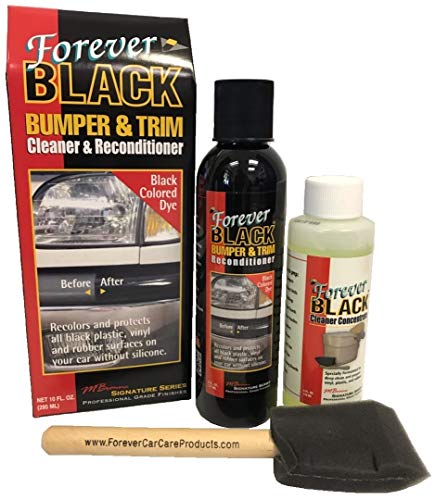
Best for chalky, badly oxidized trim that needs recoloring
- Dye-and-seal kit for real recoloring
- Applicator included
- For trim too far gone for a dressing
- The heavy-duty restorer option
Why buy it: the restorer for the worst cases — actually recolors dead-gray plastic that a dressing would only mask for days.
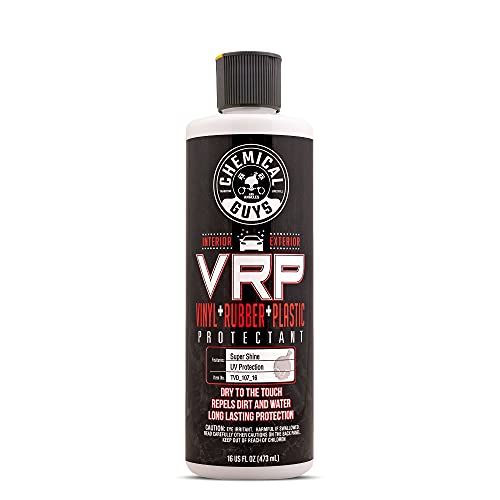
Best for maintaining trim, tires and interior plastics
- Satin dressing for vinyl, rubber and plastic
- Sits on top — freshens, does not bond
- One bottle for trim, tires and dash
- The dressing side of the comparison
Why buy it: the dressing side — a quick satin freshen-up for trim already in good shape, or maintenance over a restorer.

Best for a fast refresh between deeper restorations
- Wipe-on darkener for faded black plastic
- Instant black, easy to apply
- Washes and weathers off over weeks
- A dressing despite the "restorer" label
Why buy it: the cheap, easy dressing for maintenance — great on top of a bonding restorer, not a lasting fix on its own.
Prices are pulled from Amazon and were accurate as of Aug 22, 2026, 6:54 PM EDT. Product prices and availability are subject to change — the live price is shown on Amazon.