
Affiliate Disclosure
Some links on this page are affiliate links. As an Amazon Associate, we earn from qualifying purchases — at no extra cost to you. We do not buy, test, or physically handle the products we cover; our rankings come from aggregated owner reviews, ratings and expert consensus. Commissions never change our verdicts. How we rank & full disclosure.
Short version: Your black trim did not get dirty, it got cooked. Sunlight breaks down the surface of the plastic, the additives that kept it black and flexible leach out, and what is left is a thin chalky gray layer of degraded polymer. Washing will not fix it because it is not dirt. You either strip that dead layer or coat over it with a UV-protective restorer. Understanding this is what makes every trim fix finally make sense.
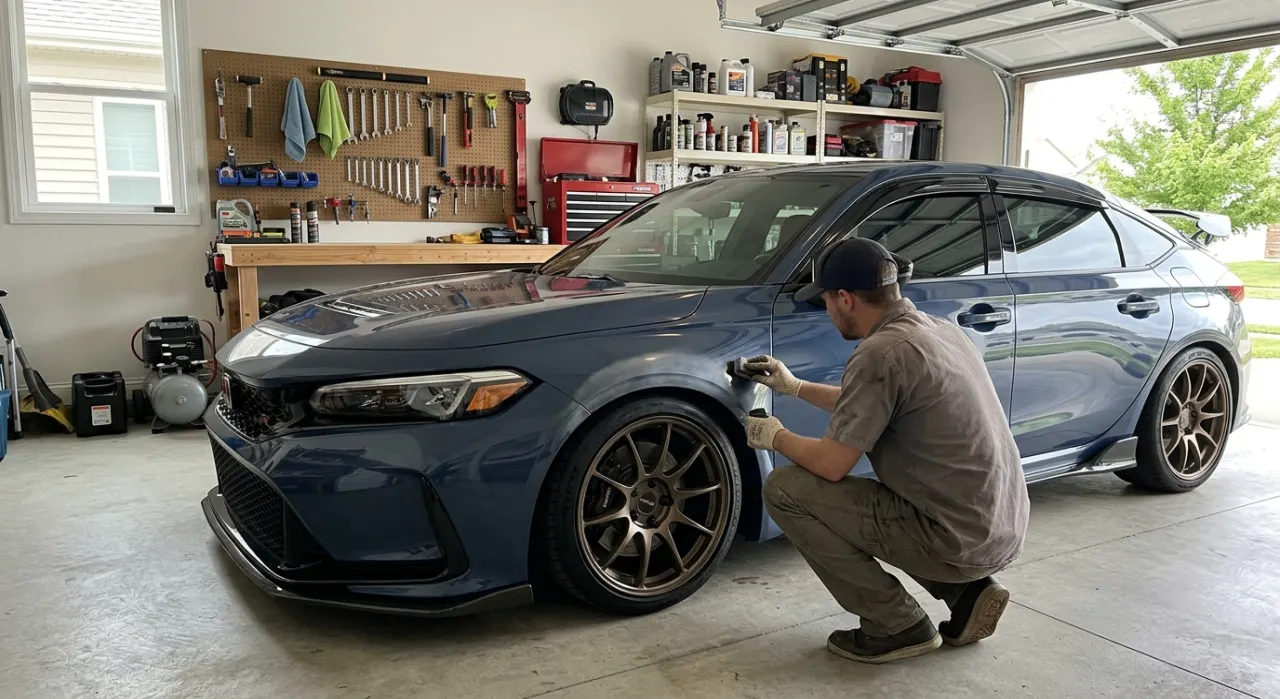
Everyone has seen it. A car rolls by with beautiful paint but the bumpers, mirror caps and lower cladding have turned that sad, chalky gray. It ages a car instantly, and it drives people nuts because no amount of washing touches it. To fix it properly you have to understand what is actually happening, so let me explain it the way I wish someone had explained it to me.
What that black plastic actually is
The unpainted trim on your car, the bumpers, cowl, mirror housings, window surrounds and wheel-arch cladding, is usually a textured polymer like polypropylene or TPO. From the factory it is dyed black and loaded with additives. Two of those additives matter here: carbon black for color and UV stability, and plasticizers and oils that keep the plastic flexible and give it that rich, deep look.
When the trim is new, all of that is evenly distributed through the surface. The plastic is saturated with color and protective additives, so it looks deep black and slightly satin. It is basically at full strength.
What the sun does to it
Now park it outside for a few years. Ultraviolet light is high-energy radiation, and it does not care how nice your plastic looks. UV photons hit the surface of the polymer and start breaking the chemical bonds that hold it together. This is called photodegradation, and it is the same basic process that fades a plastic toy left on a windowsill or crumbles an old garden chair.
As those surface bonds break, a few things happen at once. The plasticizers and oils that kept the surface rich and flexible get driven out and evaporate away. The carbon black gets less effective as the surrounding polymer degrades. And the very top layer of plastic turns into a fine, brittle, microscopically rough crust. That crust scatters light instead of reflecting it cleanly, and scattered light reads to your eye as gray and dull instead of deep black.
Heat speeds all of this up. Trim gets blazing hot in the sun, and heat accelerates the chemical breakdown and drives the oils out faster. That is why a car in a hot, sunny climate greys out far quicker than one that lives in a mild, cloudy one, and why the sunny side of your car often looks worse than the shaded side.
Why washing never fixes it
Here is the part that frustrates everyone. Because the gray is a degraded layer of the plastic itself, not a film of dirt on top, soap and water do nothing. You are washing the surface, but the problem is the surface. You can pressure wash it, scrub it, hit it with wheel cleaner, and it stays gray, because there is nothing to remove. The color is gone from the material, not hidden by grime.
This is exactly why people get so confused about which product to buy. They reach for a cleaner, it does not work, so they reach for a shiny dressing that masks the gray for a few days and then fails. The reason nothing sticks is that they are treating a material problem like a cleaning problem. We break down the fix-it side of that in trim restorer vs dressing, because the product type you choose is everything once you understand the oxidation is real.
How you actually reverse it
Good news: oxidation is almost always shallow. That chalky layer is thin, and the sound plastic sits right underneath it. There are two ways to bring the black back, and most quality products use a mix of both.
- Strip and re-coat. You degrease and clean away the loose dead layer, then apply a restorer that bonds to the fresh surface and rebuilds UV protection. This is the durable approach.
- Bond over the top. Some restorers cure into a semi-permanent film that basically forms a new black outer skin over the oxidized plastic, sealing it and blocking further UV.
Either way the principle is the same: you are replacing the color and, crucially, the UV protection that the sun destroyed. That is why prep matters so much. If you do not clean the surface properly, the restorer cannot bond, and you are back to square one. The full walk-through lives in how to restore trim, and it is worth following the prep steps exactly.
The same thing happens to your rubber
It is not just the hard plastic. The rubber door seals, window trim and weatherstripping suffer the identical UV attack. They lose their oils, go gray and hard, and eventually crack. The fix is a little different because rubber needs feeding rather than a hard coating, and we cover that specifically in restore rubber seals. But the cause is the same sun that greyed your bumpers.
The real lesson: it is a UV problem
Once you understand that gray trim is UV damage and not dirt, the whole thing clicks. The fix is UV protection, and so is the prevention. Keep a protective layer on the trim, park in the shade when you can, and top up that protection a few times a year, and the oxidation never gets a foothold. The trim that greys out is always the trim that was left bare in the sun with no protection on it. We lay out the simple keep-it-black routine in protect trim long-term.
So next time you see gray trim, you will know it is not neglectful washing, it is chemistry. The sun broke the surface of the plastic and stole its oils and color. And now you know the fix is not a better sponge, it is stripping that dead layer and putting the UV protection back where the sun took it away.
Recommended Products
We aggregate owner reviews rather than test products ourselves. Because grey trim is oxidation, not dirt, the fix is a restorer that either bonds over the dead layer or re-dyes the plastic — and prep is everything. No product bonds to a surface you have not cleaned and degreased first.

Best for people who want the black to stay back for months, not days
- Cures into a semi-permanent ceramic film over the plastic
- Rebuilds real UV protection, not just a wet look
- Includes prep and applicator
- Huge owner base
Why buy it: the bond-over-the-top approach done well — a new black outer skin that seals the oxidized layer and blocks further UV.

Best for the deepest, most convincing black on badly faded trim
- A little goes a long way
- Restores a deep, even black even on grey trim
- Detailer-favourite results
- No greasy sling-off when applied thinly
Why buy it: the enthusiast pick for results — reads as genuinely restored black, provided you prep the surface properly first.
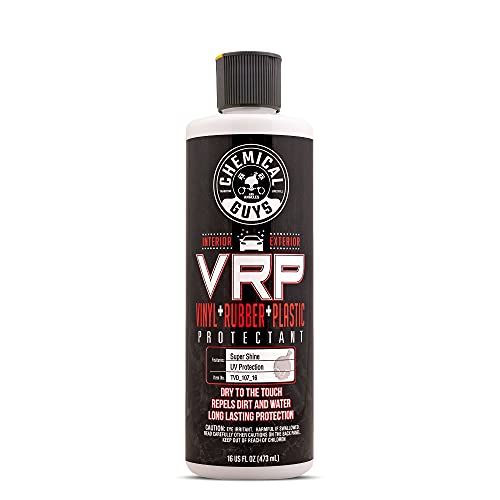
Best for a versatile dressing for trim, tires and interior plastics
- Adds UV protection and a satin finish
- Works on trim, tires and rubber
- Water-based, easy to apply
- Enormous owner base
Why buy it: a lot of protective dressing for the money — best on lightly faded trim as ongoing UV maintenance.

Best for fast, easy revival of mildly greyed trim
- Wipe-on restoration with quick results
- Adds UV protection
- Good for maintenance top-ups
- Widely available
Why buy it: the grab-and-go option for lightly faded trim between deeper restorations.
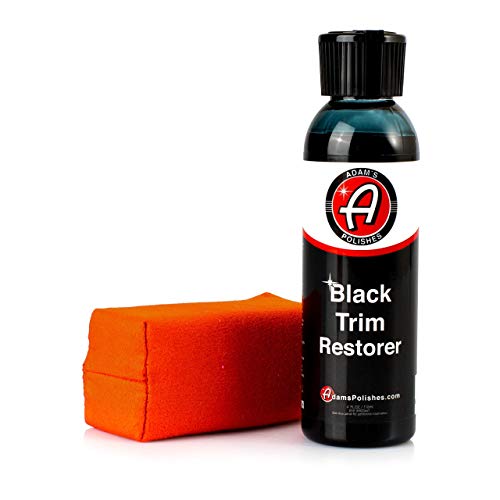
Best for enthusiasts who want a quality restorer with an applicator
- Restores colour and adds protection
- Comes with an applicator
- Popular in enthusiast kits
- Even, controllable finish
Why buy it: a tidy premium option for detailers who want controllable, even coverage.
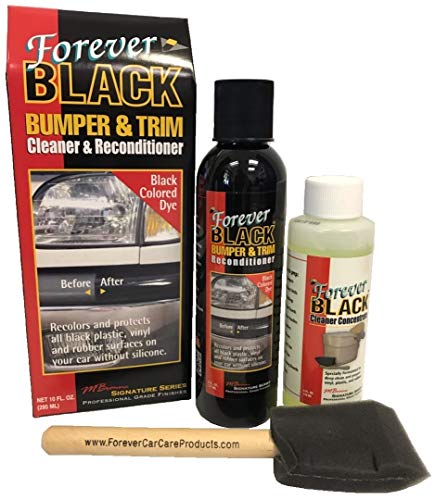
Best for severely oxidized trim that needs re-dyeing rather than dressing
- Dyes the plastic rather than coating it
- Long-lasting colour on heavily faded trim
- Includes applicator
- Best after a thorough clean and degrease
Why buy it: the choice when trim is too far gone for a dressing — it re-colours the plastic instead of masking it.
Prices are pulled from Amazon and were accurate as of Aug 22, 2026, 6:54 PM EDT. Product prices and availability are subject to change — the live price is shown on Amazon.