
Affiliate Disclosure
Some links on this page are affiliate links. As an Amazon Associate, we earn from qualifying purchases — at no extra cost to you. We do not buy, test, or physically handle the products we cover; our rankings come from aggregated owner reviews, ratings and expert consensus. Commissions never change our verdicts. How we rank & full disclosure.
Short version: the finish on your wheels decides which cleaner is safe. Painted and clear-coated wheels (most modern cars) tolerate any quality acid-free cleaner. Chrome, polished, matte, anodized, and PVD finishes are delicate and need pH-neutral, non-acid products only — acid will etch them permanently. If you do not know your finish, a pH-neutral acid-free cleaner is the safe universal answer for every wheel here.
Wheels are expensive, and the fastest way to ruin a set is to hit a delicate finish with the wrong chemical. Acid-based cleaners are dramatic and strong, but on the wrong wheel they etch, pit, and discolor in ways that do not come back. The good news is that the rule is simple once you know your finish — and if you do not, there is a safe default. Let me walk through each finish so you buy and use the right thing.
Why Finish Decides the Cleaner
Different wheel finishes react very differently to chemistry. A durable clear coat can shrug off strong cleaners, while a polished or chrome surface can be etched by the same product in minutes. The pH of the cleaner is the key variable: acid-based cleaners are aggressive and effective on heavy grime but hostile to delicate finishes, while pH-neutral (acid-free) cleaners are far gentler and safe across almost everything. Matching the cleaner to the finish is the single most important safety decision in wheel care, more than the brand on the bottle.
Painted & Clear-Coated Wheels
These are the most common wheels on modern cars — a colored or silver paint under a protective clear coat, giving that smooth glossy or satin factory look. The clear coat is durable, so these tolerate any quality acid-free cleaner comfortably. You can use iron removers on them safely too, which is great for lifting bonded brake dust. This is the easy finish: pick a good acid-free cleaner, agitate with a soft brush, rinse. See our ranked cleaner picks for reliable options.
Chrome
Chrome is bright, mirror-like, and delicate. This is the finish people most often ruin. Never use acid cleaners on chrome — they etch, pit, and permanently discolor it, and there is no undo. Stick strictly to pH-neutral, non-acid products, agitate gently with a soft brush, and dry thoroughly afterward to prevent water spots, which show badly on chrome. Treated gently, chrome cleans up beautifully; treated aggressively, it is expensive to fix.
Polished Aluminum
Polished wheels are bright and warm-toned, often with a mirror-polished lip. Like chrome, they are sensitive and must never see acid cleaners, which will dull and stain the surface. Polished aluminum can also oxidize and dull over time even with gentle care, so many people follow cleaning with a dedicated metal polish to keep the shine up. Use pH-neutral cleaners, soft brushes, and dry promptly. Gentle care is the whole game here.
Matte & Satin
Matte and satin wheels have that distinctive flat, low-gloss look, and the entire point is that they are not shiny. That changes the rules: you avoid anything that could add gloss or marring. No dressings, no glossy protectants, no abrasive brushes. Use a pH-neutral cleaner and a soft brush, and skip any product designed to shine. The good news is matte wheels are not harder to clean day to day — you just have to resist the urge to make them shine, because that ruins the finish.
Anodized & PVD Finishes
Anodized (often colored) and PVD wheels — the latter a modern, high-durability decorative finish — are specialty surfaces that demand the gentlest treatment. Acid and even some stronger alkaline cleaners can damage or discolor them. Treat these exactly like chrome and polished: pH-neutral cleaners only, soft brushes, thorough rinsing and drying. When in doubt with any specialty finish, gentler is always safer.
Ceramic-Coated Wheels
If your wheels have a ceramic coating, cleaning gets easier, but you want to preserve the coating rather than strip it. Use pH-neutral cleaners — strong acids and harsh alkalines can degrade the coating over time. The upside is that a coated wheel needs far less aggressive cleaning anyway, because brake dust sits on top and rinses off easily. This is one of the big reasons I recommend coating wheels in the first place; I cover it in protecting wheels with ceramic.
The One Cleaner That Fits Them All
If you have a mixed garage or genuinely do not know your finish, here is the simple answer: a pH-neutral, acid-free wheel cleaner is safe on every finish above. It cleans painted, chrome, polished, matte, anodized, PVD, and coated wheels without risk. You give up a little raw strength versus an acid cleaner, but you gain total peace of mind and you can use one bottle across every car you touch. For most people this is the right choice, and it is why our top-rated wheel cleaner picks are all acid-free.
Match Your Tools to the Finish Too
The cleaner is only half of it — brushes matter just as much on delicate finishes. Soft-bristle brushes on any wheel face, and never a stiff tire brush on the finish itself. On chrome, polished, and matte wheels especially, an aggressive brush can mar the surface just like the wrong chemical can. Our wheel brushes guide covers which brush is safe where, and the full safe process is in how to clean wheels.
Get the finish right and everything else follows: safe cleaner, soft brush, gentle technique, thorough rinse. Painted and clear-coated wheels give you room to use stronger products; chrome, polished, matte, and specialty finishes demand pH-neutral only. And if you are ever unsure, reach for the acid-free bottle — it has never damaged a finish, and that is exactly why it lives on my shelf.
Recommended Products
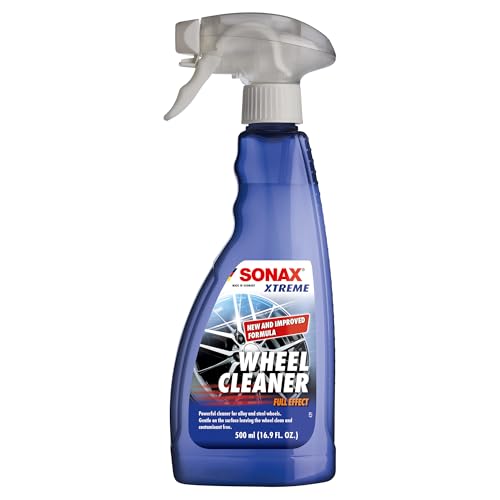
Best for one acid-free bottle that handles almost every finish safely
- pH-balanced, acid-free formula
- Iron-remover color-change action
- Safe on nearly all finishes
- Clinging gel that stays put
Why buy it: the safest all-rounder this guide points to — acid-free so it will not etch chrome or polished lips, yet strong enough to rinse filthy wheels clean without scrubbing.

Best for weekly maintenance on a normal daily driver
- Acid-free, all-finish safe
- Thick foaming action
- Great price per ounce
Why buy it: the cheapest acid-free foam we trust for weekly use on any finish — it grips the wheel and lifts everyday brake dust with zero drama.

Best for chrome, polished, matte and coated wheels that cannot risk acid
- pH-balanced, non-acid formula
- Color-change iron action
- Gentle on chrome and polished lips
Why buy it: the one to reach for on the finishes acid products ruin — engineered pH-neutral so chrome, polished and specialty wheels stay safe.

Best for neglected wheels with baked-in iron fallout
- Dedicated iron-fallout remover
- Dramatic purple bleeding action
- pH-neutral and coating-safe
Why buy it: pH-neutral and coating-safe, it dissolves embedded brake-dust particles most cleaners skate over — the deep-decon option that still respects a delicate finish.
Prices are pulled from Amazon and were accurate as of Aug 22, 2026, 6:54 PM EDT. Product prices and availability are subject to change — the live price is shown on Amazon.