
Affiliate Disclosure
Some links on this page are affiliate links. As an Amazon Associate, we earn from qualifying purchases — at no extra cost to you. We do not buy, test, or physically handle the products we cover; our rankings come from aggregated owner reviews, ratings and expert consensus. Commissions never change our verdicts. How we rank & full disclosure.
The short version: an analyzer answers the question a charger cannot. A charger will happily spend six hours refilling a battery that is going to fail next month; an analyzer tells you, in about eight seconds, whether that is worth doing. It does it by measuring the battery internal resistance and converting that into an estimated cold cranking amps figure you can compare against the number printed on the label. Ranked across thousands of owner reviews, our #1 is the TOPDON BT100: conductance testing across 100 to 2000 CCA, cranking and charging system checks, and readings owners describe as repeatable — which is the one thing that matters in a tool like this. Below is the full ranked field, what conductance and load testing actually measure, and how to read a CCA result without replacing a good battery.
This page is about diagnostics you use alongside a charger, including chargers with test modes built in. For the standalone tester ranking in its own right, see best battery tester — we link rather than repeat it.
Top Picks at a Glance
Why the TOPDON BT100 Is Our #1
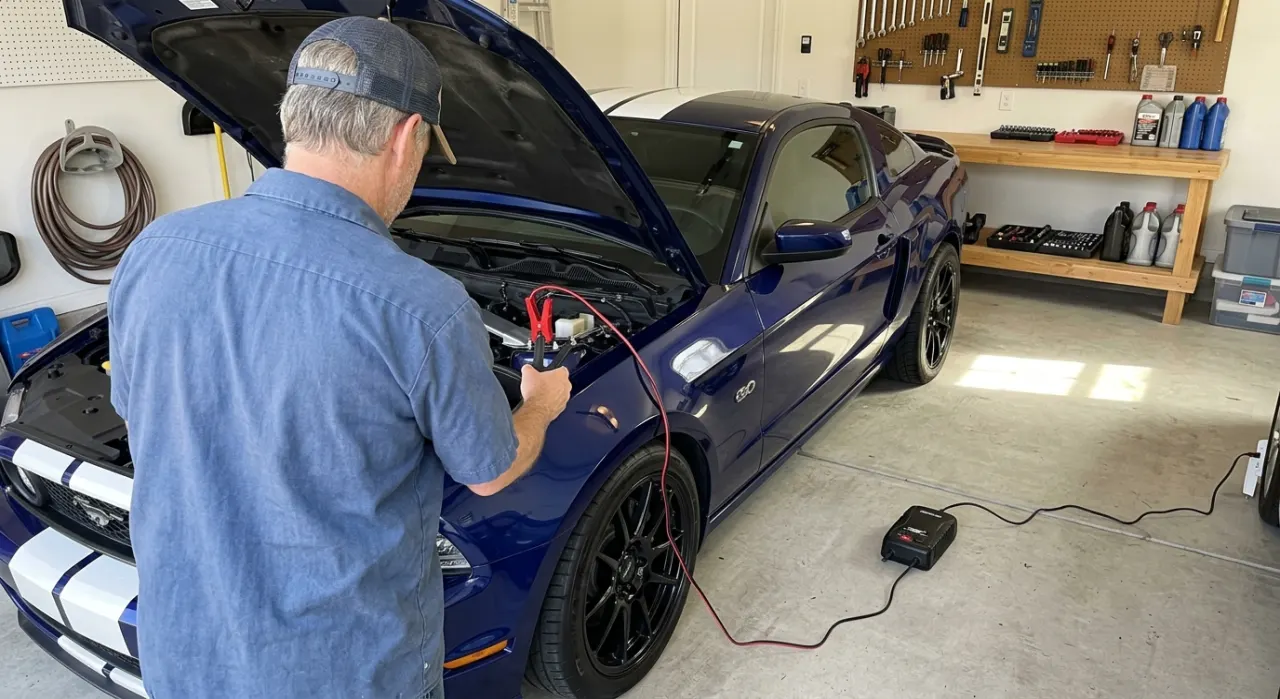
The failure mode of cheap battery analyzers is not that they read wrong. It is that they read differently each time, which makes every result useless — test a battery three times, get 480, 610 and 530 CCA, and you have learned nothing. The most consistent theme in BT100 owner reviews is the opposite: repeat tests land close together, which is why it ends up in a lot of small shops as well as home garages.
Functionally it does the three things worth doing. It measures conductance and reports estimated CCA against the standard you select — CCA, SAE, EN, DIN and so on — so you can compare directly against the battery label. It runs a cranking test that watches how far voltage sags while the starter turns, which catches a battery that reads fine at rest but collapses under real load. And it runs a charging system test on the alternator with the engine running, which matters because a battery that keeps going flat is very often a charging problem rather than a battery problem.
It supports flooded, AGM, gel and EFB batteries, which covers essentially every 12V starting battery on the road, and because it is a conductance tester it does not discharge the battery it is testing and produces no heat. Clip it on, choose the type and rating, read the answer.
The honest limits. It is 12V only, so the 6V batteries inside golf cart packs and many RV house banks are out of scope — that is what the FOXWELL further down handles. CCA is a starting-battery metric, so it says nothing useful about the reserve capacity of a deep-cycle battery. And the accuracy of any conductance reading degrades on a deeply discharged battery; charge first, then test.
Best Battery Analyzers 2026: The Ranked Field

Best for a clean CCA number before you decide to charge
- Conductance testing, no discharge needed
- 100–2000 CCA across most 12V standards
- Tests cranking and charging systems
- Works on flooded, AGM, gel and EFB
Why buy it: the analyzer that turns a vague "the battery might be tired" into a number you can act on — measured CCA against rated CCA, in about eight seconds.

Best for a genuine load test on a budget
- 12V battery, alternator and starter tests
- 100–2000 CCA range with health percentage
- Reverse-polarity and over-heat protection
- Backlit display and long test leads
Why buy it: cheap, blunt and useful — it reports state of health as a percentage alongside CCA, which is the pair of numbers that actually tells you whether to replace or recharge.

Best for logged results and printable reports
- Bluetooth to a phone app with history
- Supported battery library by vehicle
- Cranking and charging system analysis
- Exportable test reports for records
Why buy it: the version that keeps a history — genuinely useful when you are tracking a battery over months to decide whether it is failing or just being undercharged.

Best for a fast go/no-go answer in the driveway
- Digital CCA and voltage in one reading
- Cranking and charging system tests
- No discharge of the battery under test
- Compact enough to leave in the trunk
Why buy it: the one most people should own — plain readings, no menus, and it tells you in seconds whether the battery is worth putting on a charger at all.
Best for deep-cycle, 6V golf cart and marine banks
- Handles 6V as well as 12V batteries
- Flooded, AGM, gel and EFB support
- State of health and state of charge readouts
- Cranking and charging system tests
Why buy it: the 6V capability is why this one is here — golf cart and RV banks are built from 6V batteries, and most automotive testers simply refuse to read them.
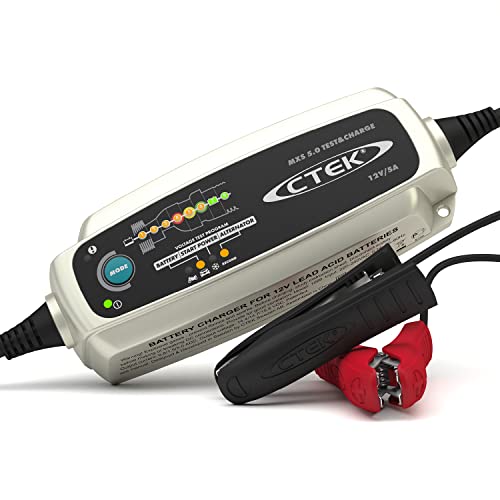
Best for testing and charging from one wall unit
- Battery voltage test before charging
- Alternator and charging system check
- Dedicated AGM absorption setting
- Cold-weather program for freezing garages
Why buy it: the tidy answer if you want one device on the wall — it checks the battery and the alternator, then charges correctly based on what it found.
Prices are pulled from Amazon and were accurate as of Aug 22, 2026, 6:44 PM EDT. Product prices and availability are subject to change — the live price is shown on Amazon.
Conductance vs Load Testing vs Charger Test Modes
Three different tools give three slightly different answers, and knowing which you are holding prevents a lot of confusion.
A load tester is the traditional approach. It applies a genuine electrical load — typically around half the rated CCA — for ten to fifteen seconds and watches the voltage sag. If the battery holds above roughly 9.6 volts at room temperature under that load, it passes. It is direct and it simulates cranking honestly. The downsides are that it generates real heat, it needs a well-charged battery to mean anything, and it is hard on a battery that is already weak.
A conductance tester injects a small AC signal and measures internal resistance, which correlates with plate condition, then converts that into an estimated CCA. It takes seconds, discharges nothing, generates no heat, and works reasonably on a partially charged battery. Nearly every modern handheld analyzer works this way, including four of the six picks here. It is an inference rather than a direct measurement, which is why consistency between repeat tests is the thing to judge a unit on.
A charger with a built-in test mode is a third and more limited thing. It usually checks resting voltage, sometimes checks the alternator, and then uses that to pick a charge profile. That is genuinely useful and covers most home-garage questions, but it rarely gives you a measured CCA compared against the rating or a state-of-health percentage you can track. Buy one for convenience, not for diagnosis.
How to Read the Results Without Replacing a Good Battery
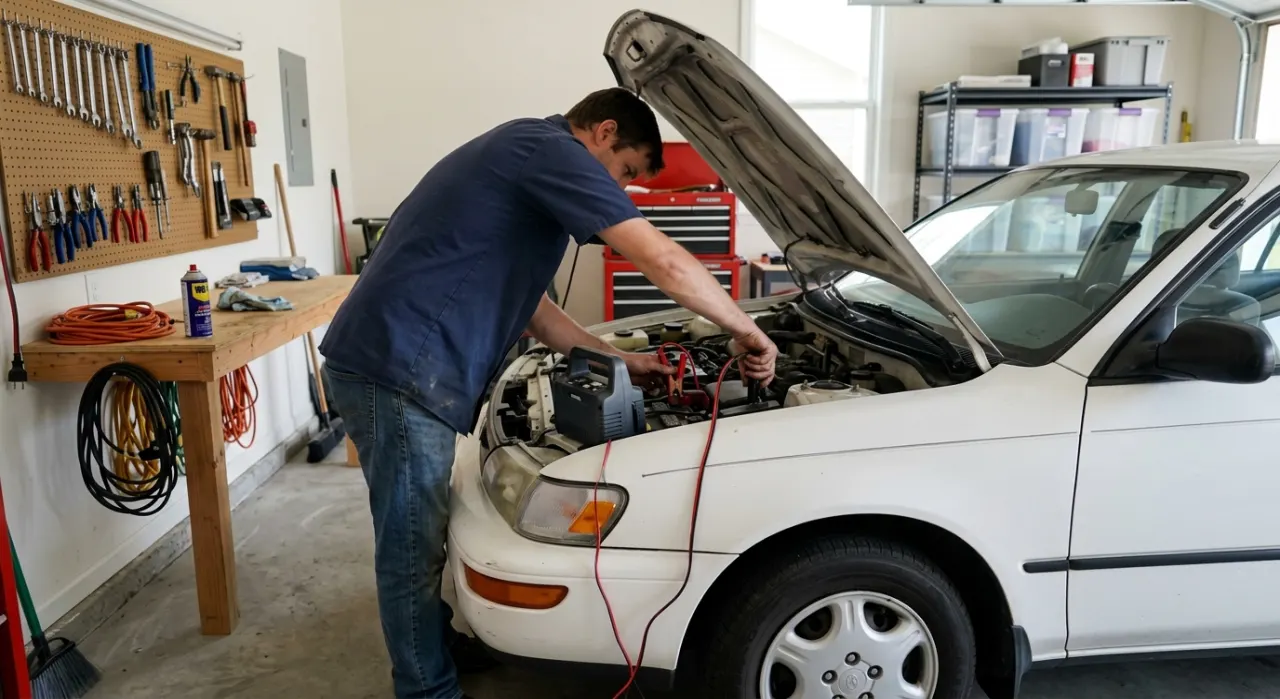
Start with resting voltage, measured at least an hour after the engine was last run. A healthy flooded 12V battery reads about 12.6 volts at full charge; 12.4 is roughly 75 percent; 12.2 is about 50 percent; 12.0 is nearly empty. AGM reads a little higher — a full AGM is around 12.8 to 12.9 volts — which is the number people misread as overcharged.
If resting voltage is low, charge before you test. This is the single most common cause of a good battery being condemned: a discharged battery and a dying battery look almost identical to a tester. Charge fully, rest an hour, then test.
Then compare measured CCA to rated CCA. Above about 80 percent of rating is healthy. Between 65 and 80 percent the battery is aging and you should plan ahead. Below about 50 to 60 percent it will let you down on the first genuinely cold morning, because cold already halves available cranking power. Finally, run the charging system test: a healthy alternator holds roughly 13.8 to 14.7 volts at the battery with the engine running. If it is below that, the battery is a victim rather than the culprit — why your car battery keeps dying works through the causes, and how to test a car battery covers the procedure step by step.
Set the Chemistry, Then Charge Correctly
Analyzers ask you to select the battery type for a reason: internal resistance differs by chemistry, and an AGM battery tested as flooded reads misleadingly. Get that right and the number means something.
The same discipline matters more once you move from testing to charging, because there it is a safety issue rather than an accuracy one. A charger must match the battery chemistry. Never apply a desulfation or repair pulse to an AGM or lithium battery — AGM is sealed and cannot be topped up, so anything it vents is gone for good, and pulsing a lithium pack drives it outside its safe voltage window. Charging lithium on a lead-acid profile can damage the pack or cause a fire. That is why the good chargers keep repair mode on its own button.
It is also worth keeping three product categories straight, because owners mix them constantly. A charger pushes real current into a discharged battery over hours. A maintainer supplies a fraction of an amp to hold an already-healthy battery at float for months. A jump starter stores no useful charge for the battery at all — it dumps cranking current for one start. Battery charger vs maintainer sorts the first two out, and the chemistry rules live in best AGM battery charger and best lithium battery charger.
Common Mistakes
Testing a discharged battery. Low charge and low health look the same to a tester. Charge, rest, then test.
Testing immediately after driving. Surface charge inflates voltage for an hour or more. Turn the headlights on for thirty seconds to bleed it off, or wait.
Trusting a single reading from a cheap unit. Test three times. If the results scatter widely, the tool is the problem.
Using CCA to judge a deep-cycle battery. CCA measures cranking ability. A house or trolling battery is judged on capacity — see deep cycle chargers for what those batteries actually need.
Replacing the battery without checking the alternator. If the charging system is undercharging, the new battery dies the same way the old one did.

Car Battery Analyzers vs Hobby and Industrial Analyzers
The phrase "battery analyzer" covers three very different tools, and it is worth knowing which one you actually need. Everything ranked here is an automotive 12V (and 6V) analyzer for starting batteries. A second world is the advanced hobby cell analyzer — units like the SkyRC MC3000 or a Vapcell tester that measure the capacity of individual AAA, AA, NiMH and 18650 flashlight cells, charging and discharging each one to log real mAh. A third world is industrial and aviation gear — brands like Christie build analyzers that service and capacity-test aircraft and fleet battery packs. They share a name but answer different questions, so if you are testing rechargeable AA cells or a drone pack, an automotive CCA analyzer is the wrong tool, and vice versa.
Easy Setup: Simple Readings vs Advanced Features
For a car battery, the best analyzer for most people is the one with the easy, no-menu setup: clip the leads on, pick the battery type and rated CCA, and read the result. That simple operation is exactly why the plain handhelds here get recommended so often — there is nothing to misconfigure. Step up to a Bluetooth or logging unit only if you genuinely need the extra features: a stored history to watch a battery decline over months, exportable reports, or a supported-battery library that fills in the rating for you. Owners currently tracking several vehicles get real value from that data; someone who just wants a go/no-go answer in the driveway does not, and is better served by the simplest tool that reads consistently.
Do You Need to Spend a Fortune on a Battery Analyzer?
If you are looking at charger analyzers and wondering how much to spend, the honest answer for a car battery is: not much. A consistent $40 handheld gives you the same CCA-against-rating number that a shop tool does, and generally the extra money buys logging, Bluetooth and a supported-battery library rather than a better core reading. You only need to spend more in two cases — tracking several batteries over time, where a history pays off, or crossing into hobby-cell work, where a dedicated unit like a SkyRC, Vapcell or XTAR analyzer measures individual AA, AAA, NiMH and 18650 capacity that no automotive tester touches. For a driveway go/no-go call on a starting battery, a simple consistent analyzer is the smart buy; save the fortune for a good charger and a spare battery rather than an over-featured tester you will not use.

How We Rank
We have no lab and we do not bench-test tools ourselves. We rank by aggregating owner ratings, review volume and the recurring themes buyers report over years of use, weighed against published specifications and standard automotive diagnostic practice. In this category the dominant criterion is consistency: an analyzer that returns noticeably different CCA figures on consecutive tests of the same battery is worthless regardless of its feature list, and owner reports are unusually good at exposing that. Beyond consistency we favor units that state a clear CCA range and the standards they support, that handle AGM and EFB rather than flooded only, and that also test the starter and alternator, since a repeatedly flat battery is often a charging-system fault. We identify plainly which picks are conductance testers, which apply a real load, and which are chargers with a diagnostic mode attached, because those three answer different questions. Prices were current at the time of writing.
The Verdict
For most people the TOPDON BT100 is the analyzer to own — consistent readings, CCA compared against the label, and cranking plus charging system tests for around forty dollars. If you would rather have a true load test and a state-of-health percentage on a budget, the KONNWEI KW208 is the pick. Anyone tracking several batteries over time, or wanting exportable records, should step up to the Bluetooth TOPDON BT100W, while the ANCEL BA101 is the no-menus option to leave in a trunk. Owners of golf carts, RVs or marine banks built from 6V batteries need the FOXWELL BT100 Pro, because most automotive testers will not read 6V at all. And if you would rather have one device on the garage wall that tests and then charges, the CTEK MXS 5.0 Test & Charge is the tidy answer.
Related reading: the battery chargers hub, smart chargers, chargers for winter storage, best battery tester for the standalone tester ranking, and reading OBD2 codes for the rest of the diagnostic picture.
Quick Comparison
TOPDON BT100 (100–2000 CCA)
Best for a clean CCA number before you decide to charge
Best Value
KONNWEI KW208 (100–2000 CCA Load Tester)
$29.95 · Check Price on Amazon
Best Premium
TOPDON BT100W (Bluetooth Battery Analyzer)
Check Price on Amazon
Best for Quick Checks
ANCEL BA101 (100–2000 CCA)
$38.99 · Check Price on Amazon
Best for RV & Marine Batteries
FOXWELL BT100 Pro (6V/12V)
Check Price on Amazon
Best Charger With a Built-In Analyzer
CTEK MXS 5.0 Test & Charge (4.3A)
$230.95 · Check Price on Amazon
Prices are pulled from Amazon and were accurate as of Aug 22, 2026, 6:44 PM EDT. Product prices and availability are subject to change — the live price is shown on Amazon.