

Affiliate Disclosure
Some links on this page are affiliate links. As an Amazon Associate, we earn from qualifying purchases — at no extra cost to you. We do not buy, test, or physically handle the products we cover; our rankings come from aggregated owner reviews, ratings and expert consensus. Commissions never change our verdicts. How we rank & full disclosure.
The short version: "portable battery charger" means two completely different products, and buying the wrong one is why people end up disappointed. A portable charger is a small mains-powered smart charger you can throw in a bag, take to a second car, a bike or a storage unit, and leave connected for hours. A jump starter is a lithium pack that cranks a dead engine in seconds and puts nothing meaningful back into the battery. This page ranks the first kind. Ranked across tens of thousands of owner reviews, our #1 is the NOCO GENIUS2: a genuine multi-stage smart charger the size of a phone charger, with AGM and lithium modes.
If what you actually need is roadside cranking power, stop here and read best portable jump starter instead — and battery charger vs maintainer explains the third category, the storage maintainer, in the same terms.
Top Picks at a Glance
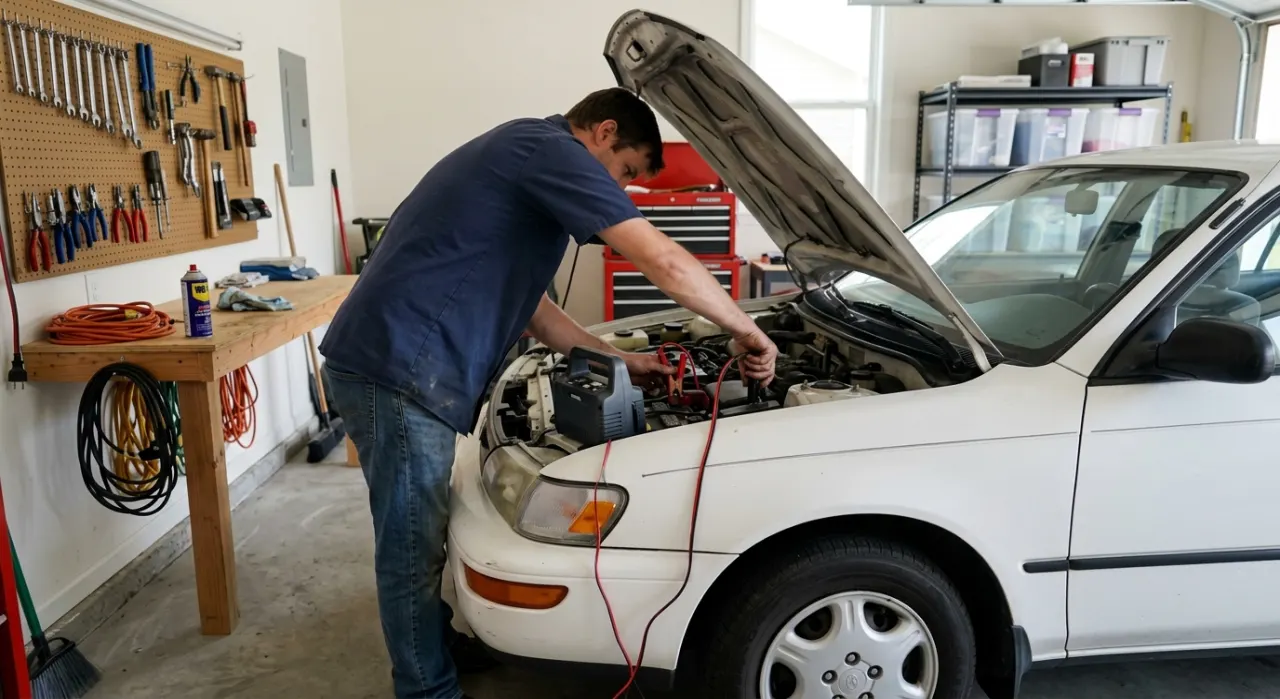
Why the NOCO GENIUS2 Is Our #1
Portability usually means compromise, and the reason the GENIUS2 tops this list is that it barely makes one. Under a pound and roughly the size of a deck of cards with cables, it still runs the full diagnose-desulfate-bulk-absorption-float curve that a wall-mounted charger runs, still compensates for ambient temperature with an internal thermal sensor, and still lets you select 6V, 12V, 12V AGM or 12V lithium before it starts. That last point is what owners repeatedly say sold them: one small unit safely covers a stop-start car with an AGM battery, an old flooded truck battery and a LiFePO4 powersports battery.
The other practical strength is the cable set. Both a clamp lead and a ring-terminal eyelet harness come in the box, so you can bolt the harness onto a stored vehicle once and afterwards charging is a plug and a click. Owners also report the force mode earning its keep — it will push current into a battery sitting at zero volts, where many chargers simply blink an error and refuse.
The honest limits: two amps is a maintenance-and-slow-recovery current, not a rescue current. Expect the better part of a day to refill a flat car battery, and consider the 5 amp GENIUS5 below if overnight recovery matters. The LED status language also takes a manual read, and there is no display or app to tell you the actual voltage.
Best Portable Car Battery Chargers 2026: The Ranked Field

Best for a full smart charger that fits in a glovebox
- 2A on 6V and 12V, 0.9 lb housing
- AGM and lithium (LiFePO4) modes
- Force mode charges from 0 volts
- Eyelet harness and clamps in the box
Why buy it: the smallest charger owners rate as a genuine smart charger — multi-stage charging, chemistry selection and a body that travels in a door pocket.

Best for a cheap, light charger for a second vehicle
- 1.5A, 6V and 12V automatic
- Charge, maintain and float modes
- Quick-connect harness included
- Reverse hook-up protection
Why buy it: the budget travel charger owners keep in the truck of a second car — automatic float means it can stay connected without cooking the battery.

Best for weatherproof charging with app monitoring
- 5A adaptive multi-stage charging
- IP65 dust and water resistant
- Bluetooth app with live charge data
- Lead-acid and LiFePO4 algorithms
Why buy it: the charger overlanders and van owners travel with — sealed against weather, and the app tells you exactly what the battery is doing.
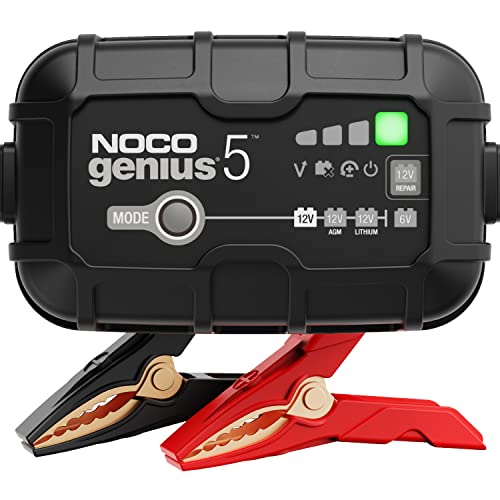
Best for a portable charger that can actually refill a flat battery
- 5A on 6V and 12V, still hand-sized
- AGM, lithium and repair modes
- Thermal sensor adjusts for temperature
- Charges batteries down to 1 volt
Why buy it: the compromise most owners land on — small enough to carry, but 5 amps means a dead car battery is an overnight job rather than a three-day one.

Best for switchable 6V/12V duty in a camper or trailer
- 4A, switchable 12V or 6V
- Lead-acid, AGM, gel and lithium
- Four-stage charging with float
- Compact case, long DC leads
Why buy it: the traveler’s charger — one small unit covers the 12V chassis battery and 6V golf-cart-style house batteries in older campers.
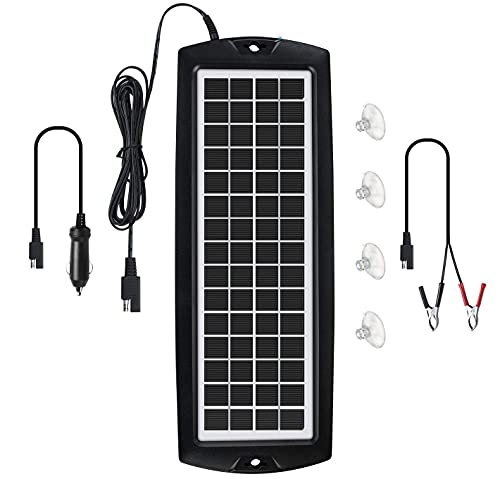
Best for vehicles parked where there is no power at all
- 5W panel with charge controller
- Cigarette-lighter plug and clamps
- Weather-resistant for dashboard use
- Offsets parasitic drain in storage
Why buy it: the only pick here that works with no outlet — it will not recover a flat battery, but it holds a healthy one in a paddock or storage lot.
Prices are pulled from Amazon and were accurate as of Aug 22, 2026, 6:44 PM EDT. Product prices and availability are subject to change — the live price is shown on Amazon.
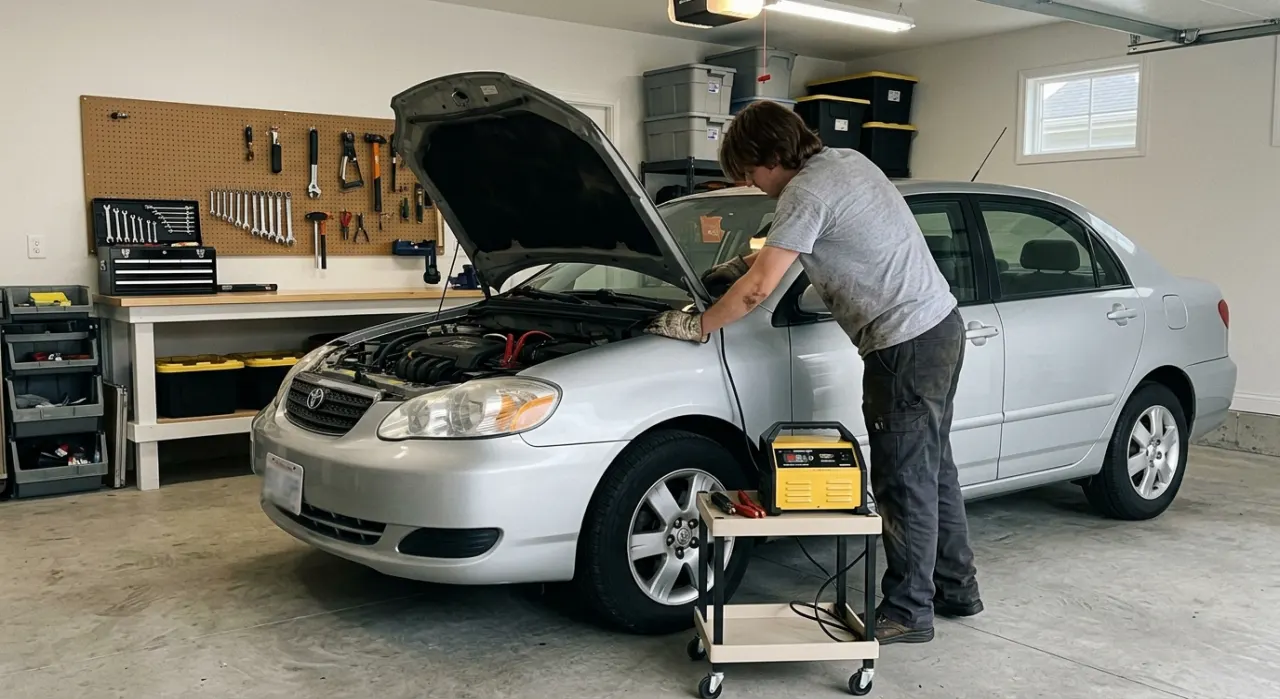
Charger, Maintainer or Jump Starter?
Getting this right saves money and frustration, so it is worth being blunt about the three categories. A charger converts wall power into a controlled current and refills a discharged battery over hours; the amperage tells you how fast. A maintainer or trickle charger is the same technology at under 2 amps, designed to hold an already-healthy battery at float voltage for months of storage — ranked in best trickle charger. A jump starter is a battery in its own right; it delivers hundreds or thousands of amps for a few seconds so the starter motor turns, then the alternator does the rest. It does not charge your battery, and a car jumped from one will go flat again if the underlying problem is not fixed.
Many owners end up with two of the three: a small charger like the GENIUS2 on the shelf, and a lithium jump pack in the trunk. Whether the jump pack is worth it is argued out in is a lithium jump starter worth it.
How to Choose a Portable Charger
Start with what you want it to accomplish. Maintaining a stored vehicle needs 1 to 2 amps and the smallest housing you can find. Reviving a flat battery overnight needs 4 to 5 amps. Anything more and portability disappears. Next, chemistry: buy a unit with explicit AGM and lithium modes unless you are certain every battery you own is flooded lead-acid. Then look at cables, which is where cheap portable chargers disappoint — six feet of DC lead and a quick-connect eyelet harness are what make a small charger usable on a car whose battery sits at the back of the engine bay.
Finally, consider where it will live. A charger that travels in a truck box or gets used on a boat trailer should be sealed — the IP65-rated Victron is built for exactly that, while most plastic-cased chargers are indoor devices that tolerate a garage and nothing wetter. If the vehicle is parked somewhere with no power at all, none of the mains units help and a solar maintainer is the only option, with the caveat that it maintains rather than charges.

The Specs That Decide It
Amps. The headline number, and the one people get wrong. Amps set charging speed, not quality — a 2 amp smart charger and a 5 amp smart charger apply the same voltage curve, one just takes longer. Work out how many amp-hours you need to replace, divide by the charger current, and add roughly 20 percent for the absorption stage that tapers at the end.
Chemistry modes. Look for the words AGM and lithium or LiFePO4 on the unit itself, not just in the listing copy. A charger with a single automatic program is a flooded lead-acid charger.
Ingress rating. IP65 means dust-tight and protected against water jets — the difference between a charger you can use on a trailer in the rain and one that belongs on a bench. Most compact chargers have no rating at all.
Cable length and terminations. Six feet of DC lead and a quick-connect eyelet harness turn a portable charger into something you will actually use. Short, stiff leads are the single most common complaint owners raise about small chargers.
Common Mistakes
Buying a jump starter and expecting the battery to be charged. It will not be. The engine runs; the battery is still weak.
Buying a 1 amp maintainer to fix a dead battery. It may refuse to start on a very low battery, and at best it takes days. Recover with a bigger charger first — see best 12V battery charger.
Leaving a solar panel on the dash without a controller. Panels without a charge controller can overcharge in strong sun. Every solar pick worth buying has one built in.
Ignoring why the battery keeps dying. A charger is a bandage over a parasitic draw or a failing alternator. Why your car battery keeps dying covers the diagnosis.

How We Rank
We have no lab and we do not bench-test chargers ourselves. We rank by aggregating owner ratings, review volume and the recurring themes in long-term reviews, weighed against published specifications and the consensus among mechanics and RV owners. Four criteria carry the most weight here. Charging behavior — a real multi-stage curve with a float stage, so the charger can be left connected. Chemistry support — labeled AGM and lithium modes rank above a single lead-acid profile, because mismatched profiles are a safety matter. Genuine portability — weight, housing size and, crucially, cable length, since a compact charger with short leads is useless in a real engine bay. And value and durability, based on what owners report after several years. Prices were current at the time of writing.
The Verdict
For a charger you can carry anywhere and still trust on any battery in the driveway, the NOCO GENIUS2 is the one owners rate highest. If overnight recovery of a flat car battery matters more than absolute size, step up to the NOCO GENIUS5. Travelers, boaters and anyone charging outdoors should pay for the sealed Victron Blue Smart IP65, and if the vehicle is parked where there is no power, the Sunway 5W solar maintainer is the only pick that works at all.
Related reading: best smart battery charger, chargers for motorcycles, the battery chargers hub, and the roadside emergency hub for the rest of what belongs in the trunk.
Quick Comparison
NOCO GENIUS2 (2A)
Best for a full smart charger that fits in a glovebox
Best Value
Schumacher SC1319 (1.5A, 3-in-1)
Check Price on Amazon
Best Premium
Victron Blue Smart IP65 12V 5A
Check Price on Amazon
Best for Faster Recovery
NOCO GENIUS5 (5A)
$69.95 · Check Price on Amazon
Best for RVs & Road Trips
Battery Tender 4A (022-0209-BT-WH)
Check Price on Amazon
Best Off-Grid
Sunway Solar 5W 12V Trickle Charger
$32.39 · Check Price on Amazon
Prices are pulled from Amazon and were accurate as of Aug 22, 2026, 6:44 PM EDT. Product prices and availability are subject to change — the live price is shown on Amazon.