
Affiliate Disclosure
Some links on this page are affiliate links. As an Amazon Associate, we earn from qualifying purchases — at no extra cost to you. We do not buy, test, or physically handle the products we cover; our rankings come from aggregated owner reviews, ratings and expert consensus. Commissions never change our verdicts. How we rank & full disclosure.
The short version: a high-mileage engine is the single best candidate for an injector cleaner, and the reason is simple. Deposits accumulate slowly over 100,000-plus miles, and because they accumulate slowly you never notice the loss — you just get used to a car that idles rougher and hesitates more than it did at 40,000 miles. A concentrated PEA cleaner is the cheapest way to claw some of that back. Ranked across aggregated owner reviews, our #1 pick is Red Line SI-1, because on a tired engine the variable that matters is detergent concentration, and SI-1 has more of it per treated gallon than almost anything else you can buy retail.
The caveat matters just as much. High mileage also means worn parts, and a bottle cannot restore compression, fix a lazy coil or seal a cracked vacuum line. If your car is running badly rather than running tiredly, a cleaner is the wrong first purchase. Below is the ranked field, what PEA content actually means, and how to run a bottle so it has a fair chance of working. For the wider category, start at the fuel system cleaners & additives hub.
Top Picks at a Glance
Our #1 Pick: Red Line SI-1 Complete Fuel System Cleaner
Red Line SI-1 wins this list on one number: concentration. Nearly every bottle in the additive aisle contains some polyether amine, because PEA is the only widely used detergent class that survives combustion-chamber temperatures long enough to reach the deposits that matter. What separates products is how much of it is in there, and that is far easier to read off the treat rate than the marketing. SI-1 is dosed at roughly one 15 oz bottle per tank of gas. A typical maintenance bottle claims 100 gallons from a similar volume. That is a five-fold difference in strength for a nearly identical shelf price.
Across roughly eleven thousand owner reviews, the pattern reported on higher-mileage cars is consistent: a settled idle, a cleaner throttle tip-in, less of the light hesitation that creeps in on part throttle, and occasionally a modest economy improvement in the tank after treatment. Owners of newer, well-maintained cars just as consistently report feeling nothing at all — which is exactly what you would expect and a useful reminder that this is corrective chemistry rather than a performance part. SI-1 also carries an upper-cylinder lubricant, which is a genuine if minor benefit on an engine with worn valve guides. Run it in one tank, drive that tank hard on the highway, then judge.
Best High-Mileage Injector Cleaners 2026: The Ranked Field

Best for the highest PEA concentration per treated gallon in a supermarket-priced bottle
- One of the most concentrated PEA doses on the shelf
- One 15 oz bottle treats a single tank, not five
- High-temp and low-temp detergents in one blend
- Adds upper-cylinder lubrication for worn guides
Why buy it: the strongest single-tank cleanout most owners can buy without a shop visit — which is exactly what a neglected high-mileage engine needs before it settles into maintenance doses.
Best for a tired commuter past 75,000 miles on a tight budget
- Real PEA detergent in a compact 6 oz dose
- Formulated specifically for engines past 75,000 miles
- Adds upper-cylinder friction reduction
- Conditions fuel against ethanol and water
Why buy it: the cheapest bottle here that still runs genuine PEA chemistry. Owners of older, higher-mileage cars consistently rate it for smoothing out idle without a premium price.
Best for European cars and owners who want the strongest concentrate available retail
- 300 ml treats up to roughly 18 gallons
- Heavily concentrated injector detergent
- Designed around converter-equipped engines
- Long-standing favorite in European owner forums
Why buy it: the enthusiast pick on high-mileage German cars. Owners describe it as the bottle that actually changes how a car idles rather than one that just smells like solvent.

Best for a bottle at every oil change once the engine is clean again
- Patented polyether amine (PEA) detergent
- Recognized in multiple automaker service schedules
- Safe with every ethanol blend up to E85
- One 20 oz bottle treats up to 20 gallons
Why buy it: the maintenance bottle. It is not the most aggressive cleanout here, but it is the one owners keep buying for a decade, and keeping deposits from returning is cheaper than removing them twice.

Best for pre-2000 cars, seasonal vehicles and anything that sat for a year
- Aggressive solvent blend that cuts old varnish
- Treats up to 20 gallons of gasoline
- Long track record on carbureted and early EFI engines
- Also usable as a soak for removed parts
Why buy it: the bottle mechanics reach for when the fuel in the tank is old rather than the deposits being new. On a truck that sat two winters, this shifts gum that a modern maintenance dose will not.

Best for high-mileage engines with worn valve guides and noisy top ends
- Blend of lubricating oils plus detergent
- One quart treats up to 100 gallons of fuel
- Works in gasoline and diesel engines
- Aimed at lubricity rather than deposit removal
Why buy it: the odd one out here on purpose. It is a lubricity product first and a cleaner second, and on a genuinely worn engine that is often the more useful half of the equation.
Prices are pulled from Amazon and were accurate as of Aug 22, 2026, 6:54 PM EDT. Product prices and availability are subject to change — the live price is shown on Amazon.
PEA Content: The Only Spec Worth Comparing
If you take one thing from this page, make it this. The ingredient that separates a real injector cleaner from an expensive bottle of solvent is polyether amine — PEA. Deposits form in the hottest parts of the fuel system: injector tips, valve stems, the combustion chamber. Most cleaning chemistry simply evaporates or breaks down before it gets there. PEA stays intact through combustion temperatures and lifts carbon and varnish off exactly those surfaces.
The cheaper alternatives you will see on the shelf are polyisobutylene amine (PIBA) and polyisobutylene (PIB). Both clean injectors reasonably well and cost the blender far less. Both are markedly weaker on combustion-chamber and intake-valve deposits, and PIB in particular has a history of contributing chamber deposits of its own. Then there is the bottom shelf: naphtha, mineral spirits or kerosene with a fragrance and a bold label. Those thin your fuel and do very little else, which is why a gallon jug for eight dollars is not the bargain it looks like.
Nobody prints a PEA percentage on the bottle, so use the treat rate as your proxy. Divide the bottle volume by the gallons it claims to treat. Under about 1 oz of product per gallon of fuel and you are holding a maintenance dose. Around 1 oz per gallon or stronger — SI-1, Jectron, Techron at its stated rate — and you are holding a concentrate. On a high-mileage engine, the concentrate is the one you want first.
What "High Mileage" Really Buys You
High-mileage formulas usually add two things: an upper-cylinder lubricant and a friction modifier. The logic is sound. An engine past 100,000 miles has more valve-guide wear and looser clearances than it did new, and a little extra lubricity riding in with the fuel does no harm and may quiet a top end slightly. Lucas Fuel Treatment is the purest expression of that idea — it is a lubricity product with detergent added, rather than the other way round.
What "high mileage" does not reliably buy you is more detergent. Several high-mileage bottles are the standard formula with an extra additive and a different label. That is not a scandal, but it does mean you should not pay a premium for the words alone. Compare treat rates between the standard and high-mileage versions of the same brand and you will usually find they are identical.
The other thing worth being blunt about: no fuel additive restores compression. If your high-mileage engine burns oil, blows blue smoke on startup or fails a leak-down test, deposits are the least of its problems. That is a mechanical conversation, and the honest first step is a scan tool and a compression gauge, not a bottle. Our reading OBD2 codes hub covers how to get the data before you spend.
How to Run a Bottle So It Actually Works
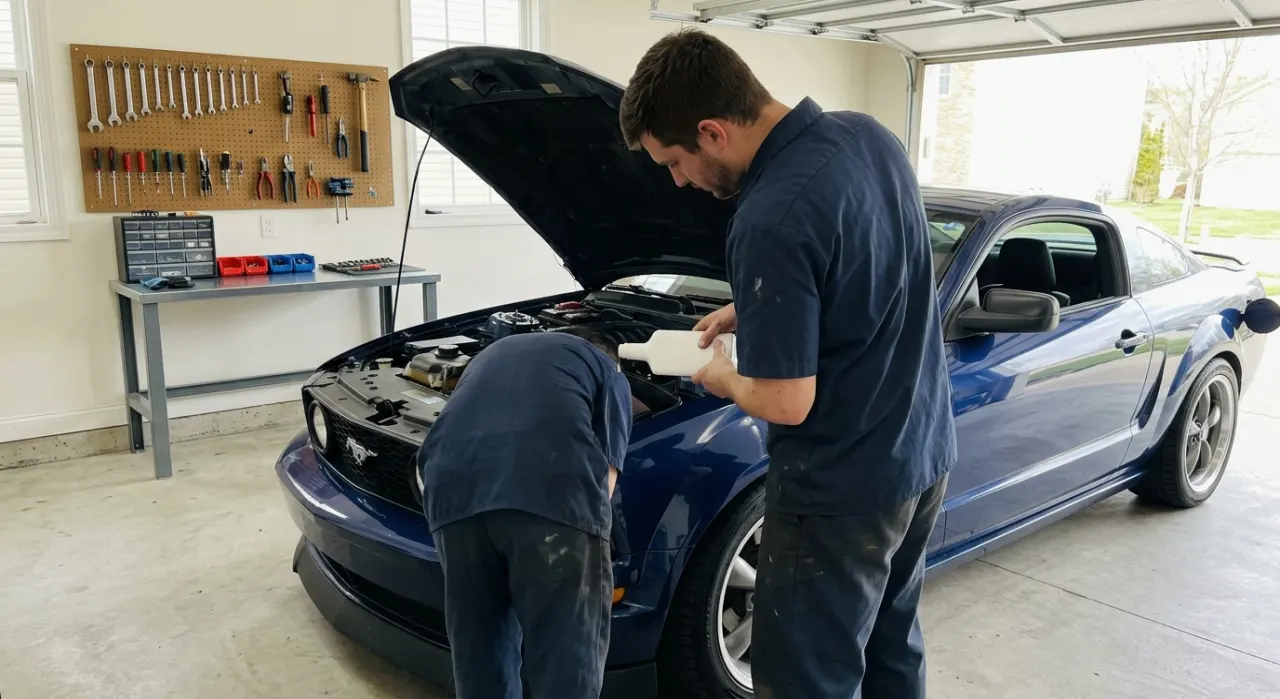
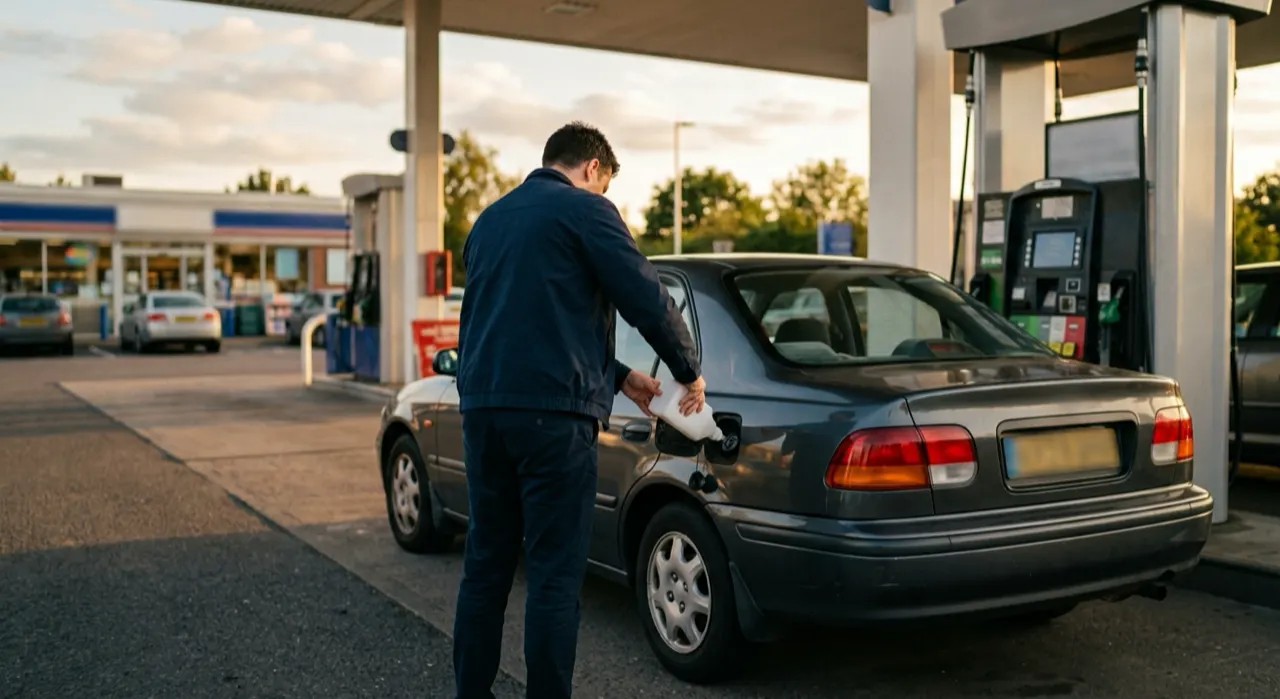
Almost everyone gets one part of this wrong. Add the bottle to a low tank — a quarter full or less — then drive straight to the pump and refuel so the cleaner mixes as the tank fills. Concentration is the entire mechanism. Pouring a treat-20-gallons bottle into an already-full 20-gallon tank halves the dose you paid for and roughly halves the result.
Then drive the whole tank normally, and make sure some of it is sustained highway running at temperature. Deposits come off with heat and flow. A treated tank burned entirely in stop-start traffic gives the chemistry the worst possible conditions to work in.
Do not stack products. Running an injector cleaner and a separate fuel system cleaner in the same tank is not additive, and mixing a strong solvent product with a PEA concentrate can dilute both below their working concentration. One bottle, one tank, then judge the result. If you want the difference between those two label categories spelled out, we already did it in fuel injector cleaner vs fuel system cleaner.
Plan for the fuel filter. On a car with an unknown service history, a heavy first cleanout can push loosened debris downstream. If yours has a serviceable in-line filter, change it after the second treatment. It is a cheap part and it closes off the one genuine risk in this whole exercise.
Common Mistakes on a High-Mileage Car
Buying by bottle size. The big jugs of thin chemistry near the register are almost always worse value than a small bottle of a real concentrate. Compare treat rates, never volumes.
Dosing every single tank. There is no evidence it helps and it quietly triples your additive spend. A hard start of two or three concentrated treatments, then one bottle per oil change, is the sensible ceiling.
Expecting a power gain. A clean fuel system restores what the engine had. It adds nothing. If you want more than the engine made new, that is a different conversation entirely — see performance mods.
Using a tank additive to chase intake-valve carbon on a direct-injected engine. On a GDI engine the fuel never washes the back of the valve, so nothing you pour in the tank can reach the coking there. We laid that out properly in best intake valve cleaner.
Treating a fuel problem that is really an oil problem. A high-mileage engine with a rough idle and a history of skipped services may be carrying crankcase sludge rather than injector deposits. That is a different product and a different risk profile — see best engine sludge treatment and the oil change hub.
How We Rank
We do not run a lab and we have not flow-tested a set of injectors on a bench. We rank by aggregating owner ratings and review volume across tens of thousands of buyers, then weighing four things. Active chemistry — whether the bottle is a genuine PEA concentrate or a solvent wearing a detergent label. Treat rate and real cost per treated gallon, which is the only honest measure of value in this category because bottle size means nothing. Compatibility with ethanol blends, port and direct injection, turbos, converters and oxygen sensors. And consistency of reported outcomes specifically on older, higher-mileage cars, which is a different population from the reviewers treating a two-year-old lease car. Prices were current at the time of writing.
The Verdict
For a high-mileage engine that has gone soft rather than gone wrong, Red Line SI-1 is the bottle to buy: the strongest retail PEA dose per treated gallon, at a price that makes running two consecutive tanks painless. On a budget, Gumout Regane High Mileage delivers real PEA chemistry for half the money. European car owners should look at Liqui Moly Jectron, and anyone whose fuel has been sitting rather than whose deposits are fresh will get more from Berryman B-12. Once the engine is clean, switch to Techron at every oil change and stop thinking about it.
And the honest closing note: if two proper treatments change nothing, that is your answer. Put the money into diagnosis instead. The rest of the category, including the bottles we think most drivers should skip, is laid out in best fuel system cleaner and best gas treatment.
Quick Comparison
Red Line 60103 SI-1 Complete Fuel System Cleaner (15 oz)
Best for the highest PEA concentration per treated gallon in a supermarket-priced bottle
Best for Ongoing Maintenance
Chevron Techron Concentrate Plus Fuel System Cleaner (20 oz)
$16.99 · Check Price on Amazon
Best for a Gummed-Up Older Engine
Berryman 0116 B-12 Chemtool Carburetor, Fuel System and Injector Cleaner (15 oz)
Check Price on Amazon
Best for Upper-Cylinder Lubrication
Lucas Oil 10003 Fuel Treatment (1 Quart)
$11.59 · Check Price on Amazon
Prices are pulled from Amazon and were accurate as of Aug 22, 2026, 6:54 PM EDT. Product prices and availability are subject to change — the live price is shown on Amazon.