
Affiliate Disclosure
Some links on this page are affiliate links. As an Amazon Associate, we earn from qualifying purchases — at no extra cost to you. We do not buy, test, or physically handle the products we cover; our rankings come from aggregated owner reviews, ratings and expert consensus. Commissions never change our verdicts. How we rank & full disclosure.
The short version, and we will lead with it rather than bury it: if you drive a modern, well-maintained car every day on Top Tier detergent gasoline, a gas treatment is very likely doing nothing for you. Top Tier fuel already carries a detergent package meaningful enough that the major automakers wrote the standard, and a car driven regularly on it does not accumulate the deposits these bottles remove. Buying one every tank is a small, permanent tax on your fuel bill in exchange for a benefit you will never detect.
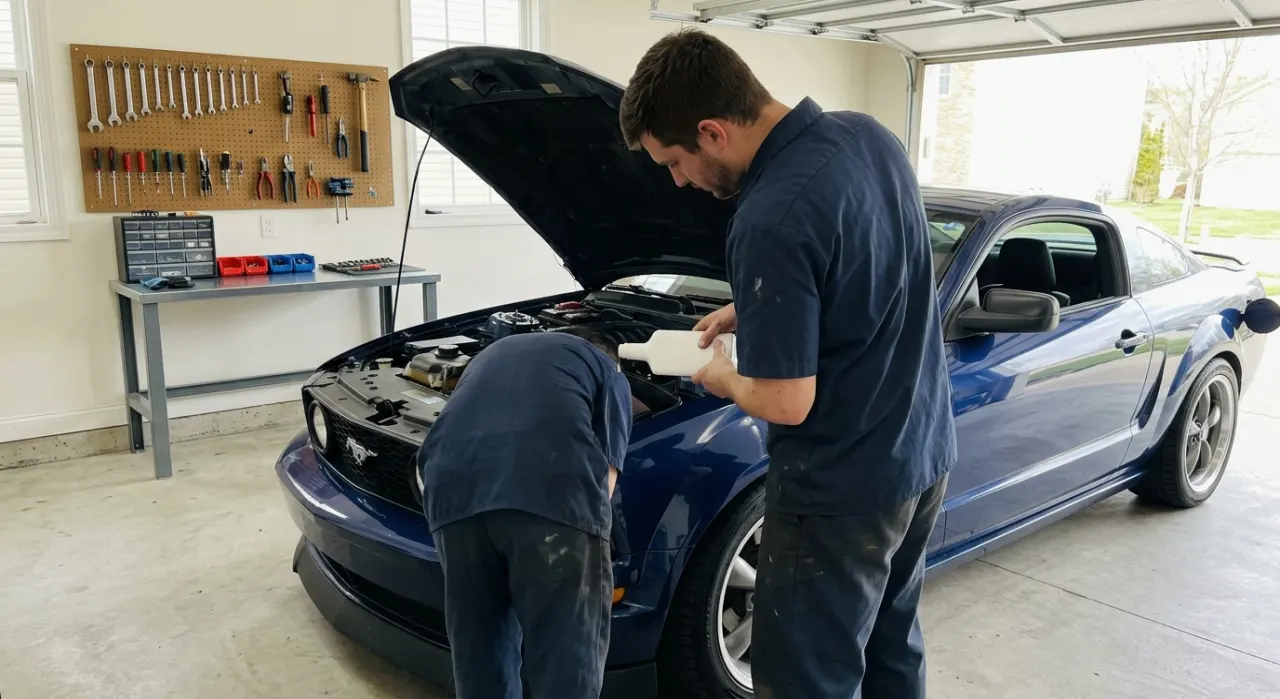
That said, three situations make this category genuinely worthwhile: a high-mileage engine carrying years of accumulated deposits, a vehicle that sits between uses, and a car that has lived on the cheapest non-detergent fuel its owner could find. In those cases a real PEA concentrate does measurable work, and our #1 pick across aggregated owner reviews is Chevron Techron Concentrate Plus. Below is the ranked field, the chemistry that separates the real bottles from the rest, and a straight answer on when to keep your money. Start at the fuel system cleaners & additives hub for the wider picture.
Top Picks at a Glance
Our #1 Pick: Chevron Techron Concentrate Plus
Techron tops this list for the same reason it tops most lists in this hub, and it has nothing to do with the packaging. It is one of the few widely available bottles built around a genuine polyether amine concentrate. PEA is the detergent class that survives combustion-chamber temperatures long enough to reach the deposits that actually matter — injector tips, valve stems, piston crowns. The cheaper chemistries in this aisle either break down before they get there or clean only the coolest part of the fuel path. That is why Techron turns up in automaker service recommendations rather than only on parts-store endcaps.
Across more than forty thousand owner reviews the pattern is steady and, importantly, honestly bimodal. Owners of cars past roughly 60,000 miles describe a settled idle, a cleaner throttle tip-in, and occasionally a small economy improvement over the treated tank. Owners of newer cars run exclusively on good gas overwhelmingly report feeling nothing — and say so. That split is the single most useful thing in the review data, because it tells you the product is doing something real on dirty engines rather than producing a placebo on all of them. One 20 oz bottle treats up to 20 gallons and costs roughly the price of lunch, which makes it easy to run at every oil change if you decide your car is in the group that benefits.
Best Gas Treatments 2026: The Ranked Field

Best for the one gas treatment worth buying if you only ever buy one
- Patented polyether amine (PEA) detergent
- Cleans injectors, valves and combustion chamber
- Safe with every ethanol blend up to E85
- One 20 oz bottle treats up to 20 gallons
Why buy it: the only bottle in this category with chemistry strong enough to matter. If a gas treatment is going to do anything measurable on your car, this is the one that does it.

Best for a cheap whole-system dose that can also be run through the intake
- Usable in the tank, the crankcase or via induction
- Targets GDI and port injectors, valves and piston tops
- Also acts as a short-term fuel stabilizer
- 16 oz bottle treats a full tank
Why buy it: the most flexible cheap bottle here. It is not the strongest detergent in the aisle, but the three application methods make it more useful than a pour-in-only product at the same price.

Best for a garage with both a gas car and a diesel truck in it
- Works in gasoline and diesel engines
- Compatible with all ethanol blends and biodiesel
- Cleans injectors, carbs, valves and chamber
- Adds stabilizer duty to the same bottle
Why buy it: the one bottle that covers two very different vehicles, with published economy and emissions figures behind the claim rather than a vague promise.

Best for fuel, crankcase and short-term storage duty from one can
- 100% pure petroleum, no harsh solvents
- Safe in fuel, in oil, or as a stabilizer
- Treats up to 16 gallons of fuel
- Safe for converters and oxygen sensors
Why buy it: the most-reviewed treatment in the country and the most versatile can on the shelf — gentler than a PEA concentrate, but it does three jobs instead of one.

Best for older engines where lubricity matters more than detergency
- Blend of lubricating oils plus detergent
- One quart treats up to 100 gallons
- Works in gasoline and diesel
- Very low cost per treated gallon
Why buy it: honest about being a lubricity product with detergent added rather than a cleaner. On a worn engine that is often the more useful half, and the cost per tank is trivial.

Best for boats, RVs, classics and anything that sits between uses
- Vapor-phase corrosion protection above the fuel line
- Cleans injectors while protecting against ethanol damage
- One 32 oz bottle treats up to 160 gallons
- Designed for in-season use on seasonal equipment
Why buy it: the genuine use case for this whole category. A vehicle that sits has a real fuel problem; a daily driver on good gas mostly does not.
Prices are pulled from Amazon and were accurate as of Aug 22, 2026, 6:54 PM EDT. Product prices and availability are subject to change — the live price is shown on Amazon.
Do You Actually Need a Gas Treatment?
Run through this honestly before you buy anything.
You probably do not need one if your car is under about 60,000 miles, gets driven several times a week, and you buy fuel from a Top Tier retailer. The detergent already in that fuel is doing the job. Adding a bottle is not harmful, but expect to feel nothing, and be suspicious of yourself if you think you do.
You probably do benefit if the car is high mileage and has gone soft — a slightly rough idle, a hesitation on tip-in, a general tiredness that came on so gradually you stopped noticing. That is the classic deposit profile and the highest-probability improvement per dollar in this entire hub. The dedicated ranking is in best fuel injector cleaner for high mileage.
You definitely benefit if the vehicle sits. A boat used six weekends a year, an RV, a classic that comes out in summer, a second car driven twice a month — these have a fuel problem, not a deposit problem, and it is a real one. Gasoline oxidizes into varnish within months, and ethanol-blended fuel absorbs water. That is where STA-BIL 360 and the storage products earn their money; the full ranking is in best fuel stabilizer.
The one you should skip is the dollar bottle at the gas station register. Almost all of it is naphtha or mineral spirits with a fragrance and a bold label, treating 100-plus gallons from a few ounces. It thins your fuel and does essentially nothing else.
What Is Actually in the Bottle
Three ingredient families cover nearly everything sold as a gas treatment, and the price difference between them is much smaller than the effectiveness difference.
PEA — polyether amine. The real detergent. Survives combustion temperatures, cleans injectors, valves and chamber deposits. Techron, Red Line SI-1, Liqui Moly Jectron and the stronger Gumout formulas use it. If a bottle is going to do measurable work, this is why.
PIBA and PIB — polyisobutylene amine and polyisobutylene. Cheaper, clean injectors adequately, much weaker on valve and chamber deposits. PIB in particular has a history of contributing chamber deposits of its own. Common in mid-shelf products.
Solvents and carrier oils — naphtha, mineral spirits, kerosene, light lubricating oils. These thin fuel, add a little lubricity, and smell impressively industrial. As a cleaning agent inside a hot combustion chamber, they contribute very little. This is the bulk of the cheapest bottles, and it is also, legitimately, most of what a lubricity product like Lucas Fuel Treatment is — which is fine, because that product is not pretending to be a detergent concentrate.
Nobody prints percentages, so use the treat rate as your proxy. Divide bottle volume by claimed gallons treated. Around 1 oz per gallon or stronger is a cleaning concentrate. Well under that is a maintenance dose, whatever the front label says. If you want the two most-recommended bottles in this hub argued against each other properly, we already did it in Sea Foam vs Techron.
How to Use One Properly
Two rules cover most of it. Add the bottle to a low tank, a quarter full or less, then refuel immediately so the treatment mixes as the tank fills — pouring a treat-20-gallons bottle into an already-full tank halves the dose you paid for. And drive the treated tank normally, including some sustained highway miles, because deposits leave with heat and flow rather than with idling.
Beyond that: do not stack products in one tank, do not dose every tank, and do not expect the second bottle to do what the first one did not. If a car that clearly runs badly shows no change across two proper treatments, stop buying chemistry and start reading codes — our reading OBD2 codes hub covers how to get real data cheaply.
Common Mistakes
Buying by bottle size. The big jug is usually the weakest chemistry in the store. Compare treat rates, never volumes.
Believing the mpg claim on the front. Cleaning a dirty engine can recover a little economy. Nothing makes a clean engine more efficient than designed.
Expecting it to reach a GDI intake valve. On a direct-injected engine the fuel never touches the back of the intake valve, so nothing you pour in the tank can clean the carbon there. That honest version is in best intake valve cleaner.
Using a gas treatment to chase an emissions failure. Cleaning the fuel side helps at the margins; it does not fix a converter code with a real mechanical cause. We were blunt about that in best catalytic converter cleaner.
Confusing a gas treatment with an octane booster. They do completely different things, and neither one makes a stock engine faster. The honest math is in best octane booster.
How We Rank
We do not run a lab, we have not measured economy on a test vehicle, and we have not pulled a head to photograph valves. We rank by aggregating owner ratings and review volume across tens of thousands of buyers, then weighing four things. Active chemistry — a genuine PEA concentrate or a solvent wearing a detergent label. Treat rate and real cost per treated gallon, which is the only honest measure of value here. Compatibility with ethanol blends, direct and port injection, converters and oxygen sensors. And consistency of reported outcomes over time, weighted toward reviews written after a year of use rather than after one tank. We also weight honestly-negative reviews positively: a product whose own buyers say it did nothing on a clean engine is a product whose positive reviews mean more. Prices were current at the time of writing.
The Verdict
If you have decided you want a gas treatment, buy Chevron Techron Concentrate Plus and run it at every oil change. It is the only bottle in this list whose chemistry is strong enough to reliably do the thing the whole category claims to do. Gumout Multi-System Tune-Up is the flexible budget answer, Royal Purple Max-Clean covers a mixed gas-and-diesel garage, Sea Foam is the versatile can for people who want one product for three jobs, and STA-BIL 360 is the right answer if your vehicle sits more than it drives.
And if you got this far and your car is a well-maintained modern daily driver on Top Tier gas: the honest recommendation is to skip the bottle and put the money into fuel from a better station. That is not a fashionable thing for a site with affiliate links to say, but it is what the evidence supports. The rest of the maintenance picture that does pay back is in the oil change hub.
Quick Comparison
Chevron Techron Concentrate Plus Fuel System Cleaner (20 oz)
Best for the one gas treatment worth buying if you only ever buy one
Best Value
Gumout 510011 Multi-System Tune-Up (16 oz)
$7.64 · Check Price on Amazon
Best Premium
Royal Purple Max-Clean Fuel System Cleaner and Stabilizer (20 oz)
Check Price on Amazon
Best Multi-Purpose
Sea Foam SF-16 Motor Treatment (16 oz)
Check Price on Amazon
Best for High-Mileage Lubricity
Lucas Oil 10003 Fuel Treatment (1 Quart)
$11.59 · Check Price on Amazon
Best for Stored and Seasonal Vehicles
STA-BIL 360 Protection / In-Season Fuel System Treatment (32 oz)
$15.71 · Check Price on Amazon
Prices are pulled from Amazon and were accurate as of Aug 22, 2026, 6:54 PM EDT. Product prices and availability are subject to change — the live price is shown on Amazon.