
Affiliate Disclosure
Some links on this page are affiliate links. As an Amazon Associate, we earn from qualifying purchases — at no extra cost to you. We do not buy, test, or physically handle the products we cover; our rankings come from aggregated owner reviews, ratings and expert consensus. Commissions never change our verdicts. How we rank & full disclosure.
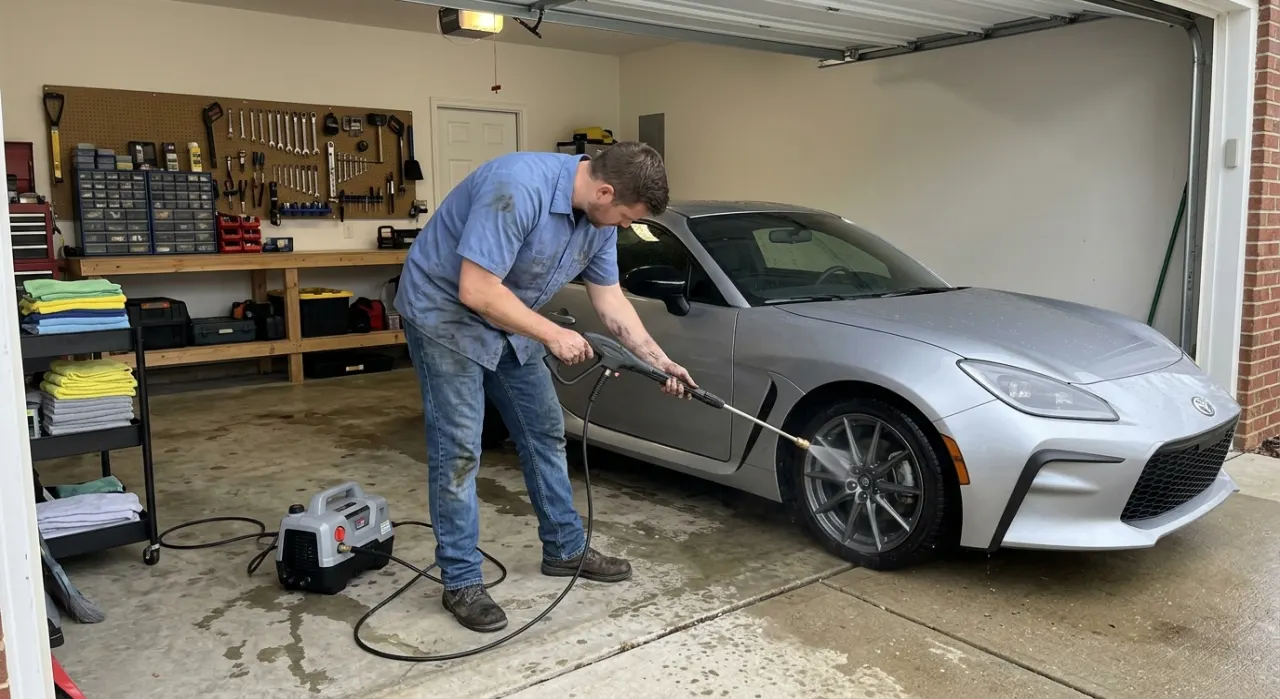
Short version: You absolutely can wash and foam a car properly for under $200. Look for an electric unit around 1,600 to 2,000 PSI with 1.2+ GPM, a metal wand connection if you can find one, and easy foam-cannon compatibility. You'll trade some hose length, flow and build quality for the price — but for one or two cars at home, a budget machine punches way above its cost.
Detailing has a reputation for being a money pit, and it can be if you let it. But the pressure washer is one place where you genuinely don't need to overspend. A careful wash with a $150 machine beats a careless blast with a $500 one every time. Here's how to spend that budget well. For the full context on choosing a machine at any price, see the pressure washer guide.
Our Top Pressure Washers Under $200
What under $200 actually gets you
In this range you're in electric territory, which for car washing is good news anyway — quieter, cleaner, lower-maintenance, and closer to the paint-safe pressure window than gas (I make that full case in gas vs electric for detailing). A typical budget unit gives you:
- Around 1,600 to 2,000 PSI — right in the safe zone for paint.
- 1.2 to 1.5 GPM of flow — enough to rinse a car and run a cannon.
- A set of quick-connect nozzles including the all-important wide fan.
- A shorter hose and cord, and more plastic in the fittings.
None of those compromises stop you from getting a spotless, foamed, paint-safe wash. They mostly affect convenience and longevity, not results.
What to prioritize on a tight budget
When money's limited, spend it on the things that affect the wash and skip the things that don't:
- Prioritize a metal wand connection. All-plastic quick-connects are the first thing to crack and leak. If a budget unit has a metal fitting, it's worth a lot.
- Prioritize decent flow (GPM) over headline PSI. Flow does the rinsing — I explain why in GPM vs PSI for car washing. A 1,700 PSI / 1.4 GPM machine beats a 2,100 PSI / 1.0 GPM one for cars.
- Check foam-cannon compatibility. Make sure the brand adapter is cheap and available, or you'll be stuck.
- Don't overpay for extreme PSI. Anything past ~2,300 PSI is pressure you'll dial back down for a car anyway (see what PSI is safe for a car).
Foam on a budget
Good news: the foam experience is nearly independent of machine price. A budget washer around 1,600 PSI runs a foam cannon just as thick as a premium unit, because foam quality comes from soap, dilution and the cannon itself — not the washer's price tag. So don't feel you need an expensive machine to get that satisfying white blanket. Put a few dollars toward a decent snow-foam soap instead. I walk through the whole setup in pressure washer + foam cannon setup.
Where budget machines cut corners (and whether it matters)
- Shorter hose: You'll reposition the machine more often around the car. Mildly annoying, easily lived with, or upgrade the hose later.
- Lower flow: Slightly slower rinsing. Not a dealbreaker for a home wash.
- Plastic fittings: The real durability concern. Treat them gently and don't over-torque connections.
- Weaker pump: Less tolerant of abuse. Never run it dry, and it'll be fine.
The honest verdict: none of these hurt the quality of the wash. They affect how pleasant and long-lived the machine is, which is exactly the right place to compromise when the budget is tight.
Make a cheap machine last
A budget washer treated well outlives a premium one that's abused. The rules are simple: never run it dry, use a short heavy-gauge extension cord (thin cords starve and can burn out the motor), rinse the inlet filter occasionally, and — the big one — never let it freeze with water inside, because expanding ice cracks pumps. Do that and your sub-$200 unit will give you several solid seasons.
And spend nothing extra on this but everything on getting it right: technique. Wide 40-degree nozzle, keep your distance, spray along panels not into seams. Good habits protect paint far better than an expensive machine — the ones to avoid are in pressure washing mistakes.
Where to spend the money you saved
Buying a budget machine frees up cash, and I'd steer that saved money toward the things that actually change your results more than the washer ever will. In rough order of impact:
- A good foam cannon. This is the single biggest upgrade to a budget setup. A quality cannon on a $150 washer out-performs a poor cannon on a $500 one.
- A proper snow-foam soap. Foam thickness lives here, not in the machine. A high-sudsing dedicated soap transforms the whole wash.
- Two buckets and grit guards. The contact-wash stage is where swirls happen. This cheap upgrade protects your paint more than any pressure spec.
- A plush drying towel. Ending the wash without dragging grit or leaving water spots matters as much as anything the washer does.
Notice none of that is about horsepower. A budget washer plus smart accessories will out-detail an expensive machine used with cheap supplies every single time. That's the whole philosophy of getting pro results on a tight budget — put the money where it touches the paint.
Setting honest expectations
I want to be straight with you about what a sub-$200 machine feels like day to day, because the reviews rarely are. The pump will be a little louder and buzzier than a premium induction-motor unit. The hose will feel stiffer and want to kink until it's been used a few times. Repositioning the machine around the car happens more often thanks to the shorter reach. And you'll baby the plastic fittings a bit — hand-tight, not gorilla-tight.
What you will not notice is any difference in how clean the car gets. The foam is just as thick, the rinse is just as complete, and the paint is just as safe. Every compromise at this price point is about comfort and durability, never about the quality of the wash. For a home detailer doing one or two cars on weekends, that's exactly the right trade.
Bottom line
You do not need to spend big to wash a car properly. A budget electric washer around 1,600 to 2,000 PSI with decent flow and easy cannon compatibility will foam, clean and rinse your car beautifully. Prioritize a metal fitting and good GPM over headline pressure, treat it kindly, and it'll serve you for years.
Recommended Pressure Washers Under $200
Best for most budget car washers — the safe default with the biggest owner base
- 2,030 PSI PWMA-rated (2,500 max) — right in the car-safe window
- Total Stop System cuts the motor off-trigger to save power
- Two onboard detergent tanks and five quick-connect tips
- The most-reviewed washer here by a wide margin, and comfortably under $200
Why buy it: the no-regret budget pick — car-safe pressure, dual soap tanks and enough flow to run a foam cannon, backed by the largest owner consensus on this page for around $150.

Best for the lowest price from a supported brand with foam-friendly flow
- 2,000 PSI, 1.2 GPM — car-safe pressure with usable flow
- Greenworks foam-cannon adapters are cheap and easy to find
- Compact, light and simple to store in a small garage
- Mainstream-brand parts support so hoses and O-rings stay available
Why buy it: the money-saver — the cheapest way here into car-safe pressure and cannon-ready flow, from a brand you can still get spares for years down the line.

Best for buyers spending near the top of the budget who wash often
- 2,300 max PSI, 1.76 max GPM — the strongest flow in this budget group
- Highest owner rating of any unit on this page
- Pro-style steel wand and onboard soap tank
- Runs cooler and quieter than universal-motor rivals, still under $200
Why buy it: the top-of-budget pick — the best flow and the highest owner rating here, for the shopper willing to spend near $200 for a machine that shrugs off regular use.

Best for owners who want a known name and easy-to-source accessories
- CETA-certified with three spray nozzles and a detergent tank
- 1.2 max GPM — steady flow that makes rinsing and foaming easy
- Kärcher parts and adapters are stocked almost everywhere
- A large, satisfied owner base at a mid-budget price
Why buy it: the trusted-name budget buy — reliable flow and a huge owner base, with Kärcher accessories the easiest of any brand to find locally, all for around $150.

Best for a lightweight unit that is easy to walk around the car
- 1,700 PSI, lightweight corded design — gentle and easy to move
- Quick-connect nozzles including a dedicated soap tip
- Strong owner rating across thousands of reviews
- Backed by Craftsman parts support and comfortably under budget
Why buy it: the easy-living budget pick — light enough to carry panel to panel, with paint-safe manners and parts support, for detailers who value comfort over headline PSI.
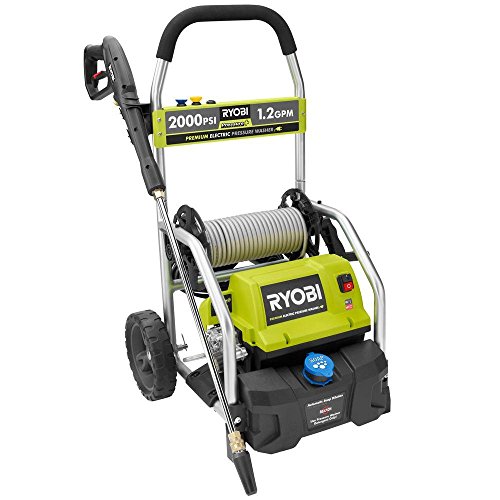
Best for apartment and small-garage owners short on storage space
- 2,000 PSI, 1.2 GPM — car-safe pressure with usable flow
- Compact footprint that tucks away easily
- Ryobi foam-cannon adapters are easy to find
- Onboard detergent tank, all for around $130
Why buy it: the space-saving budget pick — car-friendly numbers in a small package from a brand whose accessories and spares are everywhere, at one of the lowest prices here.
Prices are pulled from Amazon and were accurate as of Aug 22, 2026, 6:54 PM EDT. Product prices and availability are subject to change — the live price is shown on Amazon.
For the specific budget-friendly models I rate — plus the step-up options if you decide to spend a little more — see the best pressure washer for cars page. Those are my top picks, with the value choices called out.