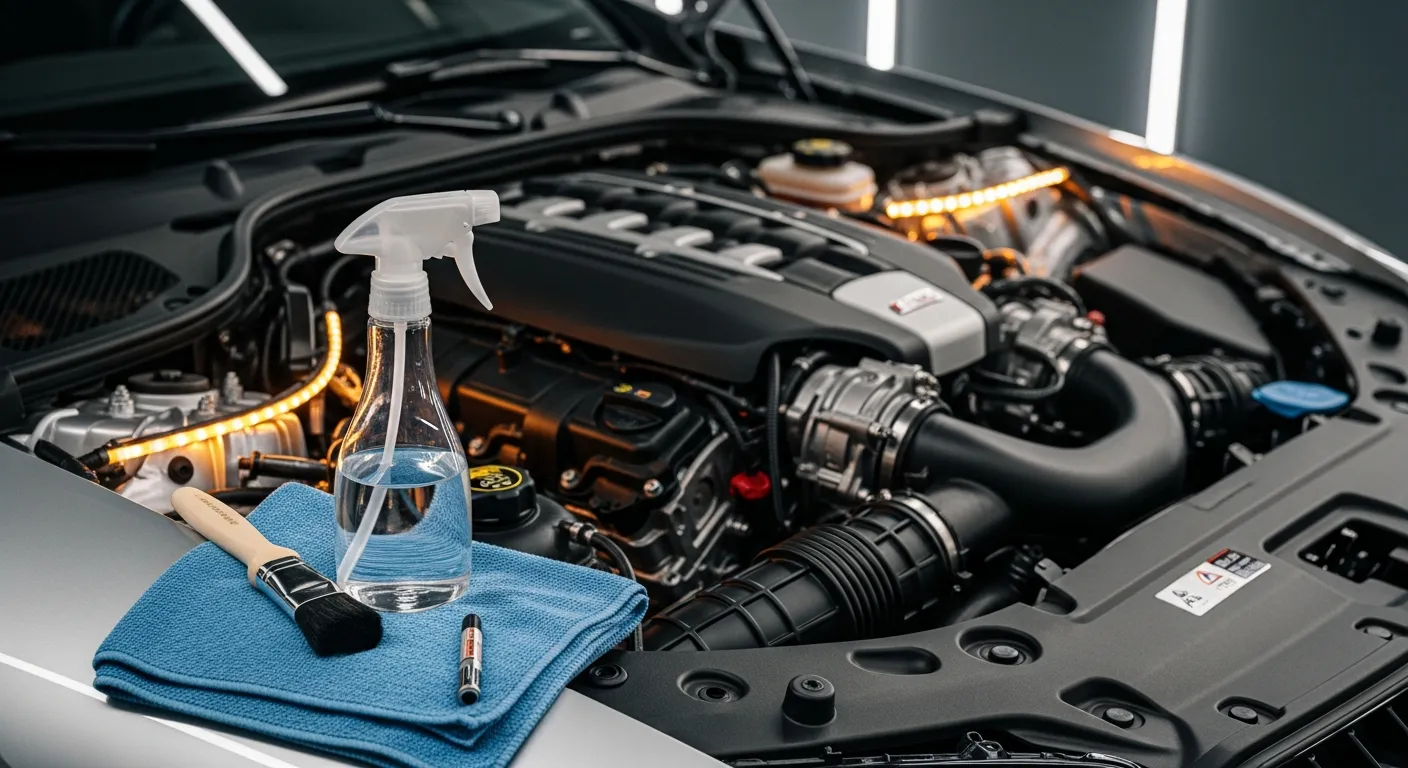
Why bother detailing the engine bay
An engine bay is the one area most owners never touch, which is exactly why a clean one turns heads at resale and makes future work easier. But there's a nervousness around it — a fear that water and electronics don't mix and you'll fry something expensive. That fear is healthy, and it's also completely manageable. Detailing an engine bay safely comes down to three rules and one simple routine.
Do it right and you get a bay that looks factory-fresh, leaks that are easier to spot, and plastics that don't crack from years of baked-on grime. Do it wrong — hot engine, exposed connectors, a pressure washer held six inches away — and you can cause the exact electrical gremlins everyone's afraid of. The difference is entirely in the preparation.
Cover the parts that hate water
Before a drop of anything touches the engine, cover the sensitive parts. The non-negotiables are the air intake, the alternator, the battery terminals, the fuse box, and any exposed electrical connectors or a visible ECU. Plastic bags and rubber bands do the job — you're not waterproofing, just keeping direct spray off the components that don't like a soaking.
Our full what to cover in the engine bay guide walks each part on common layouts, but the principle is simple: if it carries current or sucks air, bag it. Everything else can take a careful clean.
Always work on a cool engine
Never degrease a hot engine. Cold product hitting hot metal can crack components and flashes off before it can work, and a hot bay is a burn hazard for your hands. Let the car sit until the engine is cool — or barely warm at most. A slightly warm engine actually helps degreaser bite without any of the risk, so the sweet spot is a car that's been off for an hour or two, not one you just drove home.
Keep the pressure low
The biggest mistake people make is treating an engine bay like a dirty driveway and blasting it with a pressure washer. High pressure forces water past seals and into connectors, where it causes problems that show up days later as misfires and warning lights. A gentle hose, a pump sprayer, or a pressure washer on its lowest setting held well back is all you need.
We dig into the specifics in is it safe to pressure wash an engine, and the right machine in our pressure washer guide. The one-line version: low and far beats close and hard, every time.
The degrease-agitate-rinse-dress routine
With the bay covered and cool, the actual cleaning is a simple four-step rhythm. Degrease: mist a quality engine degreaser across the grimy surfaces and let it dwell a few minutes — don't let it dry. Agitate: work it in with detailing brushes to lift the baked-on film that spray alone won't shift; this step is what separates a real clean from a wipe-over. Rinse: flush gently with low pressure, keeping water off the covered parts. Dress: once dry, apply an engine bay dressing to the plastics and hoses for a satin, protected finish that resists future grime.
Our step-by-step how to clean an engine bay covers each stage in detail, and if you'd rather buy everything at once, the engine bay detailing kit guide points you to the bundles worth owning.
Degreaser and dressing do opposite jobs
Newcomers sometimes buy one product and expect it to do everything. It won't. A degreaser is a cleaner — its whole job is to break down grease and grime so it rinses away. A dressing is a finisher — it goes on last, after everything's clean and dry, to restore a deep satin look to faded plastics and protect them from the next round of grime. Use them in the wrong order, or skip the dressing, and the bay looks clean but flat, and re-soils faster. Degrease to clean, dress to finish and protect.
Where to start
If you're detailing an engine bay for the first time, keep it simple: a good engine degreaser, a set of detailing brushes, and a dressing to finish. Cover the electronics, wait for the engine to cool, and follow the degrease-agitate-rinse-dress routine. The first time you see a decade of grime rinse away to reveal clean plastics and painted metal, you'll wonder why you were ever nervous. Just remember: cover, cool, low pressure — the three rules that keep it safe.
Affiliate Disclosure
Some links on this page are affiliate links. If you buy through them we may earn a small commission at no extra cost to you. It never changes our verdicts — we only recommend gear we would run on our own cars. Read the full disclosure.