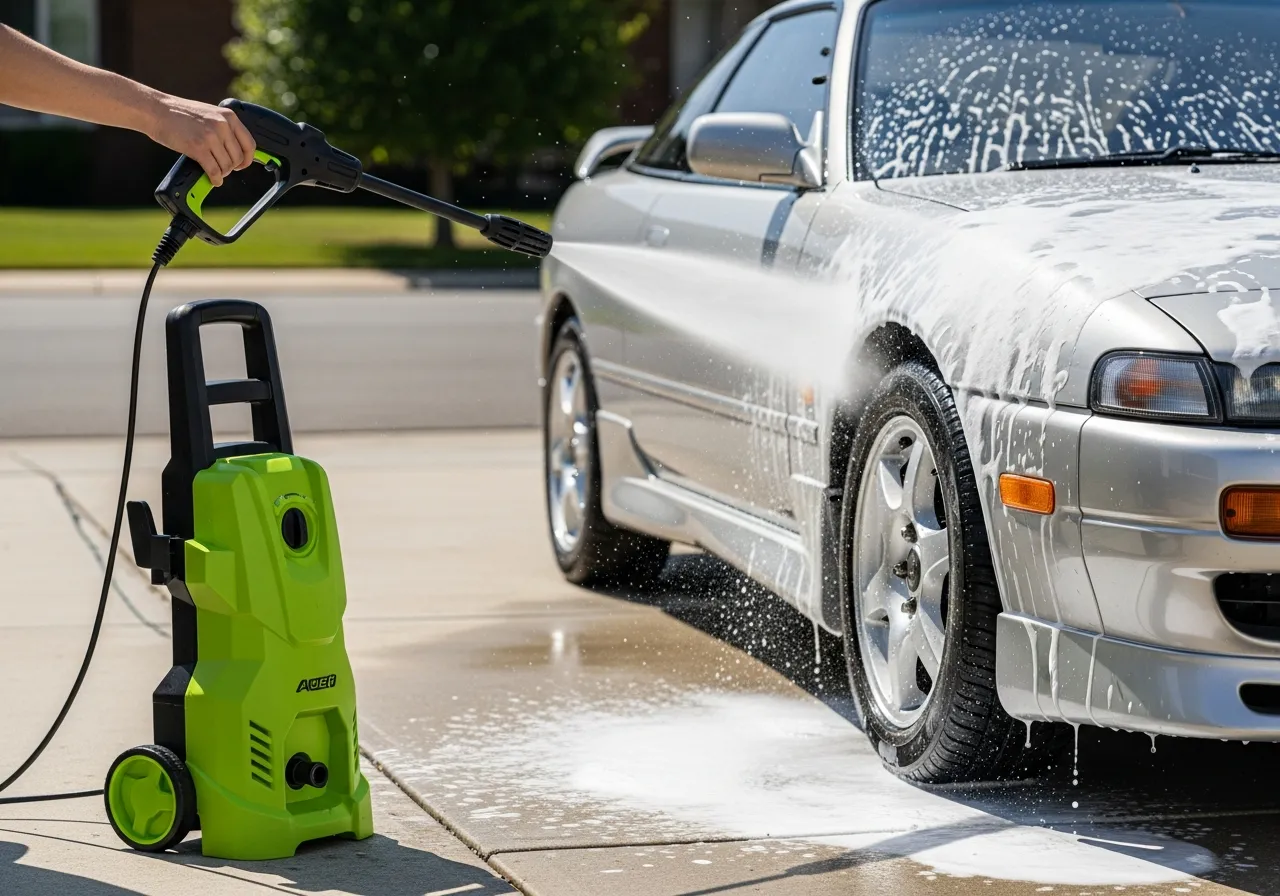
Short version: a pressure washer is the quiet hero of a scratch-free car wash — it blasts loose grit off before your mitt ever touches the paint and powers a foam cannon for a proper pre-soak. The catch is that you want the right pressure: too little and it won’t rinse well, too much (or the wrong nozzle) and you risk paint. This hub covers safe PSI, gas vs electric, foam-cannon pairing, and the washers we tested for detailing.
We deliberately focus on car washing here, not driveways — the safe, foam-ready sweet spot, not the biggest machine on the shelf. Pressure washing is the rinse and foam step before the contact wash.
The Safe Pressure Range
For car paint, 1,200–1,900 PSI is the sweet spot — enough to rinse foam and lift dirt, gentle enough not to chip paint or drive water past seals. Most consumer electric washers sit right here. Even a 2,000 PSI unit is safe with a wide-angle tip at a sensible distance; the danger is a narrow 0-degree nozzle held close. Full detail in what PSI is safe for a car, and the tip guide is in nozzles explained.
Gas vs Electric
For washing cars at home, electric wins for nearly everyone — quiet, light, no fuel or maintenance, and the ideal pressure range for paint. Gas units are more powerful and cord-free but louder and more than you need for car washing. The full comparison is in gas vs electric for detailing.
Pairing With a Foam Cannon
Most of the fun (and swirl-reduction) comes from running a foam cannon off your washer. Cannons need roughly 1,000+ PSI and 1.4+ GPM to foam thickly — nearly every electric washer clears that, but flow matters as much as pressure, so don’t just chase PSI (see GPM vs PSI). The connector-and-setup walkthrough is in pressure washer + foam cannon setup.
Why GPM Matters as Much as PSI
Pressure washers are marketed almost entirely on PSI (pressure), but for car washing GPM (gallons per minute, or flow) matters just as much — and most buyers overlook it. PSI is what dislodges stuck dirt; GPM is what carries it away and what feeds a foam cannon enough volume to make thick foam. A washer with sky-high PSI but low flow will feel harsh on paint yet foam poorly, while a sensible-PSI, decent-flow electric rinses cleanly and foams beautifully. That's the trap in chasing the biggest number on the box: for detailing you want the balance, not the maximum. Our GPM vs PSI guide explains how to read both figures, and the nozzle guide covers which tip to fit (hint: never the red 0° tip on paint).
The Pressure-Washing Mistakes That Damage Cars
A pressure washer is safe on paint used correctly, but a few habits cause real damage. The big one is the 0-degree (red) nozzle held close — its needle-thin jet can chip paint, etch trim and force water past seals; stick to a wide-angle tip at a sensible distance. Blasting directly at lifting paint, chipped edges, badges or door/window seals can peel or force water where it shouldn't go. Getting too close concentrates the force; keeping a foot or so of distance is plenty for rinsing. And pointing a high-pressure jet into the engine bay around electronics or into wheel bearings and vents invites trouble. None of this makes a pressure washer dangerous — it makes technique the thing that matters, which is exactly what our pressure washing mistakes guide walks through.
Do You Actually Need a Pressure Washer?
You can wash a car well with just a hose and the two-bucket method — a pressure washer isn't mandatory. What it adds is a better pre-rinse (blasting loose grit off before your mitt touches the paint) and the ability to run a foam cannon for a proper foam pre-soak — both of which meaningfully cut down on wash-induced swirls. For anyone who washes their own car regularly and cares about keeping the paint scratch-free, that combination is why a pressure washer plus foam cannon is the setup most detailers settle on. If you wash occasionally and just want the car clean, a hose is fine; if you're building a swirl-free routine, a paint-safe electric washer is one of the highest-value buys you can make.
Where to Start
Grab a proven, paint-safe washer from our best pressure washer for cars picks, add a foam cannon, and read safe PSI before you point it at your paint. The topical map below links every part of the setup.
Affiliate Disclosure
Some links on this page are affiliate links. If you buy through them we may earn a small commission at no extra cost to you. It never changes our verdicts — we only recommend gear we would run on our own cars. Read the full disclosure.