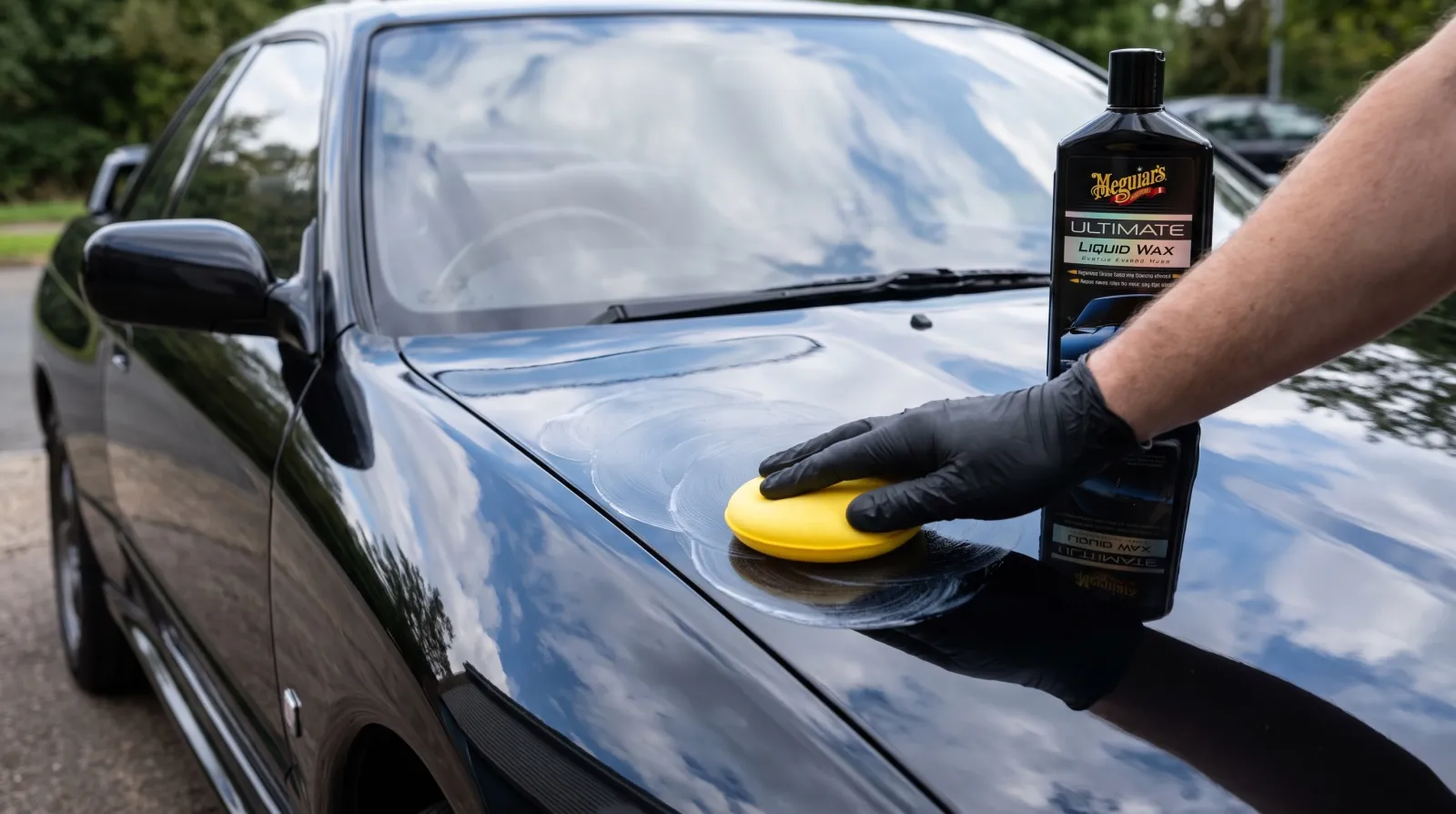
Short version: wax is the cheapest, easiest paint protection there is, and it does two jobs at once — it lays down a deep, wet-looking gloss and it shields your clear coat from the sun, water and grime that dull it. This hub covers how to apply every kind of wax, how long each type really lasts, whether carnauba or synthetic suits your car, and which specific waxes earned a spot in our garage after testing.
Wax is the protect step of a detail — it goes on after you've washed, decontaminated and (if needed) polished the paint. If you're chasing maximum durability instead, read wax vs ceramic coating before you buy.
What Car Wax Actually Does
Wax sits on top of your clear coat as a thin sacrificial layer. It fills microscopic imperfections to boost gloss, and it takes the hit from UV, acidic bird droppings and mineral-heavy water so your paint doesn't. It also makes the surface slicker, so dirt clings less and washing gets easier. What it is not is permanent or scratch-proof — it wears away and needs reapplying, which is exactly why it's cheap and beginner-friendly.
Paste vs Liquid vs Spray
Paste wax — usually carnauba-based, gives the warmest, deepest gloss; more effort to apply. Liquid wax — often synthetic, easier to spread over big panels and typically more durable; our tested pick is a liquid. Spray wax — the fastest, applied off a wash as a quick top-up, but the shortest-lived. Most people end up owning two: a durable base wax and a spray to refresh it. The carnauba vs synthetic guide covers which chemistry to pick.
How Long Wax Lasts
Set expectations honestly: carnauba paste lasts roughly 4–8 weeks on a daily driver, synthetic liquid waxes 3–6 months, spray wax a few weeks. Sun, frequent washing and road grime all cut those figures. If you want a wax that genuinely goes the distance, our longest-lasting wax test ranks the survivors.
Applying Wax the Right Way
The rules that prevent 90% of problems: work in the shade on cool paint, use a little product (more wax is not more protection), apply in thin even passes, let it haze, then buff off with a clean microfiber towel. Streaks and hologramming almost always trace back to too much product or waxing in the sun — fixes are in waxing mistakes, and the full method is in how to wax a car.
The Three Families of Wax, Compared
Almost every product on the shelf falls into one of three groups, and knowing which is which saves you from buying the wrong thing. Natural carnauba comes from the leaves of a Brazilian palm and is prized for a warm, deep, almost liquid-looking gloss — it's the enthusiast's choice for dark and classic paint, but it's soft and short-lived, lasting weeks rather than months. Synthetic (polymer) waxes and sealants are lab-engineered to bond harder and resist UV and heat far better; they trade a little of carnauba's warmth for real durability, which is why our top-rated wax is a synthetic liquid. Ceramic (SiO₂) spray waxes are the newest family — technically a hybrid between wax and coating — offering the fastest application and strong water beading, though they sit between a traditional wax and a full ceramic coating in longevity.
Most keen detailers end up owning two: a durable base layer (synthetic or a tough carnauba like Collinite) laid down seasonally, and a spray wax or ceramic booster to refresh gloss and beading after each wash. The carnauba vs synthetic guide goes deeper on the chemistry and which suits your paint and climate.
How to Get the Best Results From Any Wax
The product matters less than the process. Whatever you buy, four habits separate a streaky, patchy finish from a showroom one. First, prep the surface — wax only bonds and looks its best on clean, decontaminated paint, so wash and, ideally, clay before you start; waxing over grime or old failing wax just traps the mess. Second, work cool and shaded — never wax a hot panel in direct sun, which flashes the product off too fast and bakes on streaks and hazing. Third, use less than you think — a thin, even layer protects exactly as well as a thick one and buffs off far more easily; over-application is the single most common beginner mistake and wastes product. Fourth, let it cure and buff with clean microfiber — give the wax the haze time listed on the tin, then remove it with a fresh, plush microfiber towel, flipping to a clean side often. Get those four right and even a $15 wax looks like a professional job.
Timing matters too: most waxes want to fully cure for an hour or two before the car gets wet, and a fresh wax layer bonds better if the paint hasn't just been washed with a wax-stripping shampoo. If you're unsure how often to reapply, our how often should you wax guide gives a realistic schedule for daily drivers versus garaged cars.
Where Wax Fits in the Detailing Process
Wax is the protect step, and it's the last thing you do to the paint. The full order runs: wash to remove loose dirt, decontaminate (clay bar) to pull out bonded fallout, polish to correct swirls and restore gloss, and only then wax or coat to lock it all in. Skipping straight to wax on swirled, contaminated paint seals the defects under a shiny layer instead of fixing them. If your paint already looks good and just needs protection, you can wash and jump straight to waxing — but if it's dull or swirled, correct it first so the wax has a flawless surface to sit on. And if you're weighing wax against something longer-lasting, the wax vs ceramic coating breakdown is the place to decide.
Where to Start
New to this? Read how to wax a car, grab a proven wax from our best car wax picks, and if you've already got a coating, check can you wax over ceramic first. The topical map below links every part of the wax process.
Affiliate Disclosure
Some links on this page are affiliate links. If you buy through them we may earn a small commission at no extra cost to you. It never changes our verdicts — we only recommend gear we would run on our own cars. Read the full disclosure.