If your paint has fine spiderweb swirls that show up under sunlight or LED lights, there's a good chance your wash routine put them there. The two-bucket method is the fix — a simple system that keeps grit away from your paint so washing cleans the car instead of scratching it. It costs almost nothing and takes five minutes to learn.
Part of the washing your car hub. This is the technique every other wash guide assumes you already know.
What You'll Need
- Two buckets — ideally 3–5 gallon, one for suds and one for rinse water.
- Two grit guards — one for the bottom of each bucket.
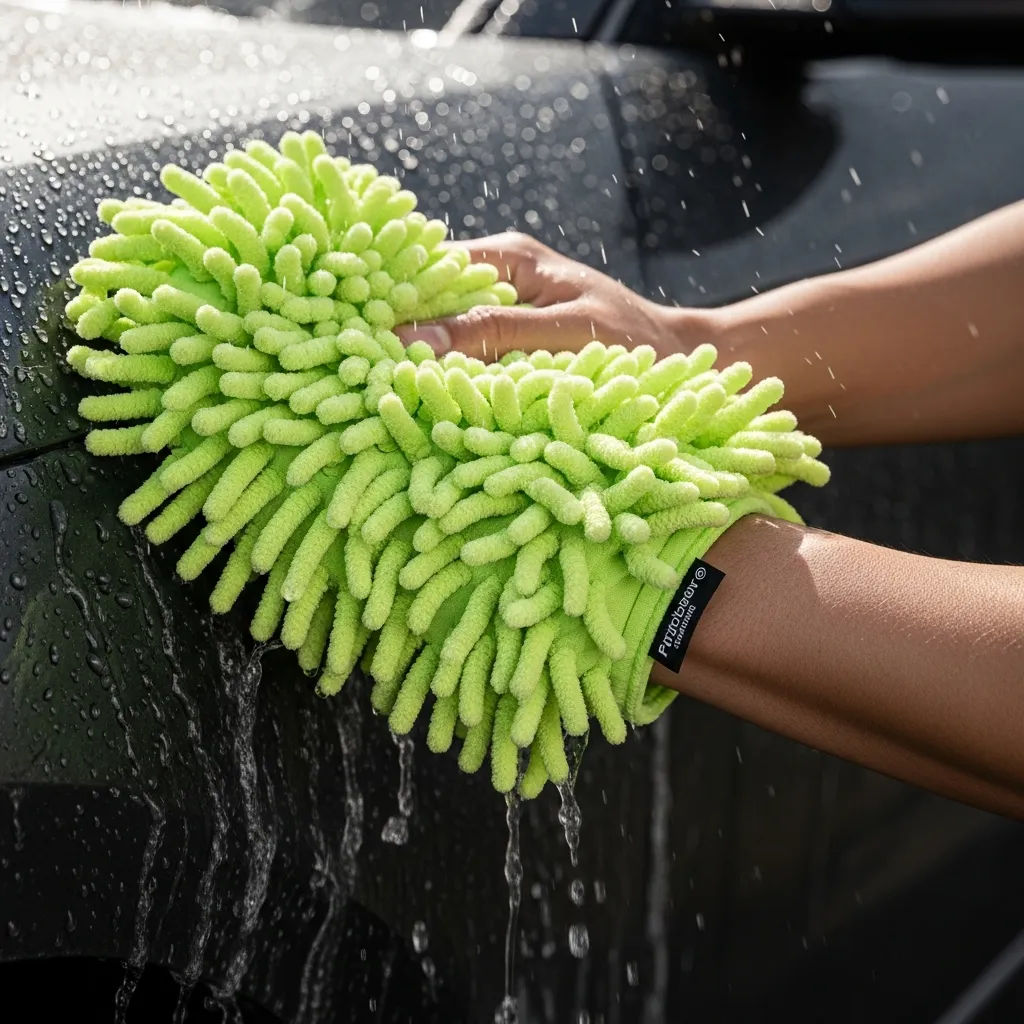
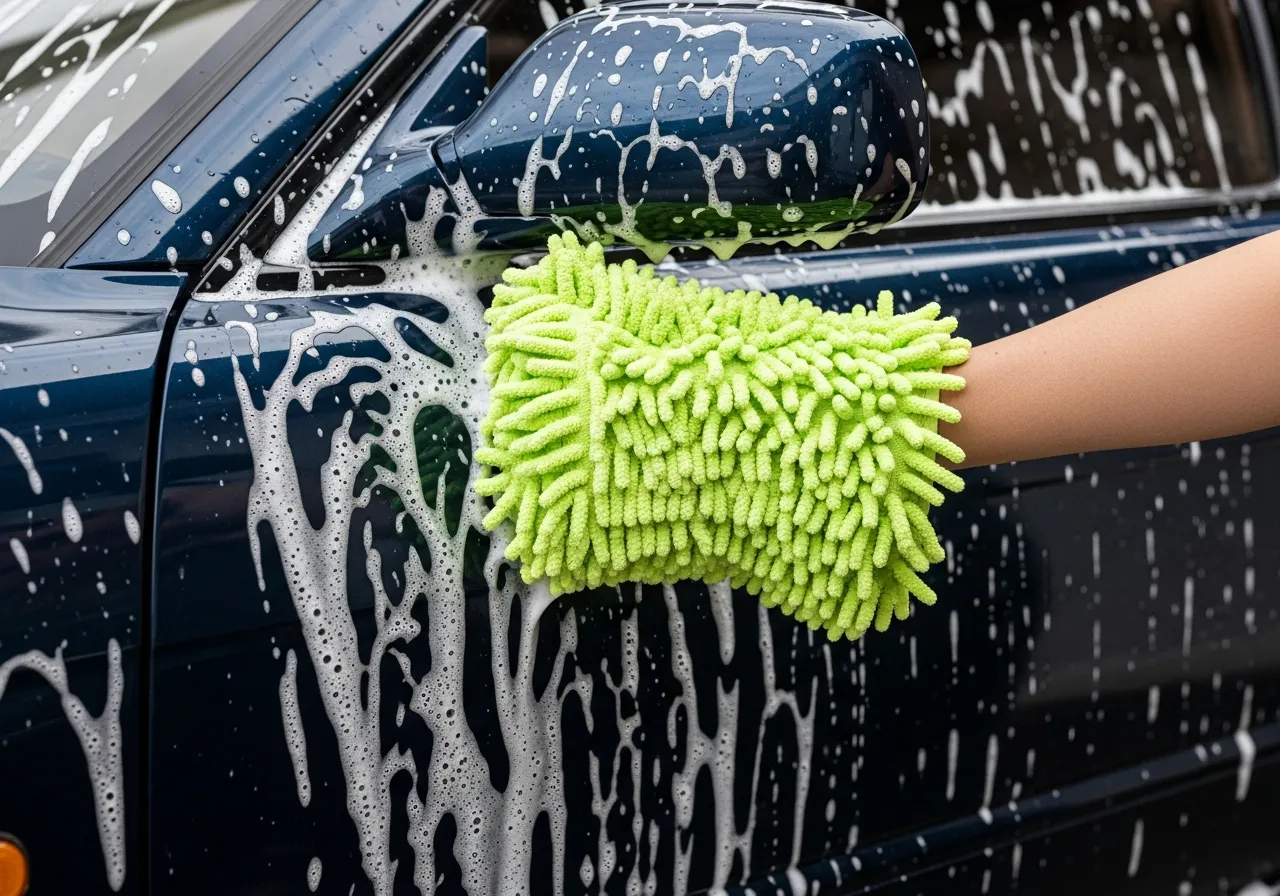
- A microfiber or chenille wash mitt — never a sponge.
- A pH-neutral car wash soap — for lubrication and to protect your wax.
- A hose for rinsing, and a clean microfiber towel for drying.
Why Two Buckets
With one bucket, every time you dunk the mitt you drop the grit you just picked up back into your wash water — then you smear it across the next panel. The second bucket breaks that cycle: you rinse the dirty mitt in the clean-water bucket first, agitate it against the grit guard to shed the dirt, and only then reload with clean suds. Your soap stays clean, your mitt stays clean, and grit never gets a second pass at the paint.
Step-by-Step
- Fill both buckets. Suds in the wash bucket per the soap's dilution; plain water in the rinse bucket. Drop a grit guard in each.
- Pre-rinse the whole car. Blast off loose grit and dust so the mitt meets as little abrasive as possible.
- Start at the top. Load the mitt with suds and wash the roof first — the lower panels are dirtiest, so you save them for last.
- Wash in straight lines. Front-to-back, gentle passes, no circular scrubbing (circles are what make swirls visible).
- Rinse the mitt between sections. Dunk it in the rinse bucket, scrub it on the grit guard, wring it out, then reload from the suds bucket.
- Work down the car panel by panel, saving the filthy lower doors, bumpers and sills for the very end.
- Rinse the car thoroughly from the top down so no soap dries on the paint.
- Dry with a clean microfiber towel or a drying towel — don't let it air-dry into water spots.
Pro Tips & Mistakes to Avoid
- Use two more buckets for the wheels — wheels are the dirtiest part of the car; never wash paint with the same mitt or water.
- Keep the car out of direct sun so soap and water don't dry into spots mid-wash.
- Don't skip the pre-rinse — it removes the grit most likely to scratch.
- Replace the mitt if you drop it — a mitt that hits the ground is now full of grit; rinse it hard or swap it.
- One direction, never circles — straight-line scratches hide; circular ones catch the light as swirls.
How Often to Wash This Way
For a daily driver, a full two-bucket wash every one to two weeks keeps the paint safe and the dirt from building into something abrasive. Beyond the schedule, wash promptly whenever bird droppings, bug splatter or road salt land on the paint — those are acidic or corrosive and will etch the clear coat if left to bake in the sun. Between full washes, a quick rinseless or waterless wash handles light dust without dragging grit around. The goal isn't to wash constantly; it's to never let contamination sit long enough to bond or to require aggressive cleaning later. Counterintuitively, regular gentle washing protects paint far better than occasional aggressive scrubbing.
Don't Forget the Wheels — Use Separate Buckets
Wheels are the single dirtiest part of the car, coated in abrasive brake dust and road grime. Never wash them with the mitt or water you use on your paint — that grit will end up smeared across your panels. Use a dedicated wheel bucket, wheel mitt or brushes, and a wheel-specific cleaner, and do the wheels first, before you start on the paint, so any overspray gets rinsed away during the body wash. Then set the wheel gear aside and switch to your clean paint buckets. It's the same two-bucket logic — keep dirty and clean separate — applied to the messiest zone on the car.
What the Two-Bucket Method Can and Can't Do
The two-bucket method is about preventing new swirls during washing — it keeps the grit you pick up from being ground back into the paint. What it can't do is remove swirls that are already there; those need polishing to correct. It also won't remove bonded contamination like tar, iron fallout or tree sap, which need a clay bar and dedicated removers. Think of the two-bucket wash as the routine that keeps good paint good: pair it with occasional decontamination and protection, and you break the cycle of "wash, add swirls, polish them out, repeat" that wrecks clear coat over time. Wash safely from the start and your paint simply stays better, longer.
What's Next
A clean, swirl-free car is the foundation for everything else. If you found existing swirls while washing, our prevent swirl marks guide explains removal, and once the car's clean it's time to protect it — wax or ceramic coating. New to the whole routine? Start with how to wash a car.
Affiliate Disclosure
Some links on this page are affiliate links. If you buy through them we may earn a small commission at no extra cost to you. It never changes our verdicts — we only recommend gear we would run on our own cars. Read the full disclosure.