Redline Garage is reader-supported. We earn affiliate commissions from qualifying purchases — how this works.

Microfiber & Towels

Home/Resources/Microfiber & Towels
Detailing · Gear · Beginner-friendly
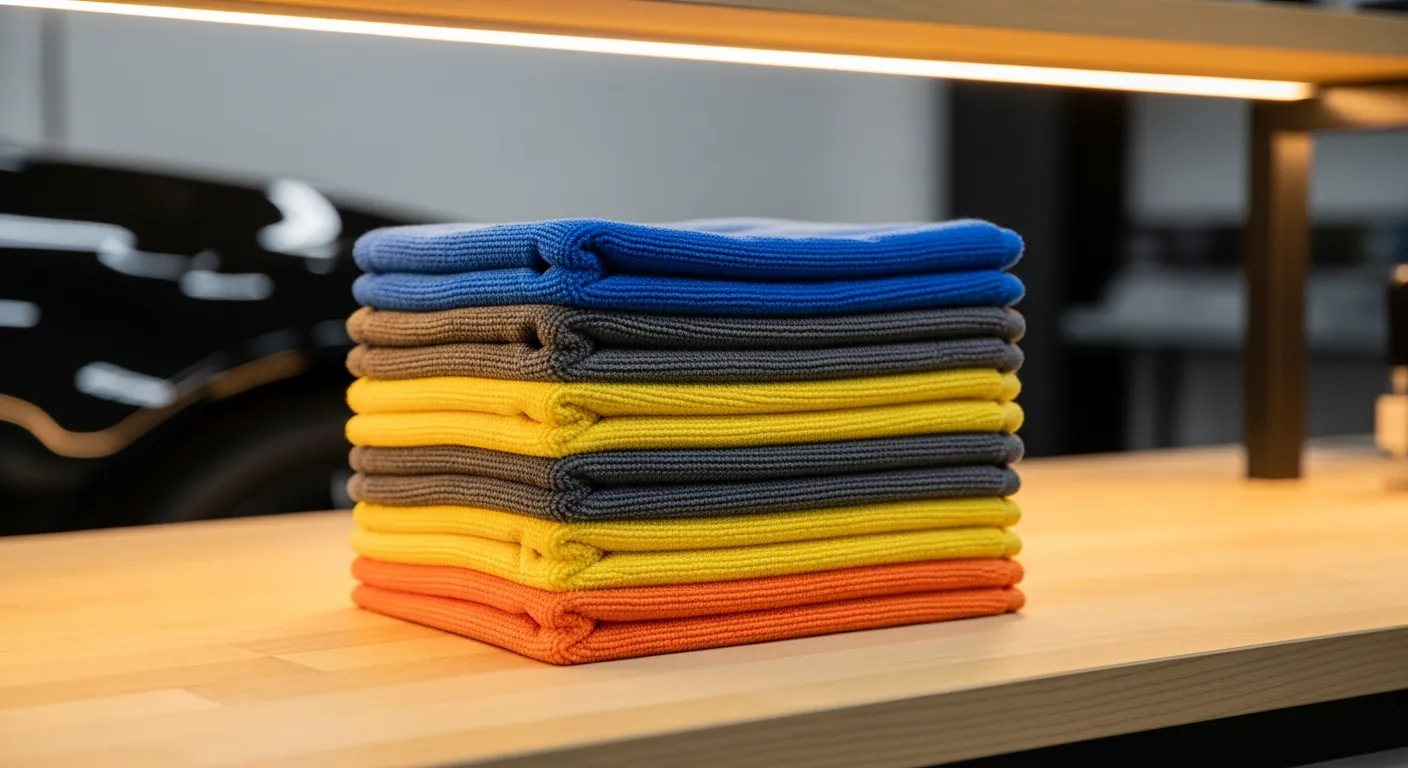
A stack of folded plush microfiber detailing towels in different colours on a workbench

Why your towels matter more than you think

Most swirl marks and fine scratches in car paint don't come from the wash — they come from the towel. A rough, low-quality or dirty towel dragged across your clear coat is sandpaper in slow motion. Getting your towels right is the single cheapest way to stop marring your own paint, and it's the part most people skip. That's why we treat towels, applicators and brushes as core detailing gear, not an afterthought.

We test this stuff by actually using it — buffing wax, drying whole cars, wiping interiors — and then washing each towel repeatedly to see which ones stay soft and which turn crusty. The picks below survived that.

The basics: GSM, weave and edges

Three things decide whether a towel is right for a job: its weight, its weave and its edge. Weight is measured in GSM — grams per square meter — and higher generally means plusher and more absorbent, though not always better. Weave matters too: plush towels with long loops are for buffing, while flat waffle-weave towels excel at drying and glass. And the edge is quietly critical — a hard stitched border can scratch, which is why edgeless towels are the default for paint.

Matching the towel to the task

The biggest beginner mistake is using one towel for everything. Wheel grime, interior dressings and paint each want a different towel, and cross-contaminating them drags grit onto your clear coat. Our towel by task guide maps it out, but the short version is: plush edgeless for buffing paint, waffle-weave for drying and glass, and dedicated cheaper towels for wheels and engine bays. For drying specifically, a big dedicated drying towel will do the whole car in a couple of passes.

Beyond towels: applicators and brushes

Towels are only half the kit. Laying down product evenly needs the right applicator pad — foam for coatings and sealants, microfiber for waxes, wool for heavier products. And the detailed areas towels can't reach — vents, badges, wheel barrels, trim seams — need detailing brushes. Get these two right and your wax and sealant go on cleaner and last longer. Pair them with the picks in our car wax hub.

Care and longevity

Good microfiber isn't cheap, but it lasts years if you look after it. The killers are fabric softener, which clogs the fibers, and washing paint towels with lint-shedding cotton. Our how to wash microfiber guide walks through detergent, temperature and storage. And if you're still deciding between modern microfiber and an old chamois for drying, our microfiber vs chamois comparison settles it. For technique on the wash itself, head to our washing your car hub.

Our top picks in microfiber and towels

If you're building a towel kit from scratch, start with a stack of quality edgeless plush towels for paint plus a big waffle-weave drying towel — that pairing handles the two jobs where scratches happen most. Our current best overall towel is The Rag Company Eagle Edgeless 500 for its plushness, absorbency and how well it holds up to repeated washing. Get the full ranked test in our best microfiber towels guide, and add the right applicators from our applicator pads roundup.

Affiliate Disclosure

Some links on this page are affiliate links. If you buy through them we may earn a small commission at no extra cost to you. It never changes our verdicts — we only recommend gear we would run on our own cars. Read the full disclosure.

// The Full Picture

Towels Hub Topical Map

Every sub-topic that connects back to the seed — a core of how-to and decision pages, surrounded by an outer ring that deepens the knowledge.

Central EntityTowels Hub
Core Section — do it & buy it
Best Microfiber Towels 2026 Six towels tested for plushness, absorbency and how many wash cycles they survive. The ones that won't scratch your paint. Top Picks
Best Drying Towel 2026 Big plush and waffle-weave dryers ranked on absorption, drag and streaking. Dry the whole car in a couple of passes. Live Wed, 2 Sept
Best Applicator Pads Foam, microfiber and wool applicators ranked for laying down wax, sealant and dressings evenly and without waste. Live Thu, 3 Sept
Best Detailing Brushes Boar's hair, synthetic and wheel brushes for vents, badges, wheels and trim. What each one is actually for. Live Thu, 3 Sept
GSM Explained What towel weight actually means, why higher isn't always better, and the right GSM for each detailing job. Live Fri, 4 Sept
Which Towel for Which Task A simple map of towel type to job — buffing, drying, glass, interior and wheels — so you stop cross-contaminating. Live Fri, 4 Sept
Outer Section — know & trust
How to Wash Microfiber Wash, dry and store microfiber so it stays soft and scratch-free for years. Live Sat, 5 Sept
Microfiber vs Chamois The old-school chamois versus modern microfiber for drying — which actually wins. Live Sat, 5 Sept
Washing Your Car Two-bucket method, wash mitts and technique in our dedicated car-washing hub. Car Wax Guides Pair the right applicator and buffing towel with our full wax hub.
GSM Explained New to towel weight? Start here before you buy your first stack. Live Fri, 4 Sept
// Straight Answers

Frequently Asked

What does GSM mean for microfiber towels?

GSM stands for grams per square meter — it's the density and weight of the towel. Higher GSM means a thicker, plusher towel that holds more product and liquid, which is great for buffing and drying. Lower GSM towels are thinner and better for glass and general wipe-downs. We break down the ideal GSM for each job in our GSM explained guide.

Are edgeless microfiber towels really better?

For paint work, yes. Traditional towels have a stitched polyester edge that's harder than the fabric and can leave fine scratches when you're buffing wax or sealant. Edgeless towels remove that risk entirely, so they're our default for anything touching paint. For rougher jobs like wheels or engine bays, cheaper edged towels are fine.

What's the difference between plush and waffle-weave towels?

Plush towels have long, soft loops that trap product and are ideal for buffing off wax and sealant without marring. Waffle-weave towels have a flat gridded surface with lots of surface area, which makes them excellent for drying and streak-free glass. Use plush for buffing, waffle for drying and windows.

How should I wash my microfiber towels?

Wash microfiber separately from cotton and other lint-shedding fabrics, using a dedicated microfiber detergent with no fabric softener — softener clogs the fibers and kills absorbency. Wash warm, tumble dry low or air dry, and keep paint towels separate from wheel and interior towels. Full routine is in our how to wash microfiber guide.

How many microfiber towels do I actually need?

For a full detail, plan on separate towels for each task: two or three for buffing wax and sealant, one or two for interior, one or two for glass, and a couple of rougher ones for wheels. A bulk pack of eight to twelve general towels plus a few premium plush ones covers most home detailers. Never reuse a wheel towel on paint.