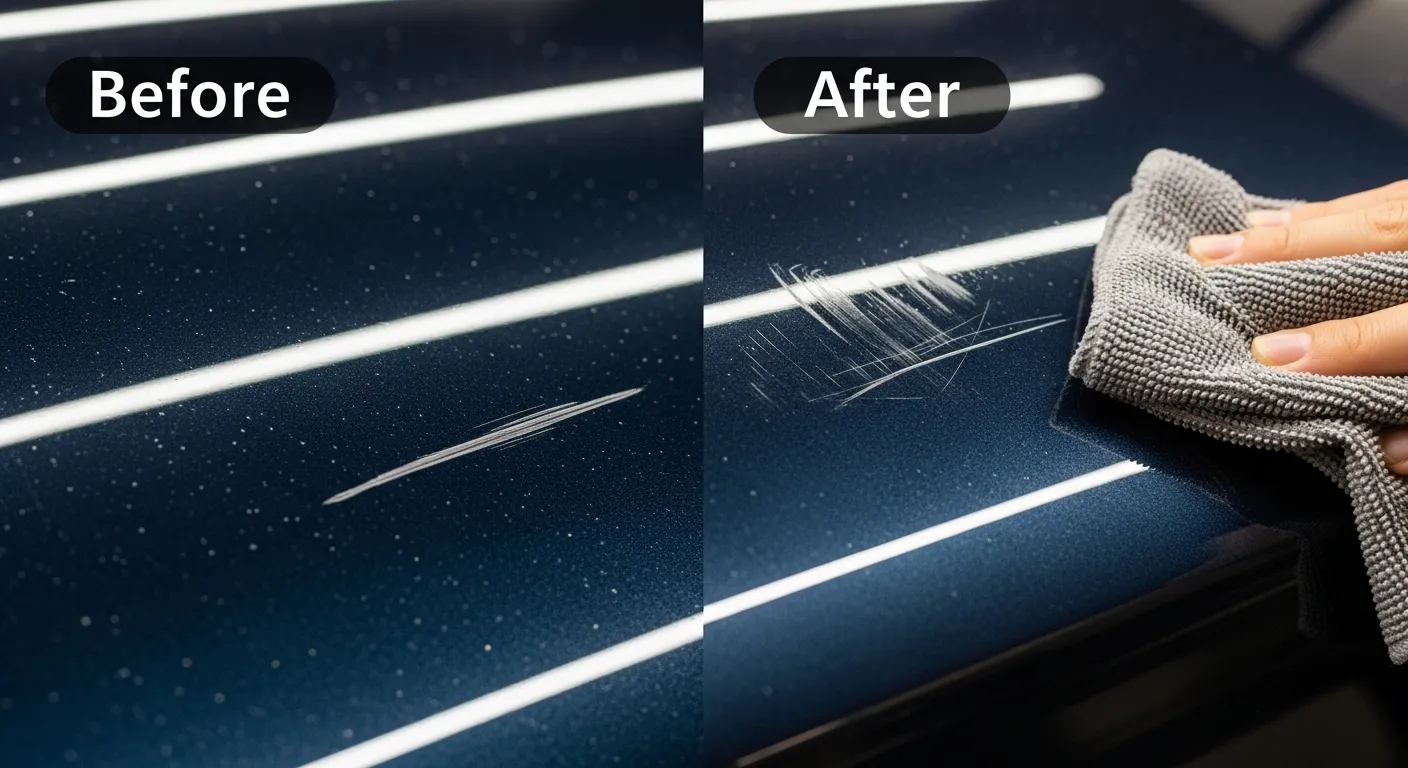
Start Here: How Bad Is It, Really?
Before you buy anything, figure out how deep the scratch actually goes. This one step decides everything, whether you reach for a bottle of scratch remover or a bottle of touch-up paint. Guess wrong and you either waste an afternoon polishing a scratch that will never come out, or you paint over one that would have buffed away in ten minutes.
The good news: most scratches on a daily driver are shallower than they look. A scratch that looks alarming in the shade often vanishes with a bit of polish because it never made it past the clear coat.
The Fingernail Test
This is the oldest trick in detailing and it still works. Drag your fingernail gently across the scratch, at a right angle to it:
- Nail does not catch: the scratch is in the clear coat only. A polish or a mild scratch remover will almost always take it out. Start with our swirl and scratch removal method.
- Nail catches, but you see no color: it is a deeper clear-coat scratch. You can often level it with a cutting compound, but it takes more work. See fixing a clear-coat scratch.
- You see white, gray, or bare metal: the scratch has cut through the color. No polish will fix this. It needs touch-up paint.
For the full breakdown with photos and edge cases, read the scratch severity guide.
Clear Coat vs Base Coat vs Primer
To understand why the fingernail test works, you need to know how car paint is built. Modern factory paint is layered, from the metal outward:
- Primer sits directly on the panel and helps the paint stick. It is usually gray or black.
- Base coat is the color layer. This is the actual paint color you see, but on its own it is dull and unprotected.
- Clear coat is a hard, transparent layer on top. It gives the gloss and takes the daily abuse, road grit, bird droppings, car-wash brushes, and light scratches.
Almost all of the scratches and swirls you notice live in that clear coat. That is the whole reason DIY repair works so often: the clear coat is thick enough that you can safely level a little of it away to erase a scratch.
What Polishing Can and Cannot Fix
Polishing, whether by hand or machine, works by abrading a microscopically thin layer off the clear coat until the bottom of the scratch is level with the surface. It is genuinely magic on the right damage and useless on the wrong damage.
Polishing fixes: swirl marks, water spots, light scuffs, oxidation, and any scratch your fingernail does not catch. Our car polish guide covers cutting versus finishing polishes in depth.
Polishing cannot fix: anything that reached the color. If you can see the base coat or metal, the clear coat is already gone at that spot, so there is nothing left to level. Those scratches need paint added back, not paint removed.
Picking Your Repair Path
Once you know the depth, the path is simple:
- Clear-coat only: use a scratch remover or polish. Finish by sealing with wax.
- Through the color, small area: use a paint pen or touch-up paint, then blend.
- Rock chip to bare metal: act fast to stop rust. See rock chip repair.
When to Stop and See a Body Shop
We are honest about the limits of a garage-floor fix. A DIY touch-up is about stopping rust and making damage less noticeable, not making it invisible. Head to a body shop when:
- The scratch is long and deep, exposing metal across a wide area.
- There is a dent or crease along with the scratch.
- Rust has already formed under the paint.
- The panel needs to be color-matched and blended for the repair to disappear, which realistically means respraying the panel.
A pro respray costs more, but on a lease return or a car you plan to sell, an invisible repair pays for itself.
Our Top Product Picks
Ready to fix it yourself? Start with the two buying guides that cover the tools you will actually reach for: the best car scratch removers for clear-coat damage, and the best touch-up paint for anything that cut into the color. Both are ranked from real hands-on testing, no filler.
Affiliate Disclosure
Some links on this page are affiliate links. If you buy through them we may earn a small commission at no extra cost to you. It never changes our verdicts — we only recommend gear we would run on our own cars. Read the full disclosure.