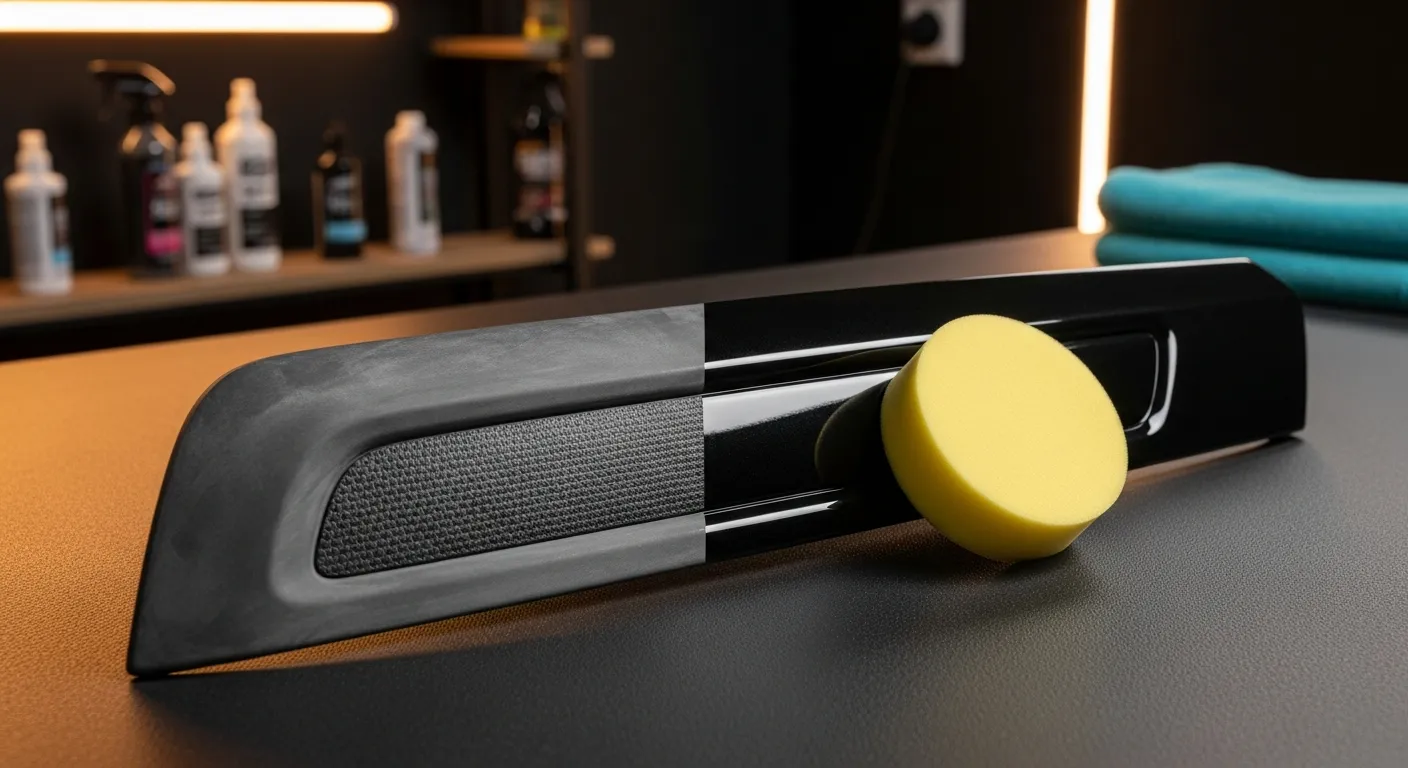
The grey-trim problem everyone recognizes
You know the look: bumpers, mirror caps and cowl panels that used to be a deep, uniform black, now faded to a chalky, patchy grey. It ages a car faster than almost anything else, and it's the single most satisfying thing to fix because the transformation is instant and dramatic. Restoring trim is genuinely beginner-friendly — the hard part isn't the doing, it's understanding what's happening and picking the right product.
That's what this hub is for. Get the why and the how right, and you can take a tired-looking car and knock years off its appearance in an afternoon, for very little money.
Why black trim goes grey
The culprit is the sun. UV light slowly breaks down the surface of the plastic and the oils and pigments that gave it its deep black color, leaving behind a thin, oxidized, chalky-grey layer. It's the exact same weathering that turns a black plastic garden chair pale after a couple of summers. Heat and road grime accelerate it, but UV oxidation is the root cause.
The good news hidden in that explanation: the plastic underneath is usually perfectly fine. It's only the surface that's degraded, which is precisely why restoration works — you're either dressing that surface, feeding it, or bonding a fresh black layer over it. Our why black trim goes grey piece goes deeper if you're curious.
Dressing vs restorer vs coating
This is the distinction that explains why your last attempt faded, and it's the most important thing to understand before you buy. There are three broad approaches, and they last wildly different lengths of time.
A dressing sits on top of the plastic and darkens it temporarily. It looks fantastic the day you apply it and for a while after, then washes and weathers away over days to a few weeks. Cheap, easy, but a commitment to reapplying.
A permanent restorer or dye chemically restores or dyes the plastic itself, so the black lasts months instead of weeks. More prep, more cost, far more durability.
A trim coating is the top tier — a bonded ceramic-style layer that can hold for a year or more over properly prepped plastic. The most effort and cost, the longest life. We break down the trade-offs in trim restorer vs dressing, and rank real products in the best trim restorer guide.
Prep is where results are won or lost
Here's the part people skip and then wonder why their trim faded again in a fortnight: preparation. Whatever you're applying, the trim has to be clean, dry and stripped of old dressing, wax and oxidation residue first. This matters most for permanent restorers and coatings, which simply won't bond to a greasy, dirty or oxidized surface — they'll flake and streak instead of lasting.
The routine is simple: wash the trim, degrease it, and dry it completely before a drop of product goes on. Our how to restore trim walkthrough covers the full prep-and-apply process. Nail the prep and even a mid-tier product lasts; skip it and the best coating in the world will fail.
Rubber seals and long-term protection
Trim isn't the only thing that greys and cracks — your door and window rubber seals suffer the same UV fate, and left dry they harden, crack and stop sealing properly. Feeding and protecting them is a close cousin of trim restoration, covered in restore rubber seals.
And once you've got everything black again, the goal is to keep it that way. A simple rhythm of UV protection and occasional maintenance stops the oxidation clock, which is exactly what protect trim long-term is about. One warning while you're at it: keep car wax off your trim — it stains bare plastic a stubborn white, so mask or wipe carefully near it.
Where to start
If your trim's gone grey and you want it fixed today, start with the best trim restorer guide and match the product to how long you want it to last. Want a quick, cheap refresh you don't mind redoing? A dressing. Want to fix it and largely forget it? A permanent restorer or a coating, applied over properly prepped plastic. Either way, prep first, apply thin and even, and enjoy watching years fall off your car in an afternoon. It's the highest-impact, lowest-effort job in detailing.
Affiliate Disclosure
Some links on this page are affiliate links. If you buy through them we may earn a small commission at no extra cost to you. It never changes our verdicts — we only recommend gear we would run on our own cars. Read the full disclosure.