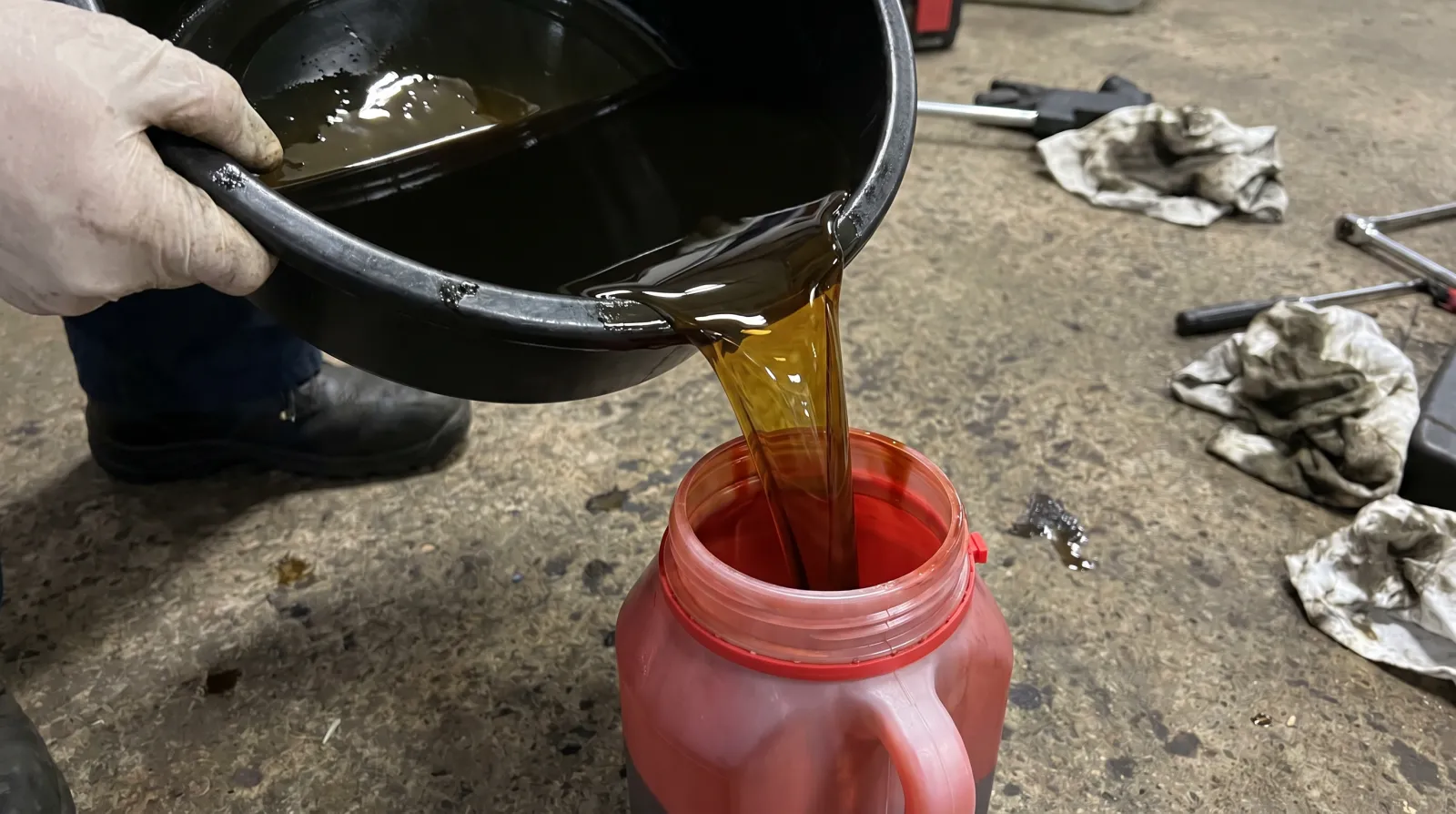
You've done the hard part — the old oil is out and the new filter is on. Now there's a drain pan full of dark, spent oil and you need to get rid of it without causing a disaster. This is the part most guides gloss over. Used engine oil is classified as hazardous waste in every Australian state and territory: you cannot put it in your bin, tip it down a drain, or pour it on the ground. The good news is disposal is genuinely easy once you know the system. This is part of our DIY oil change hub.
Why Used Oil Is So Dangerous
After a service interval, oil carries a concentrated cocktail of combustion byproducts, heavy metals (lead, zinc, cadmium) and unburned fuel that don't break down harmlessly. A single litre of used oil can contaminate up to one million litres of drinking water. Tipped down a stormwater drain it goes straight to waterways. Illegal disposal also carries real legal exposure — fines run into the thousands. The flip side: properly collected used oil is valuable, re-refined with about a third of the energy of refining crude, so when you drop it off correctly it genuinely goes back into the supply chain.
Step 1 — Store It Right After the Drain
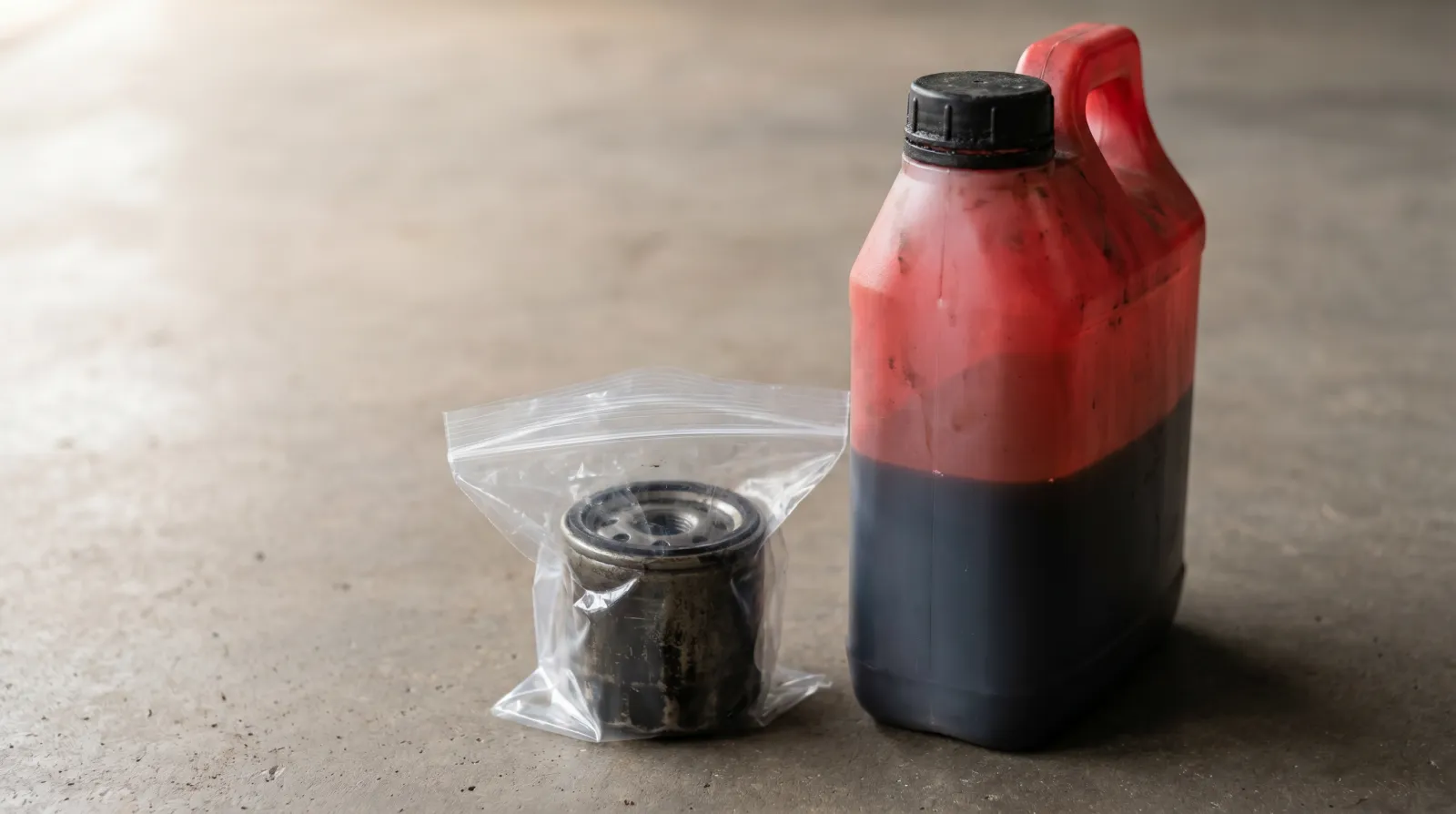
A sealable drain pan (screw-top or snap-close spout) is easiest — drain into it, seal, and it's ready for transport. Otherwise transfer into a clean sealable jug or an empty 5-litre oil bottle. It must be completely sealable, previously held a petroleum product (not food or water), and clearly labelled "USED ENGINE OIL".
Keep it uncontaminated — this is critical. Recyclers can process pure used oil; they cannot process oil mixed with other fluids, which becomes chemical waste. Never mix used oil with coolant, brake fluid, transmission/power-steering fluid, petrol or diesel, solvents, or water. If you have multiple fluids, store each in a separate labelled container.
Step 2 — Find a Drop-Off Point
Australia has a well-established collection network. Auto-parts stores (Repco, Supercheap Auto, AutoBarn) accept used oil free at most locations, often with a 20–25 litre limit per visit — call ahead to confirm. Council recycling and waste-transfer centres run household hazardous waste programs accepting oil, filters, paint and batteries free; search your council site or the Planet Ark "Recycling Near You" directory at recyclingnearyou.com.au. Many service stations and workshops accept small volumes as goodwill. For larger volumes, look up registered used-oil collectors licensed under your state EPA.
Step 3 — Recycle the Old Filter Too
The filter contains a metal canister, a paper element and residual oil — which classifies the whole thing as hazardous waste. Drain it: hold it filter-end down over your pan for at least 12 hours (24 is better), seal it in a zip-lock bag, and take it to the same drop-off as the oil. Can you bin a used filter? No — even drained it retains enough residual oil to be hazardous.
Transporting Used Oil Safely
- Keep containers upright in the boot — a crate or box stops a jug tipping
- Don't overfill — leave ~10% headspace
- Carry a rag and some kitty litter as a cheap spill kit
- Transport in the boot, not the cabin, to avoid fumes
No special permit is needed for domestic quantities — just keep it sealed and upright.
Quick-Reference Checklist
- Drain into a sealable pan or jug
- Keep oil uncontaminated — no mixing with coolant, petrol, brake fluid or water
- Drain the old filter 12–24 hours, then bag it
- Drop off at an auto-parts store, council facility or service station
- Transport sealed and upright
- Never pour oil down any drain, on the ground, or in any bin
Five minutes of planning and a short detour on your way to the shops. If you haven't done the change yet, head to the step-by-step guide and the full DIY oil change hub.
Affiliate Disclosure
Some links on this page are affiliate links. If you buy through them we may earn a small commission at no extra cost to you. It never changes our verdicts — we only recommend gear we would run on our own cars. Read the full disclosure.