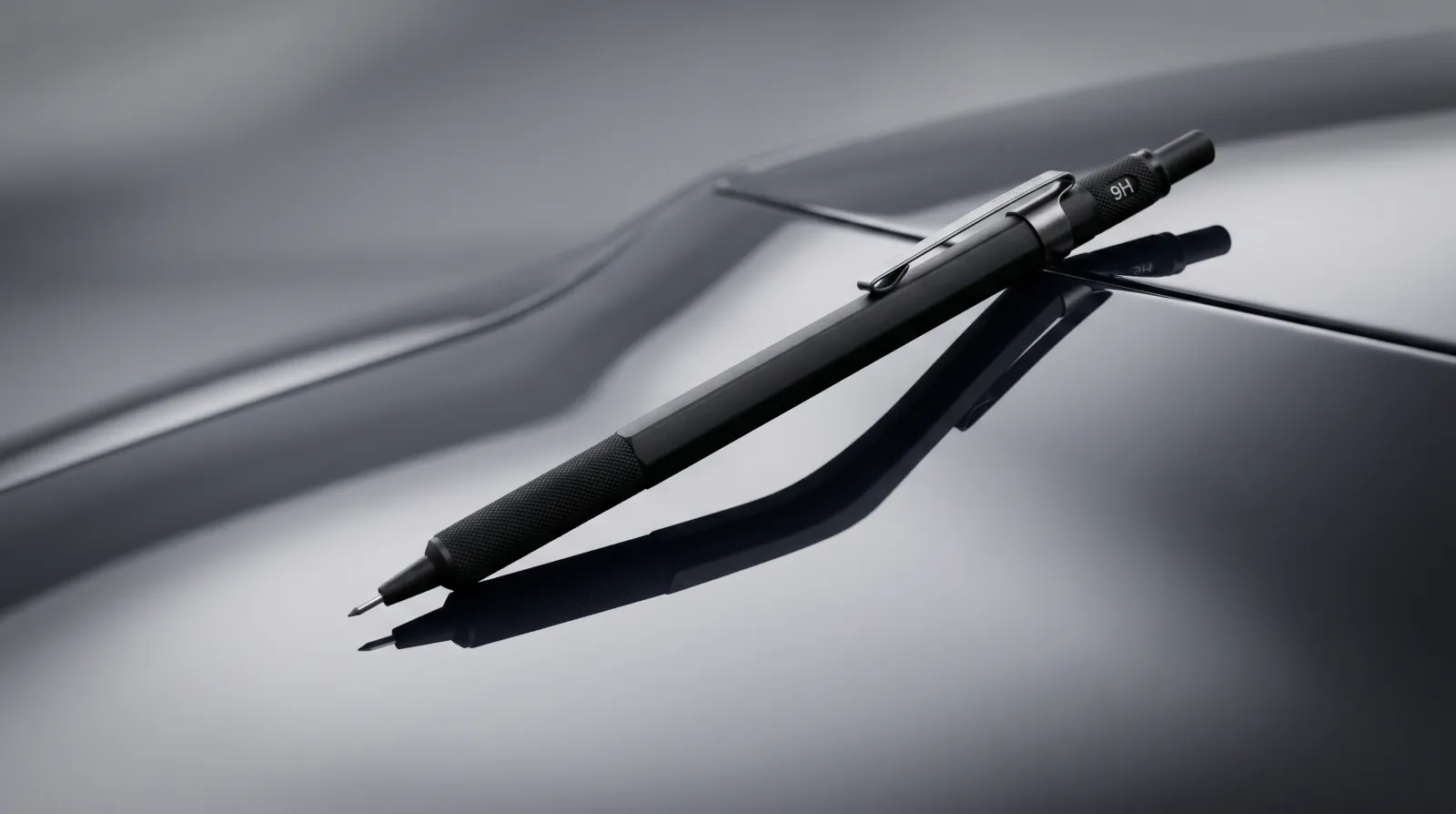
Walk into any detailing shop, scroll through any ceramic coating product page, and you'll see it everywhere: "9H hardness". It sounds bulletproof. It sounds technical. It sounds like your paint is getting a suit of armour. It isn't.
The 9H rating is one of the most misused numbers in the car-care industry, and understanding what it actually measures will save you from expecting a miracle and ending up disappointed. Let's break it down properly.
Where Does "9H" Come From?
The H in 9H has nothing to do with industrial hardness science. It refers to the pencil hardness scale — specifically the Wolff-Wilborn pencil scratch test, a method borrowed from the coatings and paint industry. Pencils are graded from 9B (very soft, waxy graphite) through HB (the standard "middle" pencil) to 9H (extremely hard graphite). In a Wolff-Wilborn test, a technician holds a pencil at a 45-degree angle and pushes it across a coated surface under a fixed load. The hardest pencil that fails to scratch the coating gives you the hardness rating.
So "9H" means: a 9H pencil held at 45 degrees under a set force did not visibly scratch the cured coating. That's it. That's the whole claim.
The Mohs Scale Is a Completely Different Thing
Here's where the confusion compounds. Many marketing materials imply that 9H relates to the Mohs hardness scale — the mineralogy scale where talc sits at 1, glass at around 5.5, and diamond at 10. It does not. The Mohs scale measures a material's resistance to being scratched by another material in absolute, physical terms. The pencil scale measures something far more limited: whether a specific pencil, under a specific protocol, marks a coating. The two systems share no common units, no conversion formula, and no meaningful relationship. Saying a 9H coating is "nearly as hard as diamond" is marketing copy, not materials science.
Silicon dioxide (SiO2) — the primary active ingredient in most ceramic coatings — sits at roughly Mohs 6–7 when fully cured. That's harder than your clear coat (around Mohs 2–4), which is genuinely useful, but nowhere near the top of any meaningful hardness scale. For what ceramic coating actually does at a chemical level, see our guide on how ceramic coating works.
What the 9H Rating Actually Tells You
Used honestly, the pencil hardness test does measure something real: the coating is harder than your factory clear coat. A harder outer layer means the coating absorbs some of the energy from light abrasions before it reaches your paint. In practical terms:
- Reduced swirl marks from wash mitts, sponges and automated car washes
- Reduced micro-marring from light contact
- Better resistance to fine environmental abrasion like dust particles in rain runoff
These are genuine improvements. Swirl marks and micro-marring are the enemies of a deep, reflective finish, and a properly applied coating defends against them meaningfully. The hydrophobic surface helps too — water and grit sheet off faster, reducing contact time between abrasive particles and the paint.
What 9H Does Not Mean
It Does Not Mean Scratch-Proof
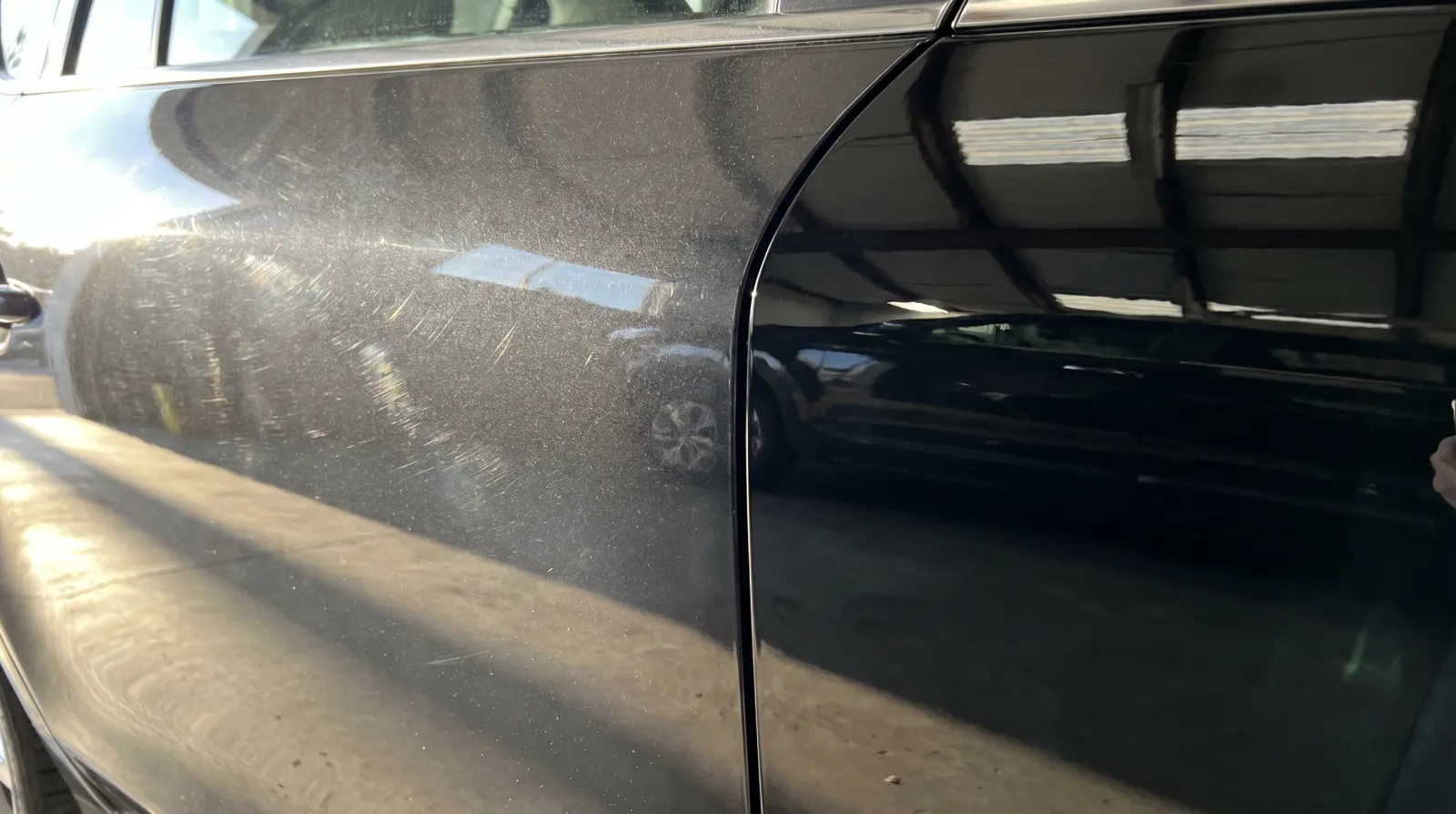
A 9H ceramic coating will scratch. Keys will scratch it. Rings will scratch it. A piece of gravel caught under a careless wiping cloth will scratch it. The pencil test is conducted in controlled lab conditions with a specific instrument; real-world contact involves irregular shapes, unpredictable angles and forces that exceed the pencil test. If someone keys your car, the coating won't stop it — the key is harder than the coating.
It Does Not Mean Rock-Chip-Proof
Rock chips involve high-velocity impact from road debris. Ceramic coating is thin — typically 1–5 microns cured, versus 40–80 microns for factory clear coat. It adds hardness at the surface but virtually no impact resistance or film thickness. A stone at highway speed carries enough kinetic energy to punch straight through clear coat, basecoat and primer regardless of what sits on top. If rock-chip protection is your priority, paint protection film (PPF) is the correct solution — 150–200 microns of urethane that physically absorbs and disperses impact.
It Does Not Mean You Can Skip Careful Washing
A 9H coating improves your margin for error during washing — it doesn't eliminate the need for proper technique. Scratching a coating with poor wash habits still puts visible damage on your paint system; the coating may be replaceable without repainting, but it still needs correcting or reapplying.
Why Do Brands Keep Pushing This Number?
Because it works on shoppers who don't know what it means. "9H" sounds like a grade, and a 9 out of 10 implies near-perfection. The pencil hardness scale is genuinely used in industrial coatings quality control, so the test itself is legitimate — the misuse is in the implication that 9H means total scratch immunity or near-diamond hardness. Some premium coatings now advertise "10H." This should tell you everything: the Wolff-Wilborn scale only goes to 9H. A product claiming 10H is not using a standard test — it's inventing a number to sound superior.
What Ceramic Coating Actually Does Well
Strip away the 9H mythology and you still have a genuinely useful product. Ceramic coatings excel at:
- Chemical resistance — bird droppings, tree sap and fallout bond far less aggressively to a cured SiO2 layer
- UV protection — the coating reduces oxidation and fading from prolonged sun
- Hydrophobicity — water beads and sheets off, keeping the car cleaner longer
- Gloss enhancement — a properly cured coating increases depth and clarity noticeably
- Swirl and micro-marring resistance — genuine, if not total
These are solid reasons to apply a quality coating. They are not reasons to believe your clear coat is now indestructible.
The Realistic Expectation
Think of a ceramic coating the way you'd think of a good quality work boot. It protects your feet from a lot of everyday punishment — water, light impacts, abrasion. It does not protect your feet from a dropped engine block. A 9H-rated coating will help your paint stay swirl-free longer, resist environmental contamination better, and look sharper with less effort. It will not stop keys, rocks or careless workmen. That honest framing is worth more than any number on a bottle. For how ceramic coating fits a complete paint-protection strategy, start with our full ceramic coating guide.
Affiliate Disclosure
Some links on this page are affiliate links. If you buy through them we may earn a small commission at no extra cost to you. It never changes our verdicts — we only recommend gear we would run on our own cars. Read the full disclosure.