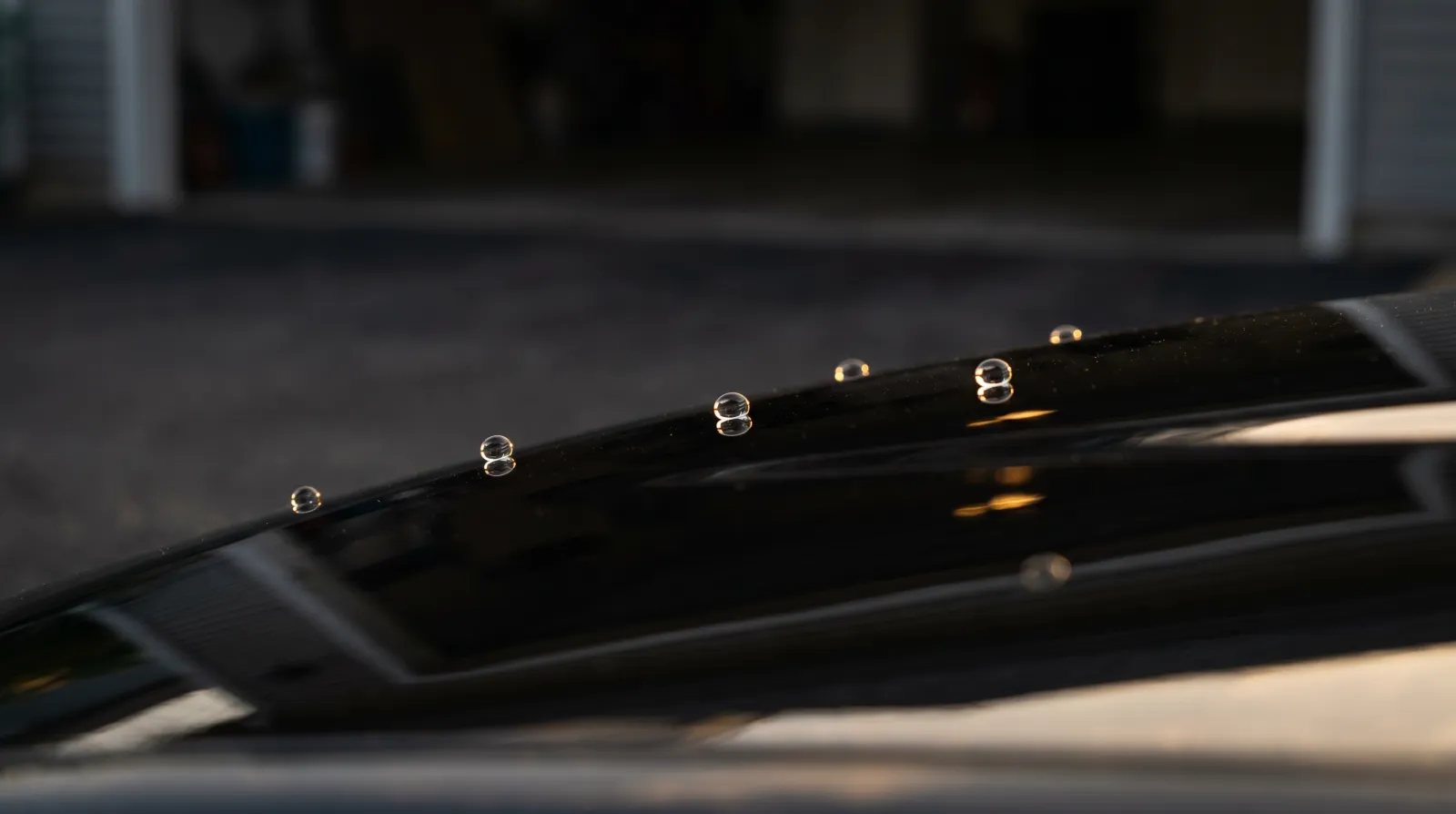
Every ceramic coating on the market ships with a number on the box. One year. Three years. Five years. Nine years. Some brands print "lifetime" and charge accordingly. If you're shopping for a coating for the first time, those numbers look like hard facts. They are not. They are best-case estimates — written by marketing departments, not paint chemists — and the gap between the claim and your driveway reality can be significant.
This page is part of the Redline Garage ceramic coating guide. We're going to pull the durability question apart properly: what the science says, which factors eat through a coating faster than any brochure admits, how consumer and professional products compare, and the dead-simple test that tells you whether your coating is still doing its job.
The Durability Claim Breakdown by Tier
Ceramic coatings are silicon dioxide (SiO2) or silicon-carbide-based polymers that form a semi-permanent bond with your paint. The thickness of that cured layer, the quality of the chemistry, and the prep underneath all determine how long the bond holds before UV and chemical attack degrade it. Here's how the numbers shake out when conditions are reasonable — not perfect, not punishing:
| Tier | Marketed | Realistic | Notes |
|---|---|---|---|
| Entry-level (spray & wipe) | 1 year | 4–8 months | Minimal SiO2; degrades fast under UV |
| Mid-range consumer | 2–3 years | 12–24 months | Good protection with proper maintenance |
| Professional installer grade | 5 years | 3–5 years | Claims are reasonably honest at this tier |
| Premium pro (Gtechniq, CarPro Forte, Gyeon Mohs+) | 7–9 years | 4–7 years | Needs flawless prep, garage storage, correct care |
| "Lifetime" consumer products | Lifetime | 12–18 months | Marketing language; rarely defined |
The pattern isn't a coincidence. Entry-level products overpromise relative to performance; professional products close the gap because the installer's reputation depends on the coating actually delivering. That accountability matters.
Do 9-Year Ceramic Coatings Really Last Nine Years?
The honest answer: some can, under the right conditions. Most won't, under typical Australian conditions. Products like Gtechniq Crystal Serum Ultra and CarPro Forte are legitimate high-concentration coatings with layerable chemistry, and the 9-year claim is based on accelerated weathering data corroborated by certified installer inspection reports. That's real data. The problem is what "9 years" assumes: a garaged vehicle, regular pH-neutral washes, no industrial fallout, annual decontamination, and near-perfect paint prep. If any of those fail — and for most daily drivers several will — the coating degrades faster. Certified warranties also carry inspection clauses that can be voided by the wrong wash chemicals or a missed check-up. For a car that parks outside and gets washed with whatever the servo stocks: expect four to five years from a premium coating, maybe six if you're diligent. Still excellent protection — just calibrate expectations.
Understanding the Sacrificial Layer
This is the concept most marketing skips. A ceramic coating is a sacrificial layer — that's the whole point. It absorbs UV, chemical attack, light abrasion and contamination so your paint doesn't have to, consuming itself in the process. A thicker coating doesn't never-wear; it takes longer to wear through. A 3-micron professional coating has three to six times the material to sacrifice as a 0.5-micron spray product — that's where the durability gap between tiers actually comes from. Wear is uneven: horizontal surfaces (bonnet, roof, boot) face direct UV and the most contamination, so they degrade first. That's normal sacrifice-layer behaviour, not a defect.
What Shortens a Coating's Lifespan
UV Degradation
The primary long-term enemy. SiO2 is UV-resistant, not UV-proof. Coatings in high-UV climates (Queensland, WA, NT) degrade meaningfully faster. If you're in Brisbane or Perth, trim realistic estimates by 20–30% versus claims written for European test environments.
Chemical Degradation
Bird droppings (pH as low as 3.5), industrial fallout, tree sap and insect acids all do damage, especially in heat — a single dropping on a hot bonnet for a day can etch through a thin consumer coating. Non-pH-neutral shampoos strip the hydrophobic layer over repeated washing faster than UV alone.
Maintenance Dependency
Coatings are not maintenance-free. Automated brush washes, harsh detergents and high-alcohol waterless products thin the coating consistently. Wash incorrectly 50 times over two years and you'll have less than half the original thickness left. Proper care — covered in our maintenance guide — isn't optional.
Contamination Bonding
Iron particles from brake dust bond to the surface over time. If not removed with an iron decontaminant (typically annually for daily drivers), they degrade the hydrophobic layer and create micro-sites where moisture and acid penetrate.
Poor Original Application & Parking
A coating over contaminated, swirled or poorly corrected paint won't bond uniformly — high spots and weak zones fail first. And garaged-overnight versus street-parked is one of the largest real-world variables: a car garaged 80% of the time realistically gets 30–50% more life from the same coating.
Consumer vs Professional: The Longevity Difference
Consumer products have two structural disadvantages. First, concentration: professional coatings often run 85–95% SiO2 or ceramic polymer by volume; consumer products sit lower (30–60%) because higher concentrations need controlled conditions to cure correctly. Second, layer count: professional coatings are often applied in two or more layers with specific cure windows to build thickness, while most consumer products are single-application. For a daily driver you'll keep five-plus years, the cost difference for professional application — in our cost breakdown — usually makes sense.
How to Tell If Your Coating Is Wearing Off
The Water Bead Test
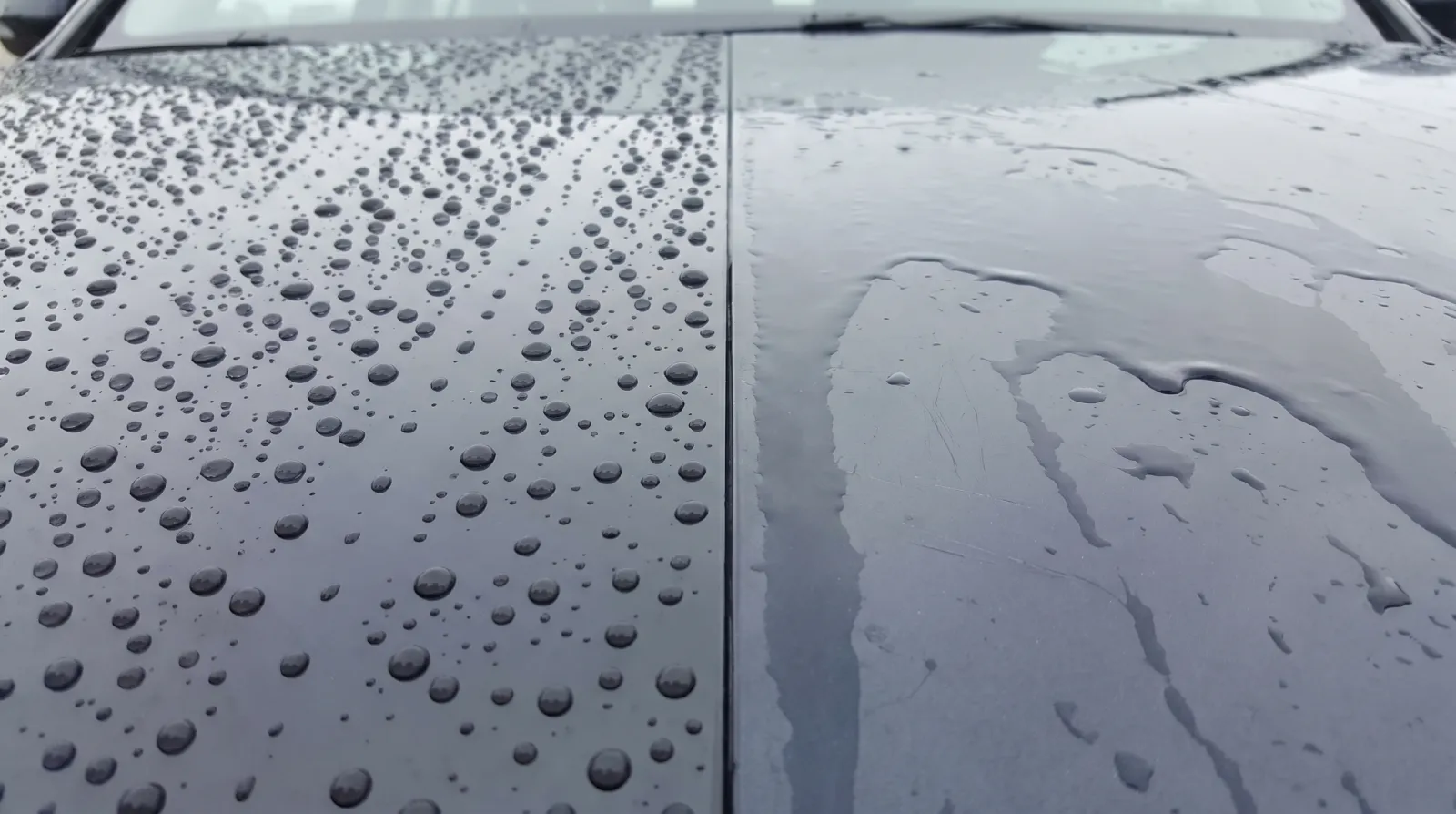
The most reliable real-world test, no equipment needed. A healthy coating produces tight, high-contact-angle beads that ball up and roll off at low angles. As the coating degrades, the beads flatten, spread and begin to sheet rather than bead. If water stops beading and sheets entirely, the hydrophobic chemistry is essentially gone.
Other Indicators
- Water spotting increases: deposits that once wiped off easily now require effort or leave marks.
- Contamination sticks more readily: brake dust and road film start bonding between washes.
- Gloss drops noticeably: the coating's optical depth diminishes; paint looks flatter even when clean.
- The slick feel is gone: a degraded coating feels like bare clear coat to a gloved hand.
If the coating wears in specific zones (bonnet centre, roof) but still beads on doors, that's normal — spot-treating those areas with a topper, or recoating just those panels, extends overall life without a full redo.
How to Maximise Coating Longevity
- Garage or shade-cover overnight wherever possible
- Two-bucket hand wash only — no brush tunnels
- pH-neutral shampoo every wash, no exceptions
- Annual iron decontamination with a dedicated iron remover
- Ceramic booster/topper every six months on high-UV vehicles
- Bird droppings and fallout removed same-day where possible
- No wax or oil-based dressings over the coating
The full detail on each is in the maintenance guide.
The Bottom Line
Ceramic coating durability is real, but the year numbers on the packaging are ceilings, not floors. A professionally applied premium coating maintained correctly will reliably outlast any wax or sealant by a factor of three to five. A consumer spray applied without proper prep and washed with truck-stop detergent will be gone in eight months. The product matters less than the prep and the ongoing care. Know what tier you're buying into, match expectations to the realistic column above, and treat the coating like the investment it is.
Affiliate Disclosure
Some links on this page are affiliate links. If you buy through them we may earn a small commission at no extra cost to you. It never changes our verdicts — we only recommend gear we would run on our own cars. Read the full disclosure.