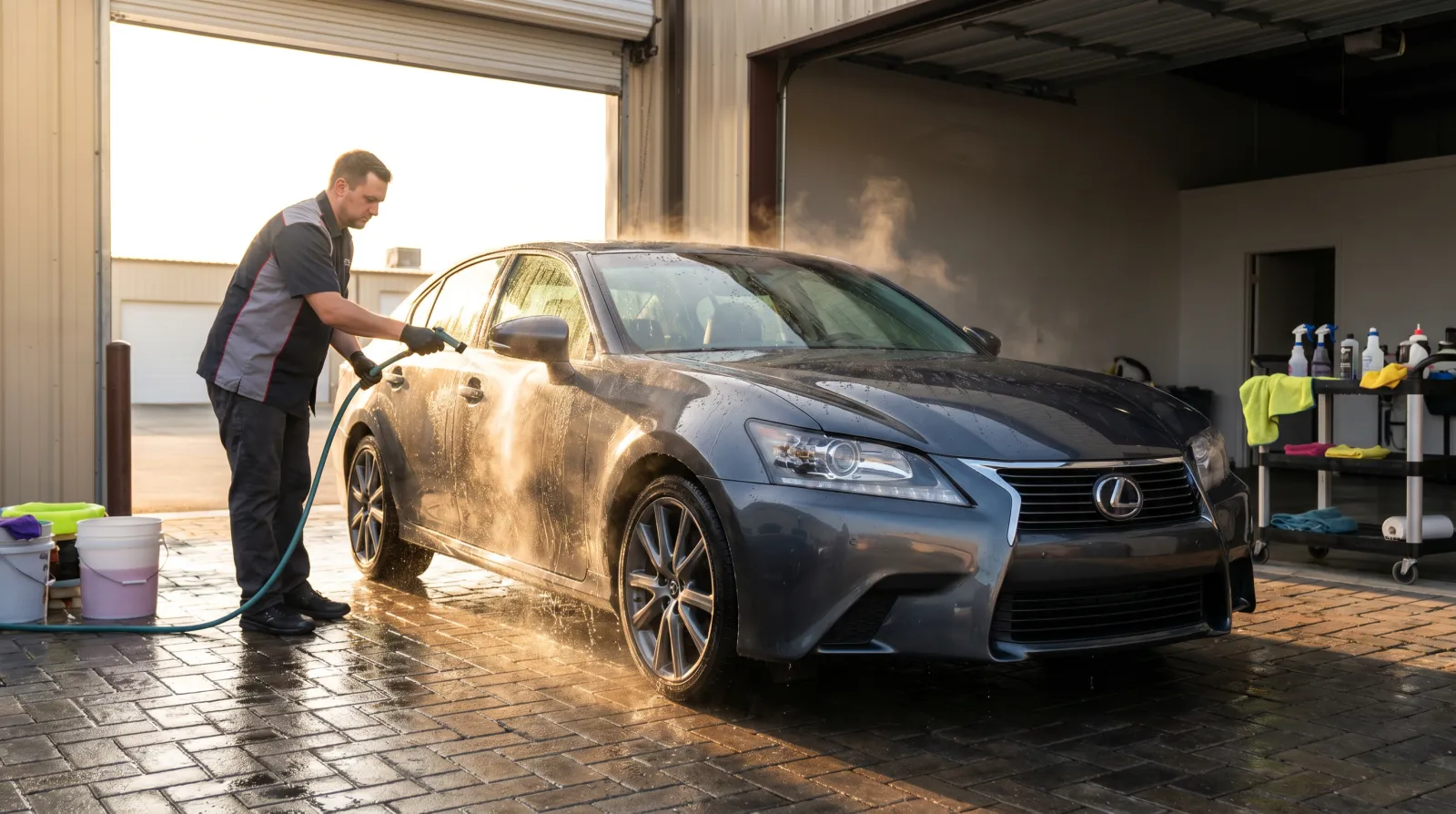
You've spent good money — or good hours — getting a ceramic coating applied. Now the question everyone asks is: what do I actually do to keep it working? The answer is simpler than most detailing forums make it sound, but there are a handful of rules you absolutely cannot break. Get them right and your coating will bead water like a freshly waxed show car for years. Get them wrong and you'll strip it flat in a few months.
This guide covers the full maintenance picture: wash method, product choices, decontamination, toppers and the schedule that keeps everything dialled in. It pairs with our ceramic coating pillar guide for the chemistry background, and with our notes on ceramic coating durability for what realistic longevity looks like.
Why Maintenance Actually Matters
A ceramic coating is a semi-permanent layer of silicon dioxide (SiO2) that bonds to your clear coat and creates a hard, hydrophobic surface. It is not indestructible. What it does is make contamination much easier to remove — if you wash the car correctly and regularly. Neglect it, and iron fallout, brake dust, bird-drop etching and water-spot minerals attack the surface the same way they attack unprotected paint. The coating buys you time and forgiveness, not immunity. The self-cleaning effect — water sheeting off and carrying loose dirt with it — only works when the coating surface is itself clean.
The Correct Wash Method: Two-Bucket, Every Time
A coating doesn't change the fundamental rule of safe washing: never drag contaminated media across your paint. The two-bucket wash method remains the non-negotiable baseline.
Setup
- Bucket 1 — Wash: pH-neutral ceramic shampoo diluted to manufacturer ratio (typically 1:500 to 1:1000).
- Bucket 2 — Rinse: clean water only.
- Grit guard in both buckets: rinse your mitt against the rinse-bucket grit guard before reloading with soap, keeping abrasive particles off the paint.
- Wash mitt: microfibre or chenille. No sponges, no old rags.
Pre-Wash First — Always
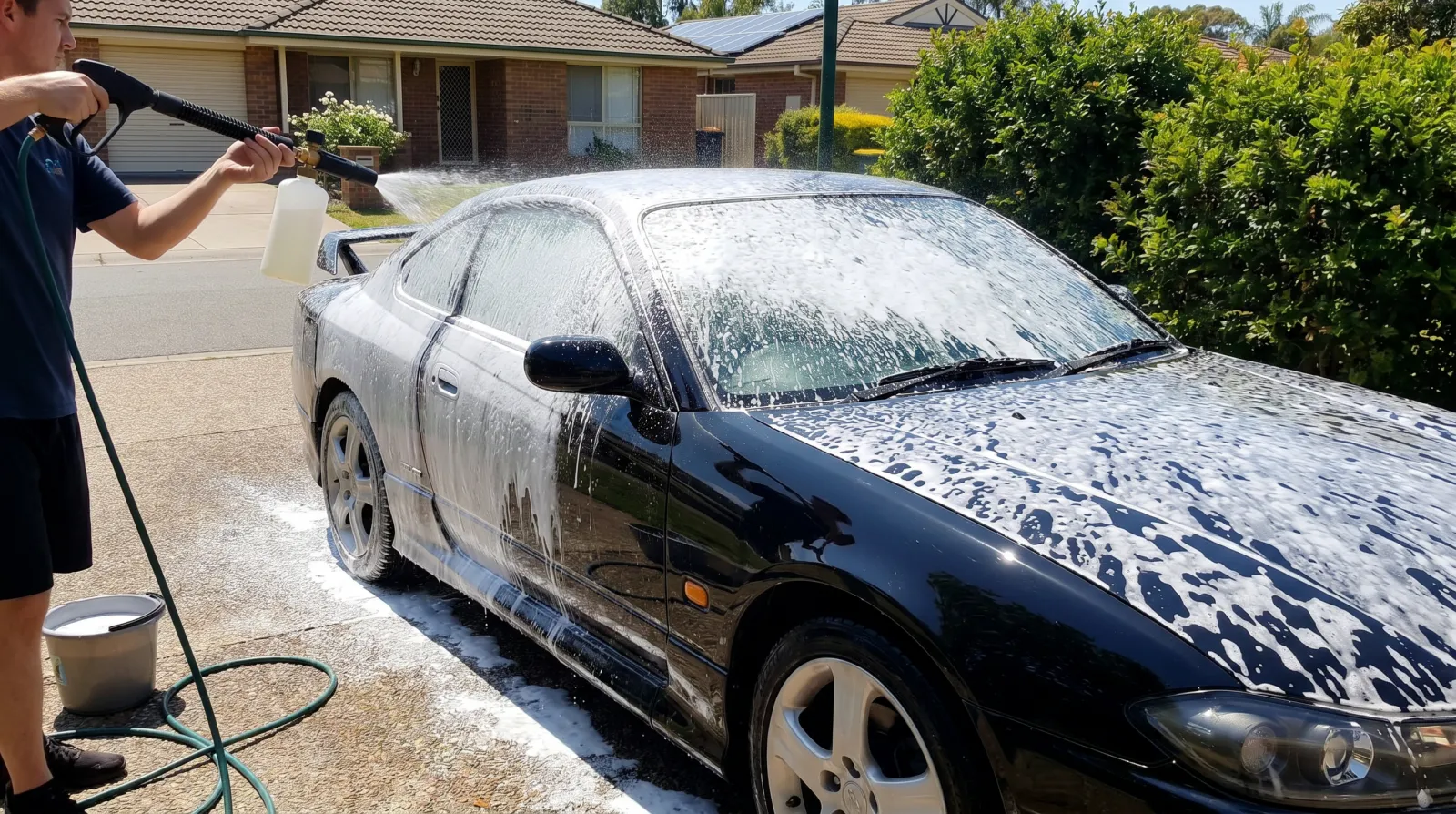
Before your mitt touches the car, do a touchless pre-wash. A foam cannon loaded with snow foam is ideal — see our foam cannon comparison if you're still choosing one. A ceramic surface still picks up road film, pollen and brake dust; a proper pre-wash removes the loose stuff before any contact. This is the single highest-impact step for protecting your coating long-term.
Washing Order
- Rinse the whole car top to bottom.
- Apply foam pre-wash; dwell 2–3 minutes (don't let it dry).
- Rinse off the foam.
- Work panel by panel with the soapy mitt, top to bottom, rinsing the mitt after every panel.
- Final rinse, top to bottom.
- Dry immediately.
Choosing the Right Soap
This is where a lot of people go wrong. You need a pH-neutral ceramic shampoo — not a strong alkaline degreaser, not an all-in-one shampoo-and-wax. High-alkaline shampoos (pH 10+) strip the hydrophobic layer over time (great for decontamination washes, not weekly use). Shampoo-and-wax combos leave a temporary film that mutes the hydrophobic response and wastes your money. Reliable neutral options used widely in the JDM detailing community: CarPro Reset, Gyeon Bathe+, Koch Chemie GSF. Look for pH 6–8, no wax additives, coating/PPF compatible.
Drying: The Step That Kills Coatings
Letting water air-dry is one of the most common mistakes. Even with strong hydrophobicity, water left to evaporate deposits the minerals it carries — calcium, magnesium, silica — onto the surface as water spots, which on a dark car in sun etch in fast. Use a dedicated drying towel: a large, plush waffle-weave or twisted-loop towel (1000+ GSM) dragged with minimal pressure, one pass per panel. A leaf blower first clears mirrors, jambs and panel gaps. To prevent water spots, wash in shade or early morning and dry fast.
Can You Use Wax on a Ceramic Coating?
Technically yes, practically no — and there's no reason to. Carnauba wax over a coating bonds to the coating surface rather than the paint. It won't damage the coating, but it significantly reduces hydrophobicity because wax has a much lower contact angle than cured SiO2 — you're paying to make your coating perform worse, and it washes off in weeks anyway. Use an SiO2 maintenance spray or topper instead. Likewise, never use an abrasive polish or compound on a coated car without understanding you're cutting through the coating itself.
SiO2 Toppers: Maintaining Hydrophobicity
An SiO2 topper is a diluted ceramic product you apply every 6–12 weeks to refresh the top layer — a seasonal recharge, not a replacement. Covered in depth on our layering and toppers guide, but the short version of the three most widely used:
- CarPro Reload: spray-on SiO2 booster for a wet or dry panel. Bonds quickly, adds slickness and beading, layers well over CQuartz. One of the most consistent performers for the price.
- Gyeon WetCoat: sprayed on a wet car before the final rinse — spray on, rinse off. Zero effort, slightly less durable than Reload.
- Gtechniq C2v3: spray-and-buff on a dry, clean panel. Durable, extremely slick, excellent over EXO or Crystal Serum Light.
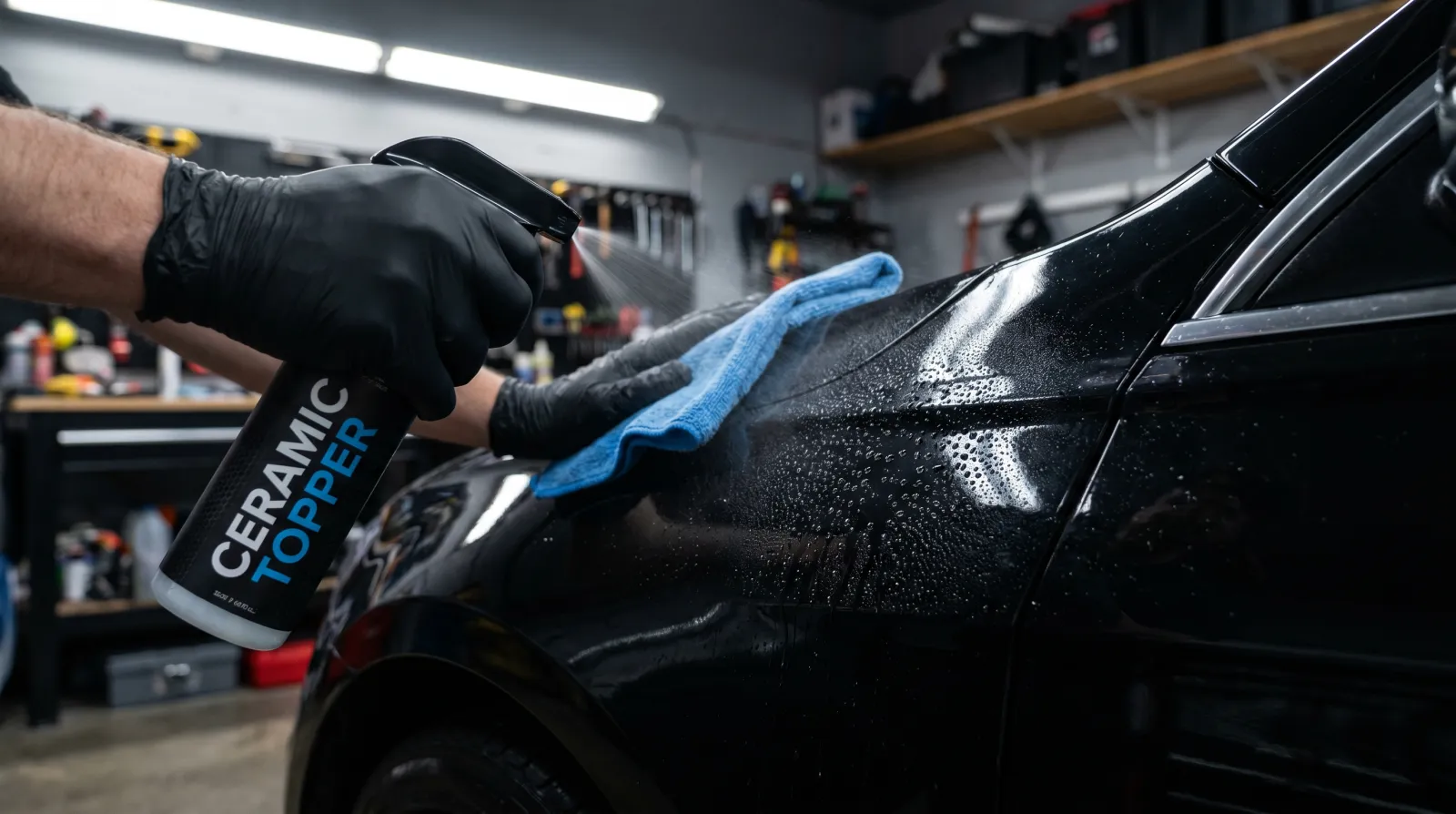
The pattern is the same across all three: apply after a proper decontamination wash, not on contaminated paint, and let the coating dry fully first.
Decontamination Wash: The Step Most People Skip
Even with correct regular washing, iron particles from brake dust and industrial fallout embed in the coating over time, causing micro-oxidation and dulling. A decontamination wash with an iron remover should be part of your routine two to four times a year:
- Pre-wash and rinse the car clean.
- Spray iron remover across paint and wheels; watch for the purple-red bleeding reaction.
- Dwell 3–5 minutes (don't let it dry).
- Rinse thoroughly.
- Clay bar or mitt any panels with remaining bonded contamination; lubricate well.
- Final rinse, dry, then apply your SiO2 topper.
This is also when a slightly alkaline shampoo (pH 9–10) is appropriate, to help the iron remover do its job. Just don't use that shampoo on every wash.
How Often to Wash a Ceramic Coated Car
- Weekly: ideal for daily drivers in high-contamination environments (city, coastal, lots of birds).
- Fortnightly: reasonable for weekend cars; don't exceed two weeks near acid rain or heavy industry.
- After every rain event in hard-water areas: rinse to prevent mineral water spots. The longer contamination sits, the harder it is to remove without abrasion.
Signs Your Coating Is Wearing Out
- Water stops beading in tight droplets and starts to sheet flat or cling — the primary indicator.
- Paint feels rough after washing rather than slick.
- Contamination bonds faster — bird drops etching within hours rather than days.
- SiO2 toppers stop bonding — Reload or WetCoat washes straight off.
At that point, get a professional inspection to assess whether a topper can buy more life or the coating needs full reapplication. Don't compound or polish to "revive" it — that removes what's left.
Ceramic Coating Maintenance Schedule
| Frequency | Task | Products |
|---|---|---|
| Weekly / fortnightly | Two-bucket wash with foam pre-wash | pH-neutral shampoo, foam cannon, grit guards, microfibre mitt, drying towel |
| Every 6–12 weeks | SiO2 topper / maintenance spray | CarPro Reload, Gyeon WetCoat, or Gtechniq C2v3 |
| Every 3–4 months | Decontamination wash | Iron remover, clay bar or mitt, slightly alkaline shampoo |
| Annually | Full coating inspection | Beading test, slickness check, professional assessment if in doubt |
| As needed | Bird drop / insect removal | Detail spray + clean microfibre — remove within 24 hours in warm weather |
The Bottom Line
Maintaining a ceramic coating is not complicated, but it does require doing the right things consistently. Use a pH-neutral shampoo, run the two-bucket method every time, pre-wash with a foam cannon, dry immediately with a proper towel, drop a grit guard in both buckets, and top up with an SiO2 spray every couple of months. Decontaminate quarterly. Stay off the wax and abrasive polishes. Do all that and your coating will keep performing well beyond its rated lifespan. For how long coatings last under different conditions, see our durability guide, and for single-stage vs multi-layer topper systems, the layering and toppers page.
Affiliate Disclosure
Some links on this page are affiliate links. If you buy through them we may earn a small commission at no extra cost to you. It never changes our verdicts — we only recommend gear we would run on our own cars. Read the full disclosure.