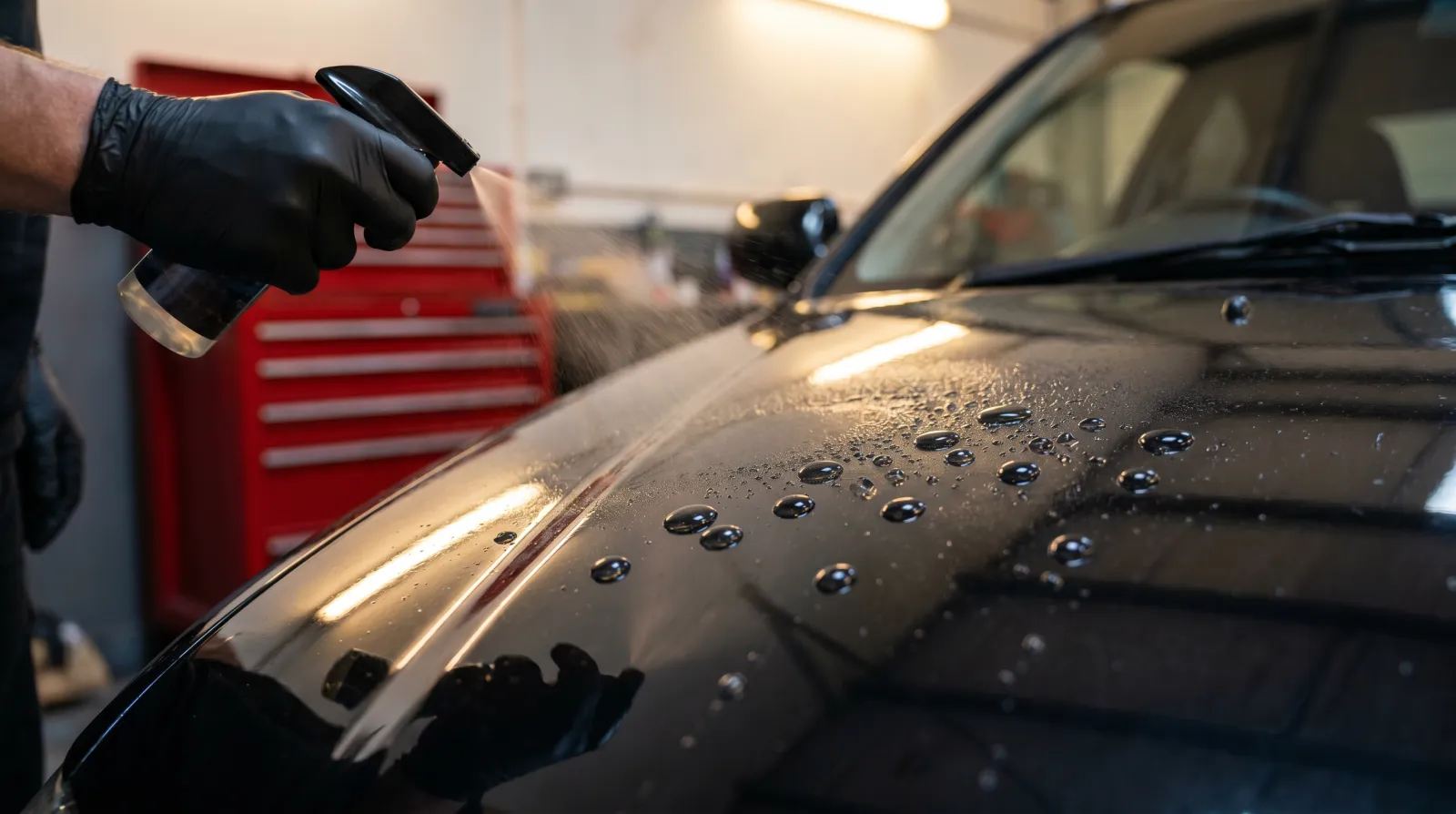
Two questions come up constantly in the detailing community: can you layer ceramic coating, and does doing it make any real difference? The short answer to both is yes — but with conditions that matter.
This page covers how cross-linking between coats works, the flash window you need to respect, where diminishing returns kick in, and how a ceramic topper or booster spray fits in. Whether you're chasing show-car results or just want your daily driver's paint protected between washes, the layering question has a different answer for each of you.
How Ceramic Coatings Actually Bond: Cross-Linking Explained
Ceramic coatings cure through cross-linking. The SiO2 (or TiO2) molecules in the liquid react with moisture and each other to form a rigid, interlocked polymer network over your clear coat. Think of it like concrete curing rather than paint drying — once set, it's set.
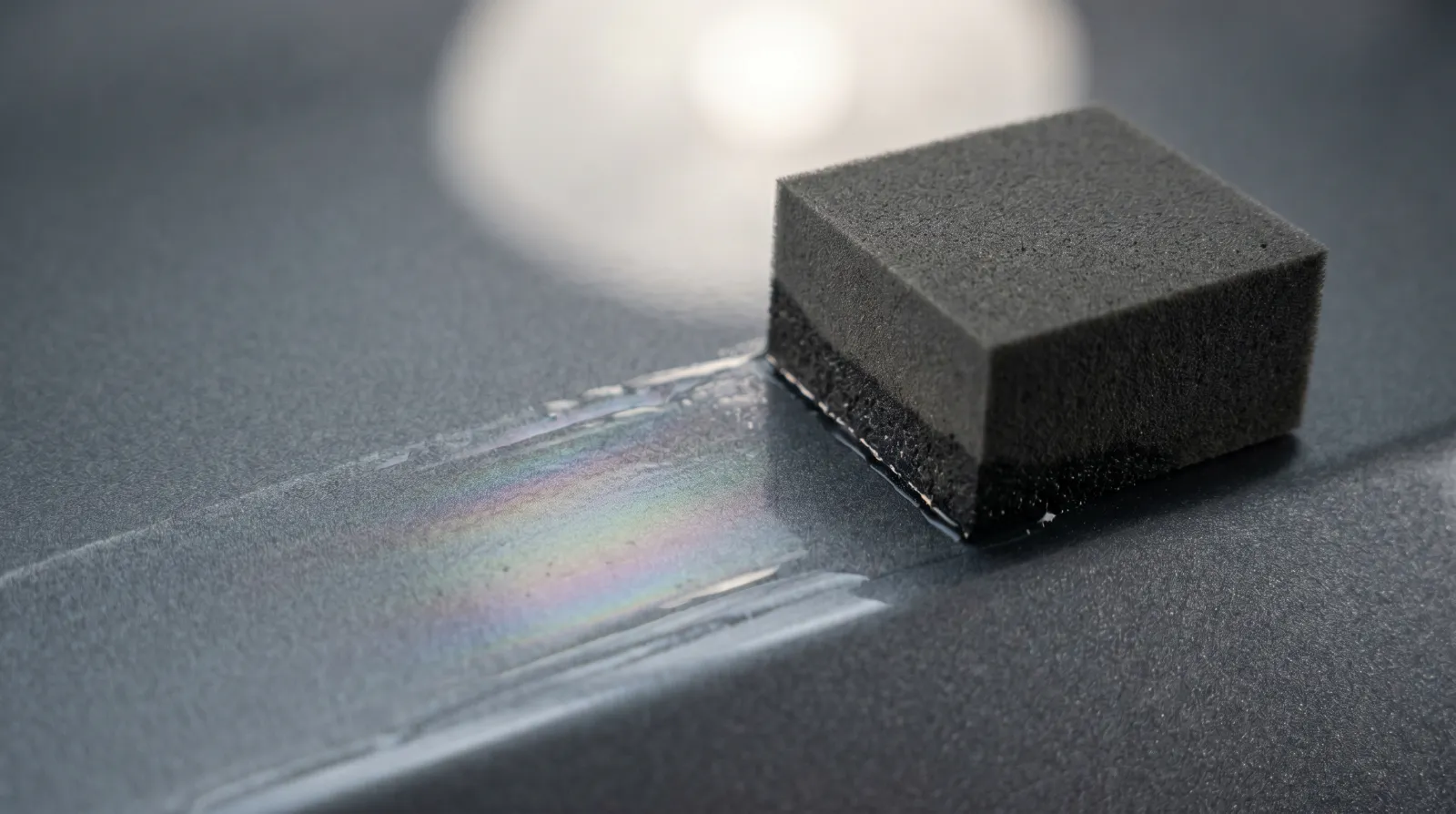
When you apply a second coat over a first that has properly flashed, the new layer doesn't just sit on top. The reactive molecules bond into the partially cured surface of the first, creating a unified matrix rather than two separate films. Done correctly, you end up with more material in the stack and slightly better depth, hardness and chemical resistance than a single coat. Done incorrectly — too early, too late, or over a fully cured base — the second coat either smears in before it can flash, or sits as a separate layer with a weak bond. Neither is what you paid for.
The Flash Window: Timing Is Everything
The flash window is the period after applying a coat when the surface is still "open" for a second coat to chemically integrate. Apply too soon and you're working into wet material; too late and the surface has fully polymerised, so your second coat bonds to a cured coating rather than into it.
Most professional-grade coatings specify a flash window of 1 to 4 hours at typical workshop temperatures (20–25°C, 50–70% humidity). Some fast-cure formulas tighten that to 30–60 minutes. Check the technical data sheet for your product — the actual TDS, not the marketing page. Signs the first coat is ready: it should feel slick, not tacky, and residue should lift cleanly. If you're still fighting high spots, wait longer.
Do Multiple Coats Actually Help?
Yes — up to a point.
First to Second Coat
The jump from one to two produces measurable, real improvements: film build increases, hardness inches up, chemical resistance improves noticeably. Most DIY consumer coatings are formulated at lower SiO2 concentrations, so two coats gets you closer to a single pro-grade coat. Worthwhile.
Second to Third Coat
Gains start compressing. You might see a small improvement in water behaviour and gloss depth, but the practical durability difference is marginal for most real-world conditions.
Beyond Three Coats
This is outright waste for a daily driver. Coatings have a practical maximum film thickness before additional layers stop bonding meaningfully. You're not building armour — you're adding material that won't perform proportionally better. For a car that sees regular roads, two coats is the sensible ceiling.
Show Car vs Daily Driver: Where Layering Is Worth It
Show car: two coats minimum, three if the product supports it and you have a controlled environment. Materials are cheap relative to the labour already invested in correction. Daily driver: one quality coat applied correctly beats two coats applied sloppily. If you're using one of the better DIY coating kits, apply two coats within the flash window and move on. The biggest durability factor on a daily is maintenance, not stack thickness — which brings us to toppers.
Ceramic Coating Toppers: What They Do
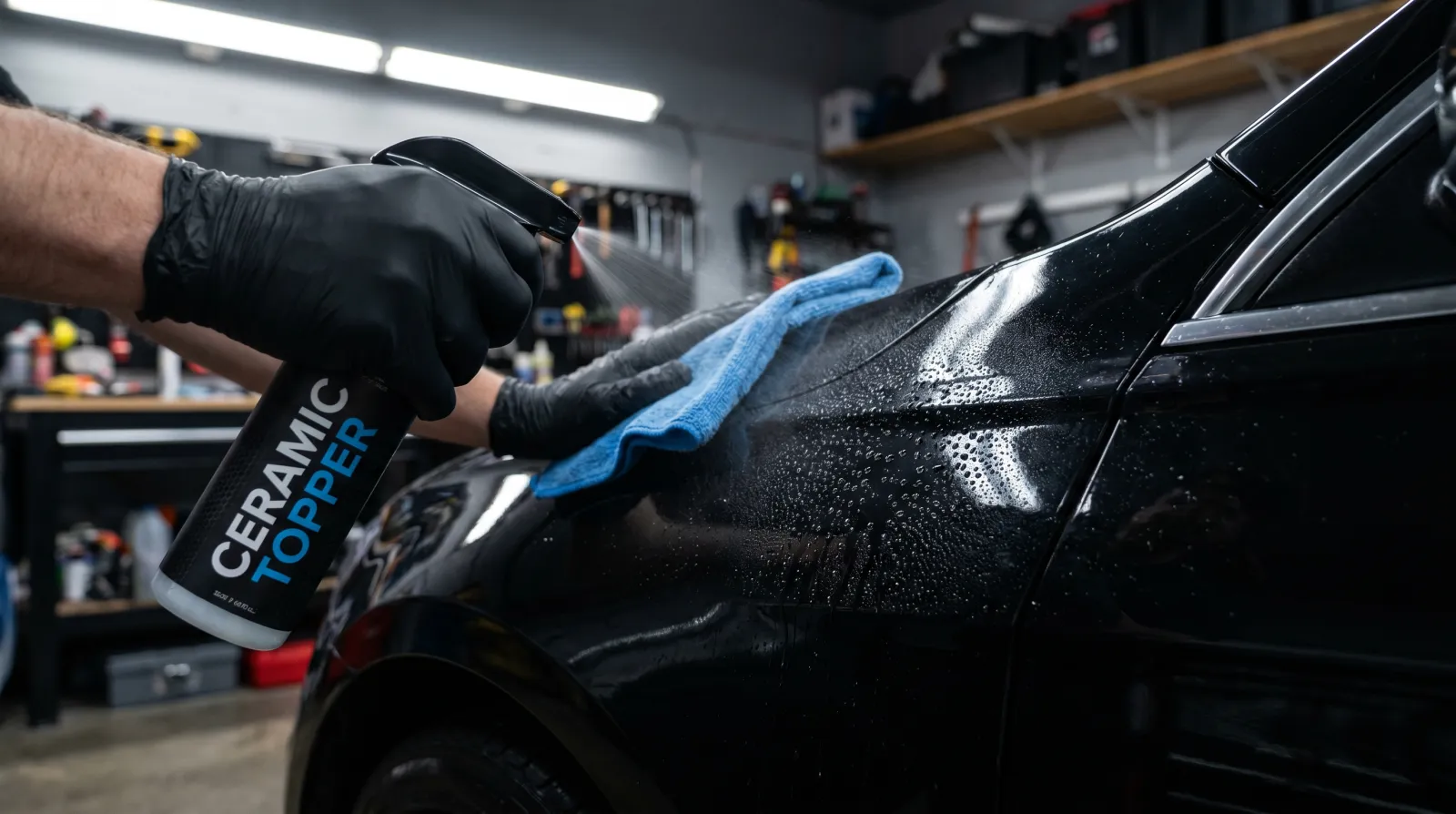
A ceramic topper (also called a booster spray, maintenance spray or SiO2 spray sealant) is not a substitute for a base coating. It's a lighter, faster-reacting SiO2 product that sits on top of a cured base and restores its surface properties between washes. Base coatings sacrifice their uppermost layer over time through UV, contaminant bonding and wash abrasion; a topper replenishes that sacrificial layer, extending the base coat's effective life. What a topper adds:
- Gloss boost — restores the wet-look depth a six-month-old coating loses
- Slickness boost — contact angle and water behaviour return closer to day one
- Additional hydrophobicity — water sheets rather than sitting in droplets that attract dirt
- UV buffer — the topper takes the UV hit before the base coat does
The Three Toppers Worth Running
Gtechniq C2v3 Liquid Crystal
The most coating-native topper here, designed by the same lab as Gtechniq's pro base coatings, so the chemistry is tuned to bond cleanly with their matrix. Apply to a clean, dry panel — spray, spread, buff — for a deep gloss that lasts weeks. Works on non-Gtechniq bases too. Slightly higher cost per application, and it needs a clean surface to bond. Don't skip the wash step.
CarPro Reload
A spray-and-rinse SiO2 sealant you can apply to a wet car after washing — the most forgiving in the group. Water-activated: spray on wet paint, dwell briefly, rinse off. Excellent slickness, good gloss (slightly behind C2v3 on a corrected finish). For a weekly-washed daily it's arguably the most practical topper because it adds almost no time to the wash.
Gyeon WetCoat
Similar wet-apply, rinse-off SiO2 spray. Notably affordable, the logical choice for topping up every couple of weeks without spending up. Strong slickness and water behaviour; the most modest gloss of the three, which matters less on dark colours. Layers especially well over Gyeon Mohs.
Base Coat and Topper Systems Built to Pair
Using a topper from the same family as your base removes compatibility uncertainty and gives you the chemistry the engineers tested:
- Gtechniq Crystal Serum Ultra / C1 → C2v3 — the professional benchmark
- CarPro CQuartz UK 3.0 / Forte → Reload — strong value
- Gyeon Mohs / Pure → WetCoat — the most budget-accessible
Cross-system pairings generally work (SiO2 bonds to SiO2) but you lose tested compatibility and any system warranty. A non-issue for most enthusiasts; matters for installers with client warranties.
When to Apply a Topper
Apply when water behaviour degrades — when water sits in droplets and sheets less. On a daily with regular washing that's typically every 4–8 weeks depending on UV, wash frequency and conditions. Don't wait until the coating is completely spent. Before any topper, decontaminate and clean the surface; an IPA wipedown removes wax or silicone residue that would block bonding — the step most people skip, and the reason their topper doesn't last as long as the label claims.
Quick Reference: Layering vs Topper
| Scenario | Recommendation |
|---|---|
| Applying base coat, want maximum protection | Two coats within flash window |
| Show car, pro-grade product | Two to three coats, TDS-guided timing |
| Daily driver, DIY coating | Two coats max, focus on correct application |
| Coating 6+ months old, gloss fading | Topper / booster spray (Reload or WetCoat) |
| Weekly maintenance, no extra steps | Wet-apply topper (Reload / WetCoat) after each wash |
| Maximum gloss for a show or meet | Dry-apply topper (C2v3) after a thorough wash + IPA wipe |
The Bottom Line
Layering works when you respect the flash window and understand where the returns stop compounding. Two coats during the initial application is almost always worth it; beyond that you're in show-car territory where marginal gains cost real time. For everyone else, a quality base coat paired with a regular topper like CarPro Reload or Gyeon WetCoat delivers more real-world value than a four-coat stack you never maintain. The topper is the part people skip and then wonder why their three-year coating looks two years old. For the full wash and care routine, see our ceramic coating maintenance guide, or start at the ceramic coating hub if you're still choosing a base product.
Affiliate Disclosure
Some links on this page are affiliate links. If you buy through them we may earn a small commission at no extra cost to you. It never changes our verdicts — we only recommend gear we would run on our own cars. Read the full disclosure.