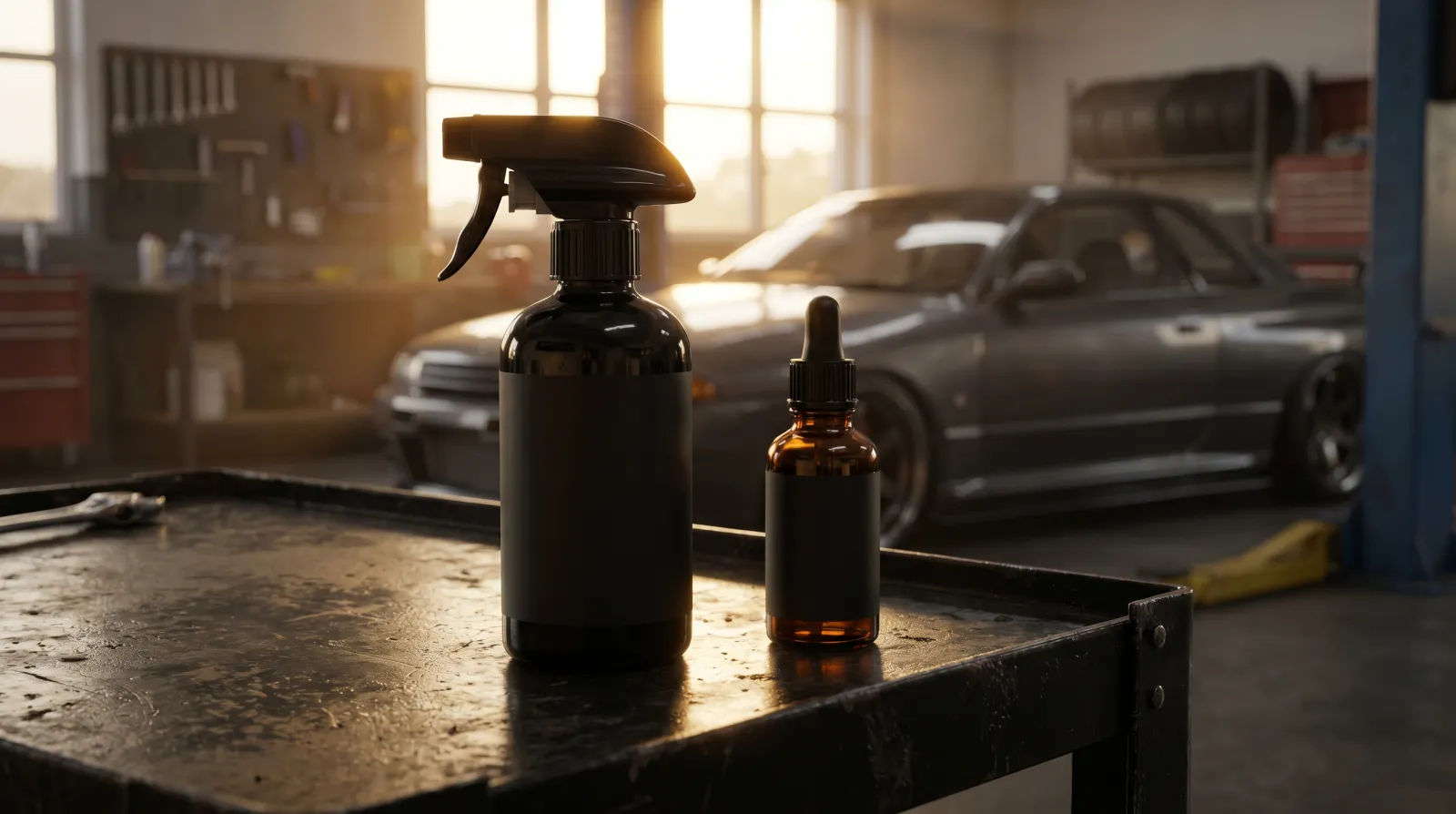
Walk into any auto shop or scroll through detailing forums and you'll find two very different products both calling themselves "ceramic coating." One comes in a small spray bottle and takes about ten minutes to apply. The other comes in a 30 ml glass vial and requires a panel wipe, an IPA prep, buffing blocks and a weekend of your life.
Both claim to protect your paint. Both contain silicon dioxide (SiO2). But they are not the same product — and confusing them is how people end up disappointed. This page cuts through the marketing so you can make the right call for your car, your skill level and your budget.
If you're still getting your bearings on how ceramic coatings work as a category, start at our ceramic coating hub. If you already know which way you're leaning and just want product picks, jump to our best DIY ceramic coating kits guide.
What's Actually in Each Format?
The word "ceramic" on a label is doing a lot of heavy lifting these days. Spray ceramic coatings — sometimes sold as SiO2 spray sealants or ceramic-infused quick detailers — typically contain a dilute concentration of SiO2 (often 2–5%) in a carrier solution. They bond lightly to the paint and to any existing coating or sealant already on the car. Some are genuinely useful; others are glorified spray waxes with a marketing badge.
Bottle ceramic coatings — the kind you apply with an applicator block and buff off before they cure — contain much higher concentrations of SiO2 or SiO2/TiO2 blends (some professional-grade products exceed 85%). They form a semi-permanent cross-linked bond directly with the clear coat. Same category name, completely different mechanism — and that matters a lot when comparing what each does over time.
The Durability Gap: Months vs Years
This is the core difference, and it's significant. Spray ceramic sealants typically last 3 to 6 months under normal driving. Some premium SiO2 sprays push toward 9–12 months if the paint was clean and lightly polished first, but that's the ceiling, not the average. Bottle ceramic coatings applied correctly typically hold for 2 to 5 years. Entry-level consumer kits like Gyeon Mohs or CarPro CQuartz Lite sit at the lower end; professional-grade products can claim 5–7 years. The cross-linked polymer matrix formed during curing is genuinely durable in a way a spray sealant can't replicate. The honest summary: if you want protection measured in years rather than car-wash cycles, a bottle coating is the only option worth discussing.
Comparison at a Glance
| Factor | Spray Ceramic / SiO2 Spray | Bottle Ceramic Coating |
|---|---|---|
| SiO2 concentration | 2–5% (dilute) | 20–85%+ (concentrated) |
| Typical durability | 3–9 months | 2–5 years |
| Bond type | Light adhesion / sealant layer | Cross-linked bond to clear coat |
| Application time | 5–15 minutes | 2–6 hours (+ 24–48h cure) |
| High-spot risk | Very low | Moderate–high if technique is off |
| Forgiveness | High — wipe on, done | Low — timing and flash are critical |
| Paint prep required | Clean, dry surface | Full decon + IPA wipe; polish recommended |
| Cost (entry level) | $15–$40 per bottle | $50–$150 for a DIY kit |
| Skill floor | Beginner | Intermediate |
| Best use case | Maintenance, leased cars, quick refresh | Long-term protection, keeper cars |
Ease of Application and Forgiveness
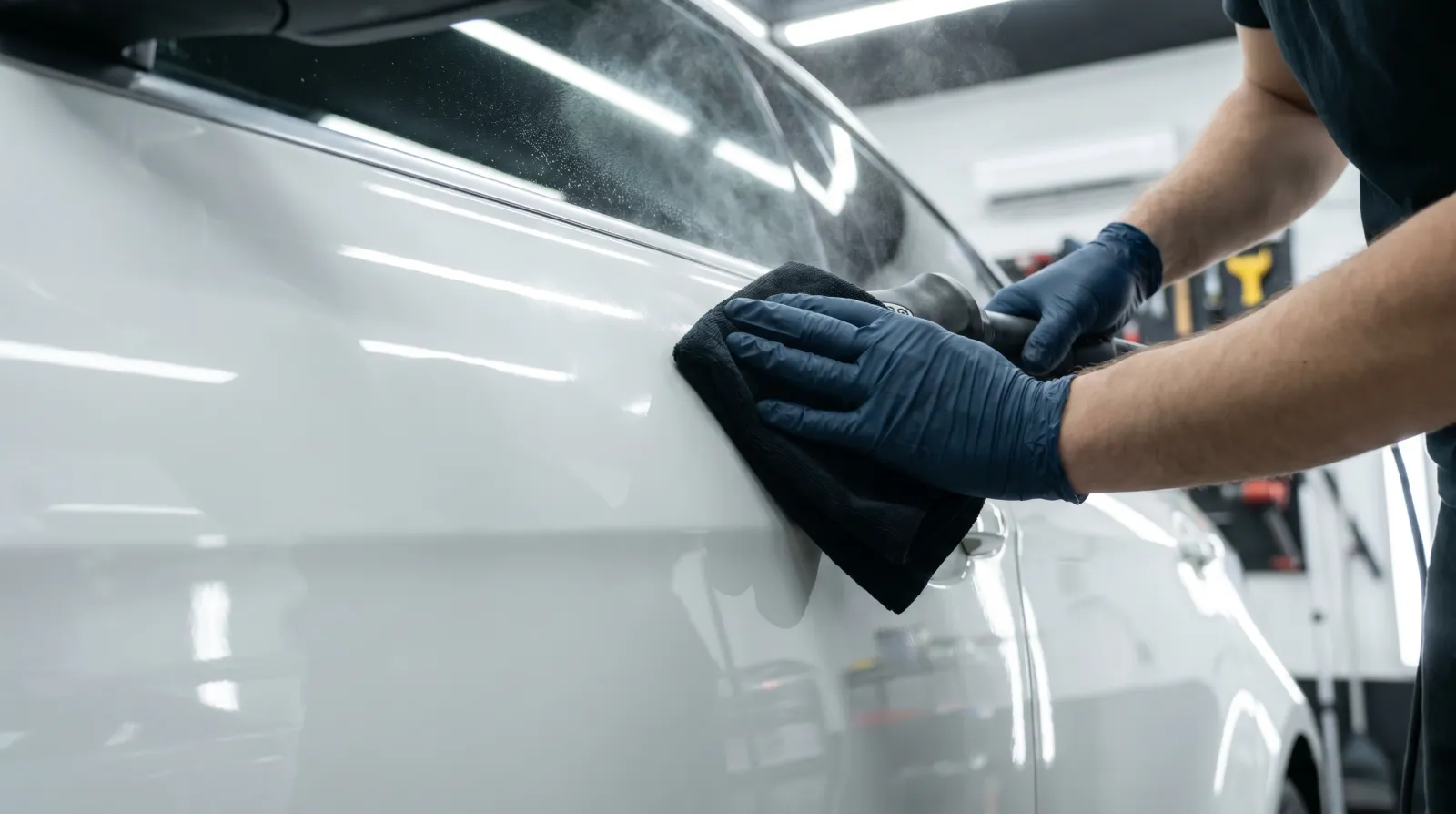
Spray ceramic sealants are nearly impossible to mess up. Spray onto a clean panel, spread with a microfibre, buff off. No flash times, no ambient-temperature worries, no panel-by-panel race before the product sets. Miss a spot, spray it again. For anyone new to paint protection, that simplicity is genuinely valuable.
Bottle coatings are a different conversation. The coating flashes — it begins to cure on contact with air — and if you don't buff at the right moment you get high spots: streaky, smeared patches partially cured into the surface. Removing them is painful work, sometimes requiring a light machine polish, and they're one of the most common first-timer mistakes. Our full how to apply ceramic coating guide covers this in detail. The short version: spray coatings are forgiving by design; bottle coatings reward preparation and patience, and punish rushing.
What Are Hybrid Coatings?
A third category has grown popular and is worth understanding: hybrid ceramic coatings. These sit between a spray sealant and a traditional liquid coating — typically a higher SiO2 load than a spray, but formulated to be more forgiving to apply than a full bottle coating, often with a wider buffing window. Brands like Gtechniq C2v3 Liquid Crystal and Meguiar's Hybrid Ceramic Wax (which adds carnauba for beading aesthetics) fall here. Hybrids typically offer 12 to 18 months of protection — a meaningful step up from a spray without the full technical demands of a proper coating. They're not a replacement for a real coating on a car you'll protect for years, but a sensible upgrade over a spray for someone who wants better durability with lower risk.
Who Each Format Actually Suits
Spray ceramic / SiO2 spray sealant is the right call if:
- You're on a leased vehicle and don't want anything semi-permanent
- You already have a cured bottle coating and want a maintenance top-up
- You have a daily beater that just needs hydrophobic protection without a weekend of prep
- You're new to detailing and want to understand the feel of ceramic products first
- You want something fast to apply before a wet season
Bottle ceramic coating is the right call if:
- You own the car and plan to keep it 3+ years
- You've just had paint correction done and want to lock in the results
- You want to reduce the frequency of waxing and sealing permanently
- You're willing to spend a day on prep for years of payoff
- You have a car you actually care about — a project car, a weekend driver
The JDM garage crowd typically splits this way: daily drivers get a spray refresh every few months; the weekend or track car gets the full bottle treatment because it deserves it.
Cost Difference: Is the Gap Justified?
At face value the difference looks small — a quality SiO2 spray like Gyeon WetCoat is around $25–$35, a DIY bottle kit like CarPro CQuartz UK 3.0 lands at $60–$120. But the real comparison is over time. Reapplying a spray every 4 months is three times a year — $75–$100 annually plus the time cost — while a bottle coating applied once covers 2–3 years. The maths generally favours the bottle coating if you're keeping the car any meaningful length of time. The cost argument for sprays is strongest on short-term vehicles, fleet cars, or as a maintenance layer over an existing coating.
Can You Spray a Ceramic Top-Coat Over a Bottle Coating?
Yes — and it's actually one of the best uses for an SiO2 spray. Once a bottle coating has fully cured (typically 7 days minimum before the first wash; check your spec sheet), layering a spray sealant or dedicated ceramic maintenance spray on top enhances hydrophobic performance and adds a sacrificial layer that takes the daily abuse of washing and contamination. Products like Gyeon WetCoat and CarPro Reload are designed specifically for this — they're not standalone long-term coatings, they're maintenance products that extend a cured base. What you cannot do is spray a dilute SiO2 product on bare paint and expect it to perform like a cured bottle coating.
The Verdict
Spray ceramic coatings are good at what they actually are: easy-to-apply, short-duration sealants with hydrophobic properties. They are not substitutes for a bottle coating if long-term protection is your goal. The durability gap is real, large, and not a matter of brand quality — it's a function of chemistry and cure mechanism. If you want protection you'll still benefit from in three years, do the prep and apply a proper bottle coating. If you want a quick, foolproof way to keep a clean car looking good between seasons, or to maintain an existing base coat, a quality spray sealant is a perfectly legitimate tool. Ready to pick a product? Our best DIY ceramic coating kits guide covers the top bottle options, and the ceramic coating hub maps the full decision tree.
Affiliate Disclosure
Some links on this page are affiliate links. If you buy through them we may earn a small commission at no extra cost to you. It never changes our verdicts — we only recommend gear we would run on our own cars. Read the full disclosure.