Most guides on ceramic coating treat the paint as if it's the only surface that matters. It isn't. Your wheels sit in a bath of brake dust and heat every time you drive. Your windscreen fights road grime, rain and bugs at highway speed. Your plastic trim slowly fades to a chalky grey. And if you've spent good money on a PPF wrap, you want that film protected too.
This guide breaks down ceramic coating by surface — what products to use, how prep differs, and what realistic results look like. For the full overview of how coatings work and whether they're worth it, start with our ceramic coating pillar guide. For the PPF debate, see our comparison page.
Wheels and Brake Calipers
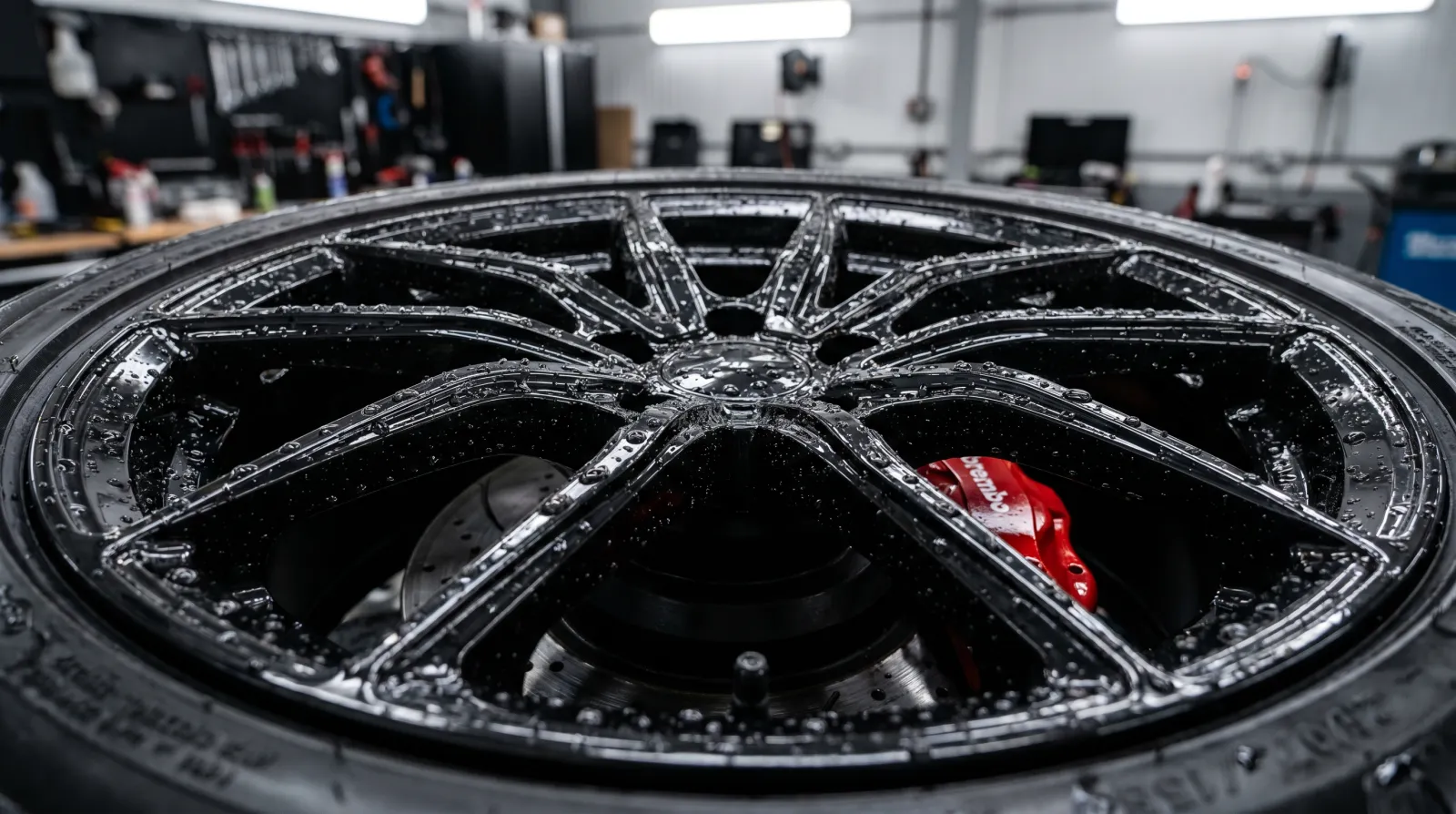
Yes, you can ceramic coat wheels — and if you're going to do one thing beyond the paint, this is arguably the highest-value application. Wheels live in a hostile environment: brake dust is chemically aggressive (iron particles from rotors and pad binders that etch into porous wheel surfaces if left to bake on), plus heat cycling from braking, road grime and winter salt. A properly applied wheel coating creates a slick, semi-permanent barrier — brake dust still lands but can't bond, and a weekly rinse keeps coated wheels looking freshly cleaned. On uncoated alloys, that same dust needs an iron remover and a brush to shift without scratching.
Heat resistance matters here. Not every coating is formulated for the thermal cycling wheels experience. Products like CarPro DLUX and Gtechniq C5 Wheel Armour are engineered for wheels, with higher heat tolerances than standard paint coatings. Brake calipers are slightly different: raw or factory-painted calipers benefit from a high-temp ceramic or dedicated caliper coating; properly painted aftermarket calipers can be coated once the paint is fully cured.
Prep for wheels differs from paint. Wheels typically need iron decontamination before coating because ferrous brake dust embeds even when they look clean. Use a pH-neutral iron remover, rinse thoroughly, then IPA wipe. Older or pitted wheels benefit from a light clay pass. Don't rush this — contamination under a coating defeats the purpose.
Glass and Windscreen Coatings
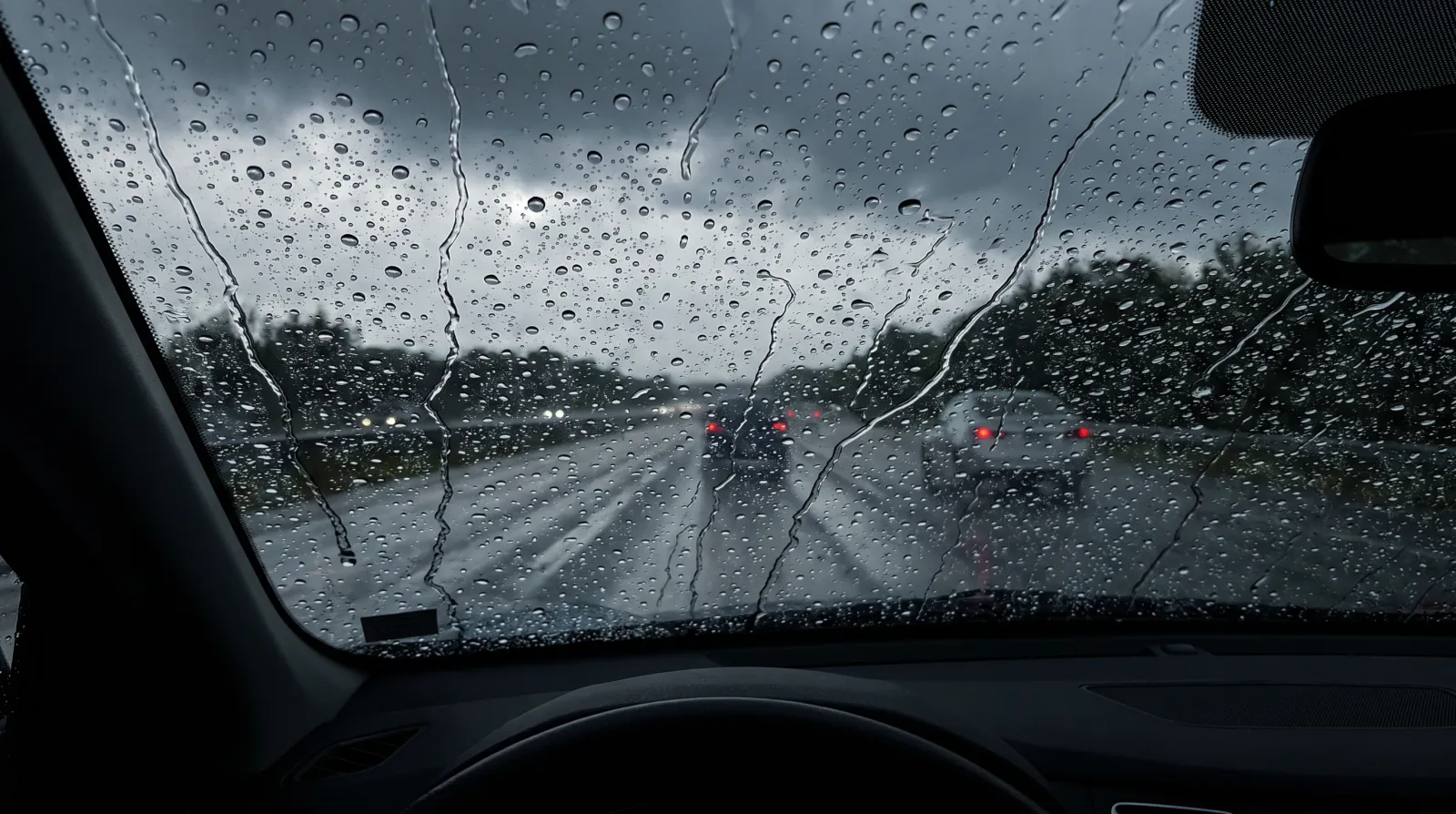
Glass coatings are one of the more genuinely useful applications, because the benefit is immediate and measurable: water sheets off your windscreen at speed, reducing reliance on wipers in light rain and dramatically improving visibility in heavy weather. The benchmark is Gtechniq G1 ClearVision, a professional-grade hydrophobic glass coating that bonds to silica-based glass and holds up to wiper abrasion far better than older rain-repellents. Applied to a properly prepped windscreen, G1 produces self-cleaning water-sheeting at around 60 km/h and above, with durability typically 12–18 months before reapplication (longer on side windows).
What glass coatings don't do: fix pitted or scratched glass, eliminate wiper chatter from worn blades, or forgive poor prep. Apply over an oily or silicone-contaminated windscreen and you'll get smearing — worse than bare glass. Glass prep differs from paint prep: start with a dedicated glass cleaner, then a glass-specific polish to remove wiper deposits and silicone contamination, finish with an IPA wipe, and ensure the glass is bone dry. Tape the rubber seals and A-pillar. If you're coating the whole car too, do the glass last to avoid contamination from coating removal.
Plastic Trim and Exterior Plastics
Faded, chalky plastic trim is one of the most visually ageing things that can happen to a car — the factory UV stabilisers in unpainted plastics (bumper valances, door handles, mirror caps) break down over time. Coating plastic trim won't reverse deep oxidisation on its own, but on properly restored trim it locks in that appearance and dramatically slows future fading. Products like CarPro DLUX (dual-purpose for wheels and trim) and Gyeon Q2 Trim are formulated for porous plastic and rubber rather than paint or glass.
The prep is the most labour-intensive part. For oxidised trim, restore the surface first with a plastic restorer or trim-specific prep compound before any coating. Coating over chalky plastic seals in the problem. Once the trim looks right, an IPA wipe and a trim-rated coating holds the restored look for 12–24 months. For plastic that hasn't yet oxidised, a light IPA clean and application is enough — prevention rather than restoration.
Exhaust Tips
Exhaust tips sit in the worst environment: heat, carbon and road contamination. A high-temp ceramic coating on polished or brushed stainless tips resists heat discolouration and makes carbon deposits far easier to wipe off. The key caveat is temperature rating — standard paint or glass coatings aren't designed for sustained exhaust heat. Use a coating rated for high-temperature surfaces, and make sure the tips are scrupulously clean of carbon (which is oily and prevents adhesion) before applying; a solvent wipe and sometimes a fine abrasive polish is needed.
Coating Over PPF (Paint Protection Film)
You can ceramic coat over PPF, and it's widely recommended when budget allows both. PPF handles the physical threats — rock chips, scratches, abrasion; ceramic coating on top handles the chemical and contamination threats — water spotting, brake dust, fallout, and UV on the film itself, while making the film easier to maintain. The important thing is product compatibility: not all coatings suit PPF (some affect the film's self-healing topcoat). Products like Gtechniq EXO v4, IGL Kenzo and several CarPro offerings are commonly used over PPF — check with the film installer and coating manufacturer first. Prep over PPF is gentle: a mild decontamination wash and IPA panel wipe. Don't clay PPF aggressively (you can lift edges), and let the film fully cure (typically 7 days minimum) before coating. For a deeper look, read our PPF vs ceramic coating guide.
All-in-One Products vs Surface-Specific Coatings
There are all-in-one ceramic sprays that claim to work across paint, glass, wheels and trim. Some are decent as a light maintenance layer. But if you're applying a proper nano-ceramic coating — the kind that requires curing time and careful prep — surface-specific products outperform a generic formula every time. The chemistry for bonding to glass differs from porous plastic, which differs from clear coat or PPF. For a car you're investing serious time into protecting, use the right tool for each surface.
Putting It All Together
A full multi-surface ceramic treatment — paint, wheels, glass, trim and exhaust — done properly is a half-day job minimum, more realistically a full day. The payoff is a car that's genuinely easier to maintain across every surface. If you're prioritising, the order of value for most daily drivers is roughly: paint first, then glass (especially the windscreen for safety), then wheels (for time saved cleaning), then trim (for appearance longevity). Exhaust tips are a bonus if you've got the high-temp product handy. Once everything is coated, your routine simplifies — our maintenance guide covers how to wash and top up a coated car without damaging the work.
Affiliate Disclosure
Some links on this page are affiliate links. If you buy through them we may earn a small commission at no extra cost to you. It never changes our verdicts — we only recommend gear we would run on our own cars. Read the full disclosure.