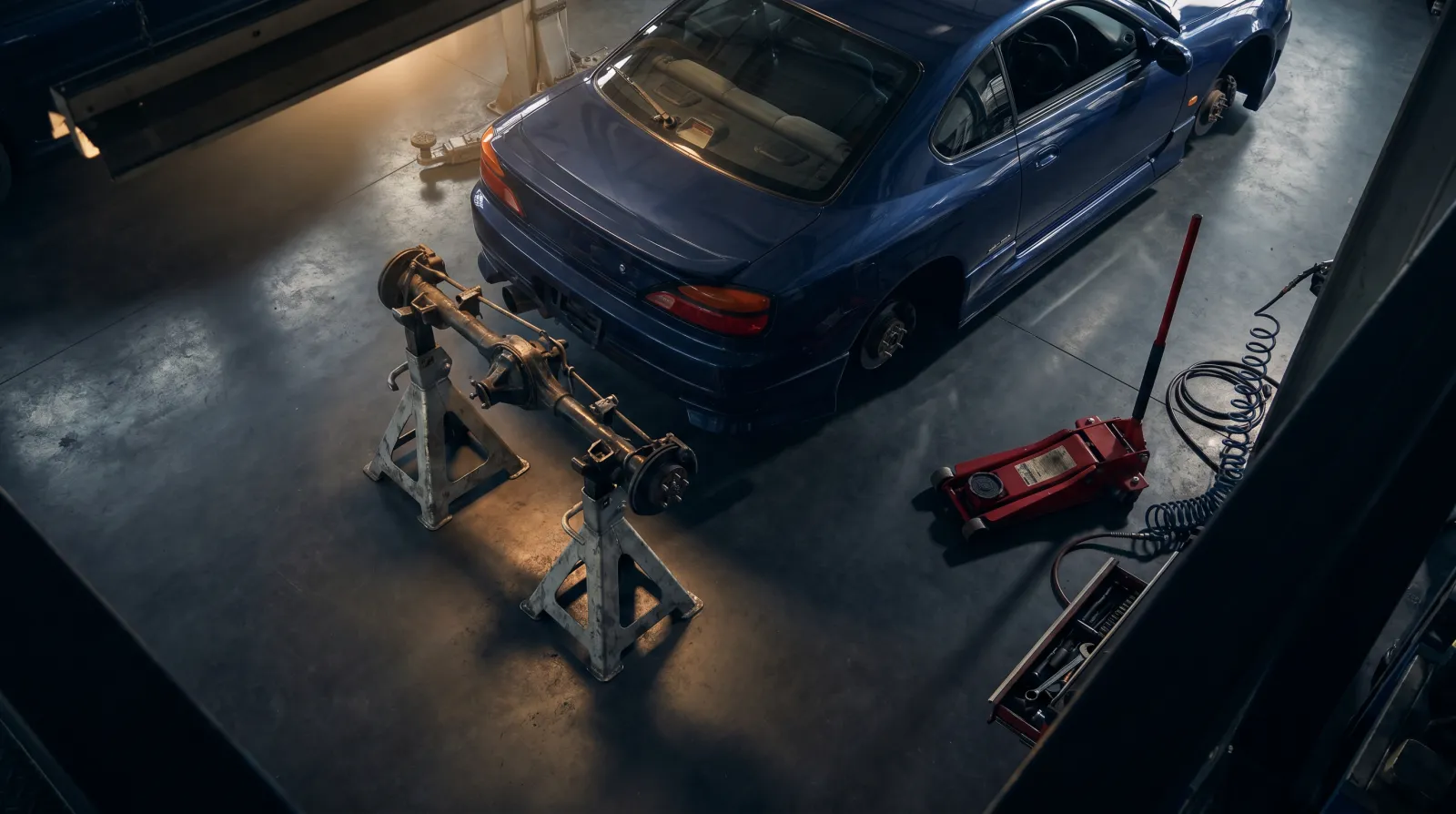
A jack stand looks simple — four legs, a column, a saddle. But the details matter more here than almost anywhere else in the garage, because a failed stand doesn't just damage the car. This guide covers everything you need to know before you buy: the mechanical difference between ratchet and pin-type stands, why the weight rating printed on the box is often half the number you think it is, height range, base footprint, the 2014 and 2020 recall episodes that shook consumer trust in ratchet stands, the standards to look for, and brand-type guidance. It sits in our jacking up a car hub — if you haven't read the full safe-lift process, start there.
Top Picks at a Glance
Best Jack Stands, Ranked
Best for safe, cheap, everyday use
- Ratcheting 3-ton pair
- Wide, stable base
- Locking pawl safety
- Unbeatable value
Why buy it: the safe, dependable default pair for almost every home garage.
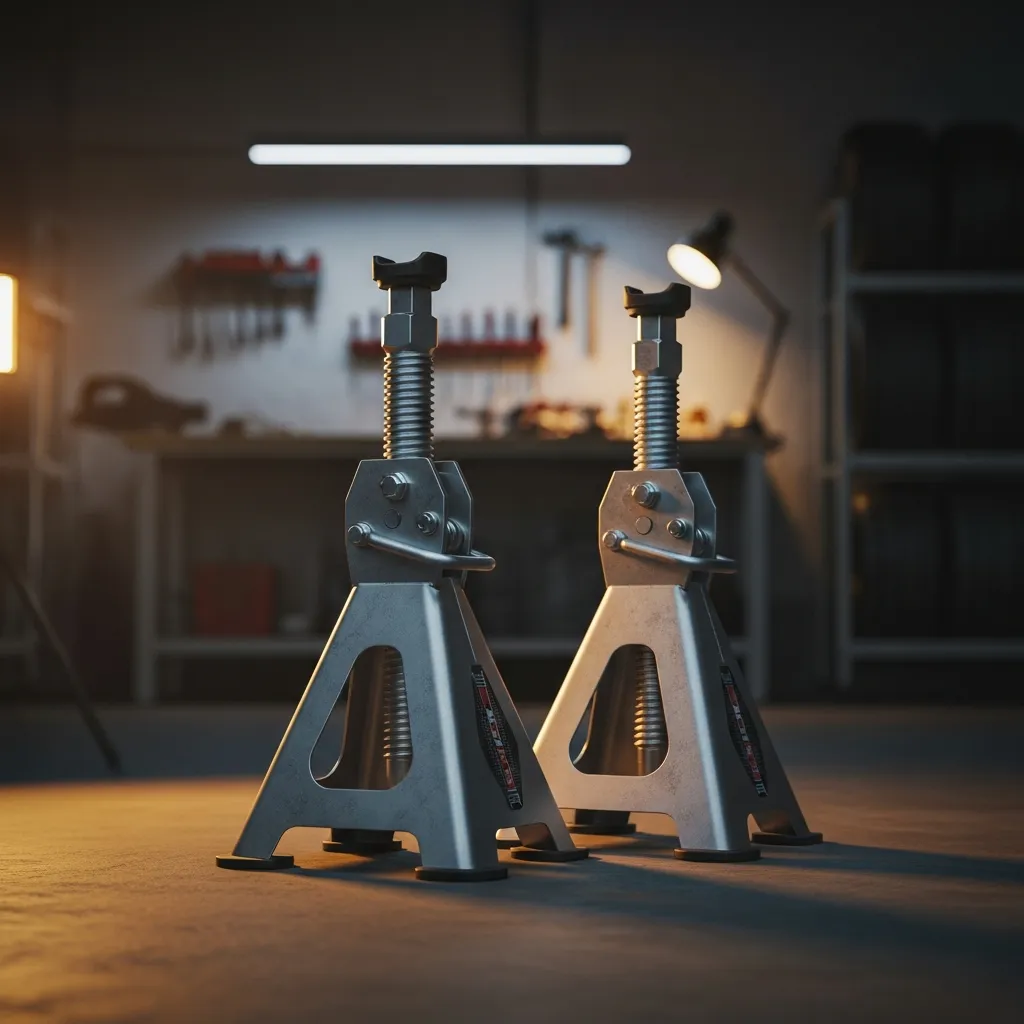
Best for the strongest, safest stands
- Pro-grade build
- Pin-lock (no ratchet slip)
- Extra-wide stance
Why buy it: the safest, most over-built stands money can buy.
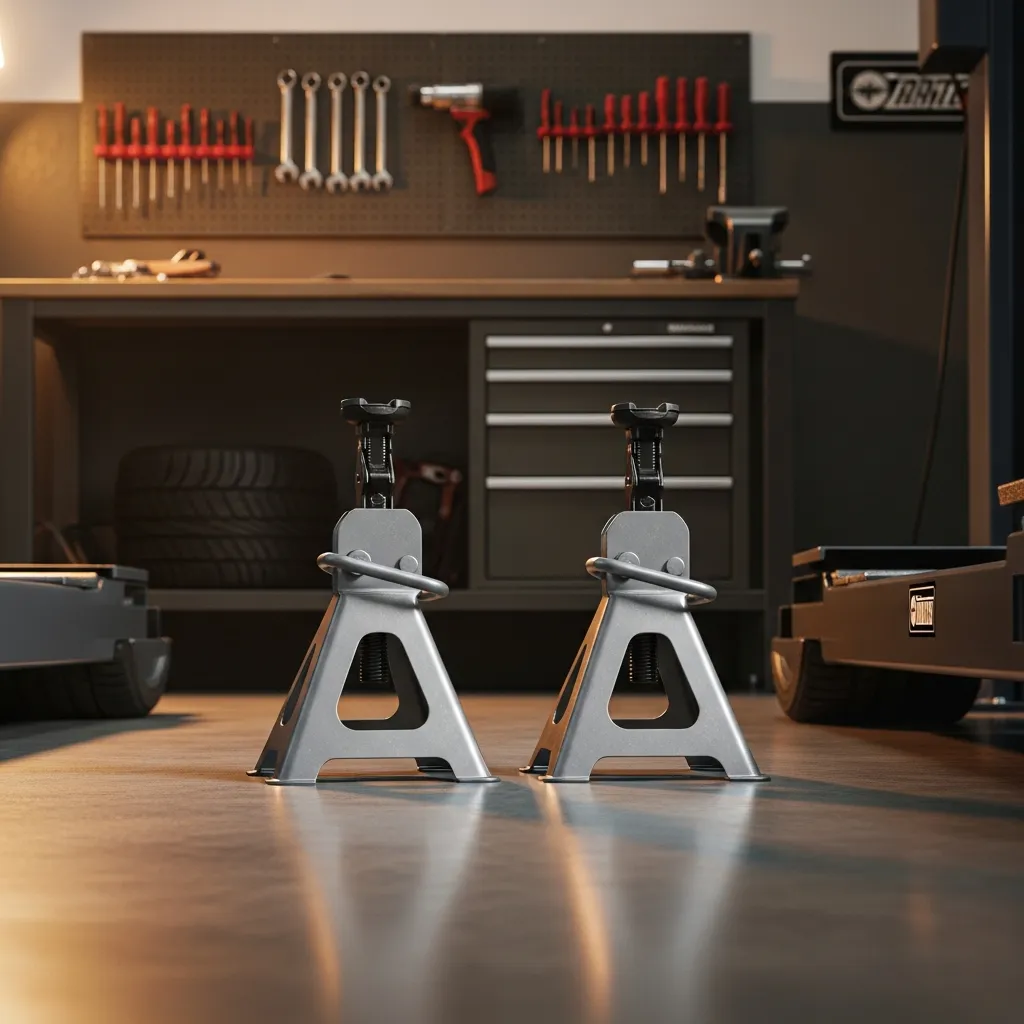
Best for a reliable mid-price pair
- Double-locking pins
- Sturdy steel
- Good height range
Why buy it: a well-built pair with a double-locking safety pin.
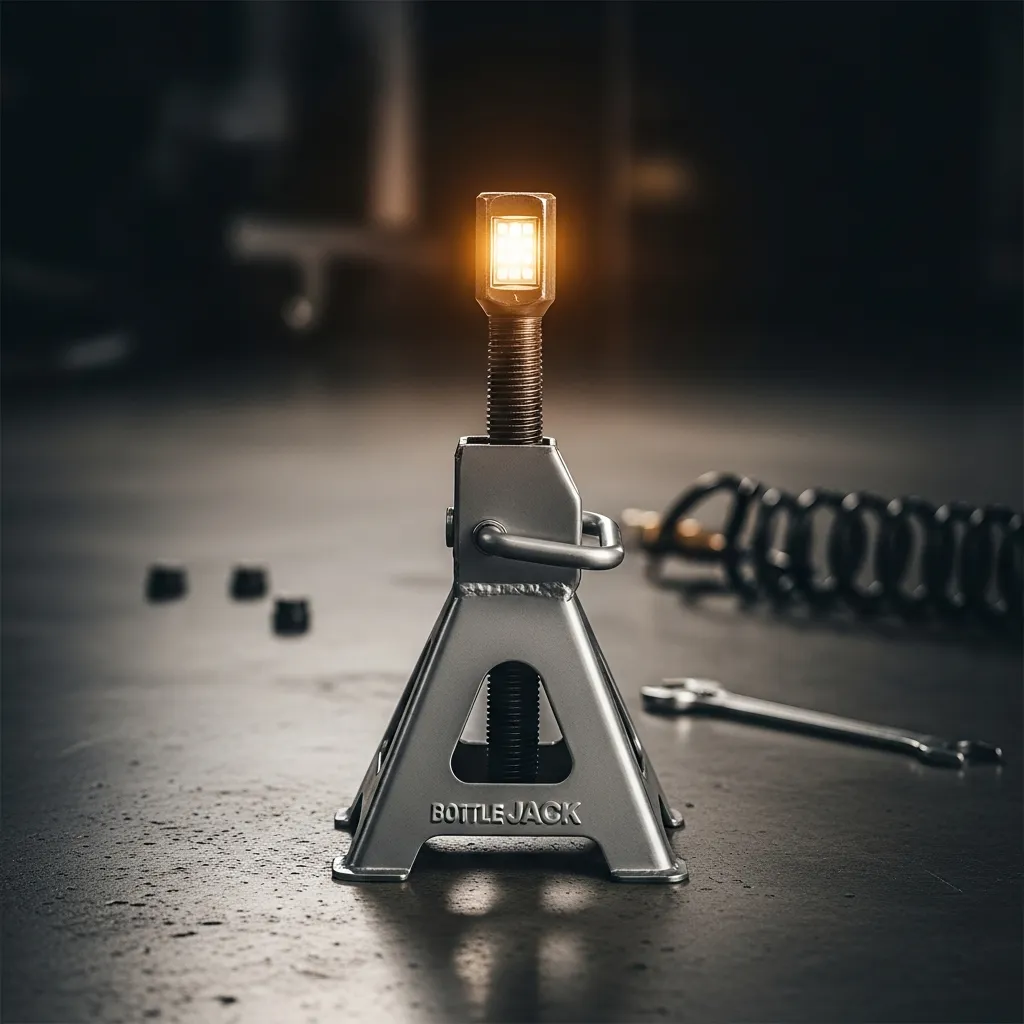
Best for tight or awkward lift points
- Bottle jack + stand in one
- Great for motorcycles too
- Self-contained lift
Why buy it: a jack and stand in one — ideal where a trolley jack won't fit.
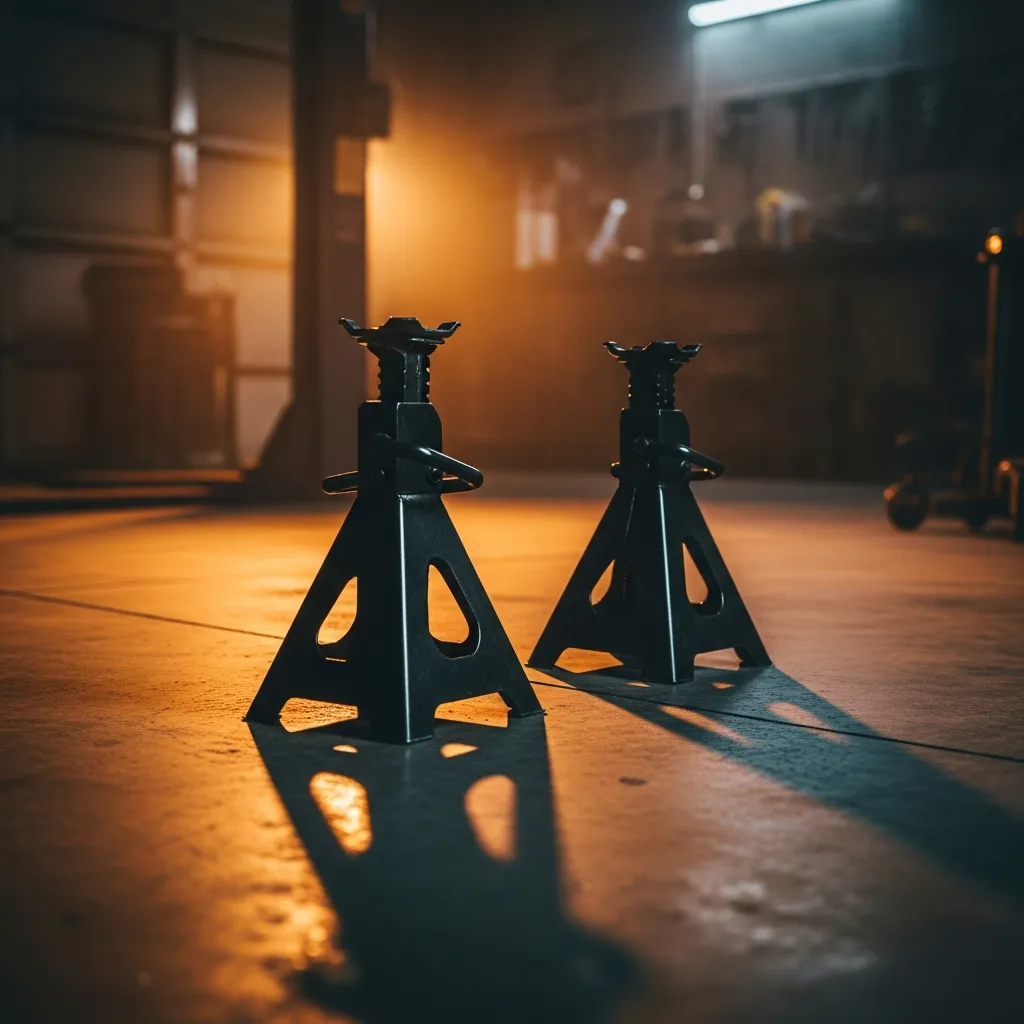
Best for a no-frills safe pair
- Simple, safe steel
- Ratcheting adjustment
- Huge review base
Why buy it: a cheap, proven pair that does exactly what stands should.
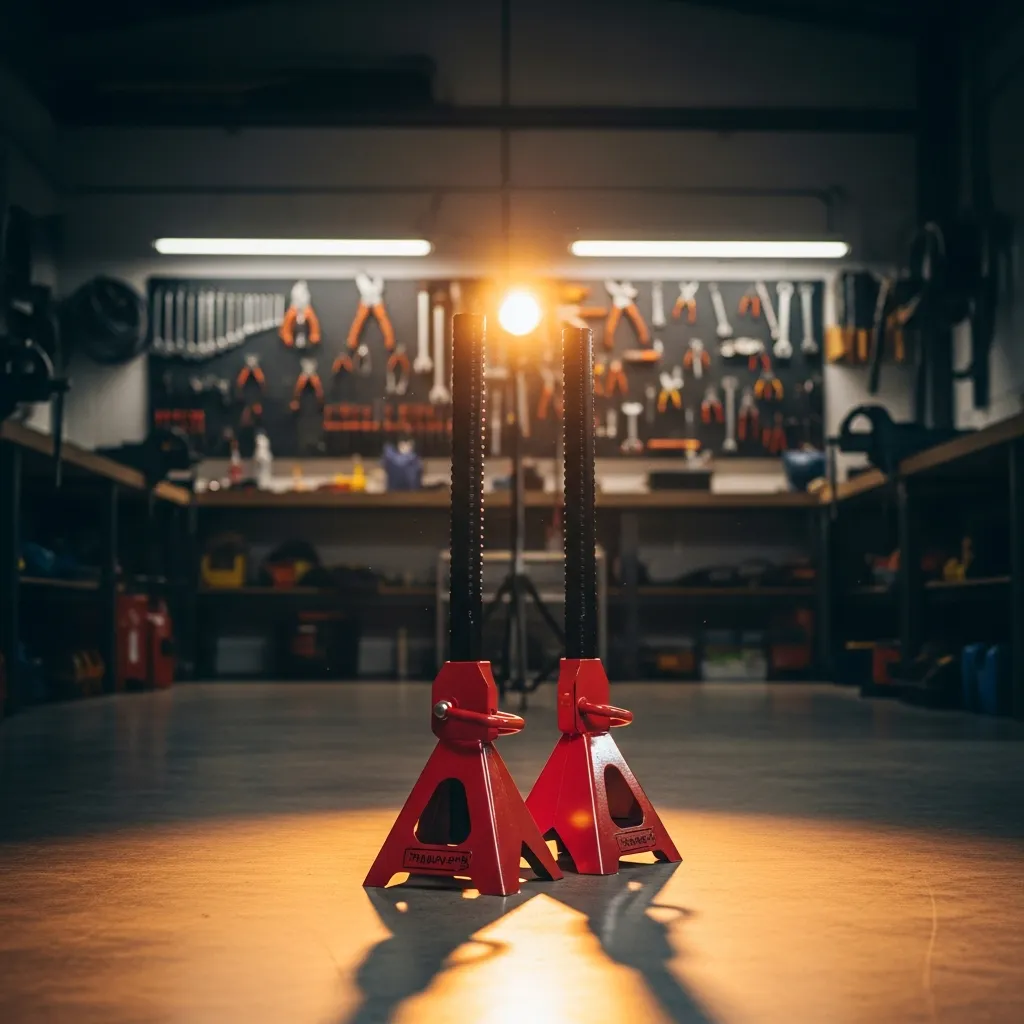
Best for trucks and SUVs
- 6-ton capacity
- Tall height range
- Heavy trucks and SUVs
Why buy it: extra capacity and height for trucks, vans and SUVs.
Quick Comparison
| Product | Best for | Rating | Price | Buy |
|---|---|---|---|---|
| Torin Big Red 3-Ton Stands | Best Overall | 4.7 | ~$40 | Check |
| ESCO 10498 3-Ton | Best Premium | 4.8 | ~$120 | Check |
| Pro-Lift T-6903D 3-Ton | Best Value | 4.6 | ~$45 | Check |
| Powerbuilt Unijack 3-Ton | Most Versatile | 4.6 | ~$70 | Check |
| Amazon Basics 3-Ton | Best Budget | 4.6 | ~$40 | Check |
| Big Red 6-Ton Stands | Best Heavy-Duty | 4.6 | ~$60 | Check |
Ratchet vs Pin-Type: The Mechanism That Decides Safety
There are two main locking mechanisms in jack stands. Understanding them is not optional — it's the starting point for every purchase decision.
Ratchet-Type Stands
A ratchet stand uses a rack-and-pawl system: the inner post has a series of teeth, and a spring-loaded pawl drops into a notch as you raise the column. Adjust height, load the stand, and the pawl holds position. They're faster to set — wind up to height, load the car — and they're the most common type you'll find at retail. The convenience is real. The risk is also real and specific: if debris, wear or a manufacturing defect prevents the pawl from seating fully, the stand can collapse under load. This isn't theoretical: it was documented at scale (see Recalls, below). Good ratchet stands from reputable makers are safe; budget no-name ratchet stands with cheap pawl springs and rough teeth are not a risk worth taking.
Pin-Type Stands
A pin-type stand (also called a pin-lock or through-pin design) adjusts via a series of holes in the inner post. You raise the column to the desired height hole, then push a solid steel pin horizontally through the post and the outer sleeve. The car's weight is carried by that pin in shear — a fundamentally simpler and more positive mechanism. The pin physically cannot withdraw under load; there is no spring to fatigue, no pawl to skip. Height adjustment is coarser (you get fixed steps rather than continuous rack teeth), and setup takes a few seconds longer. For ultimate load security, pin-type is the preferred design — and it is the type consistently favoured by professional shops and safety-conscious builders. If your budget allows only one style from an uncertain brand, choose pin-type.
Which Should You Buy?
A quality ratchet stand from a tested, established brand is a legitimate choice — many professionals use them daily without incident. If you're buying unknown-brand budget stands from a discount bin, pin-type removes the variable that caused the mass recalls. When in doubt, pin-type. Always.
The Weight Rating Trap: Per Stand vs Per Pair
This catches more people than almost any other spec. A stand sold as “3-tonne” might be 3T per pair (meaning 1.5T per stand) or 3T per stand (meaning 6T total capacity for a pair). Both products can legally carry the same headline number on packaging.
Read the fine print. Look for language like “3T capacity each” vs “3T pair capacity.” For most passenger car work — lifting one end of the car at a time — a pair with 1.5T per stand each (3T pair) is technically adequate for most light cars, but gives you very little headroom. For any SUV, ute or 4WD, or if you're lifting the entire car at once (all four wheels off the ground, two stands per axle), you need per-stand capacity to match your numbers. Work out your car's kerb weight, divide by two for the supported axle, then add a 25–50% buffer minimum. Never run a stand at its rated maximum — that's the failure threshold, not the working load.
Common real-world pairing: a 2T-per-stand (4T pair) set suits most passenger cars and light SUVs with room to spare. A 3T-per-stand (6T pair) set gives comfort for heavy SUVs, full-size utes and dual-cab 4WDs. If you find a “3-tonne pair” priced at what should be a 6T product, read the label again.
Height Range: Minimum and Maximum
Stand height has two numbers that both matter.
Minimum height (fully collapsed) determines whether the stand can position under your car at all after the jack has lifted it. A standard stand collapsed to 270–300 mm works fine for stock-height cars. If you're working on a lowered car, you may need a stand that collapses shorter — look for units in the 255–270 mm range, paired with a low-profile jack. Check your car's jacked height against the stand's minimum before buying.
Maximum height sets your working clearance once the car is on the stands. For an oil change or wheel swap, 400–420 mm maximum is fine. For exhaust work, transmission drops or getting a creeper underneath on a tall car, look for 500 mm or higher. A common 3-tonne mid-range stand typically reaches 480–520 mm maximum — a reasonable middle ground.
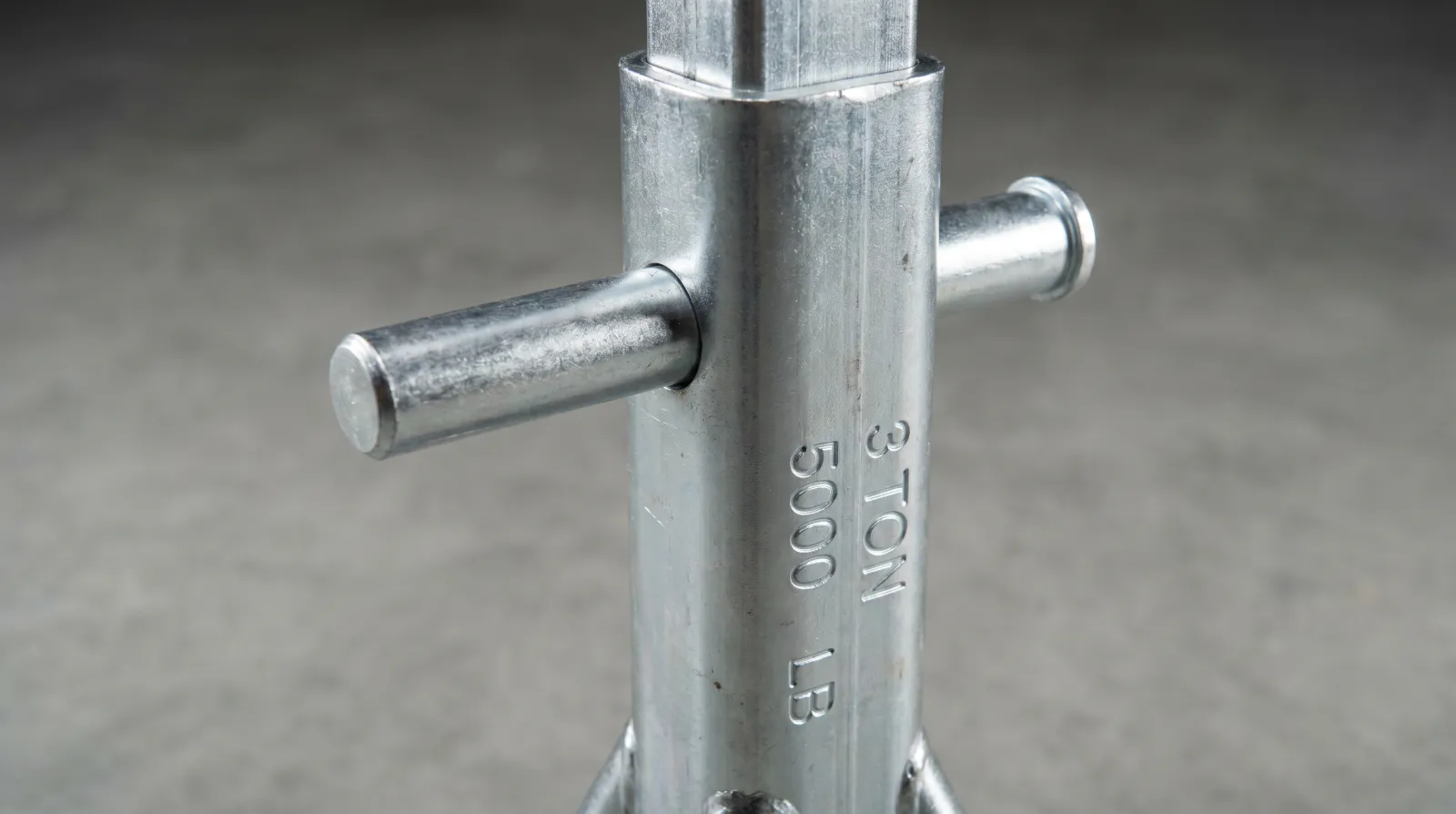
Pin-type stands are limited to their drilled hole positions; ratchet stands are theoretically stepless but have practical limits per model. In either case, verify the max height covers the clearance you need after accounting for vehicle ground clearance, wheel arch height, and how far off the ground your chosen jack points sit.
Base Footprint: Stability Under Load
The base is where physics lives. A wide, low base spreads load and resists tipping; a narrow base is the easiest corner to cut in budget stands. Look for:
- Wide leg spread: the wider the base diameter relative to the stand's height, the more stable it is under lateral force. As a rough guide, a stand at full extension should not have a base diameter less than about a third of its height.
- Flat pads or rubber feet: prevent the legs from skating on smooth concrete under sideways load. Some stands ship with bare steel legs — add rubber feet or keep them on painted, slightly grippy floor surfaces.
- Formed steel vs stamped/welded: heavier-gauge leg stampings with good gusseting at the column junction resist leg-spread failure better than thin stampings. Look at the junction between the column and leg base; thin tack welds there are a red flag.
- Saddle design: a wide saddle with a central slot (to fit pinch-weld channels or a saddle puck) reduces the chance of the car slipping sideways off the support point.
On any surface that is not flat, solid concrete, put boards under the stand bases to spread load. Grass, gravel and dirt are not safe surfaces for jack stands, full stop. Asphalt can work but softens in heat — use boards and keep sessions short in summer.
The 2014 and 2020 Ratchet Stand Recalls: What Actually Happened
Two recall events have been significant enough to shape how the industry and buyers think about ratchet-style stands.
2014 recalls centred on Torin/Big Red 3T ratchet stands widely sold across the US and Australian markets. The failure mode: the inner post teeth and pawl mechanism could disengage under sustained or dynamic load, collapsing the stand without warning. Several personal injury reports were linked to the mechanism. Millions of units were recalled.
2020 recalls were broader and hit harder. Pittsburgh Automotive (sold through Harbor Freight in the US) issued recalls on several 3T and 6T ratchet stand models — again, pawl disengagement under load. The scope was significant: multiple SKUs, years of production, millions of units in the field. The ACCC in Australia ran related consumer alerts on imported stands with equivalent mechanisms. The pattern across both events was the same: spring-loaded pawls that could, under specific loading conditions or with minor debris or wear, fail to fully engage.
What this means for buying decisions: it doesn't mean all ratchet stands are unsafe — reputable brands have responded with redesigned pawl geometry, heavier springs and stricter QC. It does mean that ratchet stands from unknown or ultra-budget sources carry a credible mechanism risk that pin-type stands by design do not share. If you're buying ratchet stands, stick to established brands with a verifiable recall history (because it means they were held accountable) rather than anonymous imports with no support structure if something goes wrong.
Safety Standards: ASME PASE and AS Standards
Knowing a stand is rated to a recognised standard gives you a floor of confidence that unrated products simply cannot provide.
ASME PASE (Portable Automotive Service Equipment): the American Society of Mechanical Engineers standard covers testing protocols for jack stands including static load, dynamic load, overload, and stability testing. A stand marked as meeting ASME PASE has been tested against a documented methodology. This is the primary standard referenced in the US and increasingly cited by Australian distributors of quality-tier stands.
Australian Standards (AS): look for compliance markings with relevant AS product standards. Stands sold in Australia through major automotive retail chains (Repco, Supercheap Auto, Kmart) are generally required to meet minimum safety standards under Australian Consumer Law. That doesn't mean every stand on the shelf is equal — it means the floor is higher than buying unbranded product off a marketplace. For genuine AS/NZS compliance, the product specification sheet will name the standard; ask the retailer or check the manufacturer's website.
Practical advice: buy from Australian retail channels where product liability laws apply, choose brands that name their testing standards explicitly, and keep your receipt. If you buy on a major online marketplace from a third-party seller with no local presence, you have no practical recall or warranty protection.
Always Use Two — No Exceptions
This is the rule above all other rules. A single stand under a car is an unstable configuration — the car can pivot, shift sideways, or rock. Two stands at matched height at the correct support points on the same axle (or all four corners for full-car lifts) create a stable, level platform. You need to be supporting both sides of the axle simultaneously.
The companion rule: always use a wheel chock on at least one wheel still in contact with the ground. For the full safety checklist before you go under, see our wheel chocks and safety guide. And the lifting tool that puts the car up onto those stands is covered in our best trolley jacks guide.
Honest Brand-Type Guidance
This is not a scored ranking — stock changes, models are revised and prices shift. Read it as a framework for how to think about the market.
Professional-grade pin-type stands (Norco, Sealey Pro, Strongarm commercial): heavy, expensive, built for workshop daily use and rated to serious commercial standards. Overkill for most home mechanics but genuinely bulletproof. If you're doing heavy engine swaps, gearbox work or regular chassis work, this tier pays for itself in reliability alone.
Mid-range stands from established Australian retail chains (Kincrome, ToolPRO upper range, Mechanix): the sweet spot for most home mechanics. Kincrome in particular has a consistent reputation in the Australian market for build quality and warranty support. The ToolPRO heavy-duty pin-type stands from Supercheap Auto represent strong value. Look at the specific model spec sheet, not just the brand.
Entry-level from major retail: adequate for light, occasional use on small cars if bought from a major chain where product liability applies. Check that they name a standard. Avoid buying entry-level ratchet stands in this tier from unknown importers — this is precisely where the 2020-style recall risk concentrates.
Direct-import unknowns: no. The savings are not worth it for a piece of equipment that your body depends on. There is no recall mechanism, no warranty enforcement, no way to verify the load rating was tested to any real standard.
When you have a shortlist, our jack stand comparison breaks down the key specs side by side.
Quick-Reference Buying Checklist
- Mechanism: pin-type for ultimate security; ratchet only from verified established brands
- Weight rating: confirm per-stand (not per-pair) capacity; give yourself at least 25–50% headroom above your calculated axle load
- Height range: minimum height clears your car's jacked position; maximum height gives working clearance for your task
- Base footprint: wide leg spread, rubber feet or pads, heavy-gauge gusseted column-leg junction
- Standard compliance: ASME PASE named, or explicit AS compliance; bought through Australian retail channels
- Quantity: always buy in pairs; always use both
- Surface: flat, solid, level concrete only
The full safe-lift procedure — jack points, stand placement, the wobble test, how to lower safely — is in the jacking up a car hub. Never skip that process regardless of how good your stands are.
Affiliate Disclosure
Some links on this page are affiliate links. If you buy through them we may earn a small commission at no extra cost to you. It never changes our verdicts — we only recommend gear we would run on our own cars. Read the full disclosure.