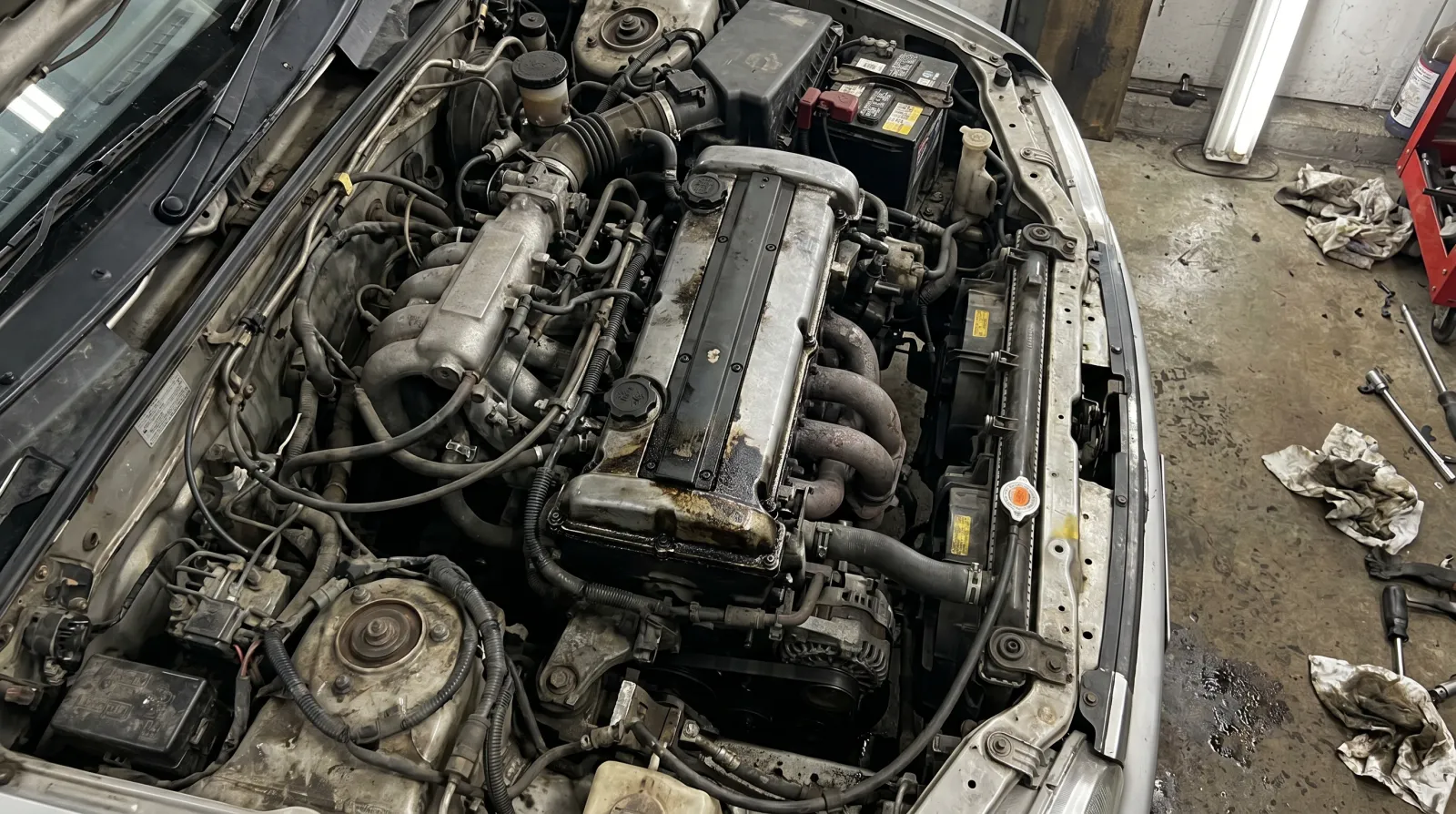
You top up the oil, and three weeks later the dipstick is below minimum again — no warning light, no obvious puddle. "Using oil" can mean half a dozen different things, and the fix depends entirely on which one. This guide covers both sides — oil that burns inside the engine and oil that escapes from a seal or gasket — how to tell them apart, and when to worry. It's part of our DIY oil change hub.
First: Is It Really Losing Oil?
Read the dipstick correctly — check it cold or after a five-minute cooldown (immediately after running gives a falsely low reading). Wipe, reinsert fully, pull straight, do it twice, and note the level with a date. Check again after 1,000 km. If it genuinely drops, the engine is burning oil, leaking it, or both. (Full method in checking and topping up oil.)
How Much Loss Is "Normal"?
Oil consumption is considered acceptable by most manufacturers up to a threshold — typically 1 litre per 1,000 km on some engines (notably turbos and certain European makes). But a healthy everyday engine should use far less — 500 ml or less per 5,000 km. A litre every 1,000 km means something is wearing, even if it's "within spec." For older high-mileage engines, the question is whether the rate is stable or worsening.
Why Is My Car Burning Oil? (Internal Consumption)
Burning oil enters the combustion chamber — the tell is blue or blue-grey smoke, especially on startup or under acceleration.
Worn Valve Stem Seals
Rubber seals around each valve stem keep oil out of the combustion chamber; they harden and crack with heat and age. The classic symptom is a puff of blue smoke on cold start that clears as the engine warms — oil pooled on the valve overnight burns off. A cylinder-head job, but not engine-out.
Worn Piston Rings or Bore Glaze
When rings wear or the bore glazes (from extended idling or too many short trips), oil gets past them into the chamber, causing blue smoke under hard acceleration. A compression or leak-down test confirms it. On a high-mileage engine this usually means a rebuild eventually.
Stuck or Failing PCV Valve
The PCV valve routes crankcase oil-vapour back to the intake to be burned. Stuck closed, crankcase pressure builds and pushes oil past seals; stuck open, it draws excess oil vapour into the intake. It's often a $10–$30 part — replace it before anything else when chasing consumption on a high-mileage engine.
Why Is My Car Leaking Oil? (External Leaks)
Working from most to least common: Valve cover (rocker cover) gasket — the most common leak on older engines; oil weeps from the seam on top of the head, sometimes into plug wells. Oil pan (sump) gasket — weeps from the bottom of the engine on high-mileage cars or after a poor reseal. Drain plug / crush washer — entirely avoidable: over- or under-tightened, or a reused washer (see how to change your oil for the correct torque). Oil filter housing / O-ring — oil runs down from the filter mount, often from a double-gasketed filter. Front main seal — oil at the front of the engine near the harmonic balancer, sometimes onto the belts. Rear main seal — oil at the engine/gearbox junction; the seal is cheap but usually needs the gearbox out.
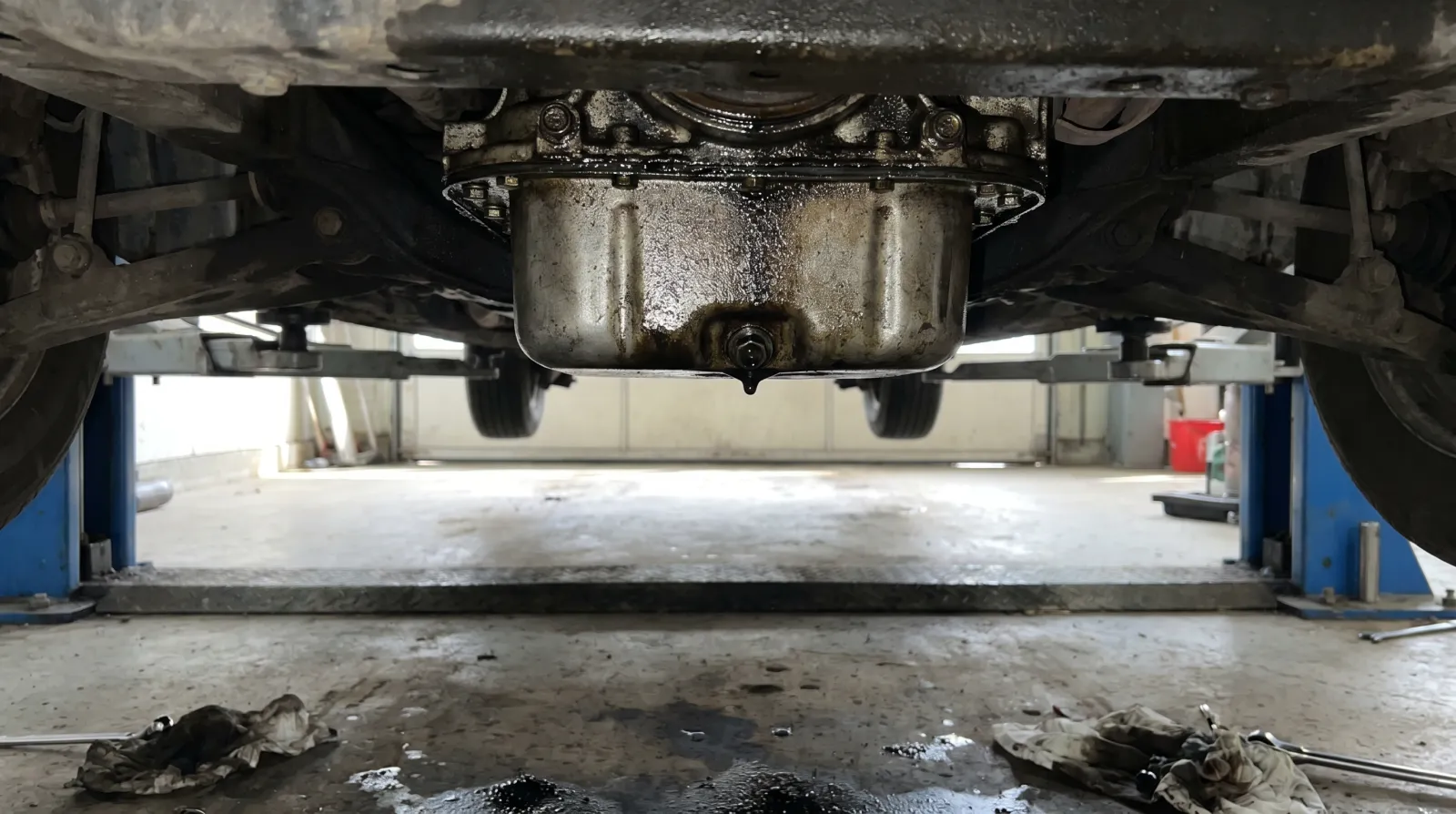
How to Find Where It's Leaking From
Oil tracks — it drips from the lowest point, not the source. The cardboard test: park on a clean surface, slide cardboard under overnight, and the drip position gives a starting point. Clean the engine first: degrease the underside, run it 20 minutes, and look for the fresh wet oil closest to its source. UV dye: add engine-oil UV dye, run the engine, and trace the bright glow with a UV torch — ideal for slow seeps. Kits are $20–$40.
Why Sort This Around Your Oil Change
A change is the perfect time: fresh oil on a clean engine makes new leaks easy to spot, you have direct access to the drain plug and filter O-ring, and tracking consumption from a known-full level gives accurate data. Putting fresh oil into an engine that's burning it wastes money — diagnose the cause first.
When to See a Mechanic
Most external leaks — valve cover gaskets, drain plugs, filter O-rings — are within reach of a confident home mechanic. Internal consumption (rings, valve stem seals) and rear main seals are a different matter: if a compression test comes back low and uneven, or consumption is accelerating, get a professional diagnosis with a bore scope before throwing parts at it. Back to the DIY oil change hub for the rest of the series.
Affiliate Disclosure
Some links on this page are affiliate links. If you buy through them we may earn a small commission at no extra cost to you. It never changes our verdicts — we only recommend gear we would run on our own cars. Read the full disclosure.