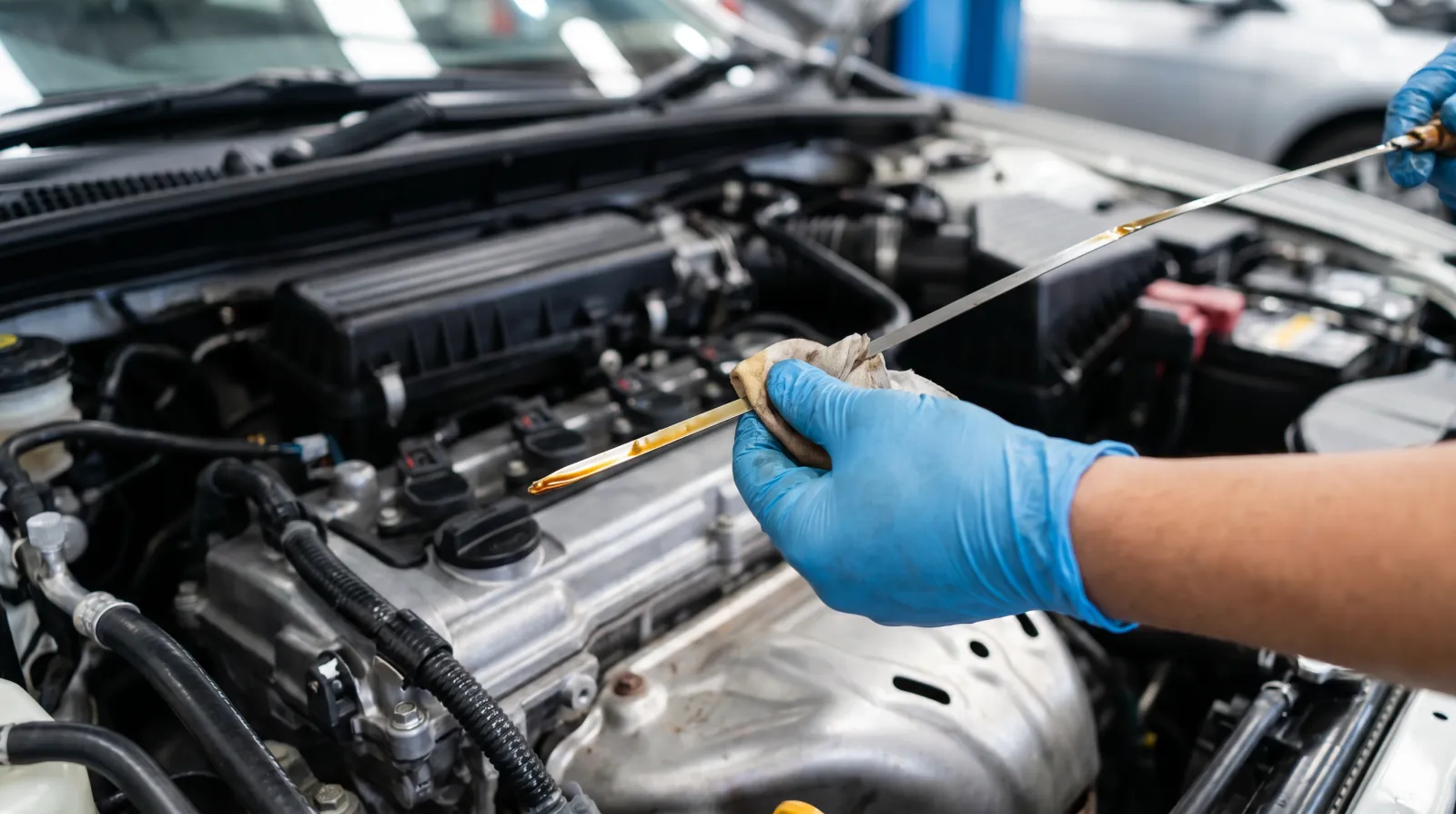
Checking your engine oil takes about two minutes and can save you thousands — yet most people skip it or do it wrong and get a misleading reading. This guide covers the right technique, what the marks mean, how to decode what the oil is telling you, and what to do if your car has no dipstick. It's part of our DIY oil change hub.
Two Non-Negotiable Rules
Level ground: even a few degrees of slope shifts the oil and gives a false reading. Cold vs warm: a cold check (engine not run today, oil all drained back) is the clearest and what most manufacturers specify. A warm check works too, but wait 10–15 minutes after switching off — never check immediately (you'll get a low reading and a burnt hand). When in doubt, cold is safest.
How to Check, Step by Step
- Pop the bonnet and find the dipstick (usually a bright yellow/orange handle).
- Pull it out fully and wipe it clean — the reading means nothing until you wipe and re-dip.
- Push it all the way back in, seated firmly.
- Pull it out again slowly, holding it horizontally so oil doesn't run along it.
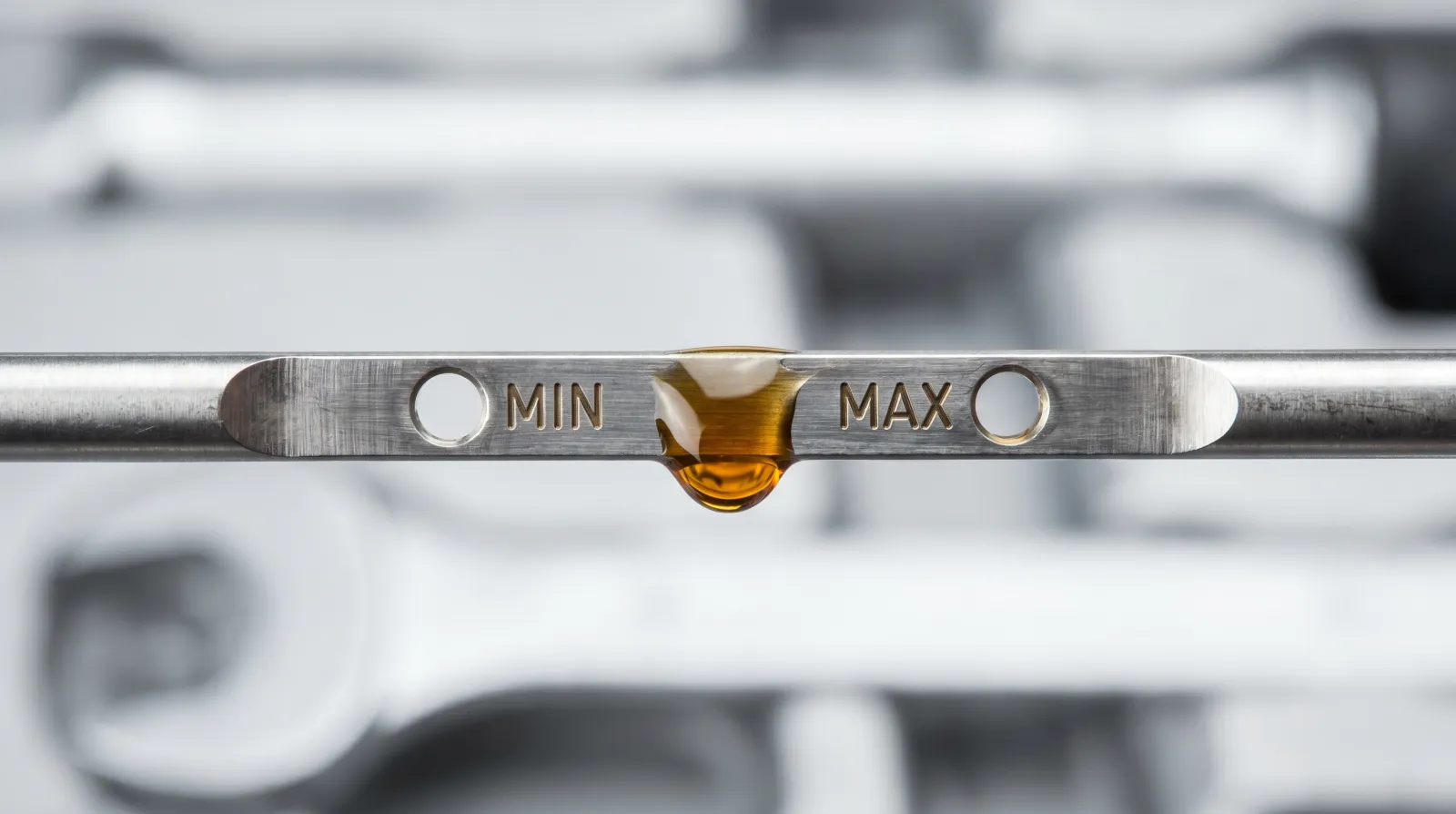
- Read the level against the min and max marks.
Understanding the Min/Max Marks
The oil film should sit between the two marks (MIN/MAX, L/H, or a crosshatched zone). At or above MAX: don't add oil — overfilling forces oil past seals into the combustion chamber, causing blue smoke and fouled plugs; drain some if significantly over. Between MIN and MAX: the safe zone. At or below MIN: top up before driving further — running at minimum risks oil starvation under cornering. The gap between MIN and MAX typically represents 0.5 to 1.0 litres, so add 250–500 mL at a time, wait, and re-check rather than going MIN-to-MAX in one pour.
Topping Up vs a Full Oil Change
A top-up restores volume; an oil change flushes degraded, contaminated oil and replaces it with the filter. If your level drops consistently between services, investigate separately — our burning and leaking oil guide covers it. Topping up is valid between changes, as long as you add the right oil.
Choosing the Right Grade to Top Up With
Never pour in whatever's lying around. Match the viscosity already in the engine (e.g. 5W-30 — on the filler cap, manual, or original container), match the specification (API SN, ACEA C3, dexos1), and stay within the same base type where possible. Not sure? Our oil grade guide walks you through it.
Reading Oil Colour and Condition
Clean amber/honey — fresh, healthy oil. Dark brown or black — normal (especially diesels); the detergents are doing their job. Smell and feel it: smooth means it's still working, gritty and strongly burnt means it's past its service life. Gritty/metallic feel — stop and investigate; usually bearing wear. Milky/creamy/foamy — take seriously: coolant has entered the oil (head gasket, cracked head), which destroys lubrication fast. Don't drive — get a proper diagnosis, and check the coolant reservoir for brown oily contamination too.
What If Your Car Has No Dipstick?
Many modern European cars (BMW, Mercedes, Audi from the mid-2010s) use an electronic oil-level sensor in the sump, displayed in the instrument cluster or infotainment menu — the reading is usually taken with the engine off and stationary on level ground. They measure by resistance/capacitance, not sight, so they can read falsely on an incline or with a fouled sensor, and you can't assess oil condition visually without draining a sample. If the system shows low, top up through the filler cap with the same add-a-little, check-again method — the sensor takes a few minutes to update.
How Often Should You Check?
Once a month is a solid habit for most daily drivers, and before any long trip. Turbocharged, older or hard-driven cars: every two weeks. Catching a half-litre drop early is a five-minute fix; catching it after the warning light is a gamble. For service schedules and full changes, head back to the DIY oil change hub.
Affiliate Disclosure
Some links on this page are affiliate links. If you buy through them we may earn a small commission at no extra cost to you. It never changes our verdicts — we only recommend gear we would run on our own cars. Read the full disclosure.