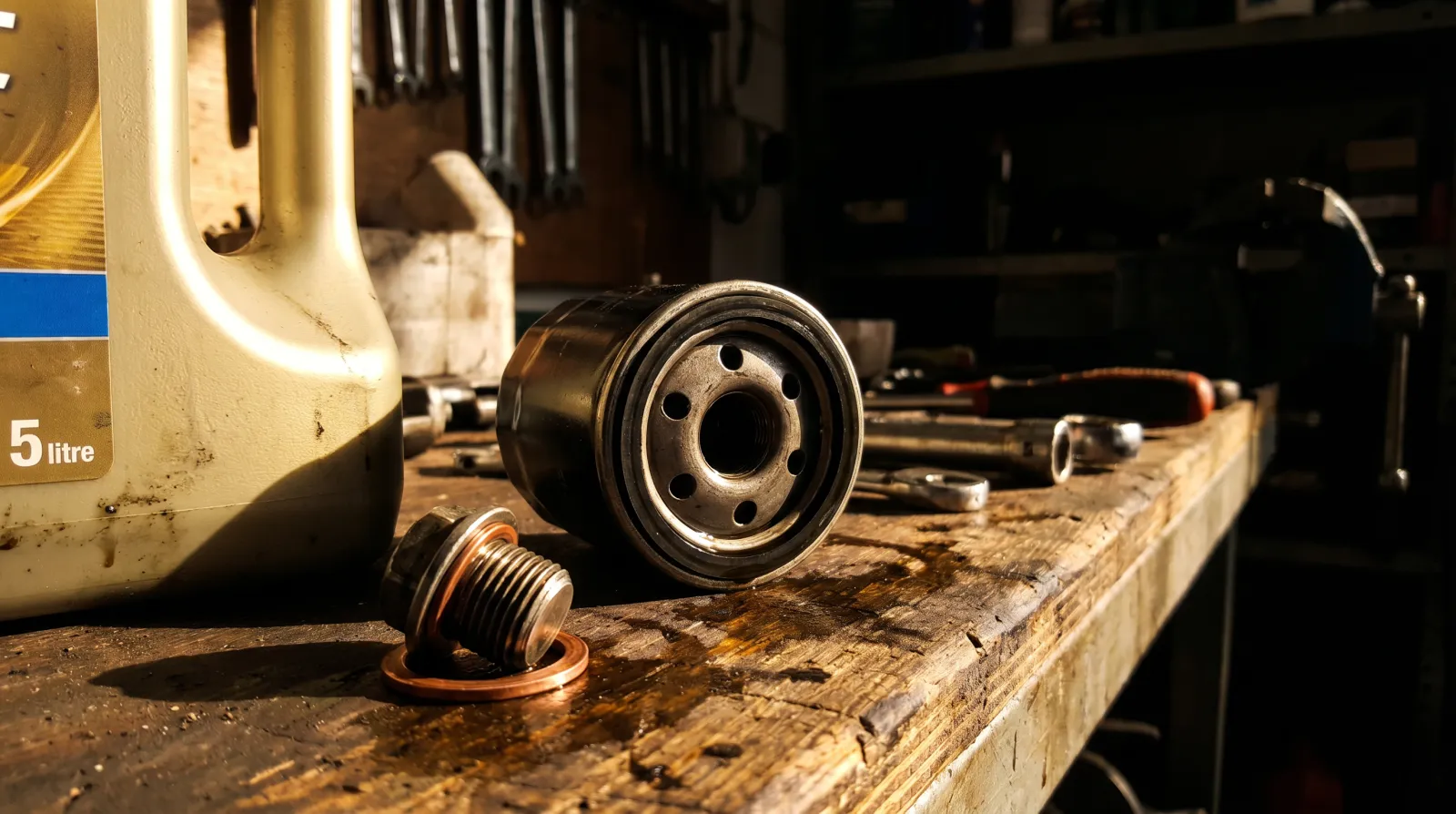
Walk into any quick-lube chain and you'll hand over $80–$180 for an oil change depending on your car and postcode. Do that four times a year and that's up to $720 before you've touched a bolt. That makes people curious about DIY — and the question that stops most of them is: how many changes does it take before the tools pay for themselves? This page works through every number. It's part of our DIY oil change hub.
What You Actually Pay at the Shop
Quick-lube chain: $60–$120 for full synthetic (the $49 specials are conventional with a bargain filter). Dealership: $90–$180, with large-sump Euro brands hitting $150–$200. Independent mechanic: $70–$130 — often the best-value shop job. None of these cover your waiting-room time, the upsells, or any certainty about which oil went in.
The DIY Parts Cost Breakdown
Every change has three consumable costs: oil (4–6 L of quality full-synthetic, $28–$65), a filter (a quality Mann/Bosch/Ryco unit, $12–$28 — avoid the $6 house brands), and a crush washer ($1–$3, or ~$8 for a ten-pack).
| Item | Low | Mid | High |
|---|---|---|---|
| Engine oil (4–6 L) | $28 | $42 | $65 |
| Oil filter | $12 | $18 | $28 |
| Crush washer | $1 | $2 | $3 |
| Consumables total | $41 | $62 | $96 |
$62 is a realistic mid-range for a mainstream Japanese or Korean car on full synthetic. European cars with 7–8 L sumps and spec-grade oils sit closer to $90–$110 in parts — but the equivalent dealer job is $180–$220, so the saving holds.
One-Time Tool Cost (and How Fast It Amortises)
| Tool | Cost |
|---|---|
| Jack + axle stands (or ramps) | $30–$140 |
| Drain pan (8 L+, sealable) | $15–$25 |
| Oil filter wrench | $10–$25 |
| Drain plug socket | $8–$15 |
| Torque wrench | $30–$60 |
| Gloves, rags & funnel | $13–$22 |
| One-time total | $156–$287 (~$220 mid) |
Full tool detail is in the tools you need guide, and ranked starter bundles are in our tool bundle comparison.
The Break-Even Maths
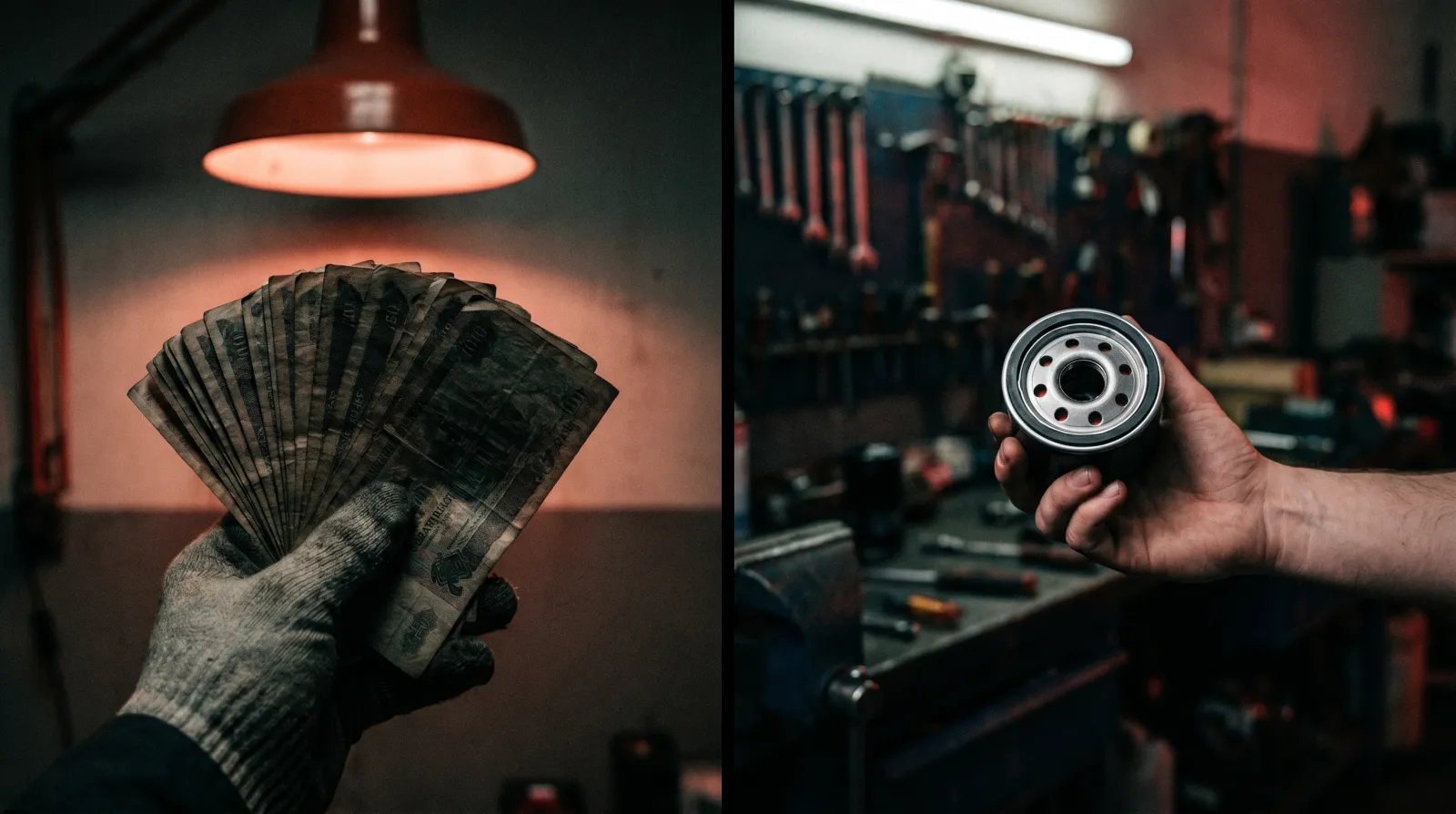
Realistic mid-range numbers: shop $110/change, DIY consumables $62 — a $48 saving per change, against a $220 tool investment. Break-even: $220 ÷ $48 = 4.6 changes — round to 5. At three changes a year you break even in under two years, and every change after saves $48 cash. Over five years (15 changes): shop $1,650 vs DIY $1,150 ($220 tools + 15×$62) = ~$500 saved, climbing above $800 against a dealer.
Time, Effort and the Non-Obvious Wins
Your first change takes 45–60 minutes; by the third it's 25–30 including clean-up — often less than a round trip and wait at a quick-lube. The effort is genuinely low: loosen, drain, swap filter, tighten, fill, check. Beyond the money, the non-obvious wins matter: you control exactly which oil and filter go in (crucial for turbos and Euro-spec engines), you catch problems early (a weeping boot, a soft hose, a rocker-cover seep) four times a year, you know the service history precisely, and you build mechanical confidence on the lowest-stakes job on the car.
When the Shop Makes More Sense
Being straight: pay a shop if you rent with no suitable outdoor space and drain access; if your car is under a warranty that requires dealer-stamped logs (confirm first); if you're genuinely time-poor during a busy stretch; or if your car has a complex full-length skid plate that adds real effort. No judgement.
The Bottom Line
If you change your oil three times a year and currently pay a shop $110, you break even on the tools in under two years — and everything after is money in your pocket, plus eyes under your car and certainty about what went in. The barrier is mostly psychological. Start with the right gear via the tools guide, and nail the schedule with our oil change intervals page.
Affiliate Disclosure
Some links on this page are affiliate links. If you buy through them we may earn a small commission at no extra cost to you. It never changes our verdicts — we only recommend gear we would run on our own cars. Read the full disclosure.