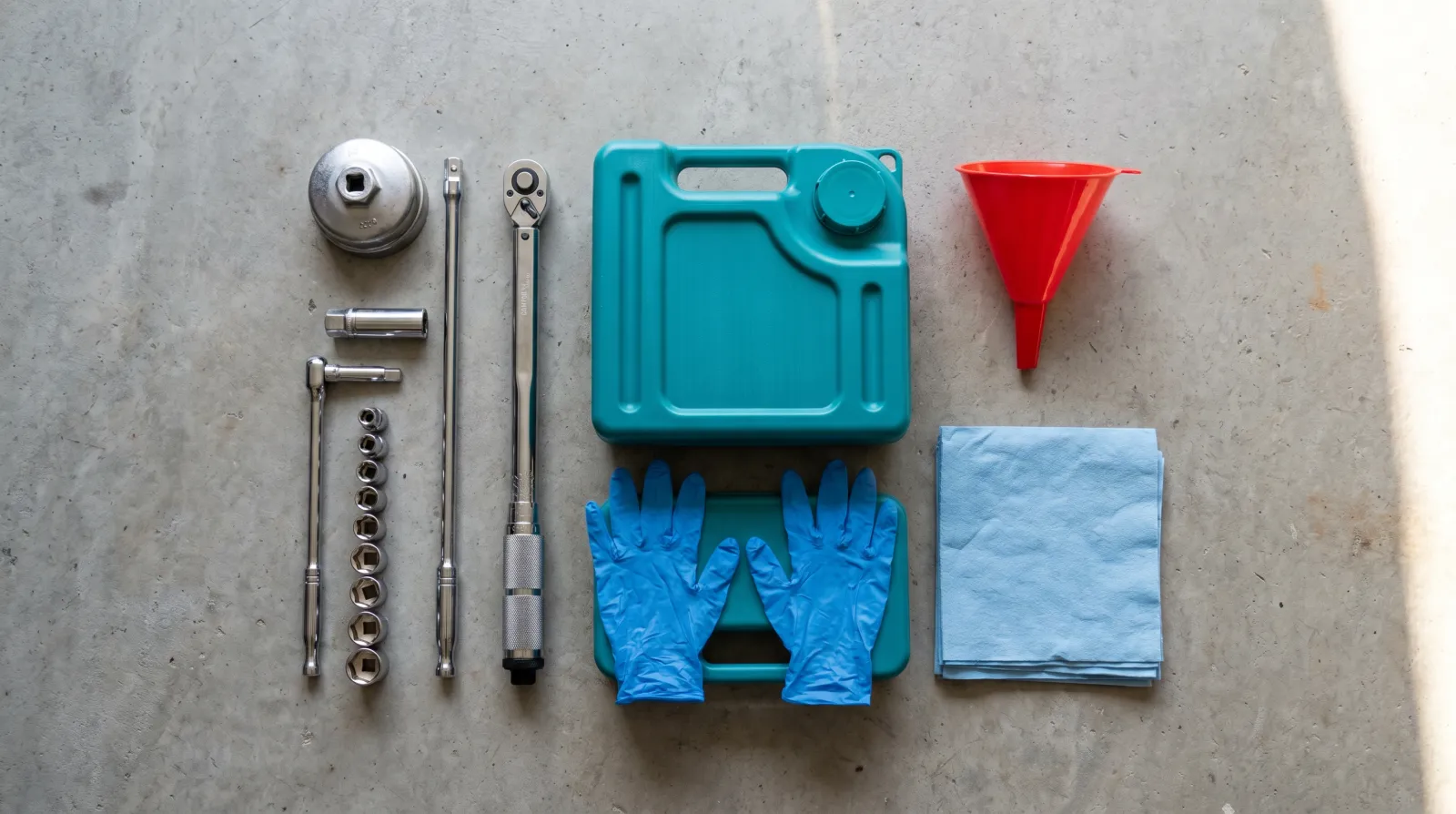
Doing your own oil change saves money and means you know the job got done right. But before you drain a drop, you need the right gear — and bad advice online has people buying junk or, worse, skipping tools that matter for safety. This guide is honestly rated. For the full procedure see how to change your oil; for your car's specific numbers, the torque specs reference; and for head-to-head picks, our tool round-up comparisons.
1. Oil Filter Wrench — Essential, Get the Right Type
The tool most beginners forget, then curse on the driveway. Three types: cap/cup style (a socket that fits over the filter and drives with a ratchet — most torque without crushing the filter; buy this first, sized to your filter, e.g. 64/65/67/74/76 mm), strap style (universal and cheap, good backup, but slips on oily filters), and claw/adjustable (grips the body for tight spaces, removal only). Verdict: buy a cap/cup set first, add a strap as a backup. Specific picks in our filter wrench comparison.
2. Socket Set & Breaker Bar — Essential
You need a socket for the drain plug — wrong size or a worn socket rounds it off. Most plugs take 14, 17 or 19 mm; a basic 3/8" metric set covers 95% of cars, and a 1/2" breaker bar cracks stubborn plugs. Don't cheap out — flimsy sockets strip.
3. Torque Wrench — Essential (Yes, Really)
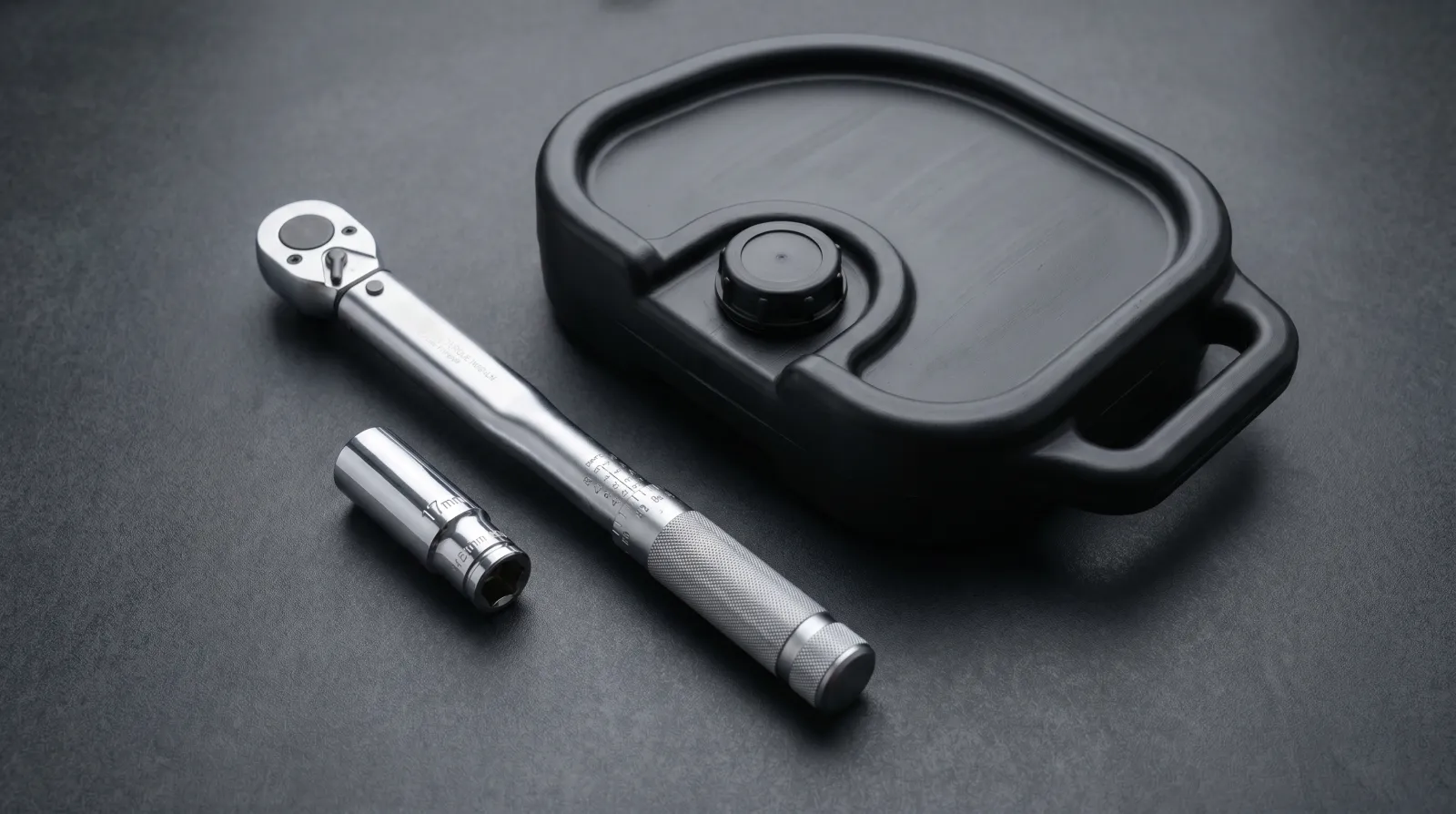
The drain plug threads directly into your oil pan. Over-tighten and you strip the threads — on aluminium pans this happens faster than you'd expect, and a stripped pan is an expensive repair. Under-tighten and the plug backs out on the highway. Most plugs spec 25–40 Nm; many cartridge housings ~25 Nm. A click-type 1/2" drive, 10–150 Nm wrench covers both. Verdict: buy a decent click-type; avoid the absolute cheapest no-name units. See our torque wrench review.
4. Oil Drain Pan — Essential (Sealable Type)
Buy a pan that holds at least 8 litres so you're never scrambling mid-drain. The single most important feature: a sealable lid with a pour spout, so you can cap it and carry the used oil to a recycling centre without spilling. Wide, low-profile pans are easiest to aim; check clearance on lowered cars. Skip open pans, buckets and cardboard boxes — they make a mess and create disposal headaches. Picks in our drain pan comparison.
5. Funnel — Essential (Costs Nothing)
Pouring from a 5-litre jug into a small filler neck without a funnel is a disaster. A basic long-stem funnel keeps it where it belongs. They're $3–$8.
6. Ramps vs Jack + Axle Stands + Chocks — Essential, Choose Your Method
"I'll just use the scissor jack" is how people get killed. Ramps are stable, fast and remove the jack-slip risk — drive up, chock the rears, done; perfect for most oil changes (check your approach angle on low cars). Floor jack + axle stands + wheel chocks is more versatile for lowered cars and other work — jack at the lift point, lower onto rated stands at the support points, chock the wheels staying down. Either is safe done correctly. Never use a scissor jack as a work support, bricks or blocks.
7. Nitrile Gloves & 8. Shop Towels — Essential
Used engine oil contains combustion byproducts and heavy metals you don't want absorbing through skin over years of work — a box of 100 nitrile gloves is under $20 and lasts a year. Heavy-duty blue shop towels clean drips, the drain plug, and the filter seat (to check the old gasket came off) without leaving fibres.
What You Can Skip (At First)
- Expensive oil filter pliers — a $15 strap wrench does the same on accessible filters
- Oil extractor pump — only useful if your car has no drain plug or it's nearly inaccessible
- Magnetic drain plug inserts — nice-to-have on high-mileage engines, not essential
- Catch/drip mats — cardboard from a moving box works fine
- Power tools — never use an impact wrench to install a drain plug; hand-torque, always
Your Essential Tool List
Oil filter wrench, socket set with the right plug size, breaker bar, click-type torque wrench (10–150 Nm), sealable 8 L+ drain pan, funnel, ramps or floor jack + axle stands + wheel chocks, nitrile gloves and shop towels. That's the complete kit — most of it for well under $150, and it pays for itself after two or three changes. Ready? Follow the step-by-step guide, or head back to the DIY oil change hub.
Affiliate Disclosure
Some links on this page are affiliate links. If you buy through them we may earn a small commission at no extra cost to you. It never changes our verdicts — we only recommend gear we would run on our own cars. Read the full disclosure.