Most people spend ten minutes researching which oil to run and thirty seconds grabbing whatever filter is on the shelf. That's the wrong ratio. The filter is the only thing standing between your oil gallery and every metallic particle your engine throws off — get it wrong and the best synthetic won't save your bearings. This guide is part of our DIY oil change hub.
Spin-On vs Cartridge: The Actual Difference
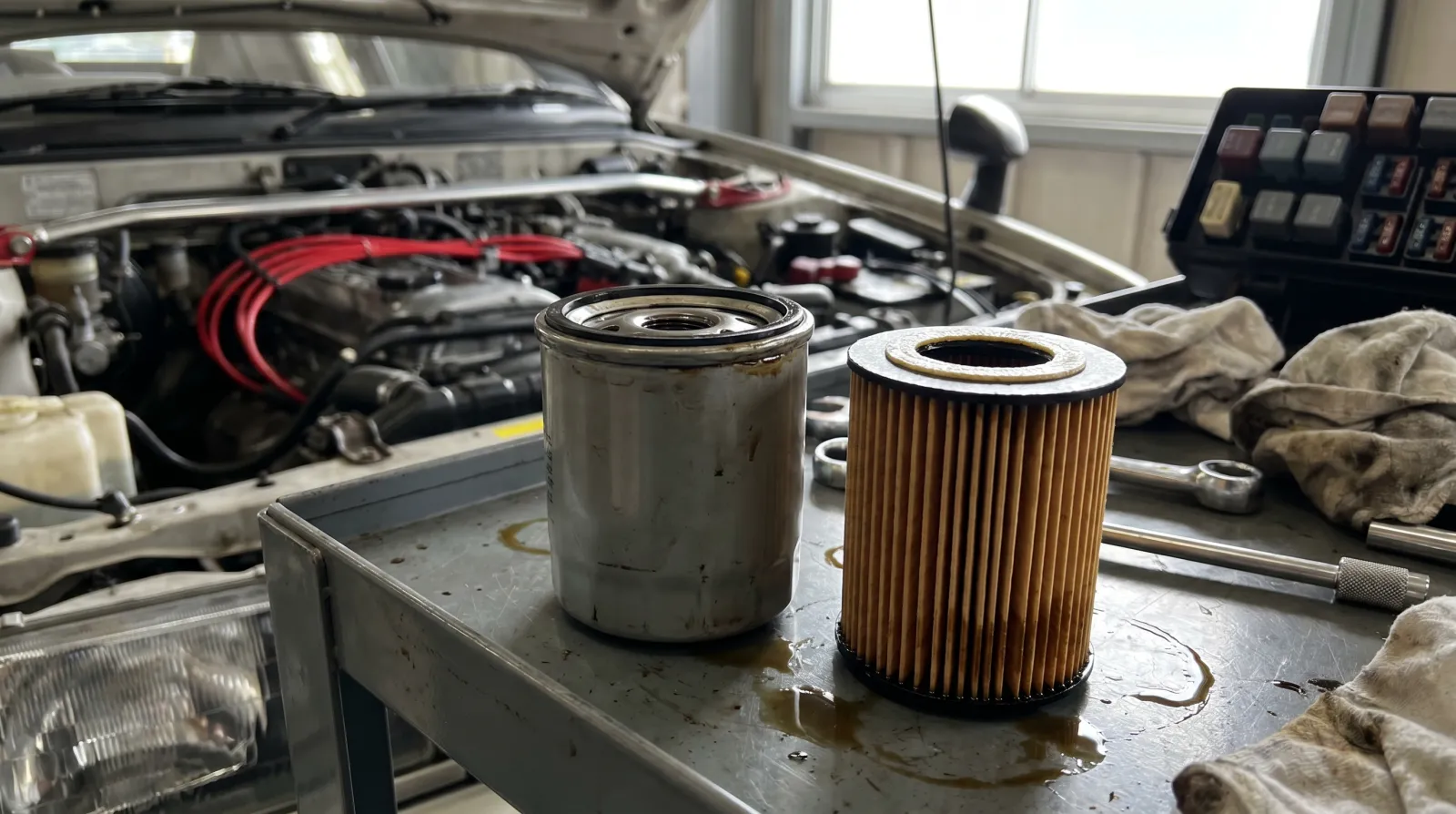
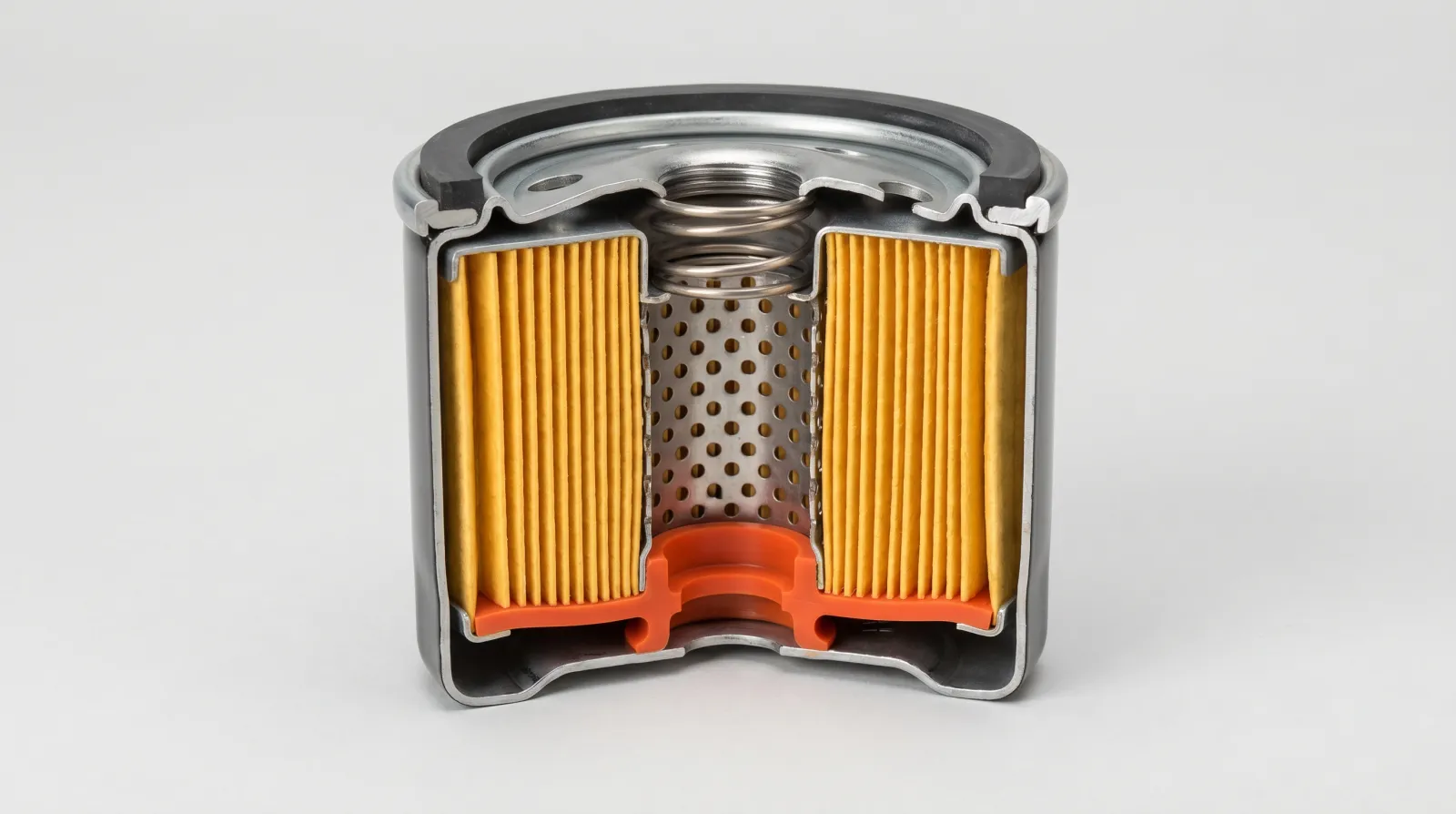
Spin-on filters are self-contained: metal canister, media, bypass valve and anti-drainback valve sealed inside. You thread the whole unit on, and bin it whole at service. Fast and foolproof — dominant from the '60s to 2000s — but wasteful (a steel canister each time). Cartridge filters separate a reusable housing cap from a replaceable paper/synthetic element; you drain the bowl, swap the element and O-ring, and refit the cap. They've surged back since the mid-2000s on European and modern Japanese engines — less waste, tighter packaging — but messier, and the O-ring must be replaced every time. Your engine is designed for one format; you don't get to choose, but you do choose the brand and quality.
What the Specs Mean
Filter media: cellulose (paper, budget), synthetic (glass/polyester — more uniform pore size, higher capacity, standard in premium filters), or synthetic blend. Media quality matters most at long intervals: cellulose is fine at 5,000 km on conventional, but at 15,000 km on full synthetic you want synthetic media. Micron rating & efficiency: wear-causing particles sit in the 10–40 micron range; reputable filters target 15–25 microns. The efficiency percentage matters as much as the size — look for ISO 4548-12 tested filters with 95%+ efficiency. Anti-drainback valve: a silicone check valve that seals at shutdown so the filter and galleries aren't dry on cold start. Bypass valve: a relief valve that routes oil around a clogged element (unfiltered oil beats no oil) — it should match the vehicle's spec cracking pressure.
How to Find the Right Filter
Fitment is everything — wrong thread pitch or gasket diameter and the filter is useless. Start with your year, make, model and engine code, then use a brand application tool (Mann Catalog, Ryco Filter Selector, Bosch application search) or a cross-reference database with your OEM part number. For JDM imports — a big chunk of the Redline audience — always verify against the Japanese engine code, not just the model name. Keep your OEM number on hand to make every future purchase faster. Our tools guide covers filter wrenches by socket size.
The Install Torque Rule
Over- and under-torquing a filter cause more leaks and removal headaches than any other install error. Spin-on: wipe the seat, oil the gasket, thread on by hand until the gasket contacts, then a further three-quarter turn — hand pressure only, no wrench. Cartridge: replace and lightly oil the O-ring, then torque the housing cap to spec (typically 20–25 Nm plastic, 25–30 Nm aluminium — plastic caps crack if over-torqued). Full procedure in how to change your oil.
Brands Worth Running
Mann-Filter — OEM supplier for much of the European market; synthetic media as standard. The most defensible choice on European/modern-Japanese platforms. Bosch — widest cross-reference range from one brand locally, consistent build, widely stocked. Mobil 1 (Extended Performance) — built by Champion, genuinely rated for extended drains; pairs logically with Mobil 1 synthetic. Fram — judge by product line: the budget Extra Guard is fleet-tier, but Fram Ultra Synthetic is a legitimate filter. K&N — well-specced with a handy removal nut; ignore the power claims. Ryco — the strongest local option for Australian-delivered and JDM cars, database calibrated to the local market.
Are Expensive Filters Worth It?
The gap between a budget and a mid-tier filter from a reputable brand (media, valve quality) is real and worth paying for. The gap between mid-tier and extended-performance premium is narrower — and only matters if you're actually running extended intervals. Paying premium then changing at 5,000 km on conventional is waste; paying premium and running 15,000 km on synthetic is sound. The sweet spot for most people is a mid-tier filter with published specs at a standard interval. To see the top options side by side on spec, price and fitment, our filter comparison puts them head to head, and the filter review goes hands-on with our top pick. Everything else is in the oil change hub.
Affiliate Disclosure
Some links on this page are affiliate links. If you buy through them we may earn a small commission at no extra cost to you. It never changes our verdicts — we only recommend gear we would run on our own cars. Read the full disclosure.