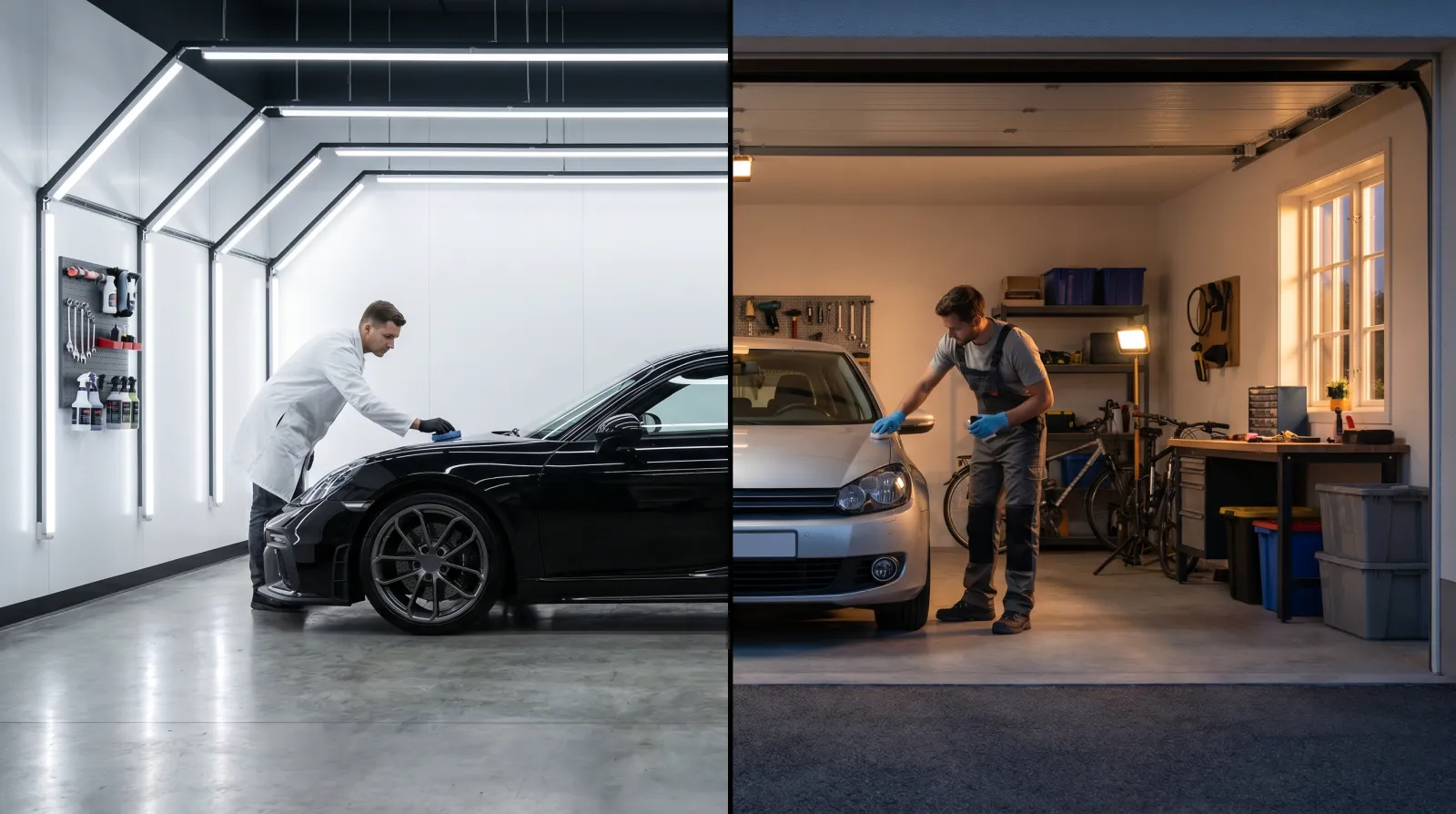
Every few weeks someone posts the same question in a detailing forum: "Can I just do it myself and get the same result?" It's a fair question. Ceramic coating products sit on the shelf at the parts store, YouTube tutorials make it look almost relaxing, and the price gap between a DIY kit and a professional install is genuinely significant. So let's give you a straight answer.
The short version: both paths work, but for different people in different situations. This page helps you figure out which category you fall into. For the full picture on how ceramic coatings work and what they protect against, start with our pillar guide.
What You're Actually Comparing
The DIY vs pro debate is not really about brand quality in isolation — it's about the total system: the product, the surface prep underneath it, and the environment it's applied in. All three matter. If any one is wrong, the coating underperforms regardless of what you paid. That's why two people can buy coatings in the same price bracket and get wildly different results.
The DIY Path: What It Costs and What It Demands
A solid consumer-grade DIY kit typically runs under $150: a bottle of SiO2-based coating, applicator pads and a buff-off cloth. Brands like Gyeon Quartz Q² Can Coat, CarPro CQuartz UK 3.0 and Adam's UV Ceramic are widely respected and genuinely do what they claim when applied correctly. Our guide to the best DIY ceramic coating kits covers these in detail.
Materials are only part of the picture. You also need to account for:
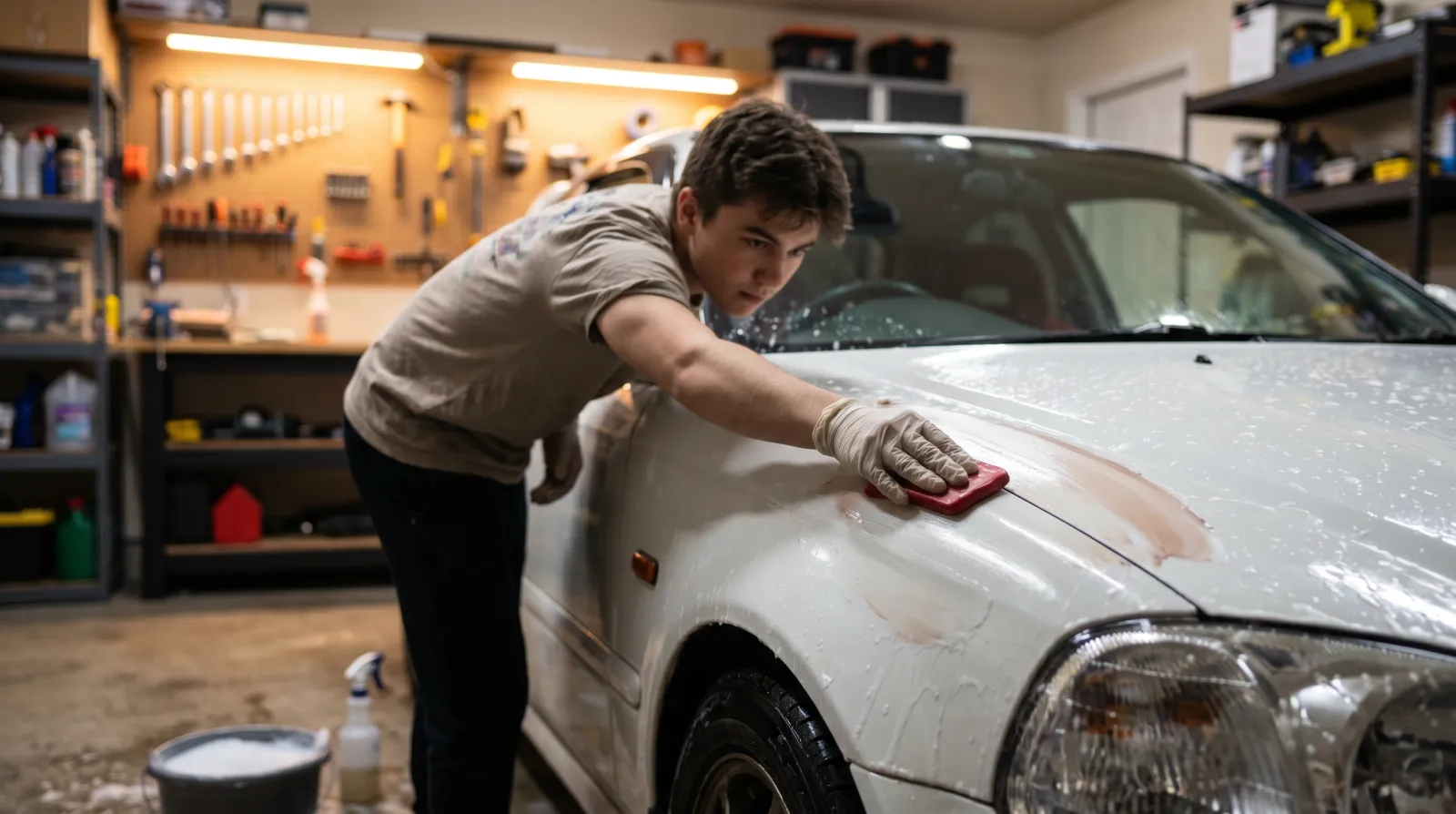
- Paint correction labour — swirls, scratches and oxidation must be removed before you coat, because the coating locks everything in. A single-stage polish is 4–8 hours on a full car, and a dual-action polisher adds $150–$350 if you don't own one.
- Panel wipe / IPA wipe-down — surface oils, waxes and polish residue must be stripped completely.
- Time — a proper DIY job is a weekend commitment; budget 8–16 hours across two days if you include correction.
- Environmental control — a dusty garage, direct sun, or temperatures above 25°C all work against you.
Pros of DIY Ceramic Coating
- Lowest upfront cost — materials under $150 for most kits
- Flexible timing — do it on your own schedule
- Genuinely satisfying if you enjoy detailing
- You control prep quality — no shortcuts from a busy shop
- Good entry point to build detailing skills
Cons of DIY Ceramic Coating
- No manufacturer warranty on the coating
- High spots and streaking are a real risk for first-timers
- Consumer-grade coatings typically last 1–3 years vs the 5–10 year claims of pro products
- Pro-only coatings (Crystal Serum Ultra, Ceramic Pro 9H) are off-limits
- Dust contamination in application ruins the result
- Any prep errors are sealed under the coating
The Professional Path: What You're Actually Paying For
A professional install costs between $500 and $2,500+, depending on coating tier, vehicle size and condition, and the amount of paint correction required. The wide range is real — a budget shop putting a consumer coating on uncorrected paint is not the same product as a certified detailer doing a two-day, two-stage polish followed by a pro coating in a dust-free environment. The full breakdown is in our ceramic coating cost guide.
Pro-Only Coatings: Why You Can't Buy Them
The most significant products — Gtechniq Crystal Serum Ultra, Ceramic Pro 9H and Kamikaze Collection ISM — are deliberately restricted to certified installers. There are real technical reasons. Crystal Serum Ultra is a dual-layer system with an aggressive lower layer that, applied incorrectly, is extremely difficult to remove without machine polishing. In exchange for that restriction, Gtechniq backs it with a 9-year warranty when applied by an accredited detailer — transferable if you sell the car. Ceramic Pro 9H works similarly, with Bronze/Silver/Gold/Platinum tiers from two to five-plus years.
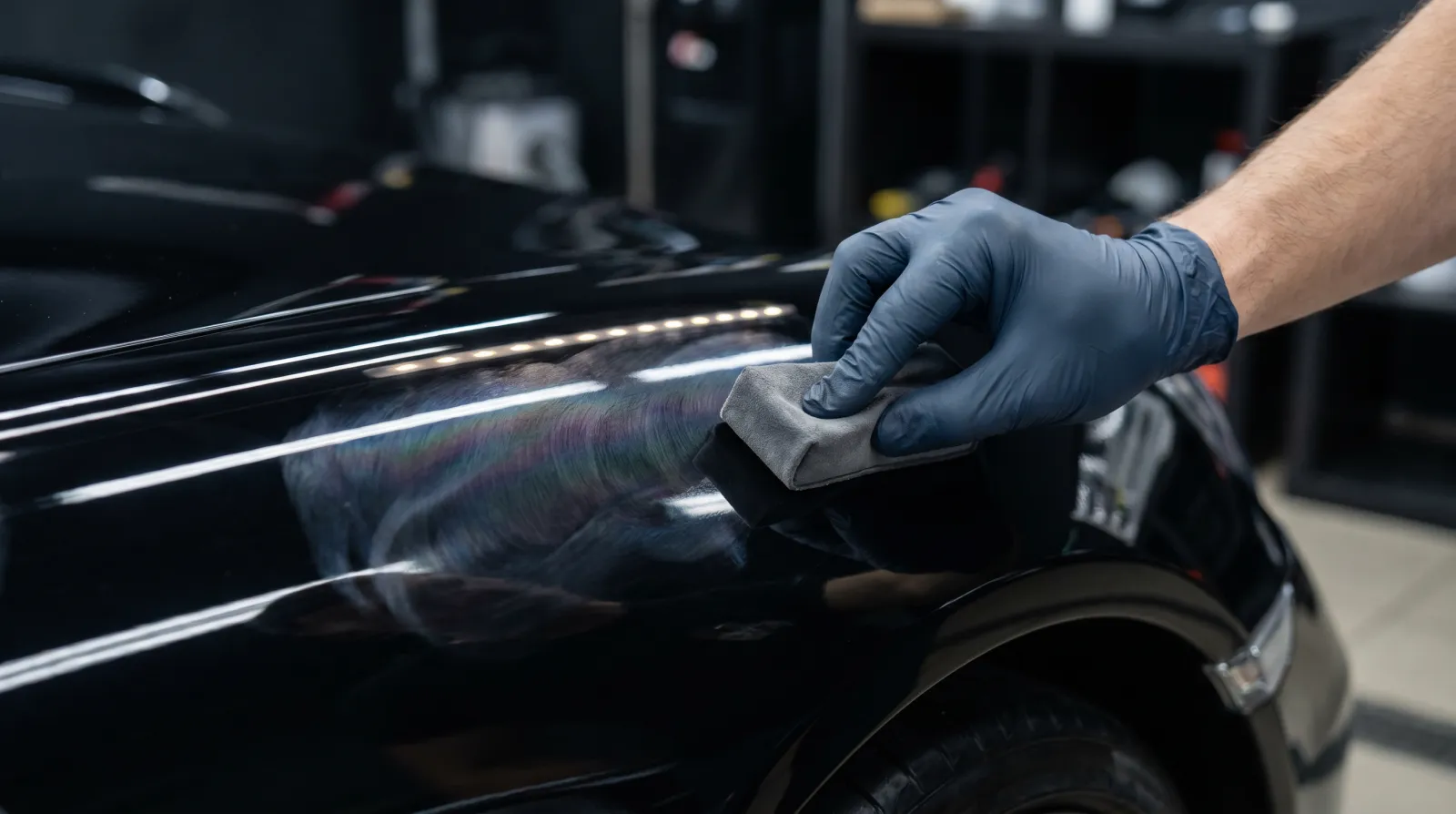
What a Proper Professional Install Includes
- Paint inspection — thickness gauge readings, swirl and scratch mapping under specialist lighting
- Decontamination wash — iron fallout removal, clay bar or mitt
- Paint correction — single, dual or multi-stage machine polishing; the most labour-intensive step
- Panel wipe — solvent wipe-down to strip oils and fillers
- Coating in a controlled, dust-free environment with specialist lighting and managed temperature
- Curing and aftercare briefing
You are not paying primarily for the liquid in the bottle — you are paying for the prep, the environment and the expertise.
Pros of Professional Ceramic Coating
- Access to restricted pro-only coatings with superior chemistry
- Multi-year manufacturer warranty backed by the coating brand
- Professional correction eliminates swirls before sealing
- Dust-free application removes the primary cause of amateur failure
- Longer real-world durability — 5–10 years on top-tier coatings
- Certified installer accountability
Cons of Professional Ceramic Coating
- Significant upfront cost — quality jobs realistically start at $800–$1,000
- You depend on choosing a genuinely skilled installer
- Scheduling at reputable shops can be weeks
- Harder to justify on older cars or cars you plan to sell
The Environment Question Nobody Talks About Enough
One factor separates pro results from DIY results more consistently than product quality: the application environment. Ceramic coating is applied in a film just 1–2 microns thick. A single dust particle landing on a wet panel is trapped under the coating permanently. In a humid environment the coating can flash before you buff it, creating high spots that need machine polishing to remove. A professional studio is a sealed, dust-free, climate-controlled space. Your home garage almost certainly is not. That's not a reason to rule out DIY — it's a reason to be honest about your workspace before you commit.
Durability: What the Numbers Actually Mean
Consumer coatings advertise one to five years; professional products claim five to ten or more. Both assume proper maintenance. In realistic conditions, a well-applied consumer coating maintained properly lasts two to three years; a well-applied professional coating like Crystal Serum Ultra or Ceramic Pro Gold realistically delivers five to seven — with a warranty that covers you if it doesn't. The durability difference is real, not marketing: pro chemistry is more advanced and the multi-layer systems create a thicker, harder final surface.
Who Should Do It Themselves
- You enjoy detailing and want to learn the process properly
- You own a daily driver where a 2–3 year result is acceptable and you'll reapply
- You have a relatively new car in good paint condition
- You have a clean, temperature-controlled workspace
- You already own or will buy polishing equipment
- You have a realistic weekend to do the prep thoroughly
If DIY is the call, our step-by-step application guide walks through the full process — prep, panel wipe, technique and cure.
Who Should Go Professional
- You own a vehicle you plan to keep five-plus years and want warranted protection
- Your paint needs serious correction and you lack the equipment or skills
- You're preparing a car for sale and want a transferable warranty
- You own a prestige or sports car where a DIY mistake carries real cost
- You don't have a suitable application environment
- You want the chemistry of pro-only products
One Honest Caution Either Way
The single most consistent source of disappointment in ceramic coating — DIY and professional — is skipped or rushed paint correction. Ceramic coating is not a paint repair product. It will not fill scratches, hide swirls, or improve dull paint. It seals the surface as it is. Whether you do it yourself or pay someone, do not let prep get cut. The coating is the last step, not the first.
Affiliate Disclosure
Some links on this page are affiliate links. If you buy through them we may earn a small commission at no extra cost to you. It never changes our verdicts — we only recommend gear we would run on our own cars. Read the full disclosure.