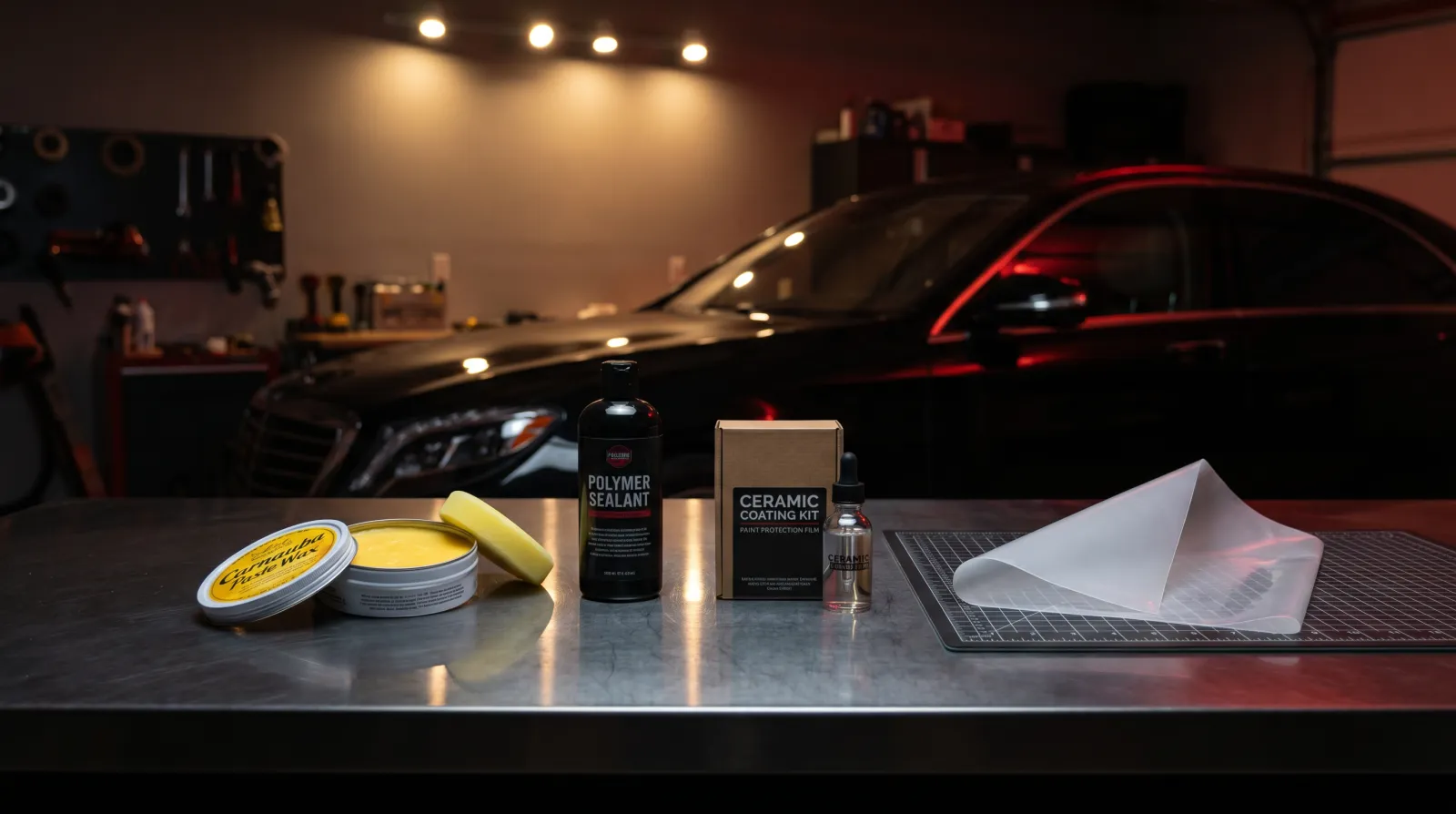
You just detailed your car. It looks mint. Now comes the question every enthusiast stalls on: what do you put on top of it? Carnauba wax, synthetic sealant, ceramic coating, or PPF? Each has a dedicated fanbase arguing it's the right answer — and each is the right answer, depending on what you actually need.
This isn't a "ceramic is king, sell your wax" piece. It's a straight comparison of all four, covering durability, cost, gloss, protection depth and who each suits. For the deep-dives on single matchups, we've covered ceramic coating vs wax and ceramic coating vs PPF separately. This page is the master overview.
The Four Contenders: A Quick Primer
Carnauba Wax
Carnauba wax comes from a Brazilian palm and is one of the hardest natural waxes around. Blended with oils and solvents into a workable paste or liquid, it forms a thin sacrificial layer on top of your clear coat, adding warmth and depth — the warm "wet" glow you see on show cars. The catch: that layer breaks down fast under UV, heat and wash cycles.
Synthetic Paint Sealant (Polymer)
A synthetic paint sealant replaces natural wax with engineered polymers that bond more consistently and last longer — 6–12 months versus 4–8 weeks for carnauba. The shine is harder and more reflective, which some find slightly "colder" than wax. Easy to apply uniformly, which makes it popular for a fast, repeatable result.
Ceramic Coating (SiO2)
A ceramic coating uses silicon dioxide (SiO2) to form a semi-permanent bond with the clear coat at a molecular level, curing into a hard, glass-like shell. It doesn't sit on top like wax — it integrates. The result is dramatically stronger hydrophobicity, UV and chemical resistance, and a self-cleaning effect. A professional coating lasts 2–5 years; consumer SiO2 sprays 6–18 months. The trade-off is cost and application complexity — prep needs to be near-perfect. See the ceramic coating pillar page for the full picture.
PPF (Paint Protection Film / Clear Bra)
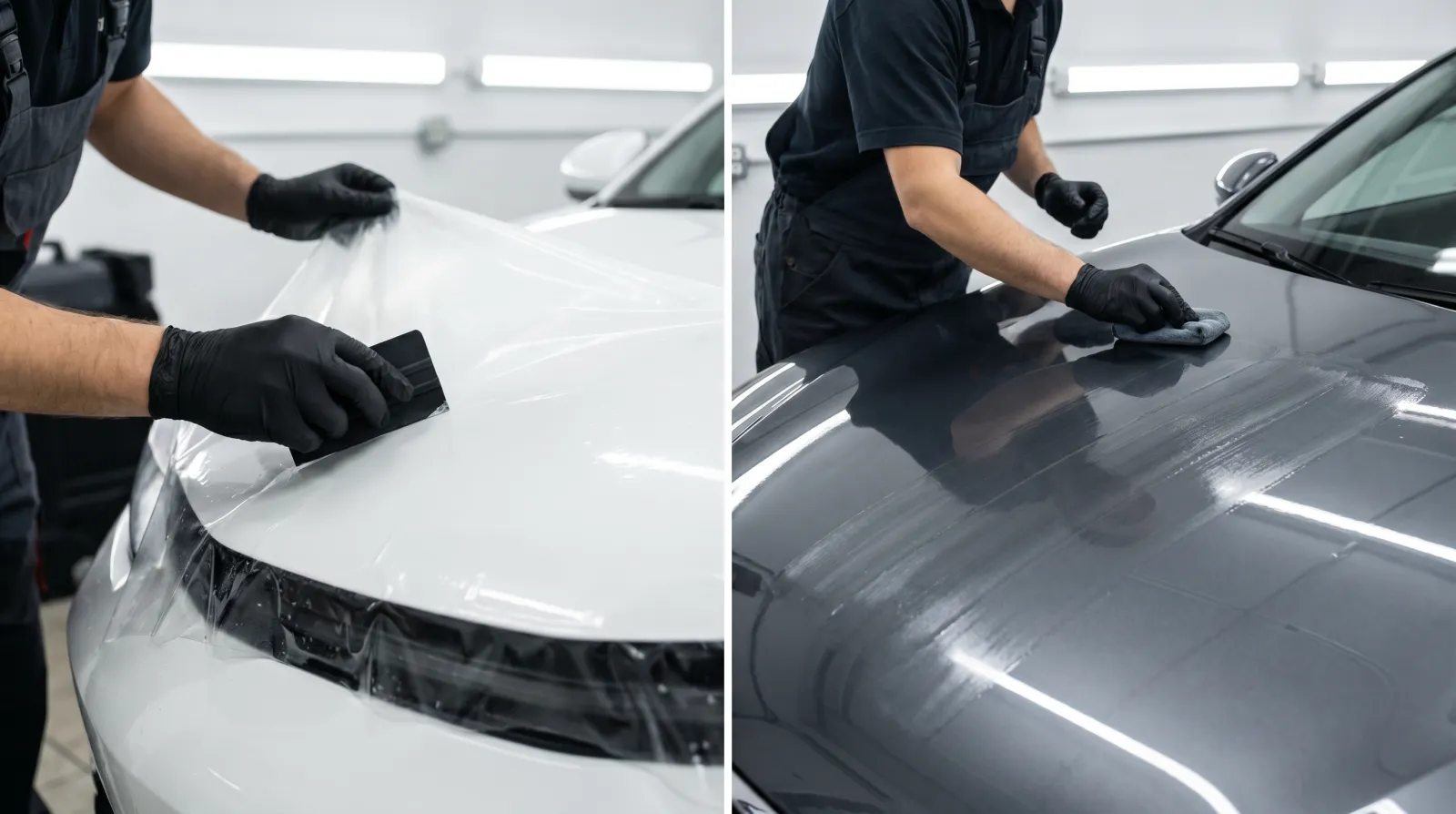
Paint protection film is a thermoplastic urethane (TPU) film applied in sheets, typically 6–8 mil thick. That thickness gives it the one capability no coating or wax can replicate: stopping rock chips and stone impacts from reaching the paint. Premium PPF also self-heals light surface scratches with heat. It lasts 5–10 years but is by far the most expensive and almost always requires professional installation.
Side-by-Side Comparison Table
| Type | Durability | Typical Cost | Gloss | Hydrophobic? | Stops Rock Chips? | DIY Ease |
|---|---|---|---|---|---|---|
| Carnauba Wax | 4–8 weeks | $15–$60 | Warm, deep | Moderate | No | Very easy |
| Synthetic Sealant | 6–12 months | $30–$100 | High, crisp | Good | No | Easy |
| Ceramic Coating | 1–5+ years | $50–$200 DIY / $800–$3,000 pro | Very high, glass-like | Excellent | No | Moderate–Hard |
| PPF | 5–10 years | $1,500–$8,000+ pro | High–very high | Good–Excellent | Yes — only option | Very hard |
Durability: The Real-World Breakdown
Carnauba wax (4–8 weeks): some high-carnauba waxes hold 8–10 weeks in controlled conditions, but with real driving and rain expect 4–6 weeks. Reapplication is cheap and quick, so for owners who wax weekly anyway it's irrelevant.
Synthetic sealant (6–12 months): properly applied to clean, polished paint, a quality polymer sealant comfortably lasts 6 months and often past 12 if garaged. Holds up better than wax through wash cycles, which is why it's popular as a base layer under wax.
Ceramic coating (1–5+ years): consumer SiO2 sprays sit at the 6–18 month end; true professional coatings like Crystal Serum Ultra, Ceramic Pro 9H or CarPro CQuartz Professional are engineered for 3–5 years. The key variable is prep — a coating over contaminated or scratched paint locks those defects in permanently. See our cost guide for what you pay at each tier.
PPF (5–10 years): premium films (XPEL Ultimate Plus, 3M Scotchgard Pro, SunTek Ultra) last 7–10 years. When the film reaches end-of-life it peels off, leaving the paint beneath in the same condition it was applied over — genuinely impressive after a decade of daily driving.
Protection Depth: What Each Option Shields You From
- Carnauba wax — light UV filtering, minor contamination resistance, a sacrificial layer against water spots. Will not stop a stone chip or a fingernail scratch.
- Synthetic sealant — improved chemical and UV protection over wax, but still a thin sacrificial layer with no physical impact protection.
- Ceramic coating — adds surface hardness (some pro coatings reach 9H pencil hardness), resists light swirling and chemical etching, but will not stop a rock chip. Anyone who tells you otherwise is selling something.
- PPF — the only product here with genuine physical impact absorption. The TPU film takes a stone strike, flexes, and contains the damage to the film itself. Self-healing PPF erases light scratches with heat. Our ceramic coating vs PPF breakdown goes deeper if rock-chip protection is your priority.
Hydrophobicity and Gloss: What You Actually See and Feel
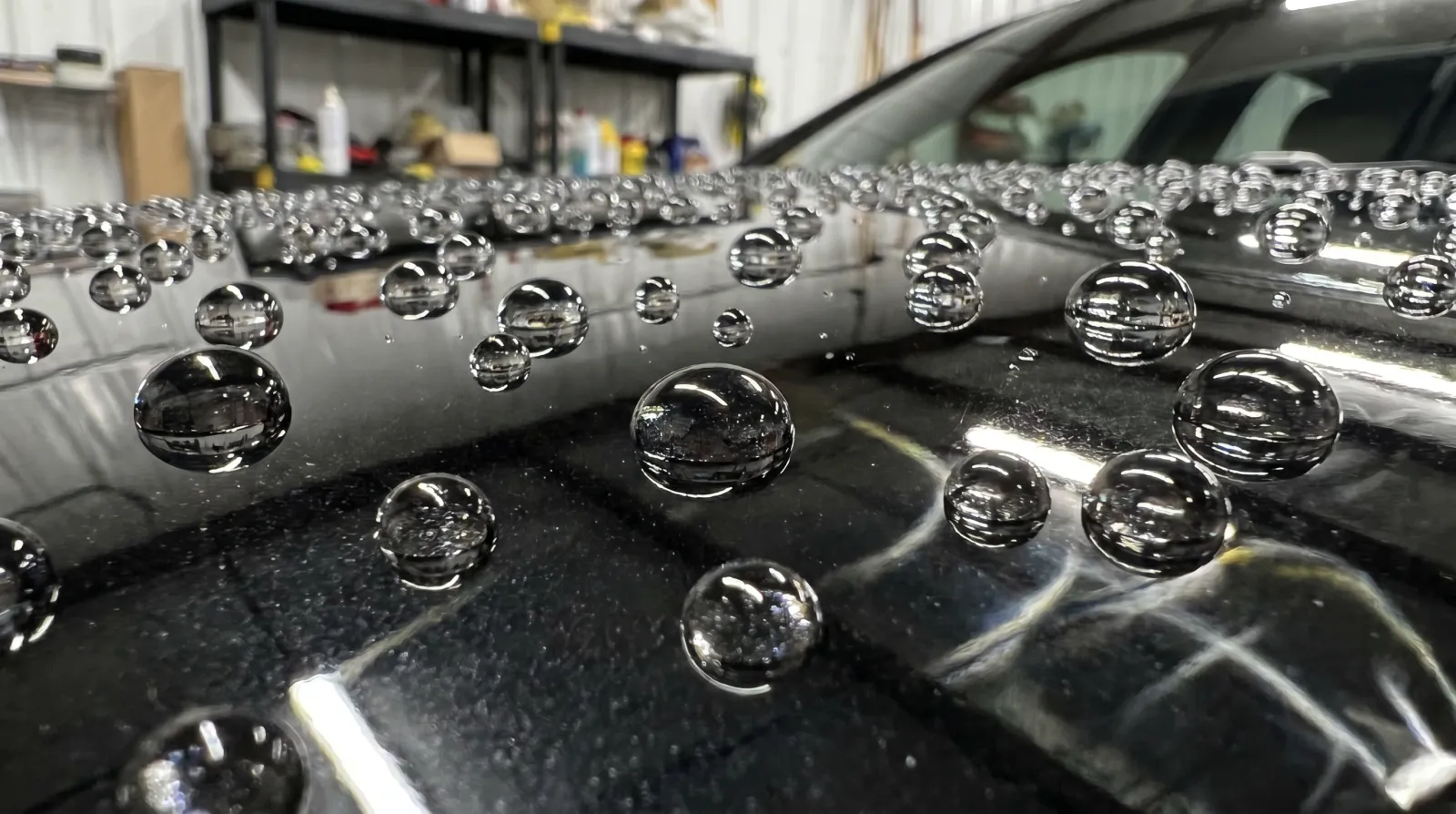
Carnauba wax produces moderate beading and a warm, buttery gloss — flattering on dark colours. Synthetic sealants bead crisper and tighter, with a sharper, more reflective shine that excels on silver, white and pearl. Ceramic coatings produce the most aggressive hydrophobicity of any layer — water forms tight, fast-moving beads and sheets off at speed, with glass-like gloss that wax and sealant can't match long-term. PPF on its own is decent but unremarkable hydrophobically — which is why the smart play is to ceramic-coat over the top of PPF: the film stops chips, the coating maximises gloss and self-cleaning.
Can You Layer These Products?
Sealant + wax: classic combination — sealant base for durability, carnauba on top for gloss character. Ceramic coating over PPF: increasingly common on performance cars — PPF for impacts, ceramic for hydrophobicity, gloss and UV protection of the film's topcoat. Do not apply wax or sealant over a ceramic coating — it breaks down the coating's surface properties. Use a SiO2 maintenance spray instead.
Cost Reality Check
Carnauba wax and synthetic sealant are accessible to anyone — $20–$100 of product gives a year of applications, both DIY-friendly with minimal prep. Ceramic coating escalates: a consumer spray kit is $50–$100; a DIY pro-grade kit $100–$200 but demands corrected, decontaminated paint; professional installation including correction often runs $800–$3,000+. PPF is the top of the range — a partial front-end install is $1,500–$3,000, a full premium wrap $6,000–$10,000+.
Who Should Choose What
Choose carnauba wax if you detail regularly, enjoy the ritual, want the warmest gloss on a show or weekend car, and longevity isn't a priority. Choose a synthetic sealant if you want solid protection most of a year, wash regularly but not weekly, and want easy, consistent application — the pragmatic daily-driver choice. Choose a ceramic coating if you want protection that lasts years, seriously reduced maintenance, and you're prepared to invest in proper prep — ideal on a new or freshly corrected daily driver. See the full ceramic coating guide. Choose PPF if you have a new, high-value or low-production car, drive on stone-chip-heavy roads, or want rock-chip protection — because nothing else here provides it. Best result: PPF the high-impact zones, then ceramic coat the whole car.
The Bottom Line
There is no single right answer — but there are wrong answers for your situation. Spending $2,000 on a ceramic coating and expecting it to save your bonnet on a gravel road is a mistake. Buying carnauba when you want 12 months of hands-off protection is equally wrong. Match the product to your actual driving life, budget and how much detailing time you genuinely want to spend. For ceramic pricing at different tiers, the cost guide breaks it down without the upsell.
Affiliate Disclosure
Some links on this page are affiliate links. If you buy through them we may earn a small commission at no extra cost to you. It never changes our verdicts — we only recommend gear we would run on our own cars. Read the full disclosure.