
Your first DIY oil change feels like a win — until the engine doesn't sound right, or the oil light stays on. Most first-time mistakes are completely fixable, but a couple can take out an engine in under a minute. This list covers the ten most common, roughly from "annoying" to "catastrophic." Work through it before you turn a wrench. If you haven't done your first change yet, start with our step-by-step guide; everything's in the DIY oil change hub.
1. Double-Gasketing the Oil Filter
When you remove the old filter, its rubber O-ring sometimes sticks to the block. Fit a new filter over it and you've got two O-rings stacked — the seal never seats, and oil leaks immediately, sometimes dumping the whole supply at highway RPM. Fix: run your finger around the filter mating surface before fitting the new filter; peel off any old ring. Every time.
2. Forgetting to Refill Before Starting
Drained, filter swapped, plug torqued — and you turn the key on an engine with no oil. Five to ten seconds of dry running scores bearings. Fix: make refilling your next physical action after the plug and filter are tight. Funnel in, pour, check the dipstick, then start.
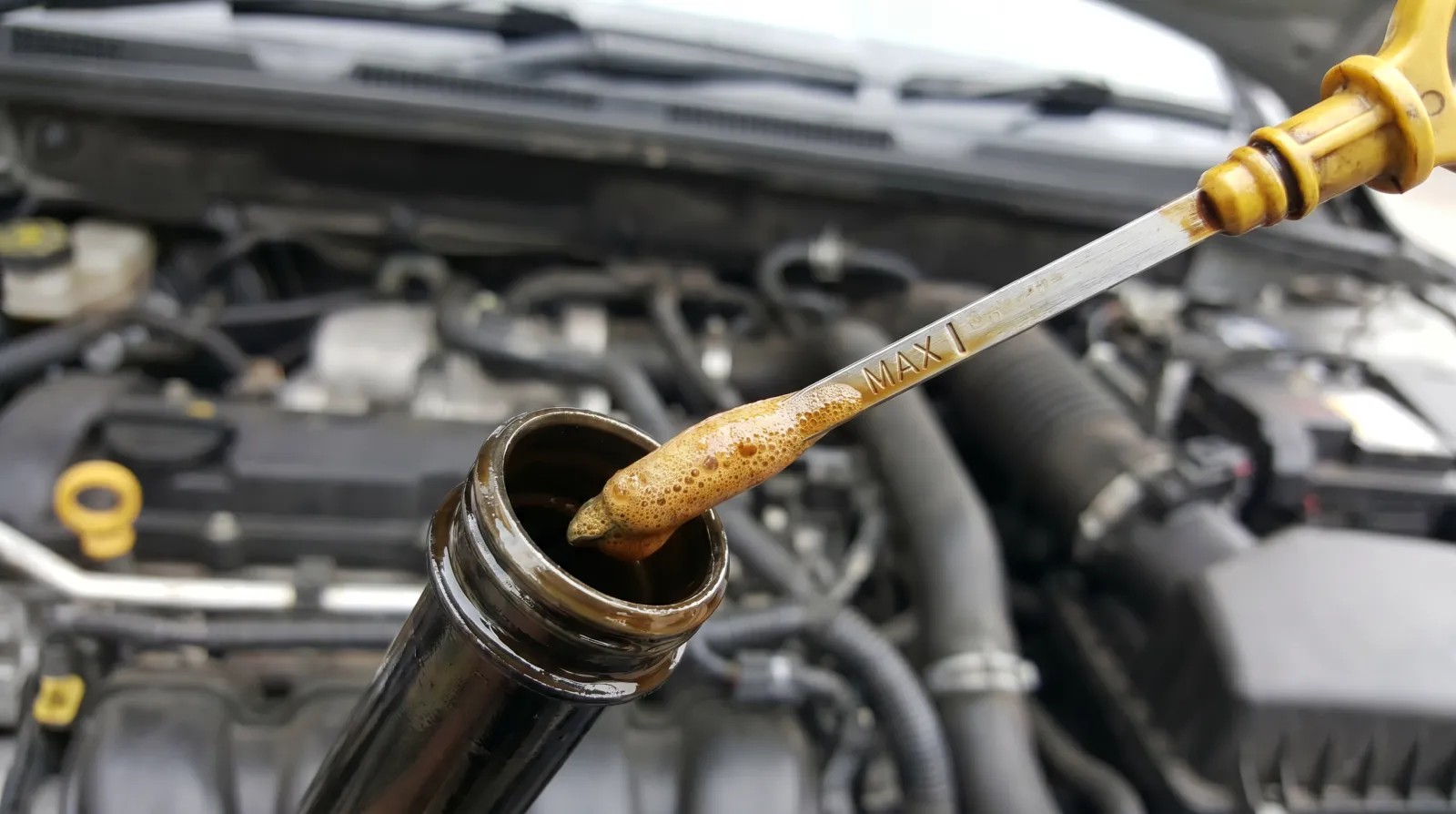
3. Overfilling the Engine Oil
More oil isn't safer. Overfilling causes white/blue exhaust smoke and foaming on the dipstick — aerated oil runs on bubbles instead of film, and pressure forces oil past seals. Fix: add in half-litre increments, checking the dipstick each time, and stop between MIN and MAX. Drain or pump out any excess. More in checking and topping up oil.
4. Under- or Over-Torquing the Drain Plug
Hand-tight plus a guess is not a torque spec. Under-torqued plugs weep or back out on the highway; over-torqued plugs strip the sump — expensive on aluminium. Fix: look up the figure (usually 25–35 Nm, but verify) and use a torque wrench. See torque specs.
5. Reusing the Crush Washer
Crush washers deform once to seal and don't re-seal reliably the second time. Fix: buy a pack when you buy the oil and filter — a dollar or two each, the cheapest insurance in the job.
6. Using the Wrong Viscosity or Grade
The wrong viscosity won't flow properly through modern tolerances at cold start (too thick) or hold pressure at temperature (too thin). Fix: check the filler cap, manual or door-jamb sticker. The grade is not a suggestion, and synthetic vs conventional aren't always interchangeable.
7. Draining the Wrong Plug
On RWD cars, utes and 4WDs the sump, gearbox, transfer case and diff all have drain plugs that look similar. Drain the gearbox by mistake, refill the sump, and you run the gearbox dry while overfilling the engine. Fix: identify each plug with a torch first — the sump drain is typically the lowest, central point under the block.
8. Skipping the Funnel
Pouring straight from a 5-litre jug coats the intake and exhaust in oil that then smokes for days. Fix: use a funnel. They're $3.
9. Not Warming the Oil First
Cold oil drains slowly and incompletely; hot oil straight off a drive burns. Fix: run the engine three to five minutes, or let it sit 20 minutes after a drive, so the oil is warm but not scalding.
10. Not Resetting the Oil-Life Monitor
The monitor calculates the next change from driving conditions, not a simple counter — skip the reset and it nags you or gives false security. Fix: look up the reset (usually a button sequence with the ignition on) before you finish, while you're still thinking about it.
One Final Check
With the oil in and the plug and filter tight, start the engine and idle 60 seconds while you watch underneath for drips and confirm the oil-pressure light goes out within a couple of seconds. Then shut off, wait, and check the dipstick once more. That routine catches almost every mistake on this list. Do it right from the start with our complete how-to, and bookmark the torque specs for your car.
Affiliate Disclosure
Some links on this page are affiliate links. If you buy through them we may earn a small commission at no extra cost to you. It never changes our verdicts — we only recommend gear we would run on our own cars. Read the full disclosure.