Affiliate Disclosure
Some links on this page are affiliate links. As an Amazon Associate, we earn from qualifying purchases — at no extra cost to you. We do not buy, test, or physically handle the products we cover; our rankings come from aggregated owner reviews, ratings and expert consensus. Commissions never change our verdicts. How we rank & full disclosure.
Short version: living with an EV is easy once you get three things right — how you charge at home, how you plug into public chargers, and how you protect the car. This hub ranks every corner of EV care by aggregated owner ratings, review volume and value: the best Level 2 home chargers, the portable chargers that charge just as fast for less, the J1772 and NACS adapters that unlock every station your car can use, and the all-weather floor mats that keep an EV interior clean. No lab theatrics, no first-hand-testing gimmicks — just what thousands of real owners report living with.
EV ownership has a short learning curve and a lot of confident-sounding misinformation online. Our angle is different: we go deep on the two things that actually trip people up — setting up home charging correctly and navigating the J1772-to-NACS connector shift — and we're honest about which accessories earn their money and which don't. Here's how the whole category fits together, and where to start.
Home Charging: The Upgrade That Changes Everything
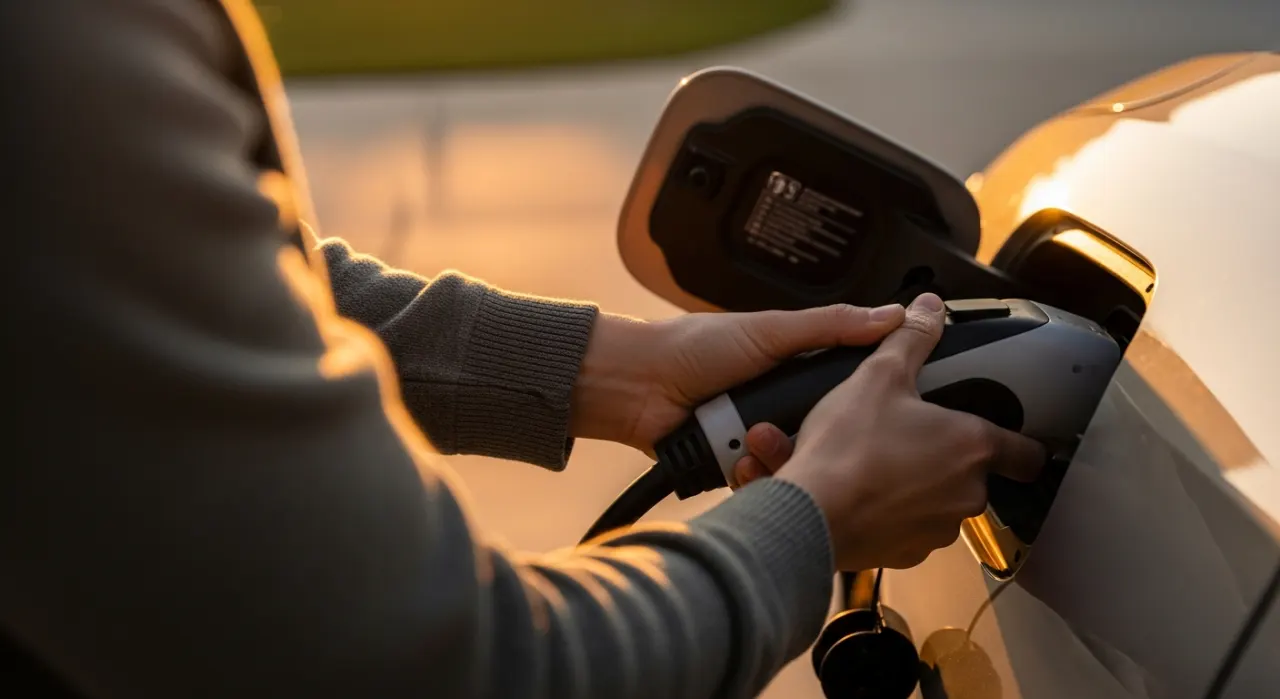
Ask any EV owner for their best purchase and the answer is almost always the same: a proper home charging setup. It turns charging from a "where do I plug in" worry into a "it's full every morning" routine, and it's far cheaper per mile than public charging. There are two speeds that happen at home. Level 1 uses the standard wall outlet your car came ready for, adding a slow 3-5 miles of range per hour — genuinely fine for a plug-in hybrid or a short commute. Level 2 uses a 240V circuit and adds around 30 miles per hour, refilling almost any EV overnight. The honest advice is to try Level 1 first and upgrade when you want more, which we lay out in Level 1 vs Level 2 charging.
Getting the setup right — the outlet, the circuit, plug-in versus hardwired, and charging cheaply on overnight rates — is worth doing once and doing properly. Our complete walkthrough is in how to charge an EV at home.
Wall-Mounted vs Portable Chargers
Once you've decided on Level 2, the next choice is how it connects. A fixed wall charger is the tidy permanent solution — mounted, docked and always ready, with the best smart features and the option to hardwire for maximum 48-amp speed. We rank the field, from the value-leading Emporia to the polished ChargePoint Home Flex and the bomb-proof Grizzl-E, in best Level 2 EV charger.
A portable charger does something clever: plugged into a NEMA 14-50 outlet, it charges at exactly the same speed as a wall unit at the same amperage, for less money — and it rides in the trunk for road trips and outlets you find along the way. Many owners simply leave one plugged in as their everyday charger. We rank the best in best portable EV charger. The two aren't mutually exclusive; plenty of households run a wall unit at home and keep a portable for travel.
The J1772-to-NACS Connector Shift
The most confusing thing in EV charging right now is connectors, and it's worth understanding because it directly affects where you can charge. J1772 is the long-standing Level 2 plug on most non-Tesla EVs; NACS is the Tesla connector — and the whole industry is converging on NACS as the shared North American standard. A Tesla ships with a J1772 adapter so it can use both worlds, and non-Tesla EVs are beginning to adopt NACS ports.
For owners, the practical upshot is simple: a small, certified adapter can dramatically expand the chargers you're able to use — a Tesla reaching public J1772 stations, or a non-Tesla EV using a Tesla home charger. Because an adapter carries the full charging current, this is one accessory where certification and reviews genuinely matter. We rank the safe options by use case, and explain which direction you actually need, in best EV charging adapter.
Protecting the Car: Mats and Detailing
EVs tend to wear light-colored interiors and soft paint, and owners keep them meticulously clean — so protection matters. The highest-value interior upgrade is a set of custom-fit all-weather floor mats, which trap mud, salt and slush behind raised edges and hose clean in minutes. The one rule: buy for your exact model and year, because EV floor contours and hidden storage are unusual and generic mats fit poorly. We rank the best by model — Model 3, Model Y Juniper, Model X and more — in best EV floor mats.
Washing an EV worries a lot of new owners, but it shouldn't: the battery and motors are sealed and weatherproof, so you can wash, rinse and even pressure-wash the bodywork exactly like any car. The only EV-specific touches are being sensible around the charge port and caring for the big touchscreen and synthetic-leather seats. The full routine is in EV detailing tips.
Winter, Range and the Accessories That Matter
Cold weather is the other big EV talking point. Expect to lose around 20-30% of range in winter — partly because cold batteries are less efficient, and partly because heating the cabin costs real energy. It's temporary and fully reversible, and mostly beaten with one habit: preconditioning while plugged in, so heating energy comes from the wall, not the battery. Add smart charging and winter tires where needed and winter becomes a non-issue, as we cover in EV winter range and care.
Beyond charging and protection, a short list of accessories genuinely earns its place — a tire inflator, quality cleaning supplies, winter tires — while a lot of flashy add-ons don't. We separate the essentials from the gimmicks in EV accessories worth buying.
Where to Start
If you're new to EV ownership, start with home charging — it's the upgrade that matters most — and decide between Level 1 and Level 2. Then choose a wall charger or a portable one, sort out your connector adapter, and protect the interior with proper floor mats. Every ranking below leans on aggregated owner ratings, review volume and value — so you can buy once and buy right. The topical map ties every part of EV care together.