Affiliate Disclosure
Some links on this page are affiliate links. As an Amazon Associate, we earn from qualifying purchases — at no extra cost to you. We do not buy, test, or physically handle the products we cover; our rankings come from aggregated owner reviews, ratings and expert consensus. Commissions never change our verdicts. How we rank & full disclosure.
Short version: roadside emergency gear is the cheapest insurance you will ever buy against the worst version of an ordinary bad day — a dead battery on a dark shoulder, a flat in the rain, a car stuck in the mud, or something far more serious. The right kit, extinguisher, strap and flares cost very little against what they save you in danger, time and money, and they turn "stranded and waiting" into "handled and moving." This hub ranks every category by aggregated owner ratings, review volume and value — no first-hand testing theater, just what thousands of real drivers report when things actually go wrong.
Roadside gear does two honest jobs: keeping you safe while you are stopped, and getting you going again. Safety is the visibility, fire and escape gear that protects you and your passengers on the shoulder. Recovery is the kit, cables and straps that fix the breakdown or pull you free. The best-prepared cars cover both. Here is how the whole category fits together, and where to start.
Why Roadside Gear Is the Best-Value Safety You Can Buy
Most drivers never think about roadside gear until the one night they need it and do not have it. That is exactly backwards. A breakdown is not a rare freak event — a dead battery, a puncture, or getting stuck in bad weather happens to almost everyone eventually. The difference between a minor story and a genuinely dangerous situation usually comes down to whether the right gear was already in the trunk.
And the gear is cheap relative to what it does. A set of LED road flares costs a few dollars against being invisible on a highway shoulder. A small fire extinguisher is pocket change against a car fire that spreads in under a minute. A recovery strap is the difference between a five-minute pull and a long, expensive wait for a tow truck. Owners consistently report the same regret — that they wish they had bought this stuff before the night they needed it.
Start Here: A Complete Emergency Kit
If you buy one thing, make it a proper roadside kit. It is the foundation everything else builds on, covering the most common breakdowns — a dead battery, a flat, a minor injury — in a single organized bag. A good kit gets you from an empty trunk to genuinely prepared in one purchase, which is why it anchors this hub.
The main decision is quality versus piece-count. A cheap kit padded with a hundred flimsy pieces is worse than a smaller kit with real jumper cables and a usable first-aid kit. We break down exactly what belongs in a kit — and what to add — in what to keep in a car emergency kit, and rank the best ready-made options in best roadside emergency kit. Whichever you choose, plan to upgrade the visibility gear and add an extinguisher and escape tool, since almost no kit includes those.
Fire Safety: The Item Most Kits Skip
A car fire is one of the fastest-moving emergencies a driver can face, and it is the one a general kit almost never prepares you for. A small, mounted car fire extinguisher buys you the minute that matters — enough to knock down a small electrical or fuel fire, or to hold it back while everyone gets clear. The two decisions are agent type (clean-agent Halotron leaves no residue and protects your engine; dry chemical is cheaper but messy) and mounting it within reach. Just as important is knowing the technique and, crucially, when not to fight a fire — both covered in the car fire extinguisher guide.
Recovery: Getting Unstuck and Moving Again
Sometimes the problem is not a breakdown but being stuck — in mud, snow, sand or a ditch. A rated tow and recovery strap lets a willing truck pull you free in minutes instead of waiting hours for professional recovery. The catch is that a strap under load stores dangerous energy, so it demands respect: rated attachment points only, everyone clear of the danger zone, and a gentle pull rather than a violent yank. Get it right and recovery is routine; the full safe method is in how to use a tow strap safely.
Visibility and Escape: When Seconds Count
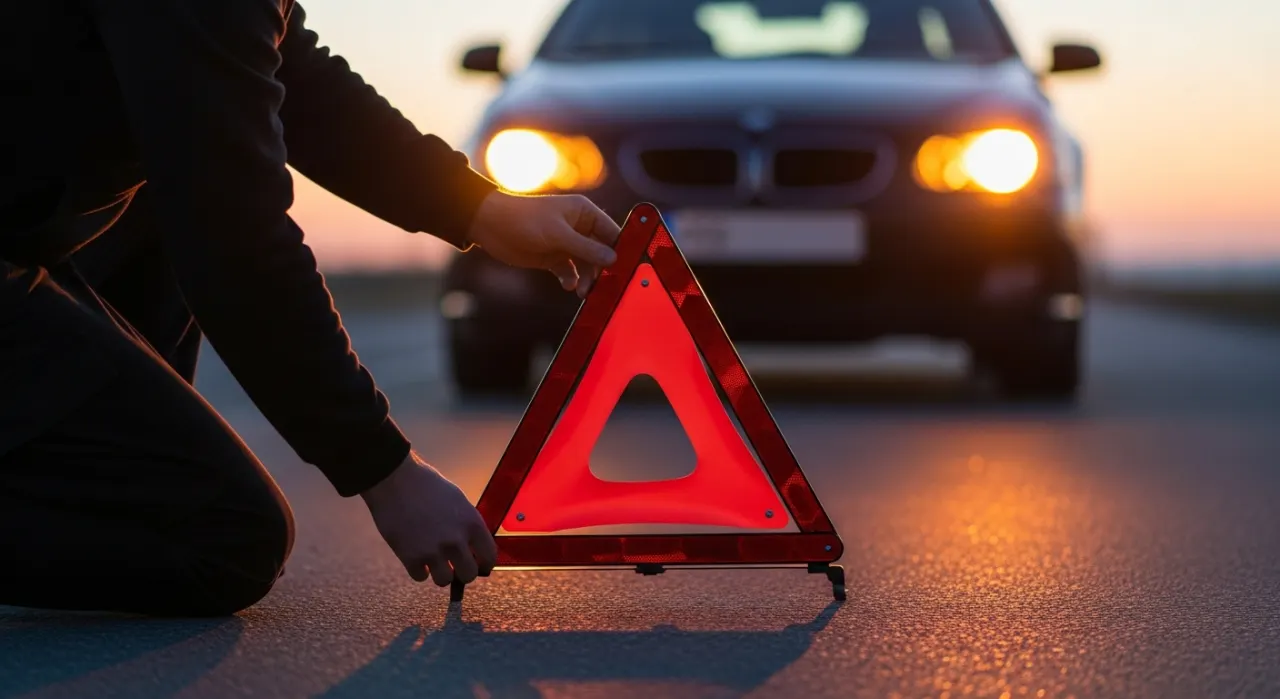
Two categories cover the moments where time is everything. Visibility keeps you from being hit while you are stopped — a reflective triangle at minimum, upgraded with bright LED road flares set in a warning line behind the car. Escape covers the rare, terrifying scenario of a crash or a submerged car: a window-breaker and seatbelt-cutter, mounted within reach, is the one tool you cannot improvise in the moment. How they work — and the laminated-glass catch that trips people up — is in car escape tools explained.
Winter: When a Normal Kit Is Not Enough
Cold weather changes the math. A breakdown that is an annoyance in summer can be genuinely dangerous in a snowstorm, and a standard kit ignores the two things winter demands: traction and warmth. A dedicated cold-weather layer — blankets, hand warmers, a shovel, traction aids and extra food and water — plus a few survival rules is what keeps a winter breakdown from becoming a crisis. It all comes together in the winter car emergency kit guide.
Where to Start
If you are building from scratch, start with a solid roadside emergency kit — it covers the most ground for the least money. Then close the gaps almost every kit leaves: add bright LED flares for visibility, mount a fire extinguisher and an escape tool within reach, and keep a recovery strap if you ever drive where you could get stuck. Every ranking below leans on aggregated owner ratings, review volume and value — so you can spend once and spend right. The topical map ties every part of roadside safety together.