Affiliate Disclosure
Some links on this page are affiliate links. As an Amazon Associate, we earn from qualifying purchases — at no extra cost to you. We do not buy, test, or physically handle the products we cover; our rankings come from aggregated owner reviews, ratings and expert consensus. Commissions never change our verdicts. How we rank & full disclosure.
Short version: for rubber mats, hose off, scrub with soapy water or a vinegar mix for salt, rinse, and air dry fully. For carpet mats, vacuum first, spot-treat stains, shampoo gently, rinse or extract, and air dry — never a hot dryer. The two rules that matter most: dry them completely before they go back in, and stay ahead of salt and mud instead of letting it set. Do that and mats last for years while protecting the carpet underneath.
Floor mats are the hardest-working accessory in your car — they take everything you track in so the factory carpet doesn't. But they only keep doing that job if you actually clean them, and a surprising number of people either ignore them until they're wrecked or clean them in a way that damages them. Here's the routine that keeps both rubber and carpet mats in service for the long haul.
Cleaning rubber and all-weather mats
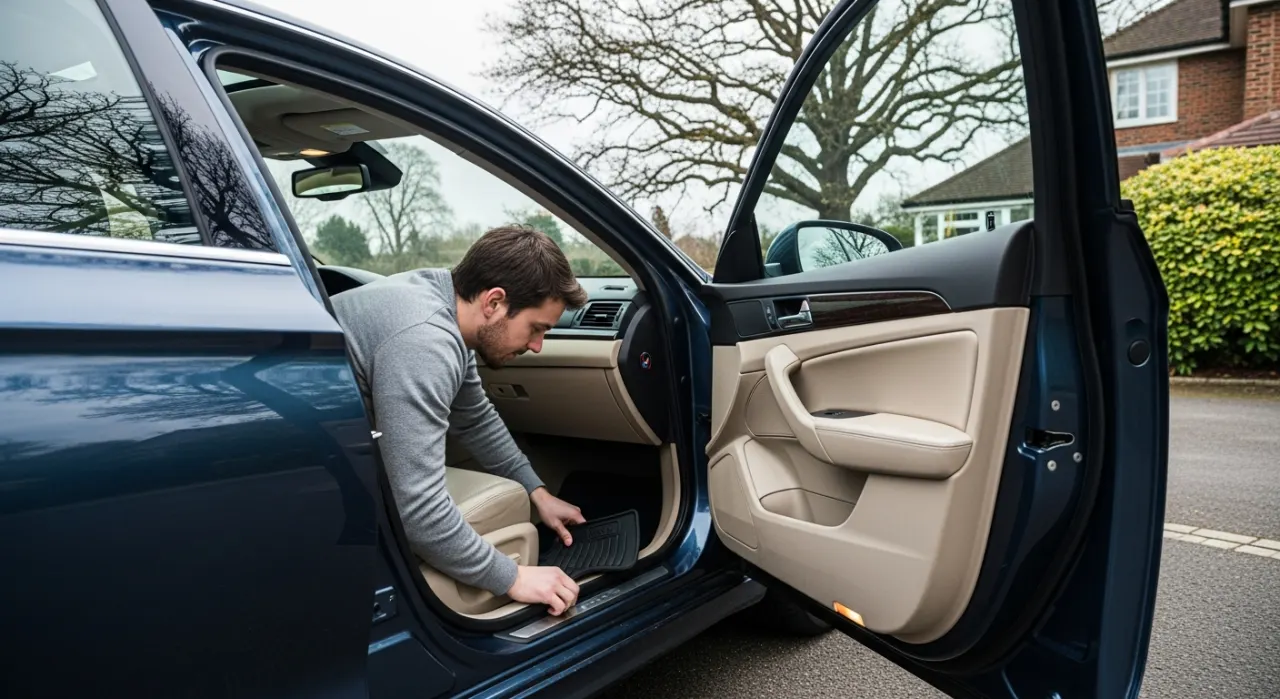
This is the easy one, and it's a big reason owners who buy all-weather mats rate them so highly. Pull the mats out of the car and knock or shake the loose grit and debris off — do this away from the car so it doesn't end up back inside.
Lay them flat or hang them, then hose them down to flush out the bulk of the dirt. Spray on an all-purpose cleaner or a squirt of dish soap in warm water, and scrub with a stiff-bristle brush. The trick with all-weather mats is working the brush into the raised channels and nibs where mud and salt hide — a flat wipe glides right over them. Rinse thoroughly until the water runs clear, then set them out to air dry.
One optional finishing step: a water-based rubber protectant brings back the deep black look and helps repel the next round of grime. Skip solvent-heavy or greasy "shine" products — they make the mats slippery underfoot, which is dangerous near the pedals.
Beating road salt and winter grime
Winter is where mats earn their keep and where cleaning gets a little harder. Road salt dries to a white, crusty residue that ordinary cleaner smears around rather than removing. The fix is acidic: a 50/50 mix of white vinegar and warm water. Spray it on the salt stains, give it a minute to break down the crust, then scrub and rinse.
On rubber this usually clears it in one pass. On carpet you may need to repeat, then blot the area dry. The real winning move is frequency — in winter, rinse the salt off weekly rather than letting it accumulate into a thick crust. Salt is also corrosive, so getting it out of the car protects more than just the mats.
Cleaning carpet floor mats
Carpet mats take more care because you're cleaning fibers, not a wipeable surface. Start dry: vacuum thoroughly, and use a stiff brush to agitate the pile and lift embedded grit ahead of the nozzle. Getting the dry debris out first stops you from turning it into mud in the next step.
For stains, spot-treat before you wash the whole mat. A dedicated carpet or upholstery cleaner works best — the same products and blotting technique used on seats apply here, and our upholstery cleaner guide covers the ones that lift stains without soaking the backing. Work from the outside of a stain inward so you don't spread the ring, and blot rather than rub.
To wash the whole mat, mist on cleaner, agitate with a soft brush, then either rinse lightly and extract with a wet/dry vac or blot hard with clean towels. The cardinal sin is over-wetting — a soaked carpet mat takes forever to dry, mats the fibers, and grows a musty smell. Use the least water that gets the job done.
Drying: the step everyone rushes
More mats get ruined by bad drying than by bad washing. Whatever the material, the mat must be completely dry before it goes back in the car. A damp mat traps moisture against the factory carpet, and that's exactly how you get mildew and that stale-car smell — ironic, since the mat is supposed to protect the carpet.
Air dry only. Stand mats up or hang them somewhere with airflow and, ideally, sunlight. Never use a hot dryer on carpet mats — the heat melts the rubber backing, warps the shape, and can shrink them so they no longer fit. Rubber mats dry in an hour or two; carpet mats can take most of a day. Plan the wash for a time the car won't need the mats.
Build a simple routine
The honest secret to clean mats is the same as clean anything in a car: maintain, don't rescue. A quick shake-out every couple of weeks and a proper wash once a month keeps mats from ever getting bad. Bump that up in winter when salt piles on fast, and after any big mess — a spilled drink, a muddy hike, a wet dog.
Match your cleaning habit to your mats and climate, too. If you're constantly fighting mud and salt on carpet mats, that's a sign the wrong material is in the car — the all-weather vs carpet comparison will tell you whether a switch to rubber would make your life easier. And if your mats are past saving, the ranked replacements are in best car floor mats. For everything else that keeps a cabin protected and fresh, head back to the interior accessories hub.